Request a Demo
China has consulted on the revision of GB 13102 Concentrated Milk Products in 2020, which was titled “GB 13102 Evaporated Milk, Sweetened Condensed Milk and Formulated Condensed Milk” previously1. The revision of the name is mainly due to the addition of the category of concentrated milk for industrial use.
Seeing the potential behind this novel raw material, ChemLinked will analyze its regulatory compliance in China, update the recent progress and give our forecast of what it will bring to China’s dairy industry in this article.
1. What is concentrated milk for industrial use and its compliance in China?
• Definition
Although we are familiar with concentrated milk products like sweetened condensed milk, etc., concentrated milk for industrial use is new stuff in China and lacks effective GB standards. According to the draft of GB 13102 Concentrated Milk Products, concentrated milk for industrial use refers to a product obtained by partial removal of water from raw cow/goat milk, skimmed or full-fat, and only for food industrial use.
• Application scope
Further explained by the compilation illustration2 of this draft, concentrated milk for industrial use can only be used in food industry products as raw material. Without any limitation specified in the official documents, it is considered to be a substitute for raw milk and apply to the preparation and production of various foods, such as dairy products*, coffee, etc.
*Note:
The consultation draft of modified dairy in 20203 newly added the definition of reconstituted milk. It is said reconstituted milk refers to the liquid obtained by mixing dried or concentrated dairy with water at a proper proportion. The revision can be considered as a preparation for the application of concentrated milk for industrial use in modified dairy products. Moreover, although it is also allowed to be used as raw material in infant formula, it is not recommended considering consumers’ purchase preference.
Table 1-1: Comparison between unsweetened evaporated milk and concentrated milk for industrial use
Items | Unsweetened evaporated milk | Concentrated milk for industrial use |
Type | Products for direct consumption | Raw material for the food industry |
Raw material | Food additives and nutrition fortifiers can be used appropriately | Only raw milk |
• Production process
As revealed by the compilation illustration, currently there are mainly three techniques for its production: membrane penetration, evaporation and freeze concentration process.
Explanation of the three techniques: • Membrane penetration processing is a technique that permits concentration and separation without the use of heat. Particles are separated on the basis of their molecular size and shape with the use of pressure and specially designed semi-permeable membranes.4 • Evaporation refers to the process of heating liquid to the boiling point to remove water as vapour.4 • Freeze concentration is a process of concentrating liquid products by freezing the water content and subsequently removing the so-formed ice crystals from the food system.5 |
• Properties
Since the volume of concentrated milk for industrial use will be reduced during the concentration, the indicator for protein content, fat content, etc. will increase, but the concentration of the amino acid group will bring a decrease in the pH value. Besides, concentrated milk for industrial use should be kept in refrigeration or freezing conditions.
2. Experts’ attitude and recent progress
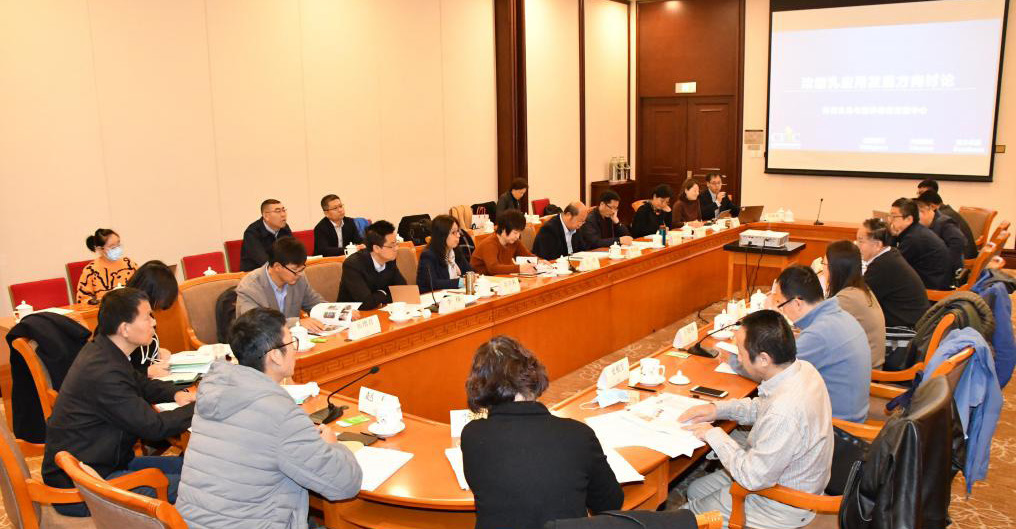
Photo from: CFIC
On November 5th, 2020, China Food Information Center (CFIC) conducted a seminar6 to push ahead with the revision of the standard of modified milk and discussed the supervision of concentrated milk. At this seminar, experts showed a positive attitude towards the development of concentrated milk for industrial use.
Li Qiang, head of Food Department of Consumer Goods Industry Division, a division of the Ministry of Industry and Information Technology, pointed out that concentrated milk for industrial use provided a novel solution to the unbalanced milk supply in different regions and seasons. The emerging of concentrated milk for industrial use will benefit the innovative development of the dairy industry. Hence, room for development should be given for this field.
Shi Gensheng, a researcher of China's National Health Commission, stated that concentrated milk is an exploration of industry innovation. To ensure its better application in products and further development, the scientific community and the industry should cooperate together to do well in the basic research and science popularization about concentrated milk for industrial use to avoid negative impacts.
Wang Xiaofeng, director of the Food Sampling and Inspection Department of the State Administration of Market Regulation, mentioned that in terms of safety indicators, the difference between concentrated milk and sterilized or pasteurized milk is slight and there are no safety concerns.
Han Yi, director of the GAC Import and Export Food Safety Bureau, also pointed out that the labeling of concentrated milk for industrial in liquid milk should be indicated in accordance with the true properties of the product identification. For example, at present, the labeling of dairy powder in liquid milk should be labeled as “reconstituted milk”, while if the raw material is concentrated milk for industrial use, then the product should be labeled with “concentrated milk”.
3. Prospect forecast of concentrated milk for industrial use
ChemLinked also believes the application of concentrated milk for industrial use will welcome a promising future and great market application in China due to the following reasons.
First of all, it meets consumers’ demands. Shi Yudong, nutrition and health manager from Mengniu Dairy, indicated that concentrated milk is much nutritive and fresh compared to milk powder due to the different processing technique.
Second, the application of concentrated milk will save the cost in time and money.
• Due to its property, protein and fat won't be separated easily, which makes it easier to be processed in the following procedures.
• Shi Yudong further denoted that compared with spray drying technique for milk powder, the technique for concentrated milk is at a lower cost.7
• Compared to raw milk, concentrated milk better meets the extended storage demands. During the actual practice, raw milk should be processed within 48 hours, while the guarantee period of freeze concentrated milk for industrial use is around several months. Besides, the removal of water from milk also reduces transportation and storage cost due to the smaller size.
Third, the fast-developing cold chain system in China provides the possibility of the application of concentrated milk. Although the removal of water from milk reduces transportation and storage cost, the cost on cold chain should still be taken into consideration.
Fourth, it offers the industry another choice of raw material. Although raw milk is more nutritive and fresh than concentrated milk, it is short in the guarantee period and should be processed as soon as possible. Hence, the emerging of concentrated milk for industrial use will become a new solution to the industry by finding the balance between milk powder and fresh milk. Besides, led by Mengniu Dairy, we predict more enterprises will choose to use concentrated milk as a raw material in diversified food products in future.
 We provide full-scale global food market entry services (including product registration, ingredient review, regulatory consultation, customized training, market research, branding strategy). Please contact us to discuss how we can help you by