Request a Demo
The application of gene editing technology in the food sector is entering a new era. The first gene-edited food, the soybean oil by Calyxt was launched and hit the market in the US on March 1st, 2019. If everything goes smoothly, Japanese consumers can also have access to gene-edited food this summer, according to a Japanese newspaper, Nikkei.
What is gene-edited food?
Basic introduction to gene editing technology
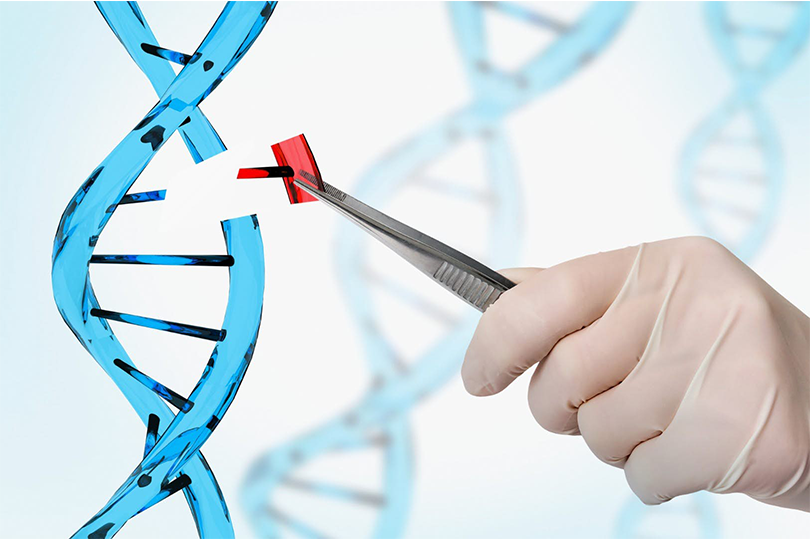
According to NIH, U.S. National Library of Medicine [1], genome editing (also called gene editing) is a group of technologies that give scientists the ability to change an organism's DNA. These technologies allow genetic material to be added, removed, or altered at particular locations in the genome. The recent CRISPR-Cas9 system is one of the approaches to edit genes and it is faster, cheaper, more accurate, and more efficient than other existing genome editing methods.
Yinong Yang, a biologist at Penn State who also created the anti-brown mushroom, said the CRISPR technique was so simple that it took only about two months of lab work to create the anti-browning mushroom; and it was extraordinarily inexpensive. "The trickiest part, making the guide RNA and its scaffolding, cost a couple of hundred dollars; a number of small biotech firms now make custom-order CRISPR constructs to edit any gene desired. The biggest cost is manpower", said Xiangling Shen, a postdoctoral fellow in Yang's lab. "If you don't consider manpower, it probably cost less than $10,000," Yang says, reported by Scientific American [2].
Here's how this system works to edit the gene—CRISPR: Gene editing and beyond, nature video [3].
Gene editing—what will it bring to our food?
Comparing to the application in medical science and animals, the off-target effect (inaccurate targeting of genes) in crops seems not so severe and will cause less danger. Thus, the application in the agriculture field is widely researched by scientists.
According to an article published by Nature [4], gene editing techniques may substantially accelerate plant breeding. USDA also reported [5] that new methods like genome editing can introduce new plant traits more quickly and precisely, potentially saving years or even decades in bringing needed new varieties to farmers.
What's more, it is possible to transform agricultural production, for example, scientists can make crops resistant to disease or develop faster-growing varieties of livestock through gene editing technology. (Reference: Why the future of gene-edited foods is in the balance [6], Financial Times)
And it can help scientists avoid the use of controversial technique, genetic modification, which involves the insertion of foreign genes. Therefore, some scientists are optimistic about the prospect of gene-edited food, because they believe these foods are different from GMO in essence. Daniel F. Voytas, a scientist from Calyxt said, "The new technology is necessitating a rethinking of what a GMO is."
Supervision worldwide & development in food
In US: is gene-edited food a kind of GMO?
In 2015, Yinong Yang, Pennsylvania State University associate professor, developed a white button mushroom with the technique of CRISPR/Cas9, which has a longer shelf life and will not brown. In 2016, USDA replied to Yang's letter [7] and confirmed that the government will not regulate the cultivation and sale of the white-button mushroom created using CRISPR, since it does not contain any newly introduced genetic material.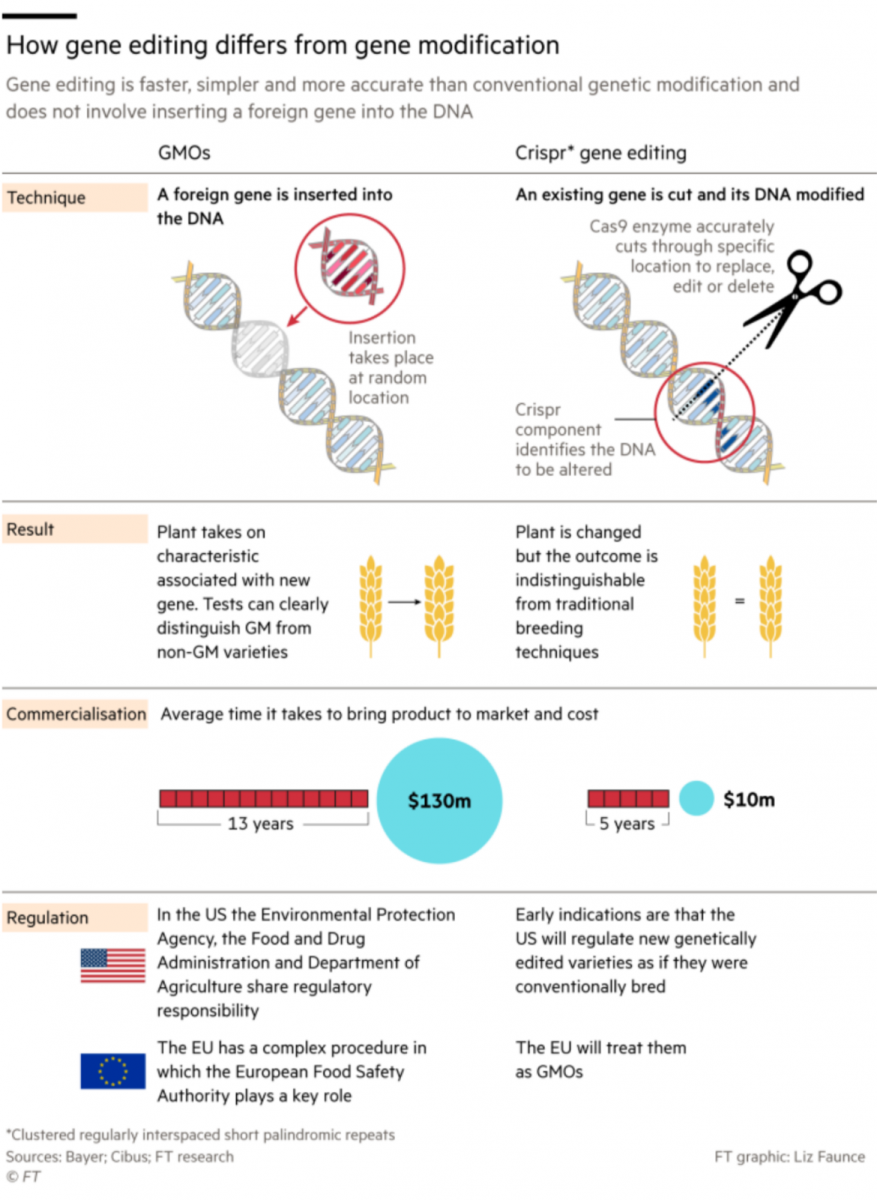
When checking the "'Am I Regulated?' Process" under USDA, Animal and Plant Health Inspection Service [8], we find that the government has sped up the process of assessing, reviewing and approving gene-edited crops. In 2018, it took one year for Calyxt to gain approval to market its high fiber gene-edited wheat product. Today it takes only 5 months. Like the US, western countries such as the UK, Sweden, Belgium, Canada, Argentina and Brazil have all given the green light to gene editing technology.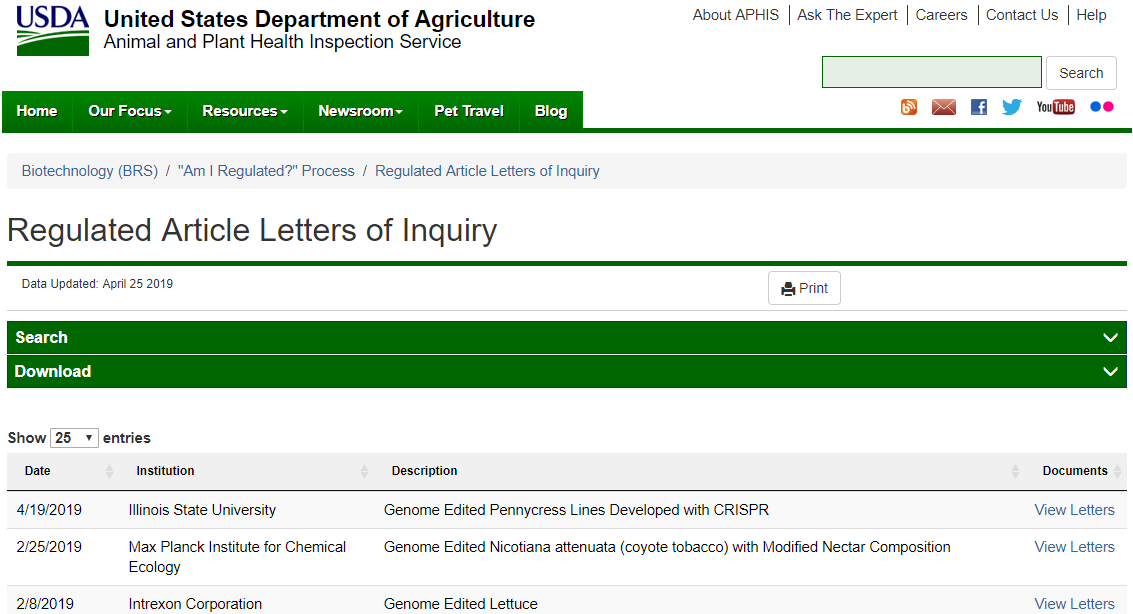
In Japan: there is little difference between traditional breeding methods and gene editing in terms of safety
On March 28th, 2019, Japan's MHLW released a report [9] and pointed out that gene-edited food will be free from safety evaluation when it involves no foreign genes. On April 15th, 2019, MHLW informed all relevant authorities [10] in local areas that gene-edited food differs from GMO. "There is little difference between traditional breeding methods and gene editing in terms of safety," Hirohito Sone, an endocrinologist at Niigata University who chaired the expert panel, told NHK, Japan's national public broadcaster.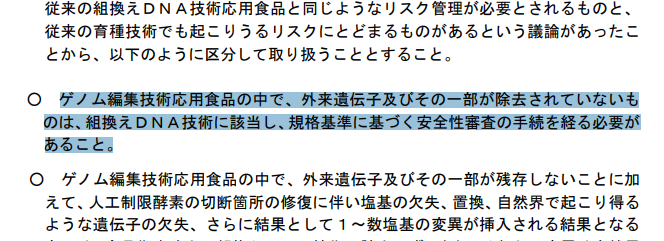
As revealed by Nikkei [11], Japan is now working on gene-edited tomatoes and pagrus major, and Japanese consumers may get access to gene-edited food as early as the summer of 2019.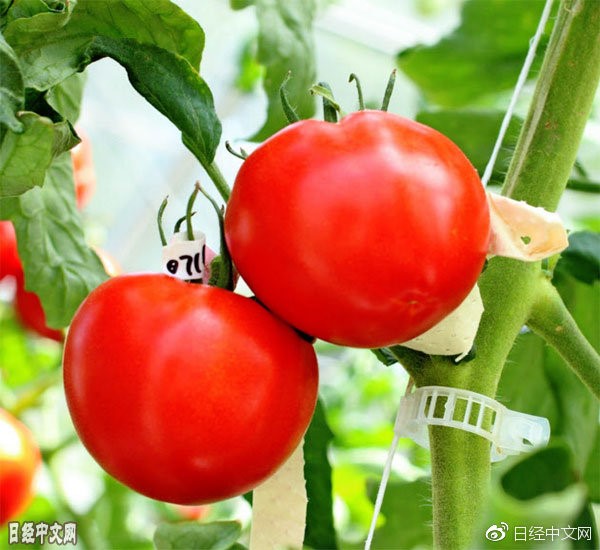
Australia loosens restrictions on gene edited food
On April 10th, 2019, the Australian government released the notice [12] updating its regulations on gene editing technology. Minister for Regional Services, Senator Bridget McKenzie, announced that amendments had been made to the Gene Technology Regulations to make the legal position of genome editing clearer.
During the Technical Review of the Gene Technology Regulations 2001 in April 2019 [13], it mentioned that gene-edited food cannot be distinguished from conventionally bred animals or plants and does not require unnecessary regulation.
Russia accelerates the development of genetic editing
On April 22nd, 2019, the Russian government approved the Federal Research Programme for Genetic Technologies Development for 2019–2027 [14], which aims to accelerate the development of genetic technologies, including genetic editing. It also denoted that "genetic editing technologies will be used to design new lines of plants and animals, including aquaculture, which are needed by the real economy", which indicates that some gene-edited products will now be exempt from the law that bans the cultivation and breeding of genetically modified (GM) organisms [15] in Russia, except for research purposes.
EU: gene editing is GM
However, not all countries favor this decision. On July 25th, 2018, Court of Justice of the European Union judged [16] organisms obtained by mutagenesis are GMOs and are, in principle, subject to the obligations laid down by the GMO Directive.
"It is an important judgment, and it's a very rigid judgment," says Kai Purnhagen, a legal scholar at Wageningen University and Research in the Netherlands who specializes in European and international law. "It means for all the new inventions such as CRISPR–Cas9 food, you would need to go through the lengthy approval process of the European Union." (reference: CRISPR plants now subject to tough GM laws in European Union [17], by Nature)
China: still in progress
Currently, there's no specific law for gene-edited food in China. During the First Global Summit on Food Safety, Nutrition and Health—Workshop on Food Safety Risk Prevention and Control, an official from China National Center for Food Safety Risk Assessment told Chemlinked that China is still doing research and trying to pin down a clear definition of gene-edited food and delineate between GMOs and gene edited foods.
On a brighter note, going on articles released by China's Ministry of Agriculture (MOA) [18], we find a positive attitude towards gene-edited food. It is predicted the supervision of gene editing will be less strict than GM.
Most concerned question: Is it really safe?
Some scientists believe gene-edited crops should be regulated less strictly than GM crops if the process doesn't introduce foreign genes. This principle is used to shape current regulatory practices in both the US and Japan. In addition, plant biologists such as Prof Jones stated that creating new varieties through GE is closer to non-genetic processes.
However, most critics believe that the potential for off-target effects, confer a serious risk and therefore necessitate serious assessment before greenlighting the technology in commercial food production.
Public opinion
Consumers nowadays still suspect the safety of GM. Will gene-edited food get better treatment? It's hard to say. According to a survey from the Pew Research Center [19] last November, about half of U.S. adults (49%) say foods containing genetically modified (GM) ingredients are worse for one's health than foods containing no GM ingredients. We may assume that these people also suspect the safety of gene-edited foods.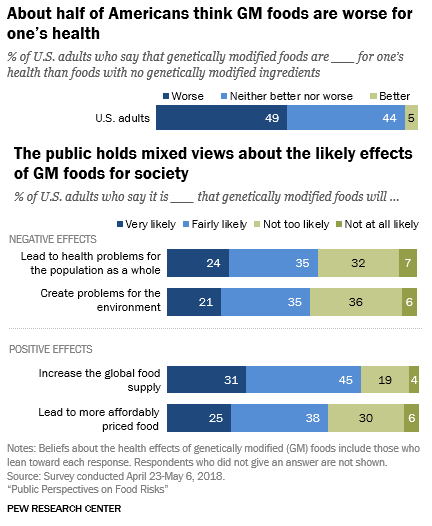 Last December, Japanese consumers launched a petition demanding a safety evaluation of all gene-edited food. Hirohito Sone, who chaired the expert panel in Japan, told NHK, although genetically modified food is considered safe, the government needs to explain the new technology to consumers thoroughly to ease the public concern.
 We provide full-scale global food market entry services (including product registration, ingredient review, regulatory consultation, customized training, market research, branding strategy). Please contact us to discuss how we can help you by