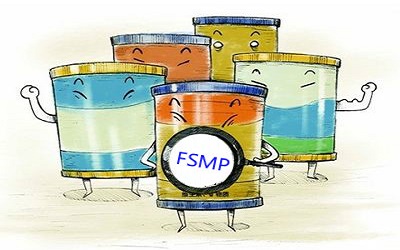
On March 7, 2016, China CFDA released the “Administrative Measures on Registration of Food for Special Medical Purpose”, stipulating that all food for special medical purpose (FSMP) sold in China or imported must be registered. This measure was to be implemented on July 1, 2016. Later on, CFDA granted a grace period for registration of FSMPs ending on January 1, 2018 (read CL news here), meaning that only registered FSMPs could be sold in Chinese market from January 1, 2018.
 Market of FSMP in China
There are 3 types of FSMP food in the market: amino-acid-based, short-peptide-based and intact-protein-based. FSMPs are categorized based on specific disease applications e.g. FSMP for diabetes, tumor, burns, liver disease and kidney disease, etc. Currently, China’s FSMP market is dominated by foreign-funded enterprises, which account for 90% of the market in China.
Current registration situation
By August, 2017, only 14 enterprises with 33 products have submitted an FSMP registration application. 8 of these products require data supplementation.
2 revisions of supporting documents for FSMP registration released in 2017
On September 6, 2017, China CFDA released revision of 2 supporting documents for FSMP registration, which are “Requirements for Application Materials for Registration of Foods for Special Medical Purpose (For Trial) (2017 revision)” and “Stability Study Requirements for Foods for Special Medical Purpose (For Trial) (2017 revision)” (read CL news here). The following section details the differences between the 2016 and 2017 versions.
Comparison between 2016 and 2017 version
Requirements for application materials for registration of FSMP (2017 revision)
(I) Application materials for product registration
Item 8 and 11 are removed in the 2017 version, that is to say, other materials proving safety, nutritional adequacy and clinical effects are not required.
(II) Requirements of application materials for product registration
Item | Interpretation |
Product Research and Development (R&D) Report and Product Formula Design and Its Basis | Product formula design and its basis
The requirement specifies that only application for registration of specific nutritionally complete formulas and nutritionally non-complete formulas are required to provide related documents, such as materials regarding the formula features, formula principles, explanation regarding the characteristics of the energy and nutritional components in the formula, target group; the basis for determination of the content of each component contained in this product (excluding food additives); the scientific literatures and test study materials etc.
“The basis for the source and use of all raw materials and food additives in the formula” is removed.
Product formula
2017 version clarifies that besides food raw materials and additives, categories of food auxiliary materials, nutritional fortification substance should comply with corresponding national food safety standards (e.g GB14880) and related regulations as well. Bioactive substances excluded from nutrient listed in standards and optional components are forbidden.
Materials such as the basis for the scientificity, rationality and consumption safety, some scientific literatures and document proving the safety of food additives are not required in 2017 version.
Products’ R&D report
It is specified that in the case of application for registration of specific nutritionally complete formulas and nutritionally non-complete formulas, applicants are required to submit the process of product formula selection, the basis for establishing the limits of each indicator.
As for process research material, it newly adds the control program for nutrient and optional components, program for potential hazardous substance like contaminant, microorganism, mycotoxin.
As for package, the latest version replaces the selection method and research data on compatibility of packaging materials with control program of hazardous materials’ migration
As for stability test, in case of application for registration of infant formula for special medical use and nutritionally complete formulas, applicants shall conduct a stability test and keep the record, but the report is not required to be submitted. Besides, it adds that for specific nutritionally complete formulas and nutritionally non-complete formulas sold in the Chinese market, applicants can submit the existing stability research materials, and summarize the results.
|
Requirements of Product Standard |
For products without corresponding standards, the 2016 version stipulates that applicant should provide quality requirements and usage basis of food raw materials and food additives, but now the requirement for products without national standards has been removed, and it clarifies that both domestic and imported foods are required to comply with national standards.
In the previous version, any potential hazardous substances in food raw materials and additives should be determined, and maximum residue limit for them should be set. Moreover, the testing methods are exclusive. But in the latest version, these requirements have all been deleted.
|
Test Reports of Test Samples | Compared with the 2016 version, the statement in the updated version is more specific:
Stability testing report is required only in in case of application for registration of specific nutritionally complete formulas and nutritionally non-complete formulas;
The report should record the testing data of all the items, and clarify the conclusion.
Applicants can undertake self-inspection of the testing sample, and if they accredit the third-party inspection organization to have the test, official seal of the third-party inspector shall be stamped on the testing report.
|
Evidentiary Material Proving the Abilities in R&D, Production and Inspection |
Materials proving the abilities in R&D are much more simplified compared with the 2016 version.
Materials proving the abilities in production are simplified as well, and the requirements are more specific. For products that have been sold in the market, domestic applicants shall submit the copy of food production license (original, copy and detail of the category); and overseas applicants should submit materials proving the conformity with Good Manufacturing Practice and (or) Quality Management System
Enterprises can have lot by lot self-inspection for all items stipulated. For enterprises with ability to have self-inspection, applicants should submit documents regarding the basic situation of inspectors, inspection equipment and qualification of inspection for all items; for those without ability to have self-inspection, applicants shall submit the name of the-third-party inspection organization, official qualification proof, and the commission contract with the inspection organization.
|
Other Material Proving the Safety, Nutritional Adequacy and Special-Medical-Purpose-Based Clinical Effects | This part is deleted to avoid repetition. |
Evidentiary Document Related to Registration Application | In 2017 version, enterprises do not need to provide document indicating that the production enterprise complying with relevant production management standard and/or relevant quality management system |
Other related materials | This part has been removed to simplify the materials. |
III Items and requirements of application materials for change of registration
Items | Interpretation |
(I) Items and requirements of general materials | Evidentiary materials related to sales, specific name of the changed item, as well as reason and basis for the change are not required in 2017 version. |
(II) Items and requirements of other materials | Applicants don’t need to provide materials proving that the changed name is repeated or not. |
Stability Study Requirements for Foods for Special Medical Purpose
 Generally speaking, compared with those issued in 2016, these 2 revisions are more practical and reasonable, as they point out different material requirements under various condition. Application documents have been simplified as well and some unnecessary or repeated materials are removed. In addition, the requirements are more specific, like some items clarify that they are just applicable to the registration of specific nutritionally complete formulas and nutritionally non-complete formulas.
Since the end of grace period of registration for FSMPs is approaching, Liu Xuecong, secretary general of China Nutrition and Health Food Association, suggested that enterprises should prepare the materials according to the issued documents, and invest money and energy into practical R&D work.


 Request a Demo
 We provide full-scale global food market entry services (including product registration, ingredient review, regulatory consultation, customized training, market research, branding strategy). Please contact us to discuss how we can help you by