Request a Demo
*“Pet food” in this article refers to formula pet cat food and dog food (staple food).
Part 1: Importation Performance of Pet Food, from 2017 to 2019 (Source: GAC Data [1])
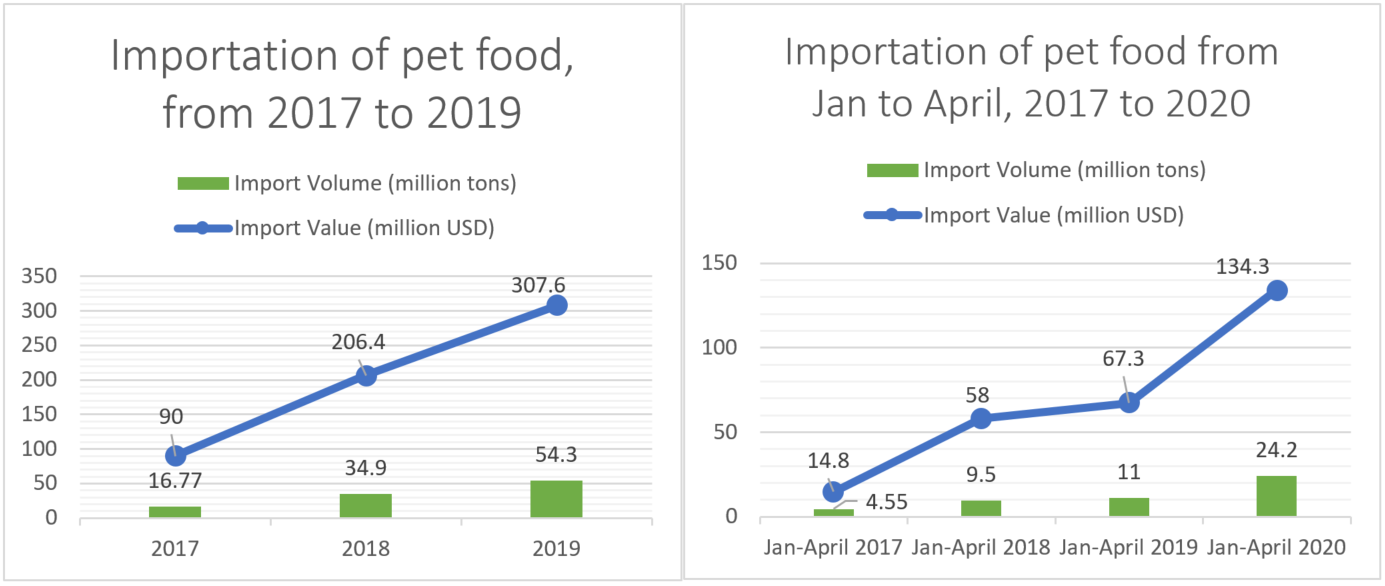
1.1 Import volume and import value of pet food, from 2017 to April 2020
The import value of pet food (refers to formula pet food/staple food in this article) was soaring from 2017 to 2019, keeping a YOY growth rate of 129% (2018) and 49% (2019). Even during the pandemic period, both the import value and import volume increased by around 100% compared to last year. Thus the importation performance of pet food is expected to reach a new high in 2020.
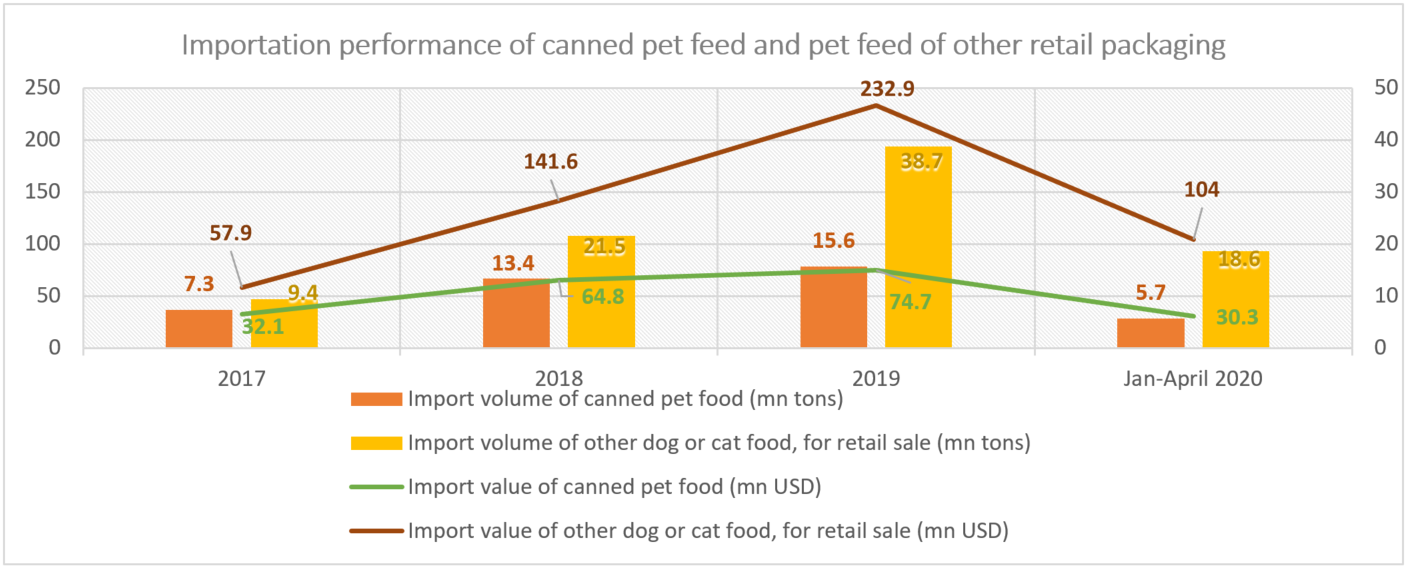
 1.2 Importation performance of pet food, by category
Pet feed is mainly divided into canned pet feed and pet feed in another retail packaging (mainly prepackaged formula pet food). As revealed by GAC data, the sales value of pet feed in other retail packaging grew rapidly by 80.3% and 64.5%, respectively, in 2018 and 2019.
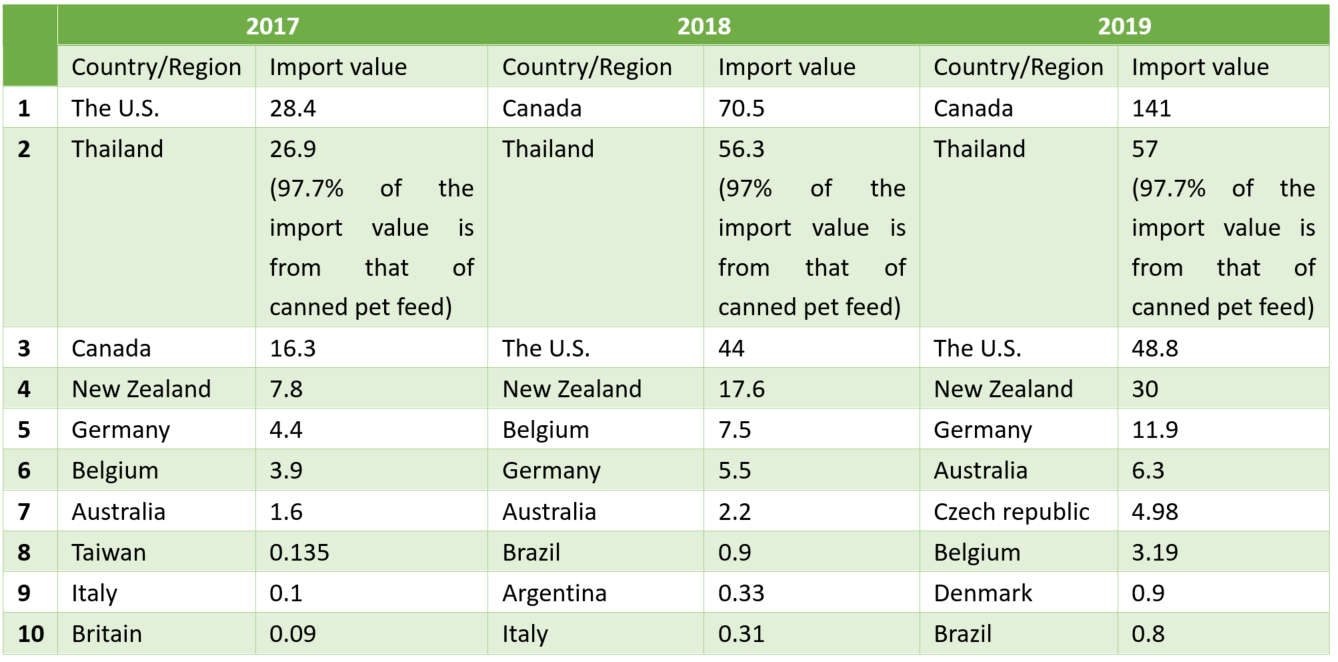
1.3 Top trading regions of pet food, by import value (million USD)
Canada outperformed the rest of the trading partners. The import value of Canada increased by 332% in 2018 and 100% in 2019.
Unlike other countries/regions, 97% of Thailand’s pet food import value came from that of canned pet food.
Part 2: Registration of Imported Pet Food (up until April 30, 2020)
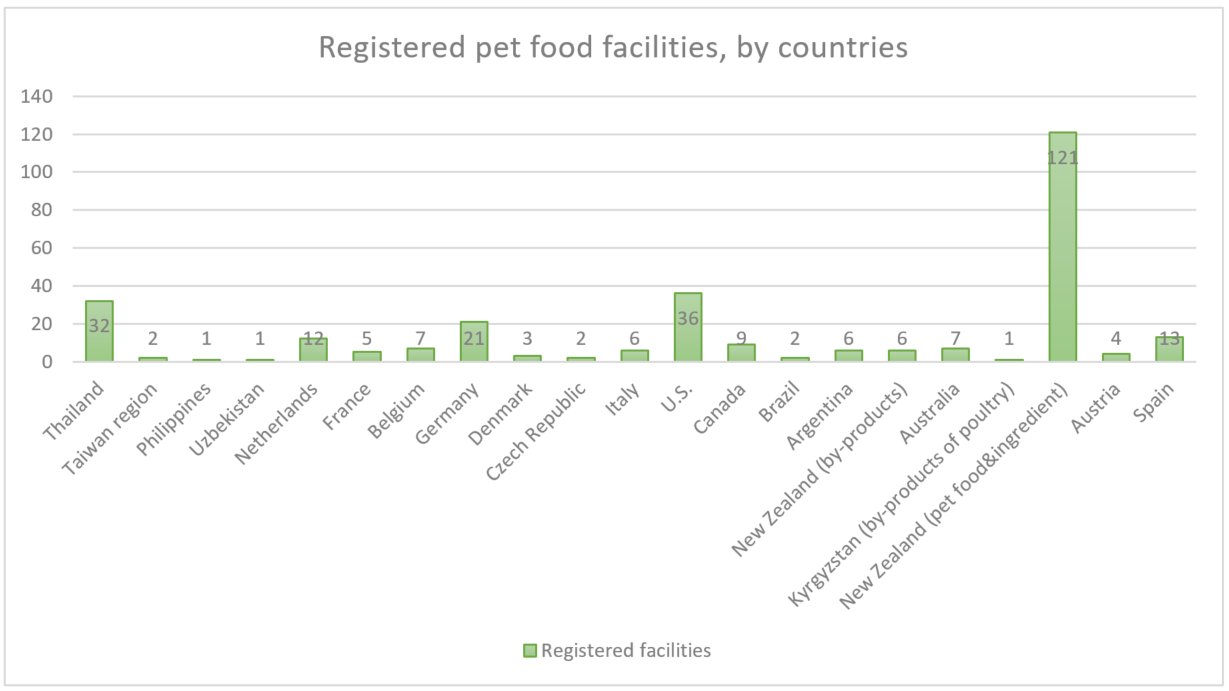
2.1 Factory registration
New Zealand was granted 121 facility registration approvals of both pet food ingredient and pet food (28). The top four countries with the most factory registration approvals are the U.S. (36), Thailand (32), New Zealand, and Germany (21).
2.2 MOARA registration
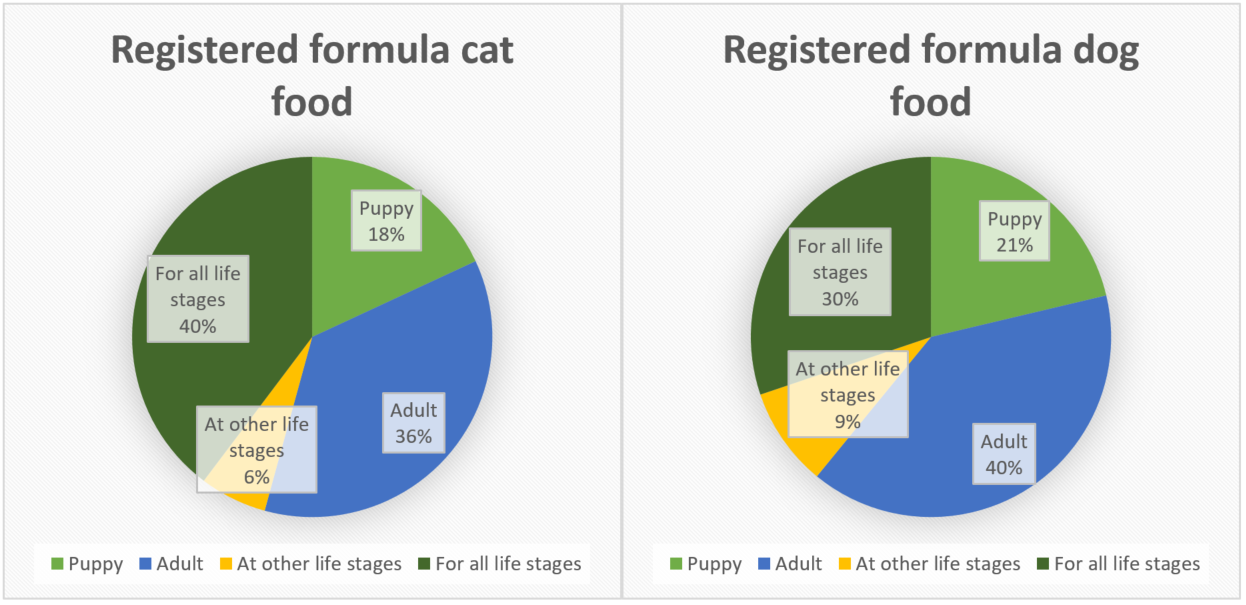
As revealed by MOARA notice [2], up until the end of April 2020, 822 formula pet food (staple food) still had valid MOARA registration approvals, among which 282 are cat food, and 540 are dog food.
By different life stages of pets
Most imported pet foods are designed for adult pets or pets of all ages.
By functions
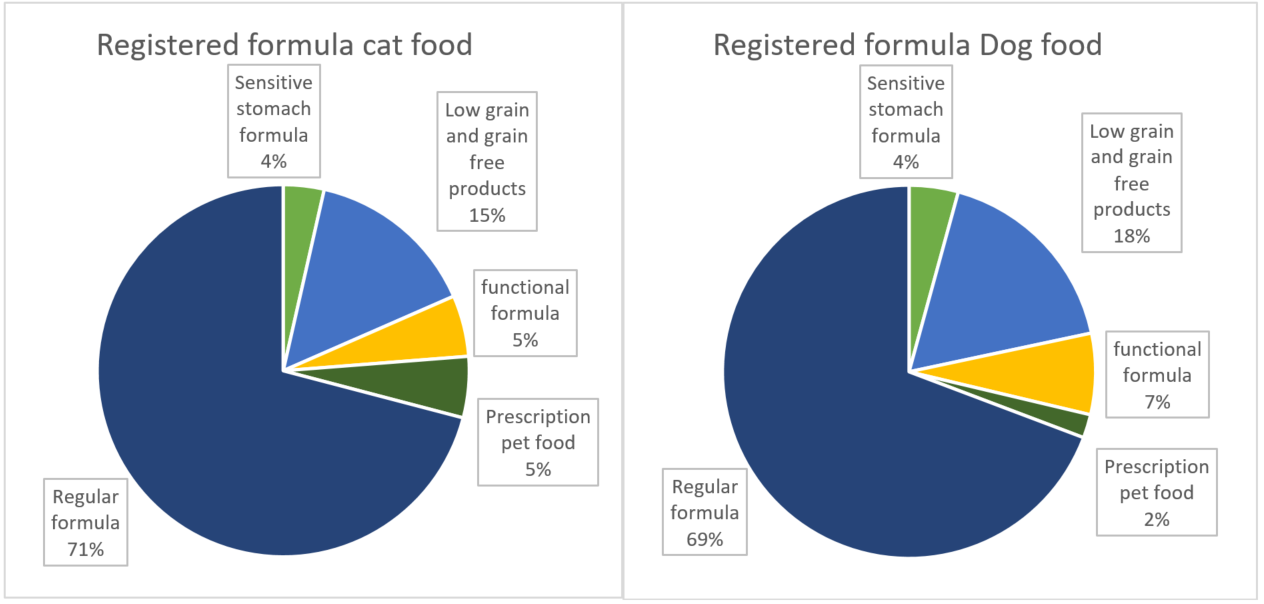
In addition to the regular formula, enterprises are also designing more formula to satisfy different demands, such as sensitive stomach formula, low-grain/grain-free formula, functional formula (e.g., for skin and coat health), etc.
Part 3: Market Performance of Pet Food
3.1 Market Data
In 2019, the pet industry's total market size reached 202 billion yuan, with an annual growth rate of 18.5%. Formula pet food accounted for 39%, and pet snack products accounted for 19.5% of the total consumption.
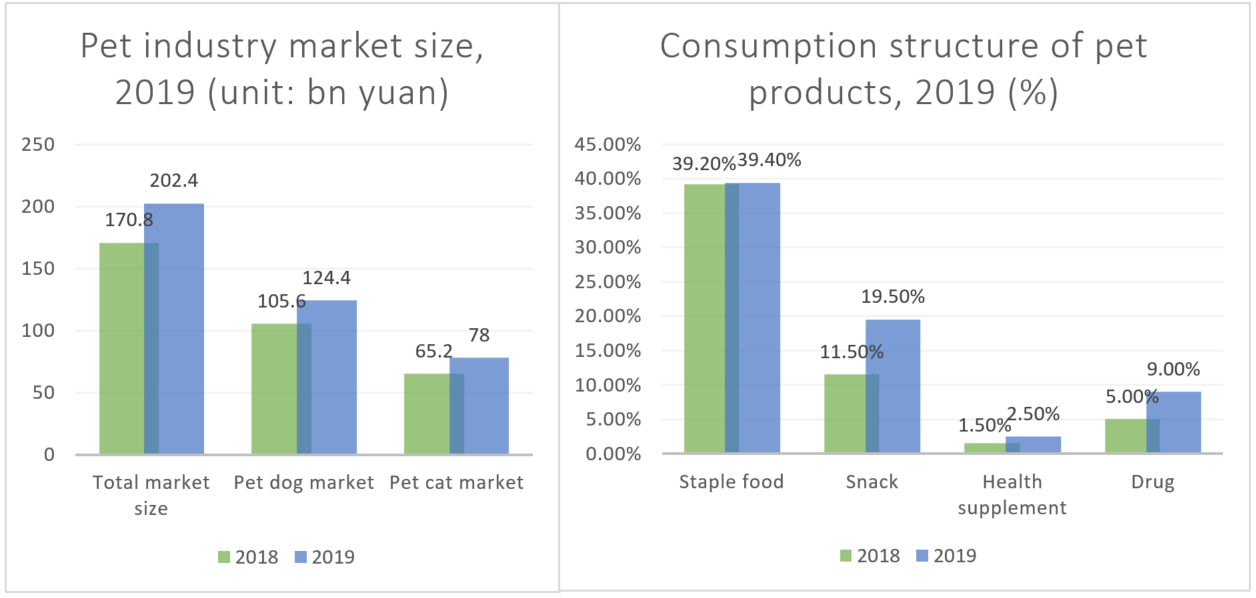 Source: China Pet Industry White Paper 2019 [3]
3.2 Consumption Preference
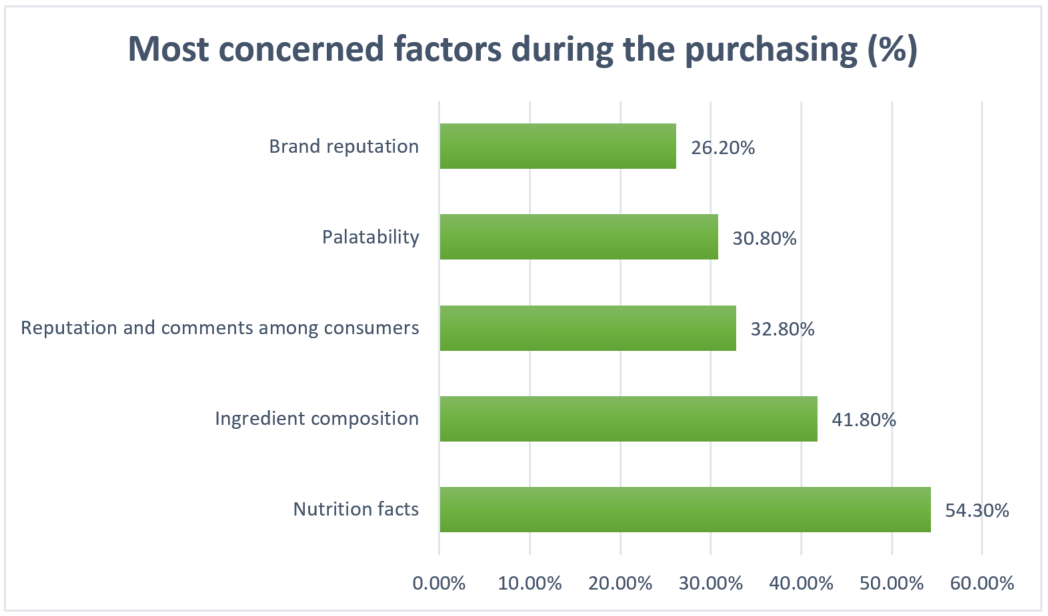
Most concerned factor
Pet food recipes and product reputation are still the most influential factors for consumers. To assess a product consumers will check the comments on websites, product evaluation from Wechat accounts, and the ranking given by Whole Dog Journal (WDJ).
Place of origin
At present, consumers didn’t show an apparent preference for domestic or imported brands. But over half of the pet owners in the first tier city will choose imported brands. Among all the imported brands, Canada and U.S. brands were ranked in the top 2 positions.
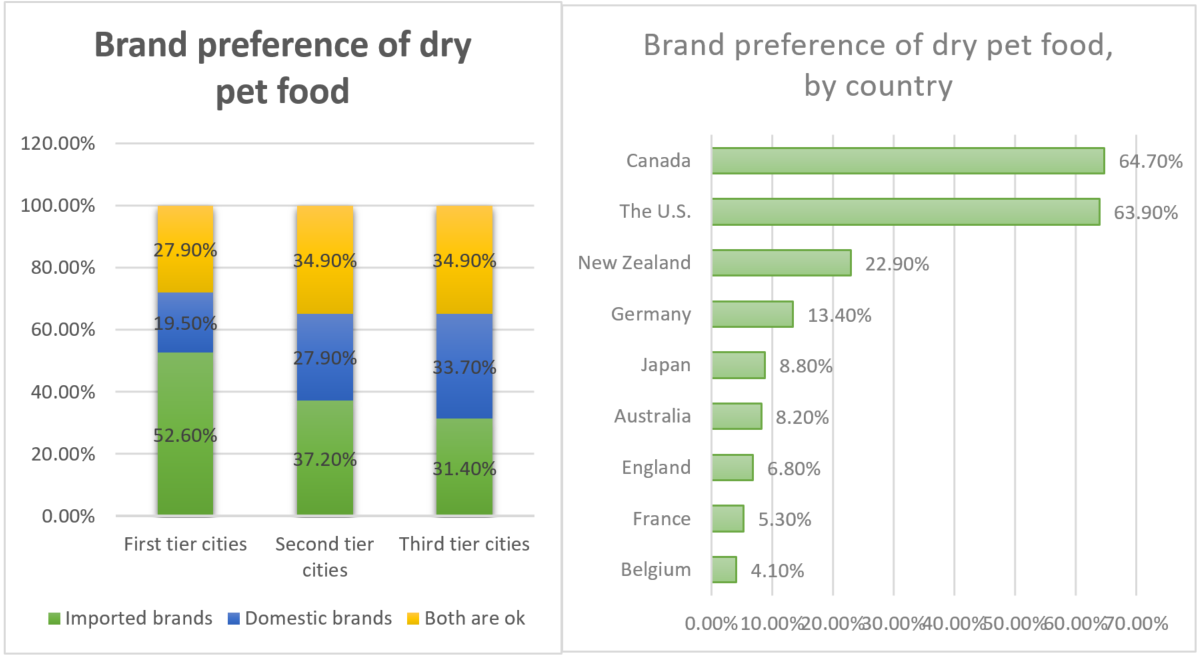 Source: China Pet Industry White Paper 2019 [3]
Price: Demand for high-end products
As revealed by data from Jingdong [4] (one of the largest E-commerce giants in China), the sales performance of dog food and cat food in Jingdong grew with an average speed of around 79.0% and 90.14% respectively. Furthermore, the growth rates of high-end products surpassed the average growth rate, which indicates consumers’ preference for well-known brands and high-end products.
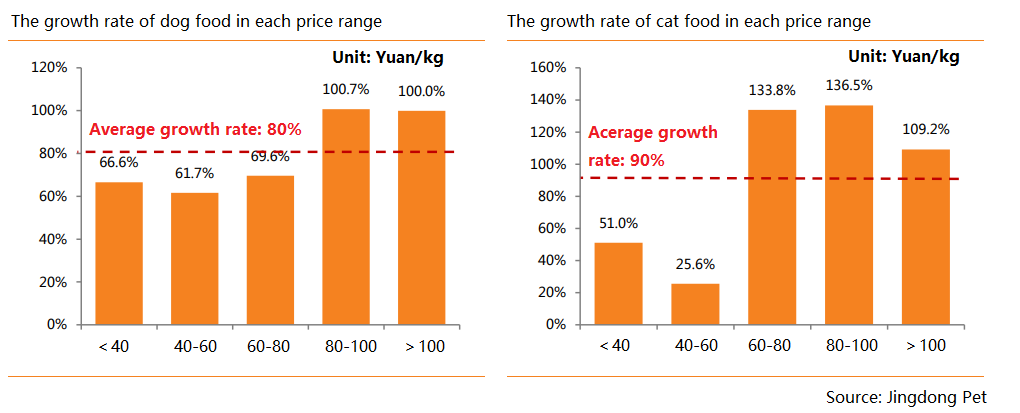
Product specification
Dog owners prefer the product packages between 10 to 14.9 kg. 60% of cat owners choose small bags under 6 kg.
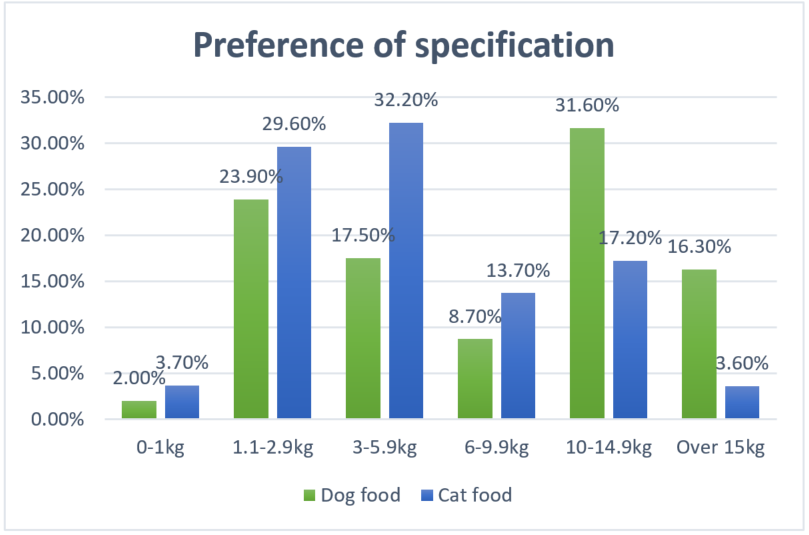 Source: China Pet Industry White Paper 2019
Sales channel
E-commerce and pet stores are the most important sales channels of pet food, which account for 80% sales.
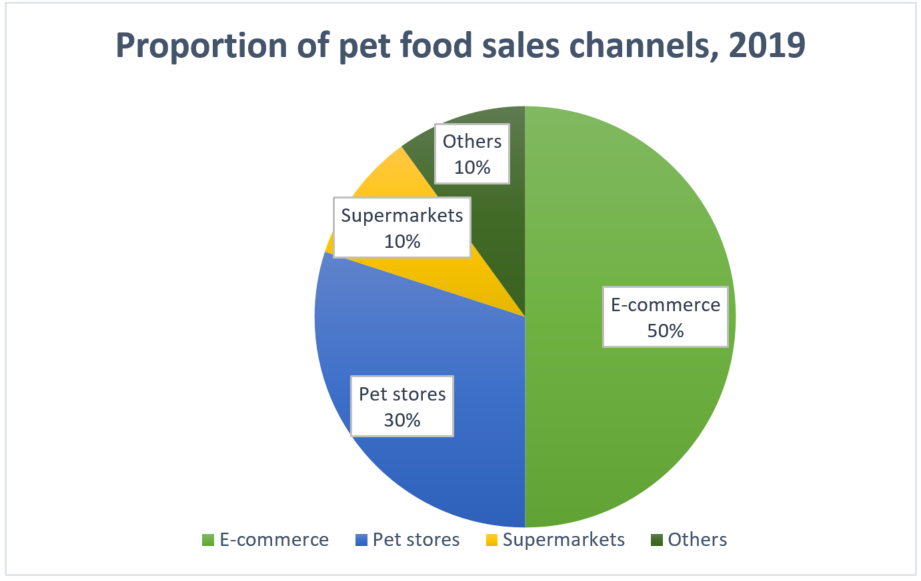 Data: iimedia Research
For more compliance service, please email [email protected].
 We provide full-scale global food market entry services (including product registration, ingredient review, regulatory consultation, customized training, market research, branding strategy). Please contact us to discuss how we can help you by