Request a Demo
1. Market Performance
Main fermented dairy products include fermented milk and cheese, both categories are growing rapidly. From 2005 to 2019, the sales amount proportion of yoghurt to liquid milk products increased from 14.7% to 36.5%.[1] Mintel estimates that by 2024 the sales volume of yoghurt will reach 10.76 million tons, with the sales amount reaching approximately 35.2 billion USD.[2] Due to short shelf live and high demand on cold chain transportation, market concentration of low-temperature yoghurt is lower than that of room-temperature yoghurt.
 Source: Xingyanjun
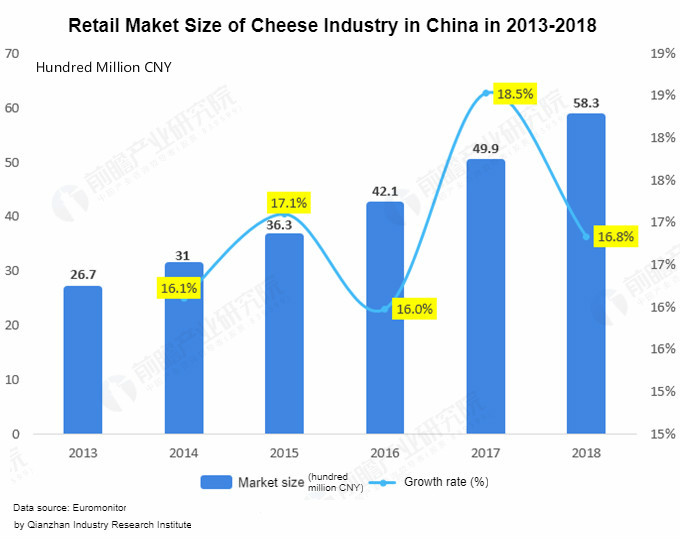
Consumption of cheese product in China was 38.4 thousand tons in 2018, showing that cheese consumption in China was still in its incubation period. According to OECD data, cheese consumption per capita in China was 0.28kg/person in 2018, while that of Japan and Korea, where consumption style was close to China, was 2.32kg/person and 2.91 kg/person.[3] Currently, Chinese cheese market is dominated by overseas brands. Regarding countries of origin, China imported 55 thousand tons of cheese from New Zealand in 2018, which took up 50.7% of imported cheese; 19.7 thousand tons were from Australia, taking up 18.2%. [3]
 Source: Qianzhan Industry Research
2. Future market trend of fermented dairy products
2.1 Yoghurt
2.1.1 Plant-base
Plant-base eating is a highly discussed topic in 2020, both in the dairy industry and the meat industry. The first attempt in plant-based milk was driven by lactose intolerance and milk protein allergy. The consumer group grew from allergy sufferers only to eventually include specific religious believers and vegetarians. Based on special demands of the said groups, plant-based dairy products has started to develop.
According to Euromonitor statistic, the market size of global plant-based yoghurt was 974 million dollars in 2018. West Europe had the largest market scale, followed by the North America. In Asia-pacific, consumer acceptance of plant-based yoghurt was much lower, especially in China, where the market presented vacancy. Judging from CAGR, global CAGR of plant-based yoghurt from 2018 to 2023 is predicted to be 17.8%. The growth speed in North America, Latin America and Europe is relatively high, which reaches 38.5%. Growth speed of Asia-pacific is predicted to be only 3%.
Danone Group is undoubtedly the key player in plant-based yoghurt market globally. It occupies 45% of market shares. Danone's brands Alpro, So Delicious, Silk occupy 22%, 12%, and 9%, respectively. Many plant-based yoghurt arise in EU and America (except for Danone). As summarized by Foodaily, there are three major types of overseas plant-based yoghurt brands:
Traditional dairy giants who expand their business to plant-based yoghurt;
Plant-based milk brands who expand their business to plant-based yoghurt;
Emerging brands targeting plant-based yoghurt. [4]
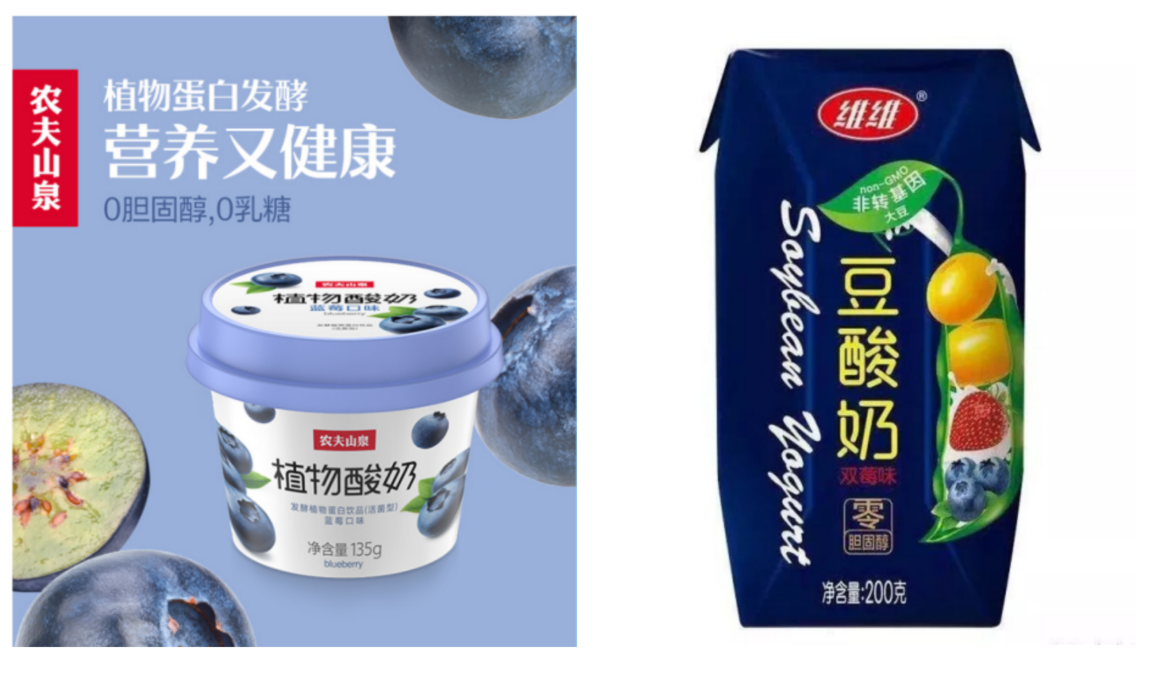
In China, Nongfu Spring took the lead by launching its plant-based yoghurt product in Mar. 2019, which is directly named as Plant yoghurt ("植物酸奶"). This product has three flavors, coconut, nut and Badam. It emphasizes on zero cholesterol, zero lactose and low saturated fat in its market promotion. VV Group ("维维") also launched berry flavored bean yoghurt in 2019.
Left: Nongfu Spring plant yoghurt; Right: VV bean yoghurt | Source: Tmall
2.1.2 Reducing Sugar
In 2019, National Health Commission of the People's Republic of China published Health Oral Action Plan (2019-2025), a Sugar Reduction Special Action was included. The action restricted sales of high-sugar drinks and snacks in schools and kindergartens and encouraged enterprises to make low-sugar and sugar free claims, aiming to improve citizens' oral health. [5]
In recent years, consumers have also raised awareness of reducing sugar in food and beverages for health and weight control. As shown by Innova Market Insights data, the market shares of "low-sugar" has increased by 68.2% from 2014 to 2018, that of "no addition of sugar" has raised by 34.6%.[6] According to Kantar Worldpanel research report, 69% of Chinese consumers said that they were trying sugar-reducing products. Sales amount of low-sugar and sugar free beverages increased by 13% in 2019, much higher than 0.6% of overall beverage growth. [7]
A noteworthy regulatory key point for products of reducing sugar is their labeling. The following GB standards can be referred to for labeling method of low sugar/sugar free products.
GB 7718-2011 General standard for the labeling of prepackaged foods
GB 28050-2011 General rules for nutritional labeling of prepackaged foods
According to quantitative labeling of ingredients in GB 7718-2011, if the labeling of a food places special emphasis on the comparatively-low presence or absence of one or more ingredients or components, the amount of the ingredients or components added or their amount in the final product shall be presented.
As specified in Table C.1 of GB 28050-2011, content claims of sugar free and low sugar should comply with the following requirements:
Item | Content claim | Requirements | Restrictive conditions |
Carbohydrate (sugar) | Sugar free or sugar excluded | ≤ 0.5 g /100 g (solid) or 100 mL (liquid) | |
Low sugar | ≤ 5 g /100 g (solid) or 100 mL (liquid) | ||
Low lactose | Lactose content ≤ 2g/100g (ml) | For dairy products only | |
No lactose | Lactose content ≤ 0.5 g/100g (ml) |
2.1.3 Diversified functions
Intestinal health
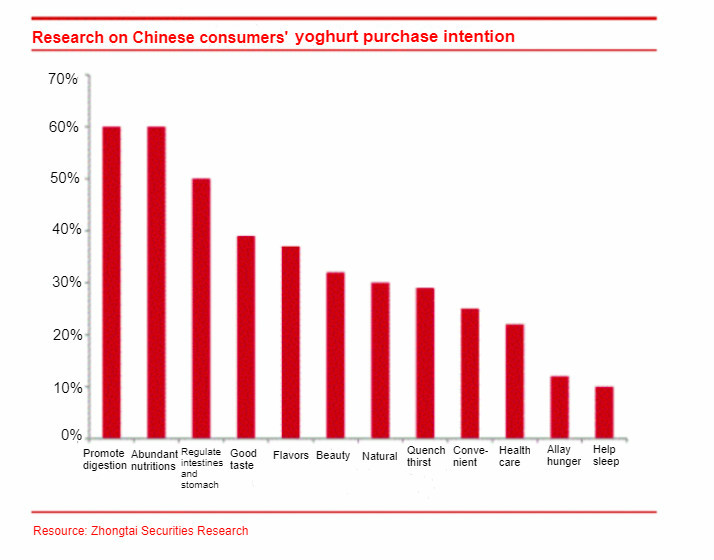
Mintel research shows that most consumers consider yoghurt as a functional food. 80% of interviewees choose improve digestion as their purpose of eating/drinking yoghurt. 2018 Probiotics Industry In-depth Research and Consulting Report of Zhongtai Securities also shows that when choosing yoghurt products, the most attractive selling point for Chinese consumers is good for intestinal health. 60% of consumers purchase yoghurt to promote digestion.[2]
 Source [2]
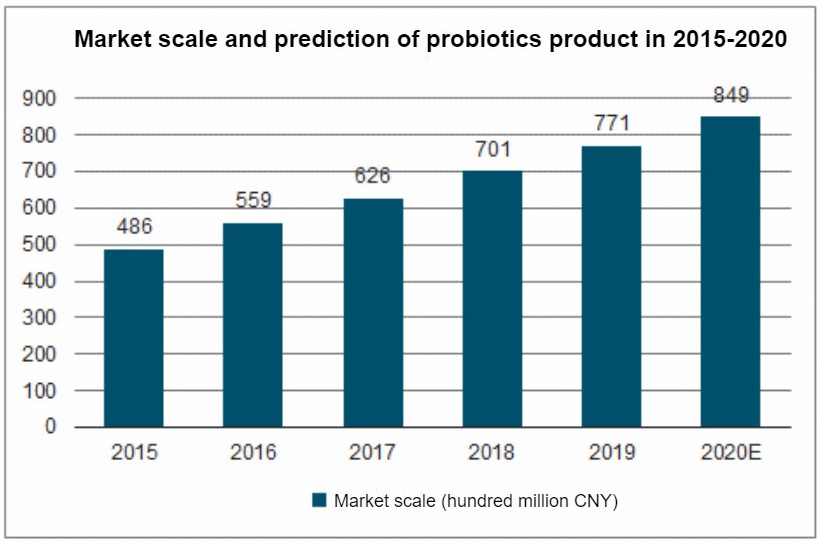
Yoghurt added with probiotics is popular for probiotics' globally recognized function for health. The industry of probiotics started later in China than in Europe and Japan, but it grew faster than the average pace of the globe. The market size of probiotics in China is estimated to be about 850 hundred million CNY in 2020. Fermented dairy product is one of the important driving forces of domestic probiotics industry, which takes up 78.4% of domestic probiotics market.[8]
 Source: chyxx
Other functions
Except for intestinal health, there are yoghurt products promoting with various functions in the market. Wahaha Group lunched a yoghurt product called Miaomian ("妙眠", which means good sleep) that claimed to have the function of improving sleep. Mengniu Tianxing ("恬醒") indicated that it could dispel the effects of alcohol. Jcan series of Bright Dairy implied that its two products could help absorb cadmium in human body and reduce the harm of air pollution (haze) to the human body.
However, claims of functions bring risks to enterprises. According to Chinese regulation, only health food with approved registration can claim functions within a certain range. Among the above mentioned products, Miaomian didn't obtain such registration and was involved in false advertisement accusation for using the slogan "Good sleep, drink Miaomian" as an advertisement of function. The other products didn't directly advertise their functions but still bared risks.
A good example of yoghurt product claiming function is Mengniu's Champion series yoghurt. It obtained health food registration in 2015 and claimed the function of enhance immunity and adjust intestinal flora. The effective period of such registration is five years. For yoghurt products wishing to claim functions, a solution might be to try obtaining health food registration. For health food registration service, please contact [email protected].
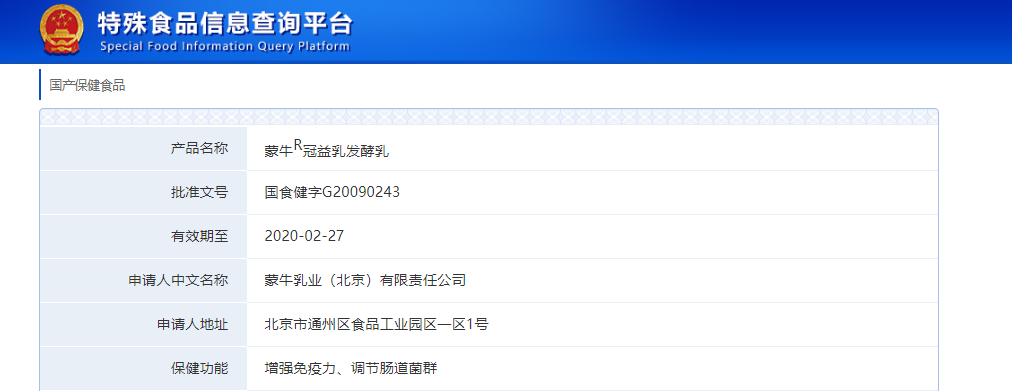 Mengniu Champion's health food registration approval on official website. | Source: Special Food Information Query Platform
2.1.4 From yoghurt to snack
In recent years, consumption trend on yoghurt has been focused on snack yoghurt. Weichuan ("味全") said that diversified yoghurt drinking scenes and consumption upgrade make consumers consider yoghurt as a healthy snack. [9] Yoghurt products sold with separately packed nuts, grains, cereals become popular as a kind of light food after meal or meal replacement. For example, Danone's Activia has a yoghurt product sold together with cereals. It has two flavors, original flavor, raspberry & chia seed flavor. Except for cereal yoghurt, freeze-dried yoghurt block is another form of snack yoghurt, such as Yili's Inspiration yoghurt block.
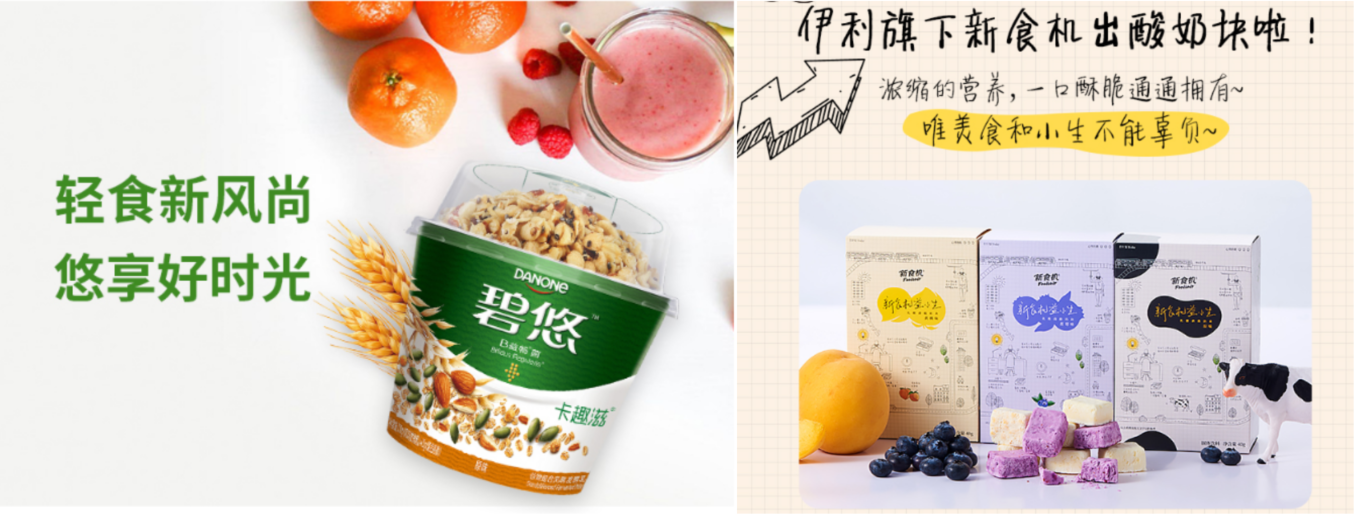
Left: Danone Activia; Right: Yili yoghurt block | Source: Tmall
2.2 Cheese
2.2.1 From cheese to snack
Compared with milk powder and liquid milk products, consumer acceptance of cheese is lower in China because of different dietary habits. Chinese consumers accept processed cheese product better than natural cheese. According to Euromonitor's data, consumption amount of natural cheese and processed cheese account for 15.4% and 84.6% of total cheese consumption in 2018, respectively. Children's cheese takes up 50% of retail cheese consumption.[10]
Milkground is the leading domestic cheese manufacturer. Its revenue of cheese in 2019 and 2020 H1 was 921m CNY and 271m CNY, respectively. Sales income of its core product cheese stick was 496m CNY and 151m CNY in 2019 and 2020 H1, respectively. The product positioning of the cheese stick is children's health snack. Sales volume of the cheese stick increased by 500% in the period of Jan. 2019 to Apr. 2019 compared with the same period of last year.[10] The success of children's cheese stick has laid a solid foundation for adult cheese snack products.
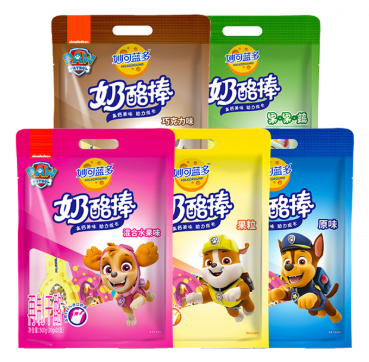 Milkground cheese stick | Source: Milkground
Currently, there are some adult cheese snack products in Chinese market, such as Yili's Pocket Cheese. It targets at adult market by printing adult's snack time on the package. Milkana has a product called "a cup of cheese", it also aims at adult market. The main force of cheese snack consumption will be the middle-class who value food quality and health, and are willing to pay for premium quality for products.
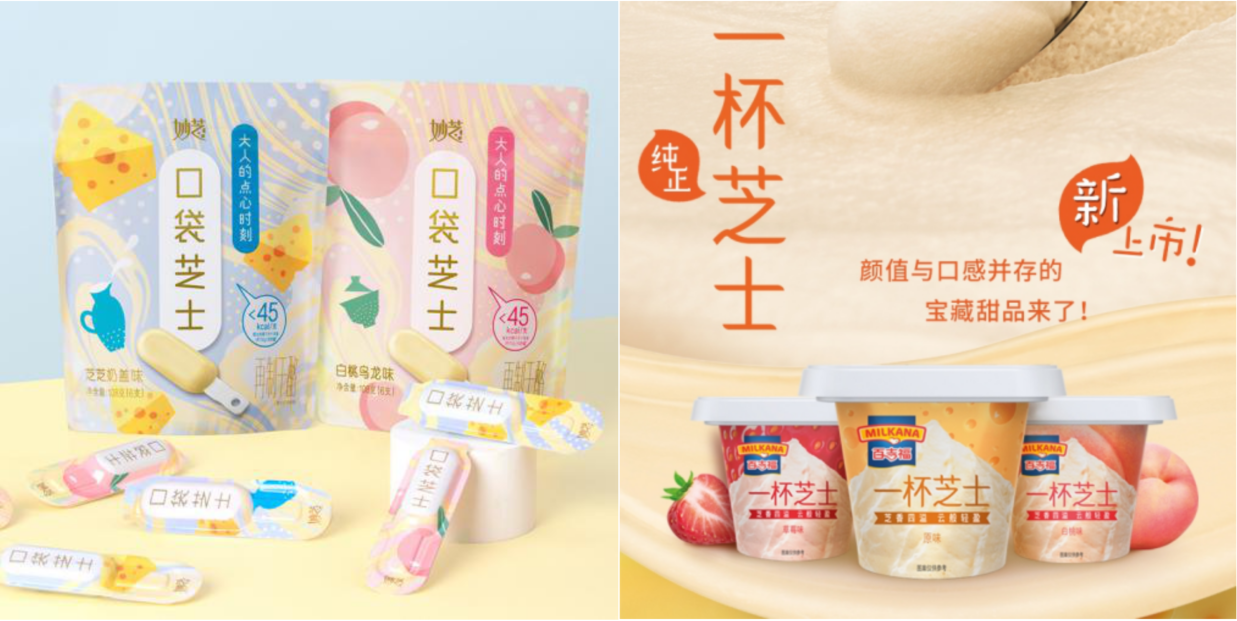 Left: Yili Pocket Cheese; Right: Milkana A Cup of Cheese | Source: Tmall
2.2.2 Cheese for baking
The Covid-19 outbreak in the end of 2019 accidentally boosted Chinese people's interest in baking during lockdown. A solid proof is that online sales of electric oven increased by 62% in the lockdown period (approximately from the 4th week to the 7th week).[11] Miao Zhuqun, vice secretary of China Association of Bakery & Confectionery Industry believes that home baking will be a future trend in China.[12] As an unavoidable ingredient in home baking, cheese will see its opportunity in this potential trend. Besides, the rapid growth of downstream industry of cheese, such as western restaurants, cafés, baked pastries and milk tea drinks, is also driving the development of cheese for baking.
 We provide full-scale global food market entry services (including product registration, ingredient review, regulatory consultation, customized training, market research, branding strategy). Please contact us to discuss how we can help you by