Request a Demo
On October 1, 2025, Japan's Consumer Affairs Agency (CAA) revised the rules on "negative claims" (such as "sugar-free" or "low caffeine") under the Foods with Function Claims (FFC) system. After the revision, negative claims are now permitted on FFC products, similar to regular foods. The amendments were published and came into effect on the same day.
However, one restriction remains: claims emphasizing the presence of ingredients not notified as functional ingredients with CAA are still prohibited. In other words, if a product wants to highlight an ingredient that is not a notified functional ingredient (nor listed in standard nutrients in Appendix 9 of the Food Labeling Standards), such claims are not allowed.
To align with the above-mentioned revision, the CAA also revised the following documents. This article will separately introduce the specific revisions to the labeling of FFC contained within these documents.
Document-Specific Updates on FFC Labeling
1. Food Labeling Standards Q&A
According to CAA's comparative table, a new question (Q277) was added to Chapter 2 (Processed Foods), addressing prohibited claims for FFC products.
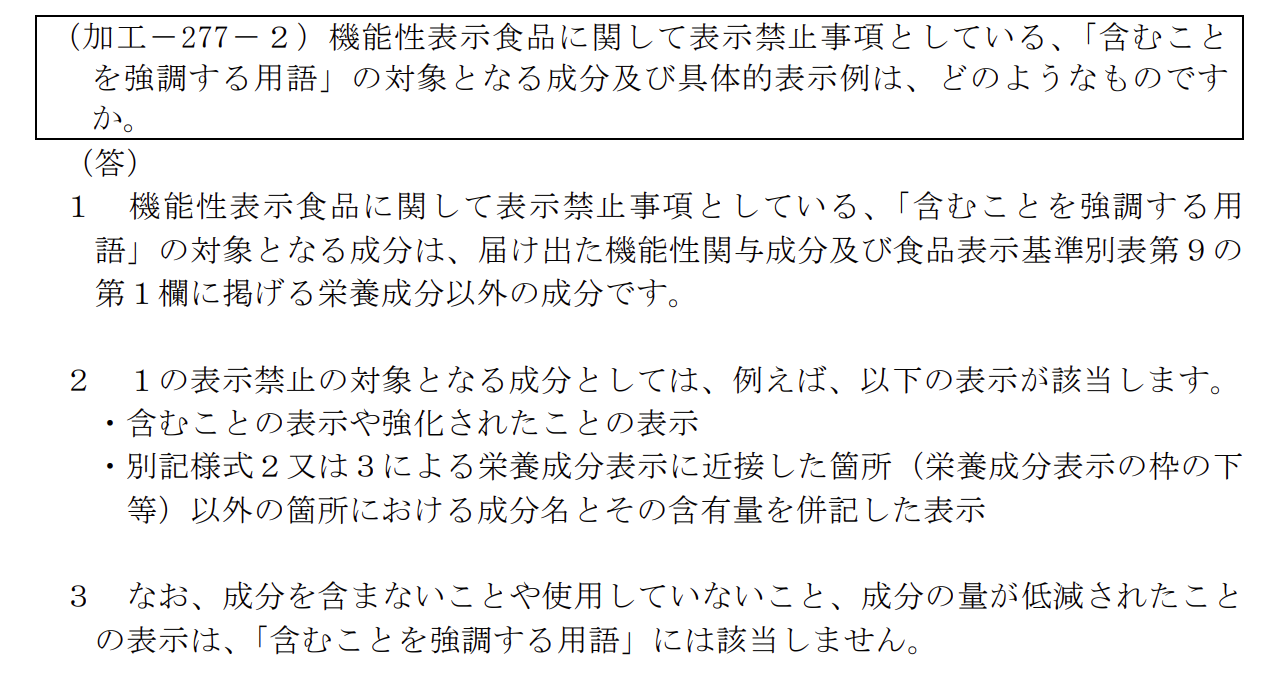
The purpose of these rules is to limit excessive emphasis on non-functional ingredients or non-standard nutrients, avoiding consumer misunderstanding and ensuring the focus remains onthe notified functional ingredients.
1)Allowed to Emphasize:
Functional ingredients notified and reported to CAA (core of FFC)
Standard nutrients listed in Appendix 9 of the Food Labeling Standards (e.g., protein, vitamins)
2)Prohibited to Emphasize:
Any other ingredient not falling under the above two categories (e.g., ingredients with marketing appeal but not notified as functional)
2. Foods with Function Claims Notification Guidelines
The revised guidelines clarify labeling restrictions and considerations for nutrient content in FFC, particularly limiting promotional emphasis on high-risk nutrients.
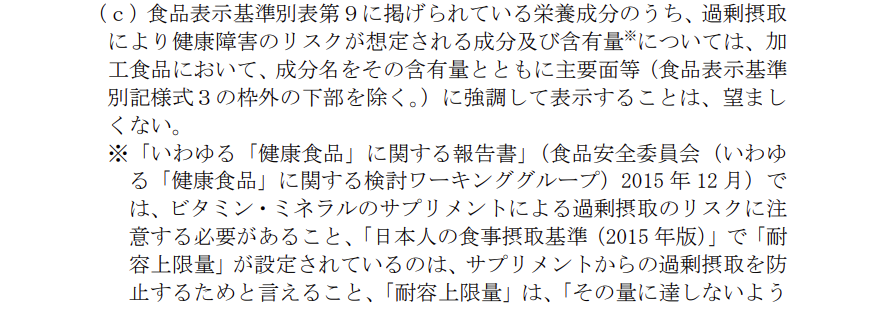
1)Targeted Nutrients:
The nutrients stipulated in the Food Labeling Standards that have a "Tolerable Upper Intake Level (UL)" and could potentially cause health problems if consumed in excess (such as certain vitamins and minerals).
2)Restricted Practices:
Prominently displaying the nutrient name and amount on the main packaging panel.
Regardless of their product form, FFC are expected to be consumed repeatedly and continuously. Continuous, long-term intake can lead to an accumulation of ingredients, and once the level exceeds the "Tolerable Upper Intake Level (UL)", there is a health risk.
Therefore, enterprises must be prudent and reasonable when setting ingredient content levels. Regulators restrict companies from overly publicizing the content of these high-risk ingredients in prominent locations, which is done to prevent consumers from mistakenly believing that "more is better" and subsequently leading to excessive intake.
3. Foods with Function Claims Q&A
Due to frequent inquiries from enterprises, CAA added new Q&A items for Notification Forms No. 5 (Functional Matters) and No. 7 (Self-Inspection Reports). Key points summarized by ChemLinked are as follows:
1)Scope and limitations of quality evaluation tables:
Risk of bias assessment items in research evaluation tables (V-11a/11b) must be fully assessed. Enterprise may supplement details to reflect research design and transparency, but format must be maintained, and unassessed items marked accordingly.
Overall quality evaluation tables (V-13a/13b) are standardized templates and should not be modified except in special cases, ensuring comparability across submissions.
2)Handling of late submissions:
The submission of the notification report for FFC is a statutory obligation for enterprises, and failure to report by the deadline will result in non-compliance.
If the delay is caused by force majeure (such as a natural disaster), enterprises will be unable to independently process the overdue notification within the database and must instead provide explanation and seek resolution by contacting the Consumer Affairs Agency (CAA) through the official inquiry channels.
 We provide full-scale global food market entry services (including product registration, ingredient review, regulatory consultation, customized training, market research, branding strategy). Please contact us to discuss how we can help you by