Request a Demo
On May 28, 2018, China Ministry of Commerce issued an analysis report on consumer goods in China including details on trade conditions and supply and demand balance. The investigation stated that domestic consumers have strong demand for imported products, especially for imported food and baby products, and 10% of enterprises are also willing to increase food import.
For imported food brand is the leading factor influencing enterprise trading preference, especially for health food, edible oil and fresh milk. Over the next year it is expected that more than 10% of relevant enterprise will increase health food imports and 12.4% of enterprise engaged in baby products will increase import of infant formula.
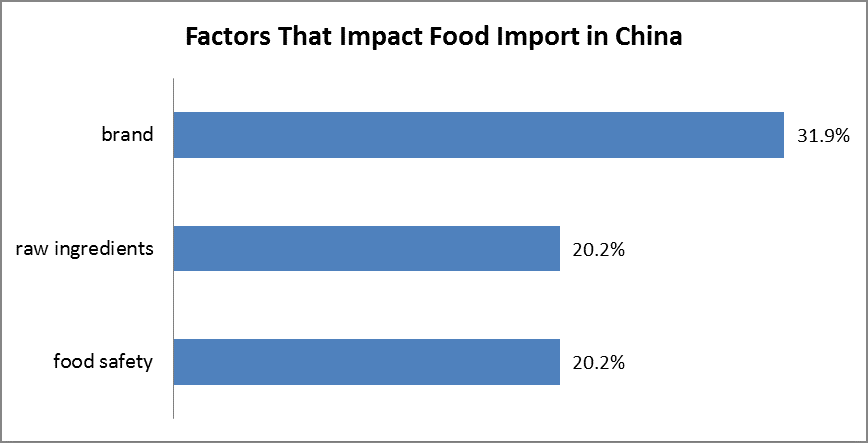
From the perspective of consumers, food is the category that they are most concerned with. Safety is the most important factor shaping consumer preference, followed by price and constituent raw materials/ingredients. In the following half year, 29.7% of consumers would like to purchase more imported food.

There is a booming demand for imported baby products. 78.8% of consumers said the domestic infant formula cannot meet their demands, and 36.9% consumers are willing to increase imported baby products consumption in the following half year.
China has also carried out some measures to encourage consumer goods import. During an executive meeting of the State Council held on May 30th 2018, Premier Li Keqiang announced that the average import tariff on some processed food, such as aquatic product and mineral water, will drop from 15.2% to 6.9% beginning on July 1st 2018, and that of partial pharmaceutical and healthcare products will decrease from 8.4% to 2.9%.
 We provide full-scale global food market entry services (including product registration, ingredient review, regulatory consultation, customized training, market research, branding strategy). Please contact us to discuss how we can help you by