Request a Demo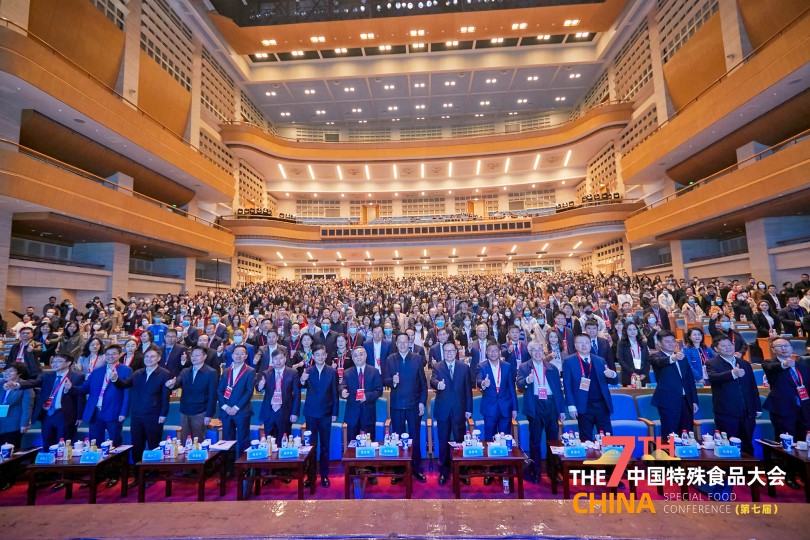
The 7th China Special Food Conference closed on March 25, 2023 in Jinan, Shandong Province after 4 days of heated discussion among officials, experts and enterprises. During the meeting, officials from different authorities shared the current supervision status of the special food industry and the future work plan. For example,
Zhou Shiping from State Administration for Market Regulation (SAMR) shared that SAMR has now signed cooperation agreements with 9 countries to conduct on-site inspection of special foods in overseas countries.
Zhu Lei from China National Center for Food Safety Risk Assessment (CFSA) revealed the food safety national standards that may be released in 2023, including GB2761 National Food Safety Standard Maximum Levels of Mycotoxins in Foods and standards related to bacterial preparations, tea substitute, complementary baby foods, foods for special medical purposes (FSMP), three food contact materials (plastic, ink and metal), plant oil, etc. Additionally, a specialized study on additives in FSMP products will be conducted this year.
As this conference was mainly about special foods, the themes of most sessions focused on health foods, infant formula, and FSMP products. In this article, ChemLinked summarized the key points shared by officials as below.
Officials from SAMR introduced the progress of current work in health food industry.
Regarding the 24 function claims that were previously solicited for public opinions, an official revealed that there were lots of controversy even if they already had many discussions. So, there is no clear publishing timeline for the 24 functional claims, as some experts are concerned that the release of a permitted function claim list may result in the lack of innovation.
But the official gave a clear answer to another question that enterprises care about: protein powder and DHA will be included in the health food raw material directory, and the updated directory will be released soon. Moreover, the official emphasized that the function claim of DHA exceeded the nutrition claim scope of GB 28050, and companies should pay attention to this.
Data regarding health food registration and filing was disclosed. Currently, there are over 11,300 registered health food products and over 13,000 products have been filed in the past 5-6 years. The top three registered health food products in terms of functions are those that enhance immunity (32%), relieve fatigue (13%), and assist in lowering blood lipids (5%).
In terms of the future supervision of health food, SAMR officials revealed that they will adopt a more open attitude towards health food management, shifting from a government-led management approach to one where companies assume more responsibility. This is anticipated to encourage more innovation and the development of new functions. The expert at the Center for Food Evaluation (CFE) of SAMR expounded this shifting by taking the formulation of Detailed Rules on Implementation for Technical Evaluation of New Functions of Health Food (Consultation Draft) as an example.
The Rules establishes a mechanism for evaluating new functions and the registration of health food with new functions. To better stimulate innovation, enterprises are recommended to submit applications for new functions and the registration of health food with new functions at the same time. The two applications will be passed or not passed jointly. The purpose is to prevent applicants from having a new function approved but product registration not approved. What’s worse, if company A which initiatively applies for a new function doesn’t get product registration at the same time, other companies may become free rider, obtaining product registration under the newly approved function proposed by company A, which will frustrate the initiatives.
The Rules also explores the dynamic function claim management of health food with new functions. Function claims should be remarked based on the level of scientific evidence, i.e., "① scientific evidence; ② supporting research evidence; and ③ limited research evidence (non-conclusive evidence) shows that the product has *** function." This method is similar to that of the United States. Experts are considering the possibility of applying such description to labeling.
After releasing new health food products on the market, the registration certificate holder of health food with the new function shall formulate the post-marketing monitoring and evaluation plan; collect data such as product sales, consumer consumption, health evaluation and complaint feedback; carry out comprehensive analysis of consumer groups and health effects; and compile an annual self-examination report and submit it to the evaluation institution every year. These steps are mainly to prove whether the product is truly effective, rather than relying solely on literature data.
Experts and officials from different authorities shared the supervision of infant formula from different perspectives.
Jinan Customs introduced the importation procedure of infant formula and stated that imported infant formula accounts for approximately 30% to 40% of the consumption amount in China.
Jiang Yujun, professor of Northeast Agricultural University and vice president of China Nutrition and Health Food Association, interpreted the Detailed Rules on Examination of Production Permit for Infant and Young Children Formula Milk Powder released in 2022. Jiang revealed that it was very likely that this document might also be applicable to overseas companies but this has not been confirmed yet.
Yu Wei from SAMR introduced that the major task for 2023 is to examine the online sales of special foods and crackdown non-compliance cases such as the sales of illegally repackaged infant formula, the inconsistency between the label displayed on the webpage and the actual product label, false advertising, exaggerated promotion, etc. Companies are advised to conduct self-examination of their E-commerce flagship stores.
In addition, Long Jihong, another expert from SAMR, shared the registration and evaluation work of infant formula.
Long revealed that over 400 recipes have been approved by SAMR (CL notes: as of the conference date, there were approximately 450 formulas). There are still 200 recipes on the review and 300 recipes waiting to be reviewed. The best situation is that if these 500 recipes are approved, the Chinese market will have around 1,000 effective recipes in the future. Before the implementation of the new national standards, the Chinese market had approximately 1,300 to 1,400 recipes according to the historical data.
During the evaluation of recipes, officials will focus on the determination basis of label values, requirements for base powder, requirements for active bacteria addition, stability studies, etc. Besides, it is specially mentioned that the product name shall not infringe any intellectual property rights.
Another important concern is the presence of perchlorate, chloropropanol esters, and chlorate in infant formula. With regards to perchlorate, the National Health Commission (NHC) has an internal control value, which companies are required to use as their internal standard and to monitor raw materials and finished products. For chloropropanol esters, companies are required to limit the amount of chloropropanol esters in ingredients, review the incoming materials, and control the content in the finished products (at least according to EU standards), and retain the test reports as evidence. Since the monitoring data of the level of chloropropanol esters rebounded last year, it is a key element worth attention this year.
Zhai Zhifang from CFE shared the management of infant formula added with probiotics (supervised as bacterial cultures in regulatory perspective). Enterprises shall pay attention to the following elements:
Only bacterial strains listed in the list of “Bacterial Cultures Permitted in Baby Foods" can be used in the production of infant formula. Currently, only Bb12, HN019, Bi-07, HN001, CECT5716, and M-16V have been applied in infant formula that are registered under the new national standards.
For infant formula added with probiotics, companies need to submit the following three types of materials for strain traceability. First, the source description of the bacterial strain raw materials. The evaluation agency most concerns about the manufacturer of bacterial strain. Second, a bacterial strain identification report provided by the applicant or supplier. Identification shall be done within two years before the application date. Third, materials to show the product has met relevant announcements.
When companies are choosing bacterial strain supplier, CFE recommends manufacturers who submitted the application and got the approval to use the bacterial strain as a novel food raw material. Of course, enterprises can choose other companies as the supplier, but more materials need to be submitted, and expert review is generally required to ensure the compliance of bacterial strain, which is relatively troublesome.
For two submitted recipes (of the same stage and from the same applicant), if they have no other difference except the species or the added amount of bacterial strain, they can still not be considered as two different recipes.
It is particularly important to note that the ingredient list can only be labeled with the name of the bacterial strain, without description like “probiotic” and the addition amount of the bacterial strain, since the national standard has already specified the amount of probiotics. Moreover, the entire label should not imply any function claims, such as enhancing intelligence, improving immunity, or protecting the intestinal tract. The use of images that imply probiotics or intestinal tract is not allowed. Descriptions such as "this product contains probiotics" are also prohibited.
An official from SAMR introduced the future trends in supervising the registration of Food for Special Medical Purposes (FSMP) in China:
SAMR is revising the Administrative Measures for Registration of Foods for Special Medical Purpose, and the progress is going smoothly. According to the official, the Measures may be released in the first half of 2023. The revised Measures aim to encourage innovation and shorten the review and approval process, with clinical nutrition needs as the guiding principle. For rare disease categories and clinically urgent FSMP, the Measures will newly include provisions about priority review and approval procedures. There will also be an increase in requirements for on-site inspections, such as the examination of raw material lists. Currently, the national standards for FSMP are not comprehensive enough, so the Measures will enhance the technical requirements, such as osmotic pressure, protein hydrolysis degree, and related detection methods. The penalties for non-compliance will also be appropriately strengthened.
SAMR is considering implementing the classification management for FSMP registration, as it is unreasonable to use the same set of evaluation requirements for simple and complex formulas. Therefore, SAMR is studying to convert relatively simple formulas to a filing management system.
The industry has been concerning about whether clinical trials are necessary for FSMP and how to conduct them. In 2019, SAMR released the clinical technique guidelines for three specific nutritionally complete foods, for tumour patients, diabetes mellitus patients, and nephropathy patients, respectively. After a long and difficult approval process, China approved one nutritionally complete food for tumour patients in 2022. SAMR believes that clinical trials can be challenging to conduct in some circumstances, such as in the case of intractable epilepsy. In such cases, it may be possible to use Chinese domestic and foreign data to exempt clinical trials.
Currently, both the general public and clinical doctors have limited understanding of FSMP. In response, SAMR has released a special blue flower logo for FSMP products, hoping to increase public's awareness and recognition of FSMP products from the labeling perspective.
Another official from SAMR shared some non-compliant situations in the review process of FSMP:
Some formulas clearly do not comply with GB 25596 General Rules of Infant Formula Foods for Special Medical Use and GB 29922 General Rules for Foods for Special Medical Purposes. For instance, some products' names and categories do not align with the national standards, such as the name of “fruit and vegetable solid beverages” and the category of “intestinal microecological regulating formula”. Additionally, the product’s contents do not match with the energy, nutrient, and optional ingredients requirements listed in the standards, such as the use of large amounts of lactose as an auxiliary material carrier in lactose-free formulas. During the review process, SAMR pays more attention to the clinical application and the necessity and rationality of ingredients’ addition into FSMP. For instance, whether it is necessary to add vitamins and dietary fibre to the fat component, and whether to add vitamins in the carbohydrate component.
Some formula designs lack sufficient scientific evidence. For instance, when adding peptides such as fish collagen peptide in the protein component, there may be insufficient evidence regarding the clinical use scenario, trial population and appropriate dosage matching the nutritional needs. Moreover, because of insufficient evidence, it is unsure if nutritionally complete foods have more than 50% high-quality protein, and if the energy supply ratio of fat and carbohydrates is sufficient as single nutrition sources for applicable populations. In principle, SAMR does not recommend adding other ingredients outside the optional ingredients listed in GB29922 to nutritionally complete foods without sufficient scientific and clinical basis.
Some non-compliant situations arise in stability studies. For instance, some applicants may submit a registration application without completing the accelerated test, or apply for a change in shelf life for a registered product without submitting long-term test data to support the proposed change in shelf life.
Some issues arise during on-site inspections, such as inconsistencies between the on-site inspected product formula and the reported formula. In addition, many quality and safety management systems formulated by enterprises cannot be specifically implemented during the dynamic production progress, leading the critical process parameters, such as sterilization temperature, exceeding the control range specified in the process regulations.
Officials from CFSA also presented the progress of current work and future plans:
CFSA acknowledges the significant role of FSMP, which can shorten hospital stays by 5-7 days in average, reduce complications and mortality rates by 10-15%, and save up to $4,000 in hospitalization costs per patient. The Chinese domestic market, with FSMP’s annual growth rate over 30%, has huge potential compared to the global market.
This year, CFSA plans to conduct a specialized study on additives in FSMP products, investigating the current use of additives and providing a basis for further clarification of food additives management in FSMP standards. Additionally, China plans to start the process of making a GB standard for FSMP in liquid form. The revised GB29923 Good Manufacturing Practice for FSMP is expected to be released this year. Besides, China is revising GB25596 and GB29922 and developing product standards for specific nutritionally complete foods for special medical purposes.
Currently GB25596 is open for public opinion, and GB29922 is seeking industry feedback. Three issues are considered in the revision of the GB standards: coordination between the two GB standards, scientificity, and its service function of satisfying clinical needs and enriching the market product offerings.
Regarding the progress in the development of specific nutritionally complete food product standards, 10 out of 13 are in the process of being created in the past few years. Details are as below. Three types began the process of formulation in 2016: specific nutritional complete foods for diabetes mellitus patients, tumour patients, and IBD patients, respectively. The process of formulating nutritional complete food for nephropathy patients was started in 2017. Nutritional complete foods for trauma, infection, surgery, and other stringent conditions began the formulation process in 2018. Formulation of nutritional complete foods for hepatopathy patients, muscle attenuation syndrome patients, and intractable epilepsy patients commenced in 2019. 2020 saw the beginning of the formulation process for nutritional complete food for patients with respiratory disease, and formulation of the product standard for nutritional complete food for patients after obesity and fat reducing surgery was initiated in 2022.
 We provide full-scale global food market entry services (including product registration, ingredient review, regulatory consultation, customized training, market research, branding strategy). Please contact us to discuss how we can help you by