Request a Demo
ChemLinked attended "The 10th China Special Food Conference" from October 23 to 26, 2025. This article introduces the insights of Chinese officials and experts regarding the recently released GB 29922 and GB 17405, as well as a policy analysis of the current health food supervision.
Key points
1. Revisions to GB 29922-2025 General Principles for Foods for Special Medical Purposes
Fang Haiqin, Director of the First Division of Nutrition at the National Center for Food Safety Risk Assessment (CFSA), provided an interpretation of the revised GB 29922-2025 standard, which was issued on September 25, 2025, and will come into effect on September 2, 2027. Read more at China Revamps FSMP Framework with Updated General Principles and New Standard for Tumor Nutrition.
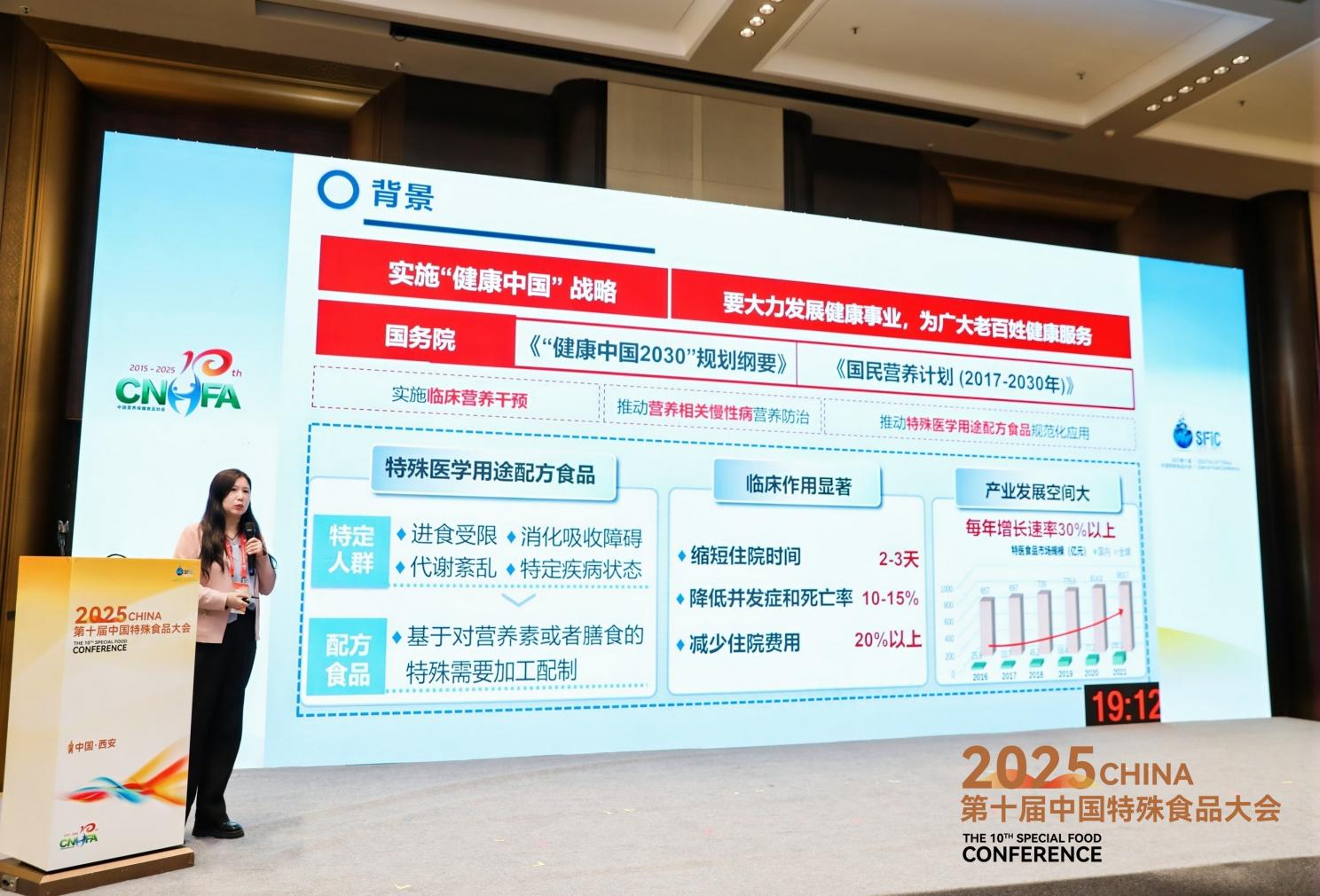
Fang Haiqin, Director of the First Division of Nutrition at the National Center for Food Safety Risk Assessment (CFSA)
According to Fang, the new version of GB 29922 introduces a more systematic and flexible structure for classifying FSMPs, refining definitions while maintaining the three main categories—"nutritionally complete foods," "specific nutritionally complete foods," and "Nutritionally incomplete foods". A notable update is the addition of a new concept of "partially nutritionally modified complete foods", which allows manufacturers to modify the proportion of energy and nutrients (e.g., high-fat or low-carbohydrate formulations) to meet specific metabolic or clinical needs.
The revised standard also provides more detailed technical specifications, including age segmentation for nutritionally complete foods (1–10 years and over 10 years), redefined minimum and maximum nutrient levels, and clearer distinctions between mandatory and optional nutrients. Such adjustments are designed to better reflect scientific evidence and align with international practices.
Fang highlighted that the revision aims to enhance both scientific rigor and industrial feasibility, ensuring that FSMPs can address diverse nutritional needs under medical supervision while promoting innovation.
2. Revisions to GB 17405-2025 Good Manufacturing Practice for Health Food
Wang Gang, Standing Committee Member of the Regulation and Standards Working Committee, China Nutrition and Health Food Association (CNHFA), provided an interpretation of the revised GB 17405-2025 standard, which was issued on September 25, 2025, and will come into effect on September 2, 2026. Read more at China Updates Good Manufacturing Practice for Health Food After 27 Years.
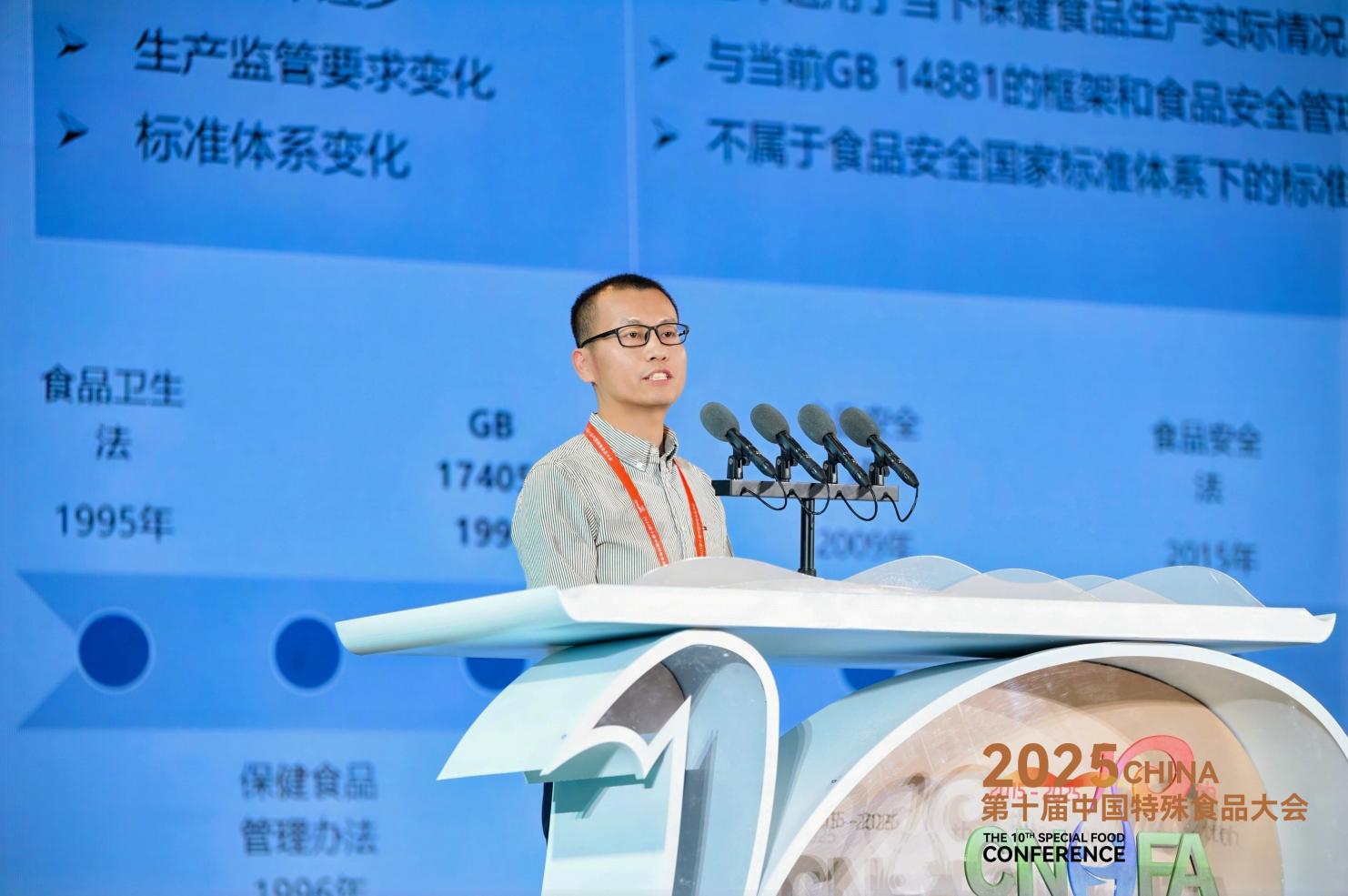
Wang Gang, Standing Committee Member of the Regulation and Standards Working Committee, China Nutrition and Health Food Association (CNHFA)
Wang noted that this is the first full revision of China's health-food GMP in nearly 30 years, aligning the system with the GB 14881 General Hygienic Specification for Food Production. The 1998 version can no longer meet current demands regarding production technology, industry scale, regulatory approaches, and quality system requirements, necessitating a systematic update.
Major updates include a new validation chapter covering key processes, equipment, cleaning, and changeover to control cross-contamination; reorganized chapters on product recall and traceability; and enhanced requirements for raw-material verification, particularly for active or functional ingredients, with other key indicators, such as those related to microorganisms, also being included.
Wang also highlighted that, under the new standard, specific frequencies for environmental indicators are no longer prescribed. Instead, companies are expected to determine appropriate monitoring schedules through their own risk evaluation and validation data.
3. Reform and Reflection on the Functional Evaluation of Health Food in the New Era
Liu Hongyu, Director of the Health Food Function Review Department, China Center for Food Evaluation (CFE) of the State Administration for Market Regulation (SAMR), delivered a keynote speech about health food functional evaluation.
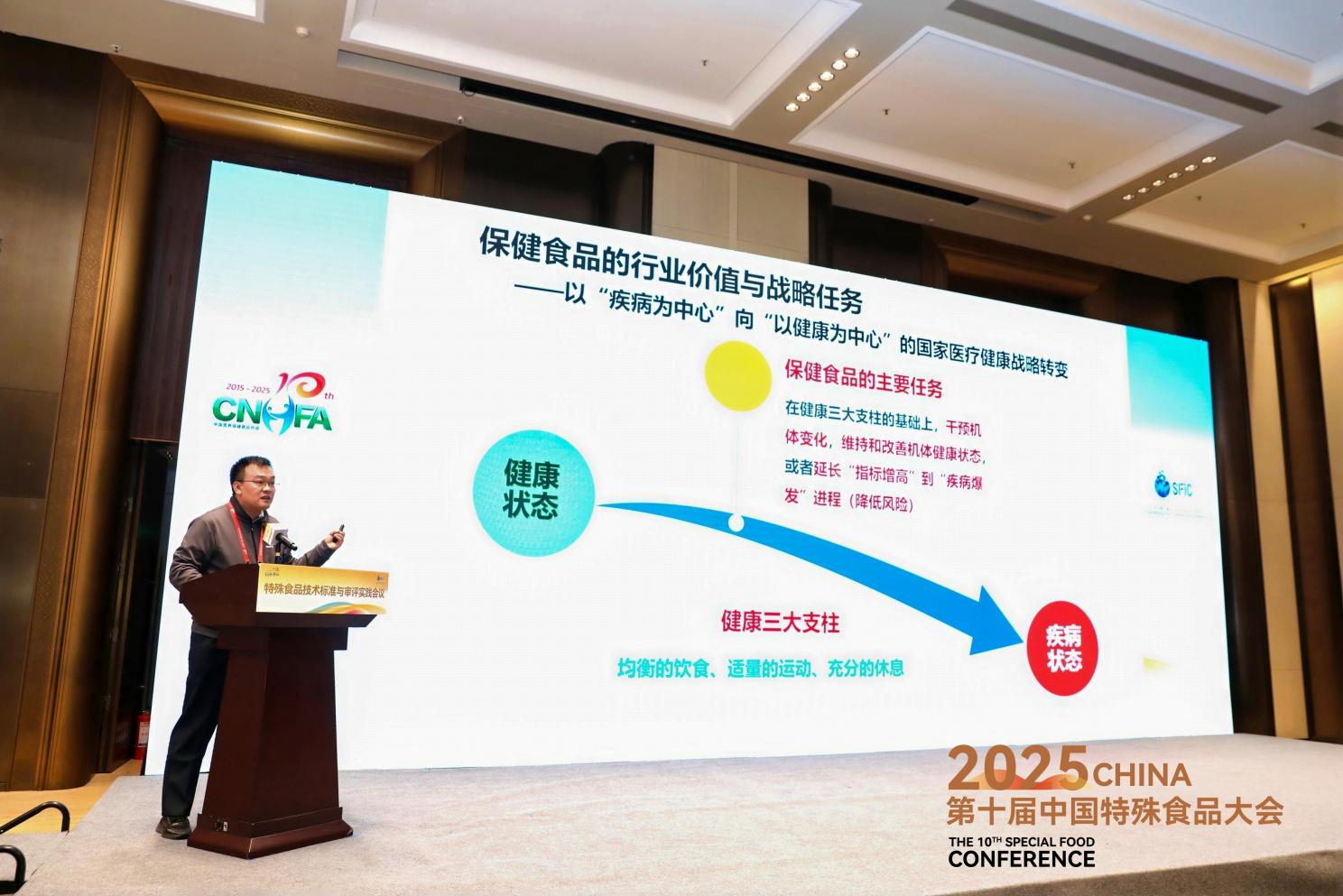
Liu Hongyu, Director of the Health Food Function Review Department, China Center for Food Evaluation (CFE) of the State Administration for Market Regulation (SAMR)
Liu began by reviewing the nearly 30-year history of China's health food regulation since its approval system was first established in 1996, emphasizing that the sector now faces unprecedented challenges amid the growing "functionalization wave" of general foods. This trend, he explained, refers to a market phenomenon where ordinary foods increasingly claim certain physiological benefits or "functions," often without undergoing the rigorous evaluation required for health foods.
He pointed out that this phenomenon has created unfair competition in the marketplace, as ordinary foods and imported products with loosely defined "functional" claims can easily gain visibility online, while approved "Blue Hat" health foods face stricter oversight and higher compliance costs. Liu noted that this imbalance not only affects domestic manufacturers but also poses compliance challenges for international brands seeking market access in China.
The core issue, he emphasized, lies in information asymmetry. Many consumers are unaware that China's health foods must undergo human efficacy evaluation, stability testing, and government review. To restore market order and consumer trust, Liu suggested establishing clearer boundaries between nutrition education-based health claims and marketing-driven claims, along with more transparent and complete product labeling.
In his analysis of broader challenges, Liu further identified the other two key challenges:
Uncertainty in registration timelines, which affects industry confidence;
Rigid evaluation models, which rely on a standardized "pass-or-fail" approval system and therefore fail to differentiate product quality or reflect diverse consumer health needs.
To address these, Liu introduced initiatives such as a national data platform for credible health food evidence, early-stage consultation for new functional applications, and enhanced information disclosure to foster fair competition. He also encouraged international collaboration with research institutes and local governments to accelerate innovation and industrial transformation of health-related resources.
Trusted Data Space - a national data platform for credible health food evidence
The platform aims to collect and manage data from human studies, real-world research, and post-market evaluations, allowing enterprises to register their study protocols, trace research processes, and submit verified results.
Through systematic data review and public disclosure, the platform will enable greater transparency and scientific validation in the health food sector. According to Liu, such a mechanism can help identify reliable products based on credible evidence, encourage fair competition, and gradually eliminate substandard products through market forces. It also reflects China's regulatory shift toward data-driven oversight, promoting trust among regulators, enterprises, and consumers alike.
4. Development Conference on the Linkage of Administrative Law Enforcement and Criminal Justice in Special Food Safety
The session gathered officials from food and drug authorities, experts from the China University of Police, and criminal investigators to discuss enforcement challenges and cooperation mechanisms.
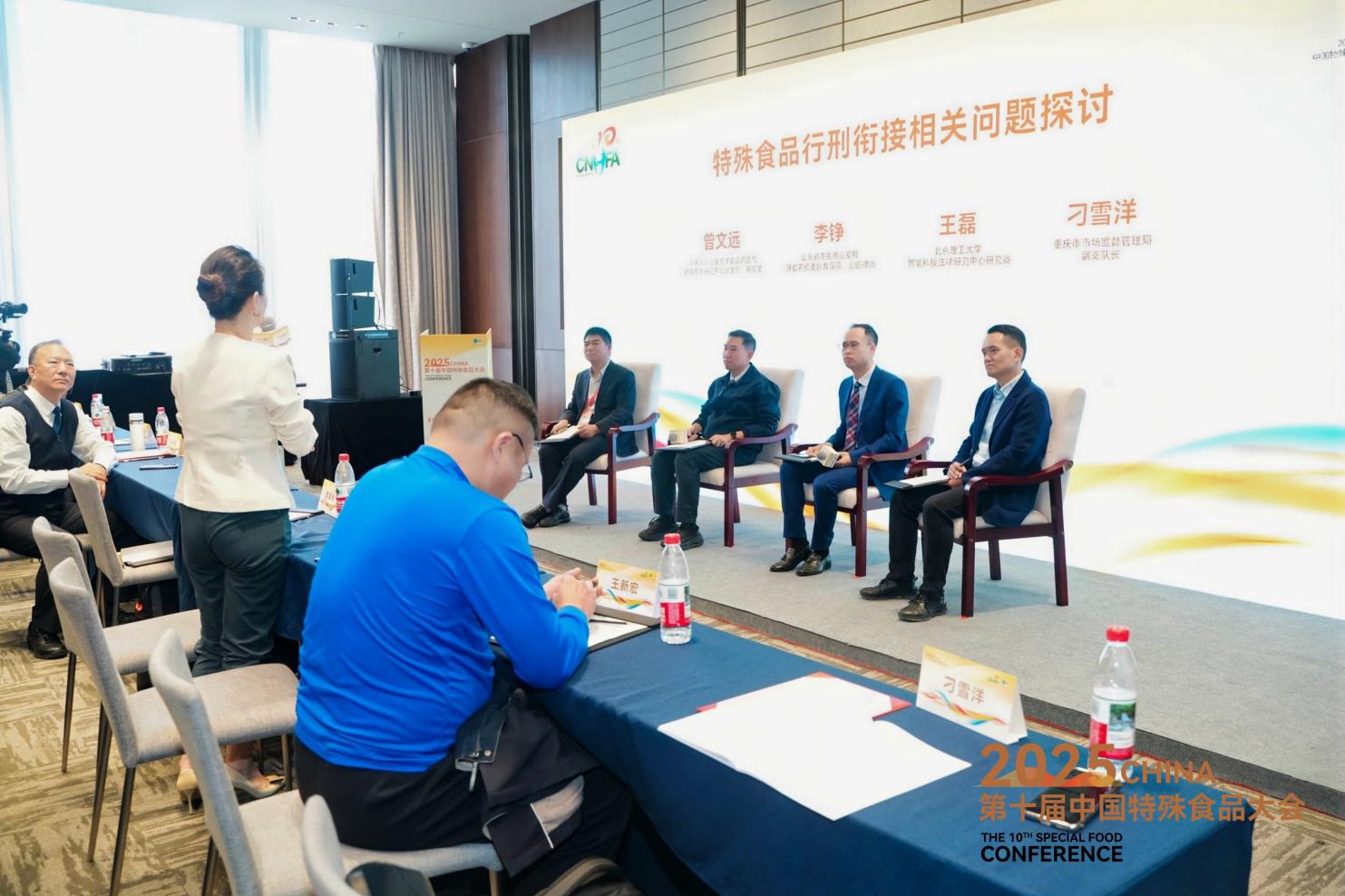
Development Conference on the Linkage of Administrative Law Enforcement and Criminal Justice in Special Food Safety
Zeng Wenyuan, Deputy Director of the Research Center for Food, Drug, and Environmental Crime at People's Public Security University of China, reviewed major compliance risks across three categories:
Health foods: violations mainly involve ordinary foods falsely marketed as health foods, false or exaggerated claims, and illegal addition of drug ingredients. The elderly are the most affected group.
Infant formula: while the sampling pass rate exceeds 99%, issues such as heavy metal contamination, nutrient deviation, and labeling irregularities persist.
Foods for special medical purposes (FSMPs): registered products maintain a 99% compliance rate, but illegal activities such as unlicensed business operations and misbranding of ordinary foods as FSMPs persist.
The session also summarized three major categories of special food crimes:
Counterfeit and Substandard Products: expired goods, unauthorized use of trademarks, or substandard manufacturing.
False Advertising and Fraud: deceptive marketing through seminars or online lectures, often targeting the elderly.
Illegal Adulteration: the most severe category, involving the addition of toxic or prohibited drug ingredients such as sildenafil and phentermine, accounting for over 80% of all health food-related criminal cases.
 We provide full-scale global food market entry services (including product registration, ingredient review, regulatory consultation, customized training, market research, branding strategy). Please contact us to discuss how we can help you by