Request a Demo

On March 10, 2025, Health and Human Services (HHS) Secretary Robert F. Kennedy Jr. directed the Food and Drug Administration (FDA) to explore rulemaking to eliminate the self-affirmed "Generally Recognized As Safe" (GRAS) pathway. For decades, food manufacturers have been able to self-determine the safety of new ingredients without notifying the FDA, raising concerns about transparency and oversight. The proposed change would require all enterprises introducing new food ingredients to publicly notify the FDA and provide supporting safety data before marketing their products.
Generally Recognized As Safe (GRAS)
"GRAS" is an acronym for the phrase Generally Recognized As Safe. According to the Federal Food, Drug, and Cosmetic Act, any substance added to food is considered a food additive and requires FDA review before use. However, if experts widely agree that a substance is proven safe for its intended use, it can be classified as GRAS and bypass the review process. Some ingredients may also be exempt from this rule based on specific legal exceptions.
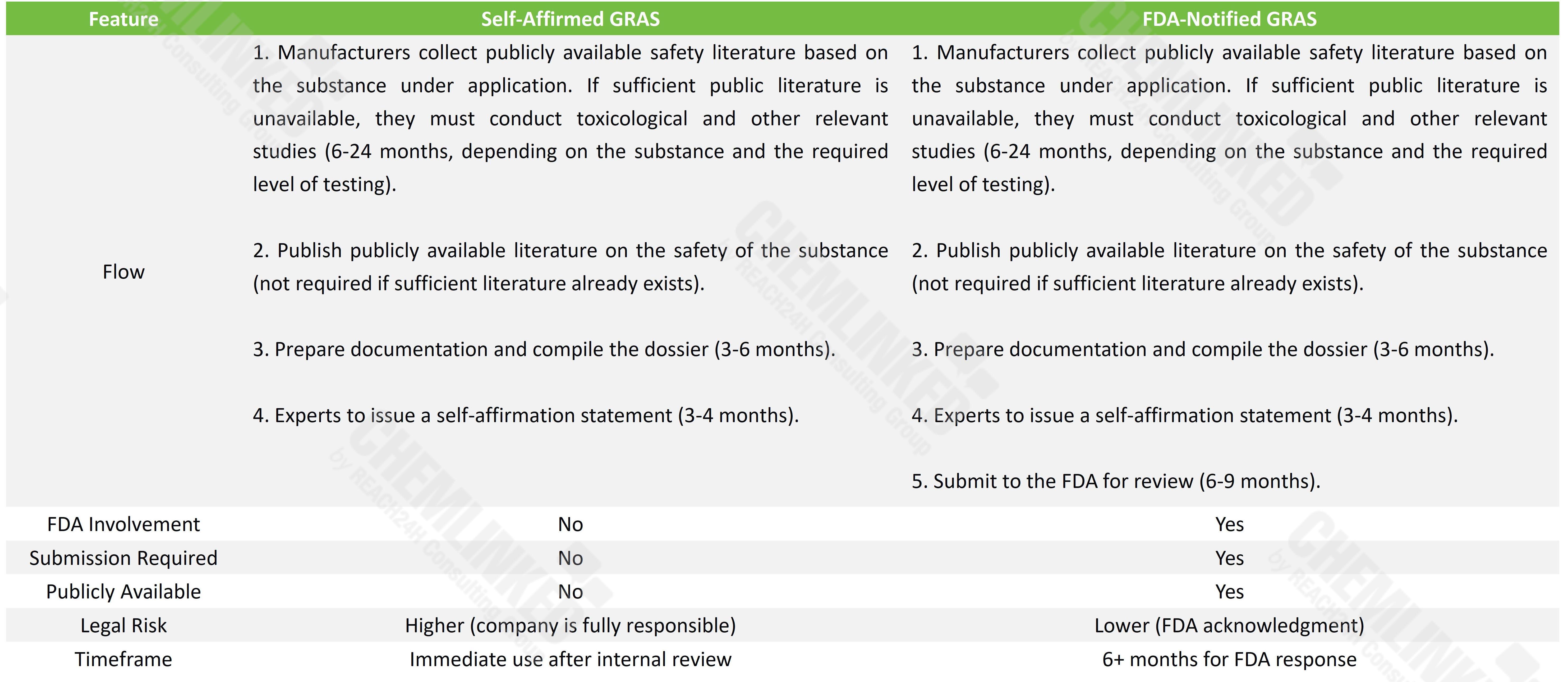
Therefore, there are currently two ways to obtain GRAS status:
Self-Affirmed GRAS, where enterprises determine on their own that a substance is safe without notifying the FDA, and
FDA-Notified GRAS, where enterprises submit a GRAS notice to the FDA for review and public record.
As of March 13, 2025, a total of 1219 substances have been published on the official website of FDA GRAS Notice, of which 87 are from China's Nnotifier, 84 are from Japan's notifier, and 32 are from Korea's notifier.
Potential Impacts of Eliminating Self-Affirmed GRAS
The removal of the self-affirmed GRAS pathway marks a significant shift in the U.S. food regulatory landscape. While it aims to enhance oversight and consumer safety, it could also introduce new challenges for businesses, including increased costs, longer review timelines, and regulatory uncertainties.
1. Potential Exposure of Proprietary Information
Enterprises must submit safety data to FDA before using new ingredients, ensuring greater transparency. Meanwhile, businesses will be required to disclose more safety details, potentially exposing proprietary information.
2. Slower Innovation & Potential Product Launch Delays
Startups developing fermentation-based and cultured foods may face higher regulatory hurdles, potentially slowing down innovation. Without self-affirmed GRAS, submitting a GRAS notice is the only method for a food additive to be recognized as GRAS. If companies wish to get a response to the GRAS notice prior to marketing, it could extend the evaluation process from months to years, causing potential delays in market entry.
3. Higher Compliance Costs for Businesses
Stricter regulatory requirements may necessitate additional toxicology studies and safety evaluations. This would significantly increase compliance costs, particularly for small and medium-sized enterprises that rely on self-affirmed GRAS for faster, cost-effective product launches.
4. Increased FDA Workload & Potential Backlogs
FDA's limited resources and existing staff shortages could lead to a backlog in reviewing GRAS applications. Currently, the FDA can only evaluate about 75 GRAS applications per year, and the review period is 6-12 months
5. Unclear Impact on Existing Self-Affirmed GRAS Products
It remains uncertain whether products already on the market under self-affirmed GRAS will require re-evaluation. Enterprises should prepare for potential transition periods or retroactive compliance requirements.
6. Limited Impact on Certain Industries
Industries like cultured meat, which are already subject to dual regulation by the FDA and USDA, may experience minimal disruption. However, other sectors relying on self-affirmed GRAS for ingredient review may need to rethink their regulatory strategies.
ChemLinked Suggestions
To prepare for this proposal, enterprises should proactively assess their ingredient compliance and regulatory strategies. This includes reviewing the status of previously self-affirmed GRAS ingredients, engaging with suppliers to verify safety data, and staying informed on evolving regulatory expectations. Strengthening internal documentation and risk assessment processes may also help ensure a smoother transition if new requirements are introduced.
Given the ongoing discussions on regulatory changes, enterprises are encouraged to closely monitor FDA rulemaking, participate in public comment periods, and track state-level ingredient restrictions. Taking early steps to enhance transparency and compliance readiness will better position businesses to adapt to potential shifts in the regulatory landscape.
Our Compliance Services
We provide professional consulting and support for food companies navigating the evolving GRAS framework, including:
GRAS Certification Consulting & Training: Expert guidance on GRAS regulations and compliance strategies.
Self-Affirmed GRAS: Assistance in conducting safety assessments and organizing expert panel reviews for self-affirmed GRAS determinations.
FDA Notified GRAS: Comprehensive support for preparing and submitting GRAS notifications to the FDA.
For more information on how we can support your regulatory needs, feel free to contact us.
 We provide full-scale global food market entry services (including product registration, ingredient review, regulatory consultation, customized training, market research, branding strategy). Please contact us to discuss how we can help you by