Request a Demo
An Overview of Food Importation Data in China
According to the WTO, China became the largest import market of foods and agricultural products in 2011. In 2017, China imported 1.429 million batches (7.9% YOY increase), 53.481 million tons (35.5% YOY increase), 58.28 billion dollars of foods (25% YOY increase) from 187 exporting countries or regions. Over the past five years (from 2013~2017) the average annual growth rate of imported foods was 5.7%.
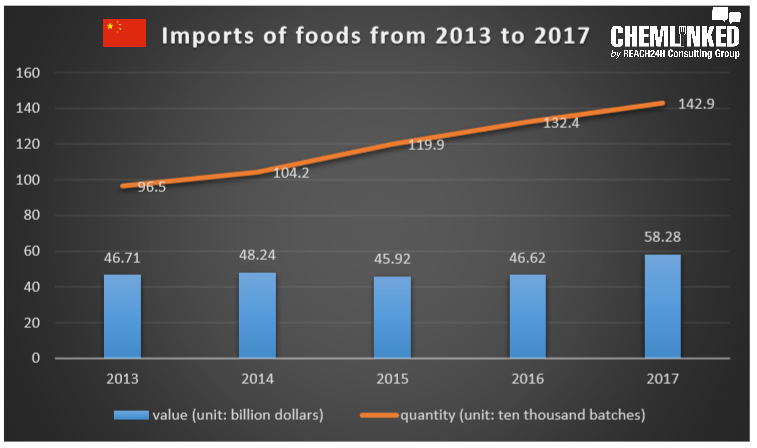
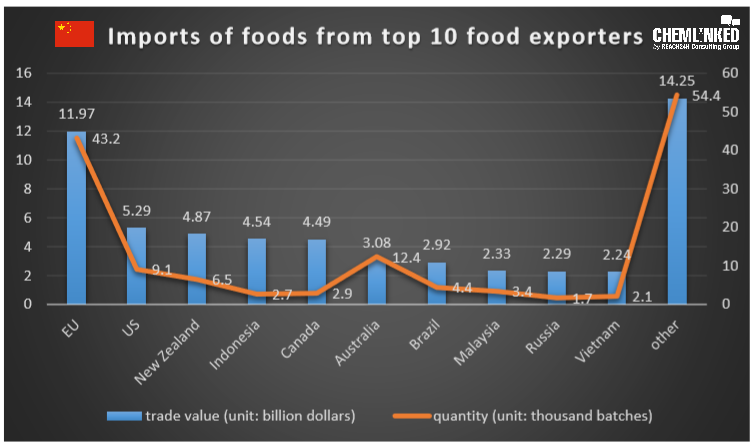
From a regional perspective, 75.5% of imports come from China’s top ten food trade partners, which are EU, US, New Zealand, Indonesia, Canada, Australia, Brazil, Malaysia, Russia and Vietnam, amounting to 44.03 billion dollars.
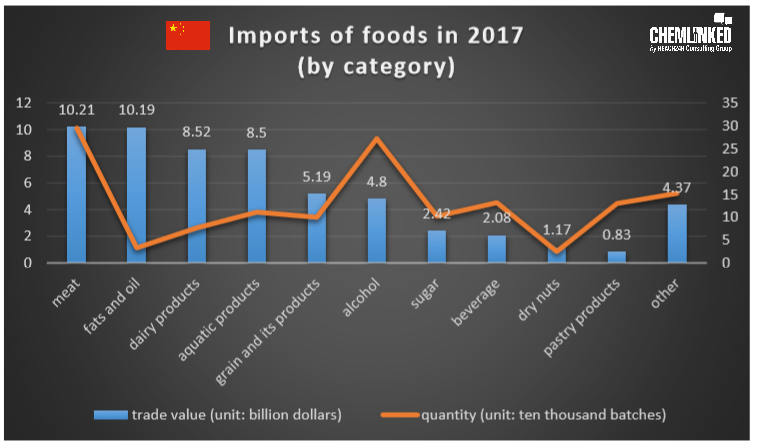
China imports a significant percentage of its staple edible agricultural products and edible animal products. Top imported food categories include meat, fats and oil, dairy products, aquatic products, grain and its products, alcohol, sugar, beverage, dry nuts, pastry products which accounted for 53.91 billion dollars or some 92.5%, of the total value of all imports.
Major imported foods
No.1 Dairy products
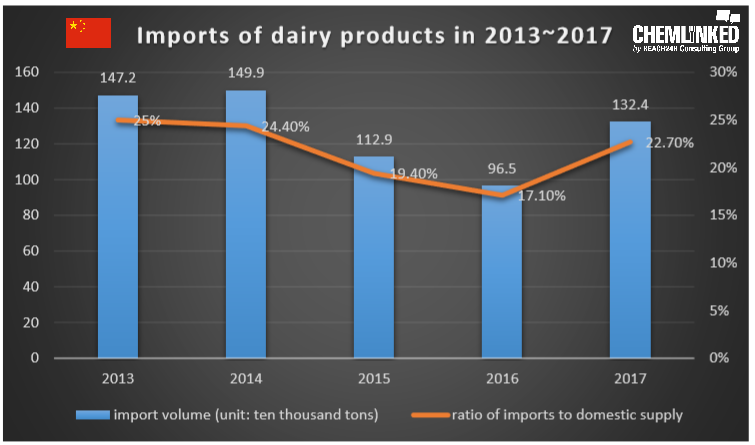
The total value of imported milk powder hit a high point in 2014 has declined since then. In 2017, China imported 13.24 million tons of milk powder (including whey powder) which made up 22.7% of domestic supply. The quantity of other dairy products (excluding milk powder) was 1.004 million tons. Among the 32 dairy exporters, EU, New Zealand and Australia were top 3 in trade value.
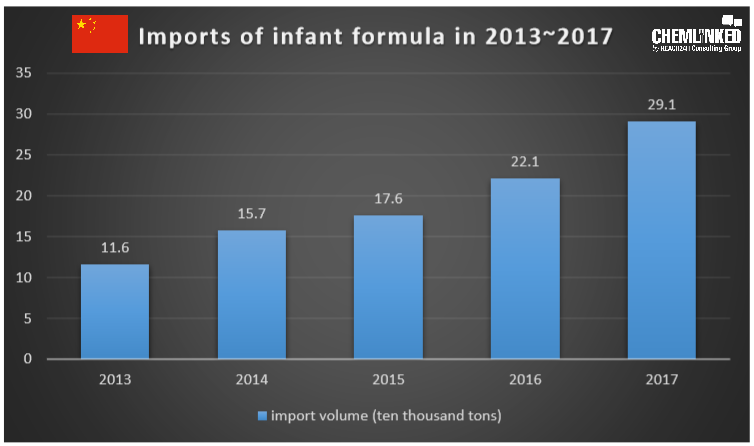
China’s infant formula imports continues to increase in both volume and value. 291 thousand tons of infant formula were imported in 2017, up 31.7% year on year. The top 3 trade partners were EU, New Zealand and Australia.
No.2 Edible vegetable oil
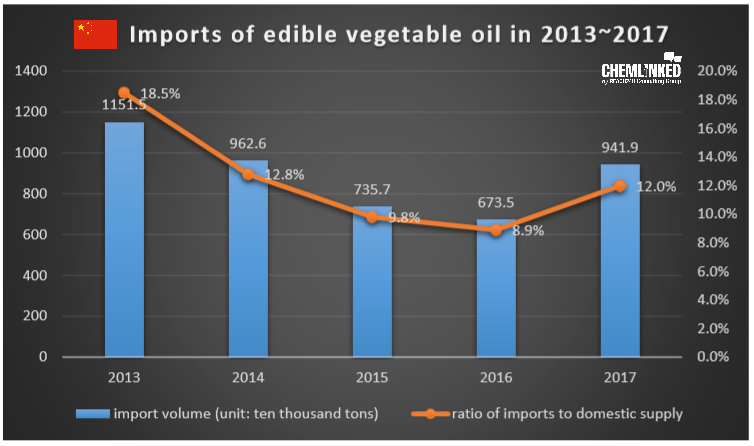
Imports of edible vegetable oil constituted an important source of domestic supply. In 2017, China imported 9.419 million tons which accounted for 12% of domestic supply. They are purchased from 62 countries with Indonesia, Malaysia and Canada taking the top 3 slots.
No.3 Meat
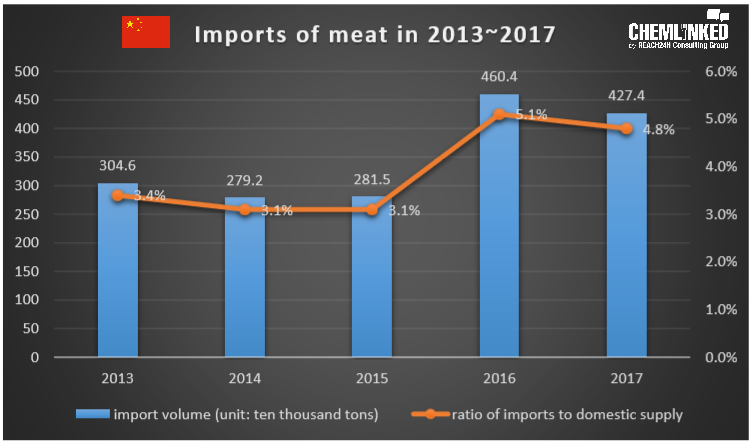
In 2017, China imported 4.274 million tons of meat, down by 7.2% year on year. It accounted for 4.8% of domestic supply. EU, Brazil and US stood out amongst China’s 24 most significant meat trade partners. Imported pork and its products, beef and its products, mutton and its products, poultry and its products each made up 4.7%, 9.5%, 5.5% and 2.4% of domestic supply.
No. 4 Aquatic products
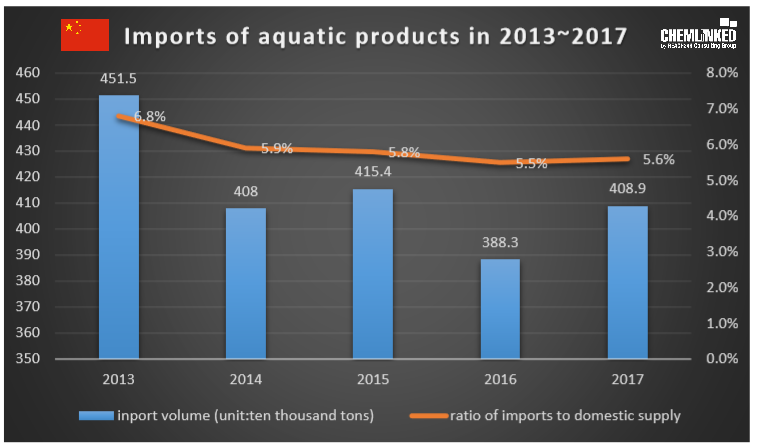
4.089 million tons of aquatic products were imported from 78 countries or regions in 2017, accounting for 5.6% of domestic aquatic product supply. Russia, US and Norway were top 3 exporters. Over the last 5 years the volume of aquatic product imports has steadily declined.
Compliance Challenges and Customs Rejections
Over the past year, a total of 6631 batches and $69.537 million worth of overseas foods were rejected by Chinese customs authorities.
All food categories were implicated and the top 10 were: beverage, pastry food, sugar, grain and its products, alcohol, meat, aquatic products, tea, specialty foods, accounting for 86.1% of total non-compliant batches.
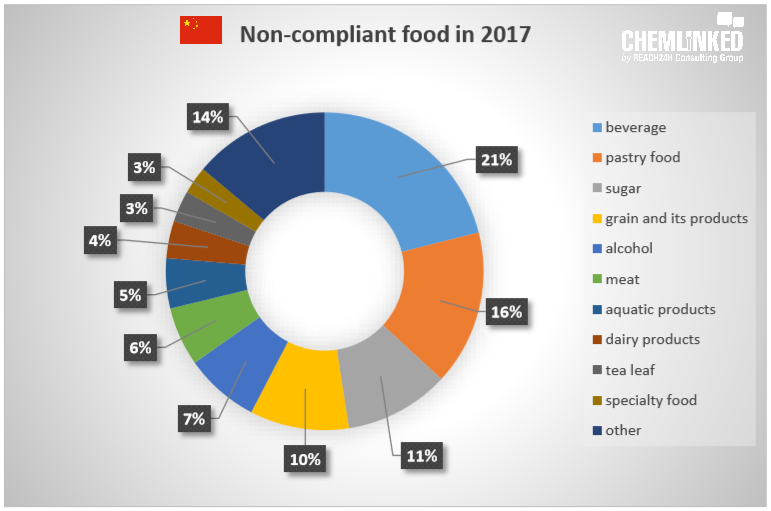
These products were mainly imported from EU, Japan, Taiwan, ASEAN, US, South Korea, Australia, Hong Kong, Russia and Canada, accounting for 88.1% of all non-compliant imports.
Food Rejections by Region and Reason:
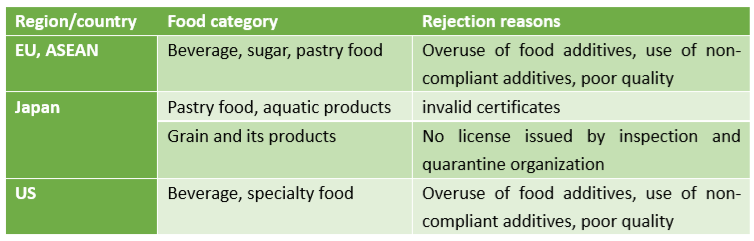 Seen from a global perspective, top 10 problems of 98.1% rejected food imports in 2017 were:
Quality (22.9 %)
Certificates (18.6 %)
Labeling (16.0 %)
Food additives use (14.6 %)
Microbial contamination (6.3 %)
Package (6.1 %)
Inspection and quarantine license (5.6 %)
Mismatch of product and license (4.6 %)
Pollutants (1.8 %)
Nutrients (1.5 %)
Other (1.9 %)
China has made considerable efforts to establish a comprehensive food safety supervision system in which every link of the imported food supply chain is monitored. China has increased the stringency of customs inspections over infant formula, vegetable oil, rice, casing etc. In addition to this China is developing a state of the art system of regulatory checks and balances, updating its national standards and implementing nationwide traceability in an effort to increase the safety of foods circulating in China.
 We provide full-scale global food market entry services (including product registration, ingredient review, regulatory consultation, customized training, market research, branding strategy). Please contact us to discuss how we can help you by