Request a Demo
According to official government data [1], in 2017 the number of cases involving violations of China’s advertisement rules was 32150. Illegal advertisement of food accounted for 9.6% of all violations and was the sector with the highest number of violations. In China, there are 59 laws and regulations supervising advertisements and apply to numerous sectors. The most important legal reference is China's "Advertising Law" [2] which was updated in 2015. The advertising law affects advertising of foods across numerous categories including health food advertisement. This article will interpret this regulation from the following 5 aspects:
Legal Liability Primarily Shouldered by Advertisers
"Advertiser" refers to a natural person, legal person, or other organization that designs, produces and publishes advertisements or an entity that entrusts another party to promote its goods or services. The Advertising Law stipulates that the advertiser should bear the major responsibility and legal liability. However certain cases are more complicated, particularly cases where a domestic distributor of an overseas manufacturer violates the law in China. In this instance, from a legal perspective, the overseas food manufacturers shall be responsible for the violation. However, in reality, the local authority has no right to punish an overseas enterprise due to jurisdiction limitations so generally it is left to customs authorities or market regulators to impose some sort of restrictions on future importation or market circulation.
False advertising
Any false or misleading contents are strictly forbidden, and article 28 of the “Advertising Law” specified the cases that are regarded as false advertising, which includes:
The commodity or service does not exist
The product’s quality, specification, ingredients, price and etc. are inconsistent with the reality.
Use of fake or falsified scientific research, survey results etc.
False or exaggerated efficacy claims
Others
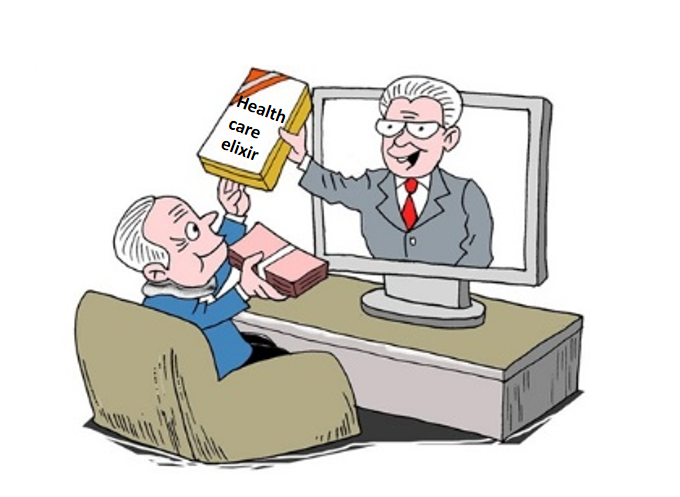 The most common violations are those in which there are inconsistencies between the advertised product and the actual product. For instance, a protein polypeptide product produced by Heilongjiang Fukang Biotech Company declares that it can prevent from cancer, high blood pressure, coronary heart disease, asthma and etc., however, diseases prevention function of polypeptide was not recognized by competent authority at all.
Additionally, this violation is closely associated with the products’ regulatory compliance, that is, if the product’s key information such as the shelf life and production system is inconsistent with the reality, its advertisement will be considered illegal, but the food product is also considered non-compliant and will also be subject to a series of supervision measures according to Food Safety Law and Product Quality Law.
Prohibition
The prohibited contents stipulated in “Advertising Law” could be summarized into 5 aspects:
1. Contents involving state image, state secret and public interest
National flag, national anthem, national emblem, army flag and etc.
Use the name or image of state authority or its staff member
2. Absolute terminology
“national level”, “the superior”, “the best” and etc.
3. Personal rights Infringement
4. Harm public order and good custom
disturbing the public order or departing from a good social climate
containing any obscene, pornographic, gambling, superstitious, horrible, or violent content
containing any ethnically, racially, religiously, or sexually discriminatory content
5. Disrupting environment, resources, heritages protection and others
Use of absolute terminology represents the majority of illegal advertisements involving prohibited content. Enterprise cannot use any superlatives or equivalent meaning to describe their products. For example, an enterprise cannot say “the most premium dried lychee in China”, “the most high-end chestnut in the world” and etc. [3]. However, the judgment of absolute terminology should be determined under specific context [4]:
Objective description
The description is true and has been certified/evaluated by professional institutions or social organizations, such as some awards or titles
Does not harm competitors’ interests
The wording does not detract or devalue competitors. However it is acceptable to use terminology relating to internal update, latest iteration of product e.g. “the latest product”, “the first”.
The classification system that has been widely accepted by industry
For example, green tea could be promoted as “super grade” as this classification system is stipulated in the national food safety standard.
Endorsement
According to the “Adverting Law”, the endorser cannot recommend a product or service that they did not use before (e.g. a male celebrity advertised for sanitary pad product), and any natural person, legal person or other organization could not be an endorser in a 3 years period following illegal activities involving false advertisement.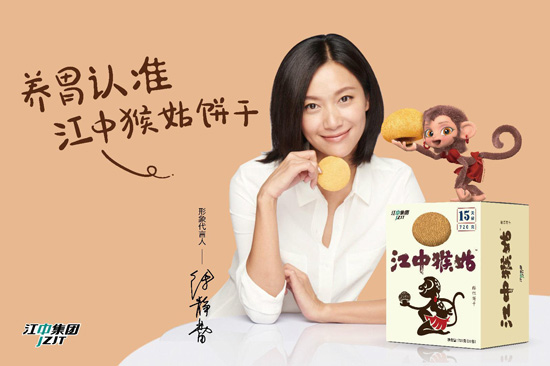 Additionally, enterprises shall not choose children who are under 10 years old for advertising. Australian infant formula manufacturer A2 was once penalized for violating this requirement (click here for the detailed)
Special requirements for health food advertising
 The updated “Advertising Law” includes requirements for health food advertising and the following items should be strictly prohibited from:
any assertion or assurance on efficacy or safety
any statement involving disease prevention or treatment functions
any claim or implicit indication that the advertised product is necessary for maintaining health
any comparison with drugs or any other dietary supplements
any recommendation or certification by an endorser
any other information prohibited by any law or administrative regulation
On Mar. 2019, China SAMR consulted on “Administrative Measures for Advertisement of Drug, Medical Devices, Health Food, and Food for Special Medical Purposes (FSMP)”, which stipulates that health food advertisement must undergo inspection prior to public issuance and specifies review standard for health food advertising (click here for the detailed).
Special requirements for infant formula
Consistent with infant formula labeling requirements, it is not allowed to indicate that breast milk could be wholly or partially substituted by infant formula products in the advertisement.
What if an advertisement violates multiple rules?
China’s advertising law sits at the top of an extensive legal hierarchy China’s administrators use to manage advertising in China. The law contains multiple articles stipulating multiple prohibited advertising scenarios/activities/terminology. In cases where a single advertisement violates multiple provisions in the “Advertising Law”, there is no clear reference or legal hierarchy for the judgment because “Advertising Law” belong to administrative law in China, and often these situations are dealt with on a case by case basis by local government. Under such circumstance, enterprises are suggested to make further negotiation with the government so as to minimize losses.
 We provide full-scale global food market entry services (including product registration, ingredient review, regulatory consultation, customized training, market research, branding strategy). Please contact us to discuss how we can help you by