Request a Demo
China's Two Sessions are the biggest political meetings of the year—the Chinese People's Political Consultative Conference (CPPCC) and the National People's Congress (NPC). It is an important window for people all over the world to see into and understand China's policies. Let's see what happened in China's two sessions in 2019 and how this will impact China's food sector.
KEYNOTES OF THE GOVERNMENT REPORT: BETTER BUSINESS ENVIRONMENT
According to the Report on the Work of the Government [1] delivered by Premier Li Keqiang at the opening meeting of the second session of the 13th National People's Congress, there are four major tasks which will impact the food sector in 2019:
Tax cuts
 In this year China will implement both general-benefit and structural tax cuts, focusing primarily on reducing tax burdens in manufacturing and on small and micro businesses. For example, VAT reform will be deepened.
On March 20, 2019, the Ministry of Finance released the No.39 Notice [2] and publicized the details to align with the reform of VAT. For imported goods, the rate of VAT will be reduced from 16% to 13%, including the food and beverage industry (also applied to products imported through CBEC), which will take effect on April 1st, 2019.
Administrative streamlining
In 2019, China intends to simplify administrative processes in 2 ways:
All business operation permits will be separated from the business license to make it quicker and easier for companies to get a license and start operating as soon as possible.
Administrative deregulation will focus on the principle of removing superfluous red tape and unnecessary bureaucracy. When approval is required, the procedures and steps involved will be simplified. This will allow companies more time to do business and less time waiting for administrative approvals.
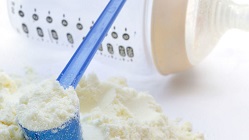 With regard to this point, NPC deputy Hu Jiqiang, the director of Conba Group expressed his opinion about the slow registration progress of infant formula powder. At the end of 2018, there was a huge backlog of hundreds of applications for infant formula registration. In his proposal, he suggested that SAMR shall push relevant ministries to complete the registration review within the deadline specified in relevant regulations. For example, according to the Administrative Measures for Registration of Infant and Young Children Milk Powder Formula Recipes [3], the review of onsite inspection shall be finished in 20 work days. However, during the actual implementation, it has taken far more than 20 days.
Will this proposal speed up the registration approval of infant formula? Usually, ministries may adopt the suggestion and release relevant policies or they will reply to the question within a certain time and explain the current situation. Thus, proposals like this may push the government to accelerate relevant administrative procedures.
Strict market supervision
Food safety is still an important topic for the public. During the session, the premier pointed out the government will continue to intensify its effort on food safety supervision. Early this year, SAMR released a notice [4] detailing its campaign of post-market supervision and random inspections.
Violations of laws will also be cracked down on, such as the production and sale of counterfeit and substandard goods. The Premier emphasized China will make illegal activities prohibitively costly, particularly for serious offenders. Products like health food will be strictly supervised which was also discussed during the sessions.
Attractive policies for foreign investors
Three main methods are mentioned in the government report 2019:
The negative list detailing prohibited international industries will be reduced.
China will grant greater autonomy to pilot free trade zones to carry out reform and innovation. The Shanghai Pilot Free Trade Zone will be improved. A Hainan Pilot Free Trade Zone will be developed. The development of a free trade port with Chinese features, etc. will be explored.
On March 15th, 2019, China passed the Foreign Investment Law [5], which will take effect on Jan 1st, 2020.
INTERVIEW WITH MINISTERS
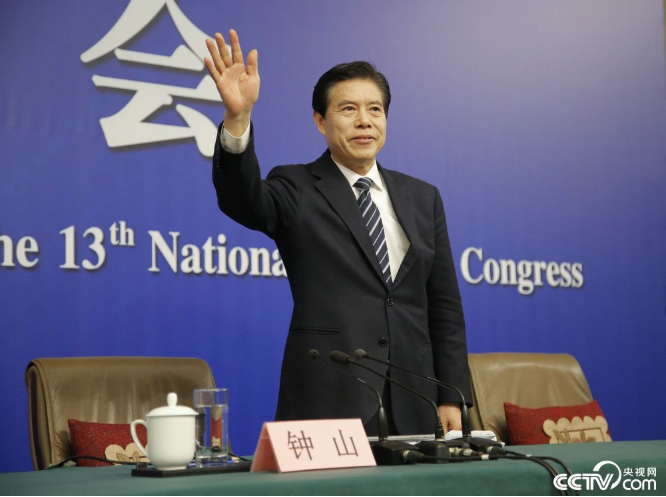 Zhong Shan, the minister of MOFCOM
To align with the targets put forward in the government report 2019, MOFCOM is going to enhance the consumption level in both cities and rural areas, especially the rural areas. E-commerce is a key channel for residents in rural areas to access diversified products.
Zhong Shan, the minister said, the total online retail value of rural areas in 2018 has reached 1370 billion yuan, with a YOY growth of 30.4%. This trend is expected to continue to grow, representing a huge opportunity for investment across multiple sectors. On Feb 14, 2019, MOFCOM together with 4 other ministries issued an implementation plan [6] to conduct a specific campaign to push forward the development of urban-rural distribution network, facilitating market entry into rural areas.
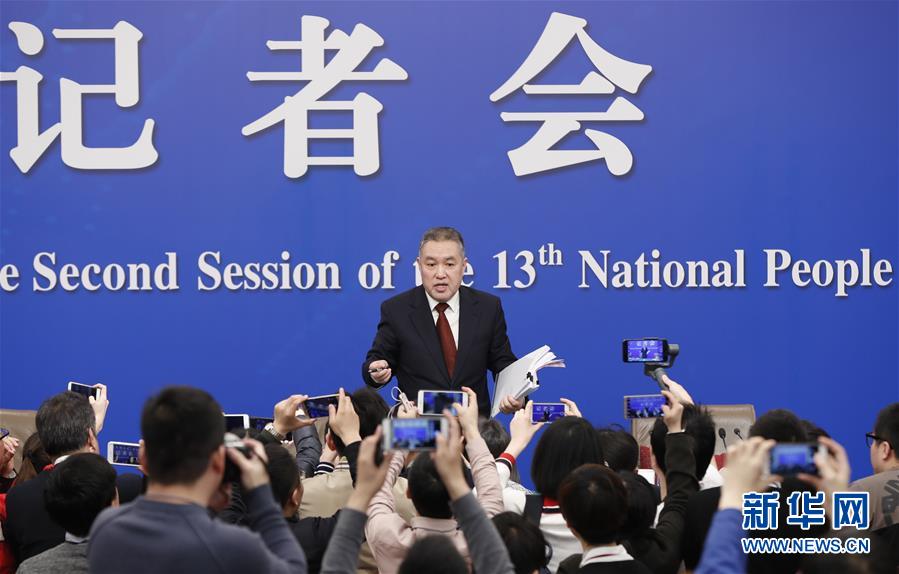 Zhang Mao, the minister of SAMR
During the session, Zhao Mao detailed the main tasks of SAMR in 2019.
SAMR will prioritize the strict supervision of the food sector, medicine, and products related to children and the elderly. For example, China will learn from international standards and formulate stricter standards to optimize and improve the current standard level.
To implement a severe punishment system with some innovative methods including the implementation of an improved punishment and whistleblower reward system. SAMR will confiscate and destroy all fake and inferior products found on the market.
To conduct tougher market supervision. On Feb. 24th, 2019, the State Council released a set of rules to hold local officials accountable for food safety [7] in their jurisdictions. Besides, as indicated in this notice [8] released by the State Council on Feb. 15th, China will continue interdepartmental supervision conducted through the random selection of both inspectors and inspection targets and will publicize the results.
To advance the social credit system and perfect relevant laws and regulations to crack down counterfeit products.
 The minister also answered questions related to health food. He said, "China gained a small victory in overhauling the health food market [9] during the 100-day campaign [10]. In future, China will reform the registration system of health food. The government won't endorse enterprises and their products. Instead, enterprises shall bear more responsibilities and advertise products legally".
NPC deputy Ke Jianhua also expressed his opinion on this topic. He believes problems with fraudulent or exaggerated advertisement, fake and substandard products etc. that have plagued the health food industry are a direct result of weak regulation and weak punishment for violators. He claims the current fine of 200,000 yuan is too mild to deter violators. For those who promote products with false or exaggerated advertising, he proposes that they shall be punished as fraud.
 Ni Yuefeng, head of the GAC
CBEC is booming in China. The import and export value of China's CBEC channel maintains a high development growth with a YOY growth of 80% in 2017 and 50% in 2018. On the double-11 day, China's GAC cleared 27 million pieces of goods in one day.
After the VAT reform, products imported from CBEC can also enjoy the preferential policy, which will not only benefit foreign enterprises but also enhance people's consumption level.
DEPUTIES' VOICE
Proposals from deputies are also a highlight during the two sessions, which is a good way for enterprises to predict the trend of future policies.
In 2018, State Council handled 6319 proposals raised by NPC deputies and 3863 proposals raised by the CPPCC members. Among them, 3200 pieces of advice were adopted and the government has released over 1,400 policies or measures to deal with these problems.
| Field | Proposals raised in 2019 |
| Food traceability |
|
| Food safety |
|
| Dairy industry |
|
| Health | CEO of Netease, Ding Lei proposed that the government shall cooperate with enterprises and encourage enterprises to spread the idea of healthy diets to lower the risk of chronic diseases. Please see China Embracing Global Plant-Based Nutrition Movement: Whole Foods, Organic and Plant-Based Trending Hard [13]. |
 We provide full-scale global food market entry services (including product registration, ingredient review, regulatory consultation, customized training, market research, branding strategy). Please contact us to discuss how we can help you by