Request a Demo
1 Standardization of the classification between processed food and perishable food
They are now standardized and organized into a single one based on the line of thinking in the JAS Law (and according to which even foods that are very simply processed (like dried mango) are classified as “processed food).
(Specific examples are written in the Food Labeling Standards Q&A (general provision - 12))
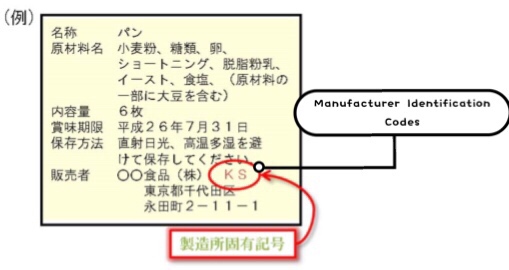
2 Amendment of rules regarding the use of Manufacturer Identification Codes
(*except for processed foods with b2b use)
3 Amendment of rules regarding allergy labeling
The specific processed foods system (the ones for which, for instance, the“egg”allergen labeling can be omitted when writing “mayonnaise” as an ingredient) and its extension (when said name is included in another ingredient name) are abolished.
Individual labeling (writing all allergens separately) is now the basic way of labelling allergen, and collective labeling (gathering allergens together) is allowed only as an exception (in such case, all allergens contained in the food should be stated on labeling.)
(Also, there are other changes including a new mention for the collective labeling: “一部に○○を含む” “(partly contains ○○ ), stricter use of the terminology such as “milk component” and “milk-derived”, and new rules for connection symbol (“・”))
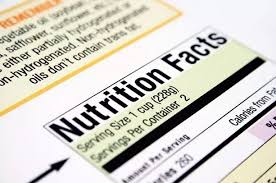
4 Nutrition facts labeling is now mandatory
To food related business operators (except for part of small business operators or business operators selling food for b2b purposes), the labeling of a nutrition facts panel for all processed food and additives aimed at consumers is now basically mandatory. (energy, protein, total fat, carbohydrate, sodium (written as “salt equivalent” on labeling)).
(Also there are other changes of rules based on appendix no.9 such as the setting of nutrients subject to labeling, the smallest units which should be used in the nutrition fact, and use of a fixed value obtained from a rational estimation)
units which should be used in the nutrition fact, and use of a fixed value obtained from a rational estimation)
5 Amendment of rules regarding Nutrient Content Claims
Regarding relative labelings (to indicate an increase or decrease in nutrients content compared to other products), the requirements for nutrient labeling claims and calculation methods of the absolute difference have changed.
The labeling claims “no use of sugar” and “no use of sodium salt” are now only allowed when certain conditions are fulfilled.
(NB: the standard values for the labeling of nutrients are also updated, therefore attention must be paid when labeling that nutrients can be supplemented, or that nutrients/calories needs can be properly consumed)
6 Change of rules regarding the Foods with Nutrient Function Claims system
“n-3 fatty acid,” “vitamin K” and “potassium (note: tablets and capsules are not subject to it)” are added to the nutrients for which a claim can be made.
Perishable/fresh foods (beside chicken egg) can now also be the target of foods with nutrient function claims, and related labeling items have been added and changed including stating mentions concerning the amount of calories and the target age in regards to labeled standard values for nutrients.
(NB: As stated above the standard values for the labeling of nutrients are updated, so special attention should be paid to the new lower limits and upper limits)
7 Change of rules regarding the labeling of the ingredients list
For a food category such as breads, ingredients and additives should be separately written on labeling, as with other processed foods.
Now regarding the labeling of compound ingredients, sub-ingredients can be written separately depending on conditions.
Besides, the rules for labeling according to individual food categories also have been changed.
8 Amendment of rules regarding labeling of additives for sales
“The name and address of the person in charge of labeling” shall now be written on labeling, and concerning additives aimed at general consumers, the net weight must also be stated.
9 Regulation, in the Standards, of parts of the labeling rules that used to only be stated in notifications
The labeling of measures concerning food poisoning caused by the fugu fish or botulism is now mandatory (in an effort to ensure food safety).
Standard values for the labeling of nutrients have been summarized and regulated in the standards.
10 Amendment of the labeling layout
Even when the size of a food product labeling space is smaller than 30㎠, labeling items regarding safety (i.e. the“Legal name”, “Storage method”, “expiration date/best before date”, “person in charge of labeling”, “allergens”, “indications that a product includes L-phenylalanine compound”) cannot be omitted.
The classification of Ingredients and additives must be clear on labeling (using one of the several allowed methods).
While the transition period runs until March 31, 2020, the precise timing until when a labeling based on the old standard will still be allowed depends on whether the product is for general or business use.
General use: for products manufactured, processed or imported to Japan by March 31, 2020
Business use: for products sold by March 31, 2020
Not to mention mandatory labeling content, some of the standards regarding (voluntary) labeling claims have also been changed.
In some instances, a mention which was previously allowed in the old standards, such as “no use of sugar”, will now be considered forbidden in the new regulations. Because of the above, we believe that it will be all the more important to carefully check the labeling your food products again.
Regarding the change in the Food Labeling Standards, for some contents please keep it mind that it is not possible that part of the changes cannot be tracked by referring only to the food labeling standards themselves: for instance rules on “the smallest units which should be used in the nutrition fact” cannot be found there. This is why it is critical to proceed with any label revision by also referring to” regarding food labeling standards” and “Food Labeling Standards Q&A” as well – following a well-established review process!
 We provide full-scale global food market entry services (including product registration, ingredient review, regulatory consultation, customized training, market research, branding strategy). Please contact us to discuss how we can help you by