Request a Demo
1. Import Data
**All import data are from China Customs Data.
Infant Formula
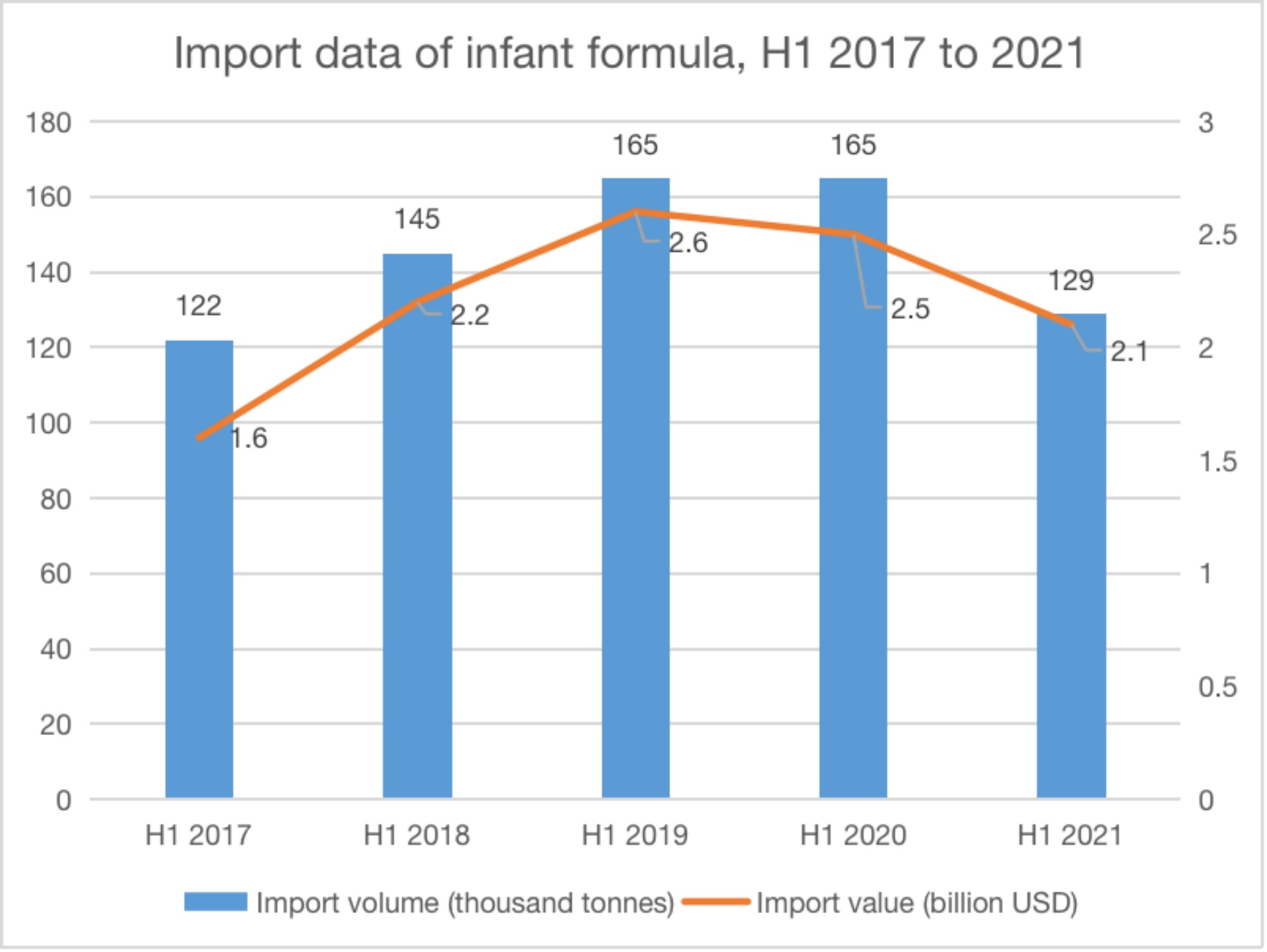
China imported 129 thousand tonnes of infant formula in H1 2021, with an import value of USD 2.1 billion. Compared to the performance of the past years in the same period, the import value of infant formula has been continuing to decline since 2019. In H1 2021, the import value was down 15.2% comparing to last year.
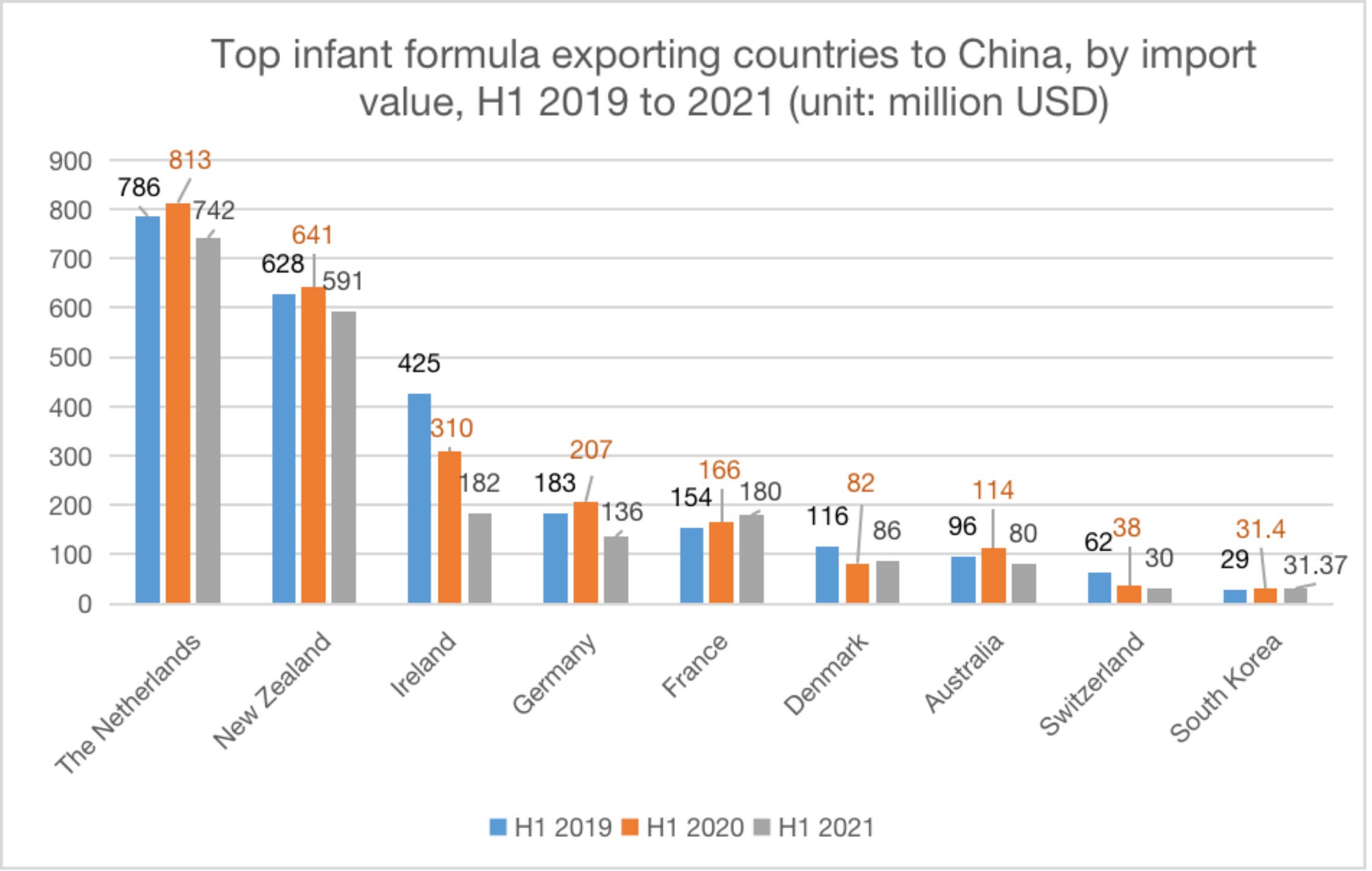
The decline first appeared in last year. In H1 2020, among the top 9 infant formula exporting countries to China, 3 countries experienced a decreased import value. E.g., the import value of Ireland dropped by 27% in H1 2020. ChemLinked assumes the decline in 2020 was greatly influenced by the COVID-19 pandemic. However, in H1 2021, except for France and Denmark, the import values of the other 7 countries were down. ChemLinked analyst Lennie Tao believes it is mainly a signal of China’s infant formula market is increasingly saturated and competitive. As discussed in our analysis1 released in 2019, ChemLinked thinks China’s import infant formula market would gradually narrow down due to a reduced birth rate, a decreased fertility rate in women, and the continued upward trajectory of China’s domestic enterprise. In the recent two years, the outbreak of pandemic accelerates this process. During the pandemic, many consumers started to purchase domestic infant formula instead since the stores were running out of foreign brands due to the disruption of the supply chain. Some consumers also assumed that imported infant formula might get contaminated during the pandemic. Domestic companies also regarded this trend as an opportunity to expand the market share.
Will 2020 and 2021 be a turning point for the import infant formula market? It’s still hard to pin it down. Stakeholders should better keep an eye on the import performance in 2022.
Milk and cream
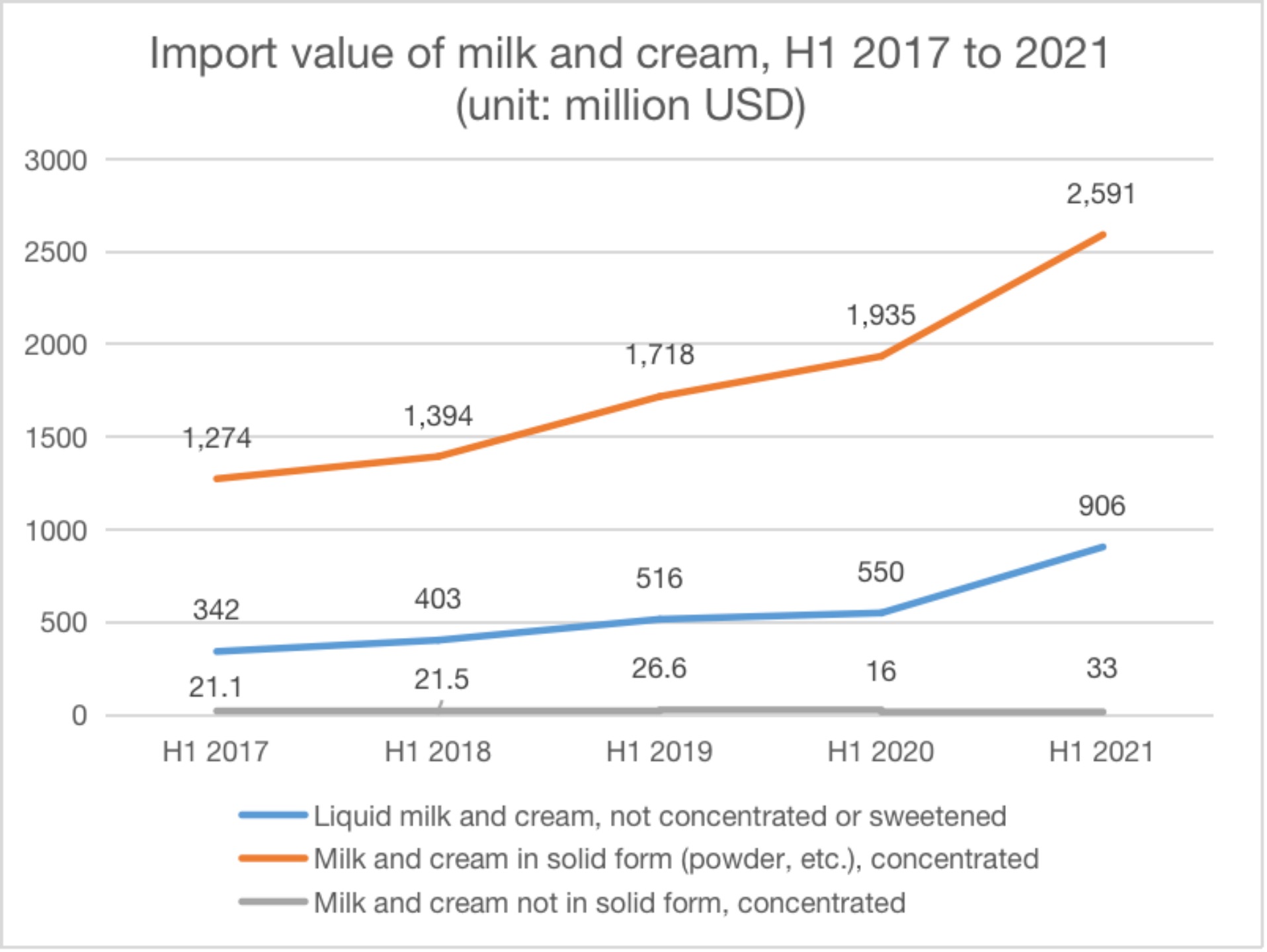
Different from infant formula’s performance, the import value of milk, including liquid milk and concentrated milk powder, and cream is on its way up.
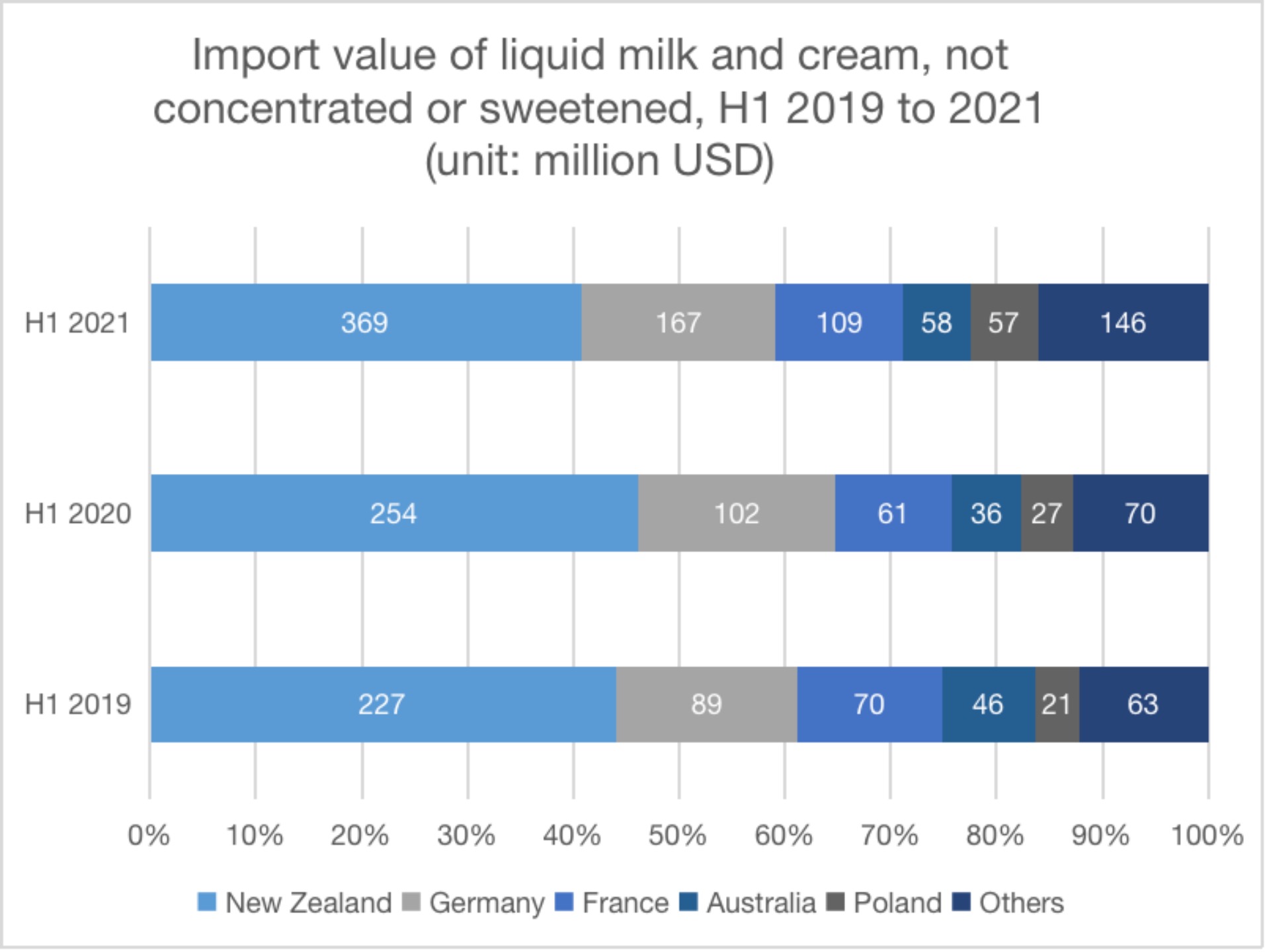
 By country—In terms of the import value of liquid milk and cream (not concentrated or sweetened), New Zealand, Germany, France, Australia and Poland kept the leading position from H1 2019 to 2021. In H1 2021, the import value of liquid milk & cream from New Zealand took over 40.7% of the total import, which accounts for the giantest share.
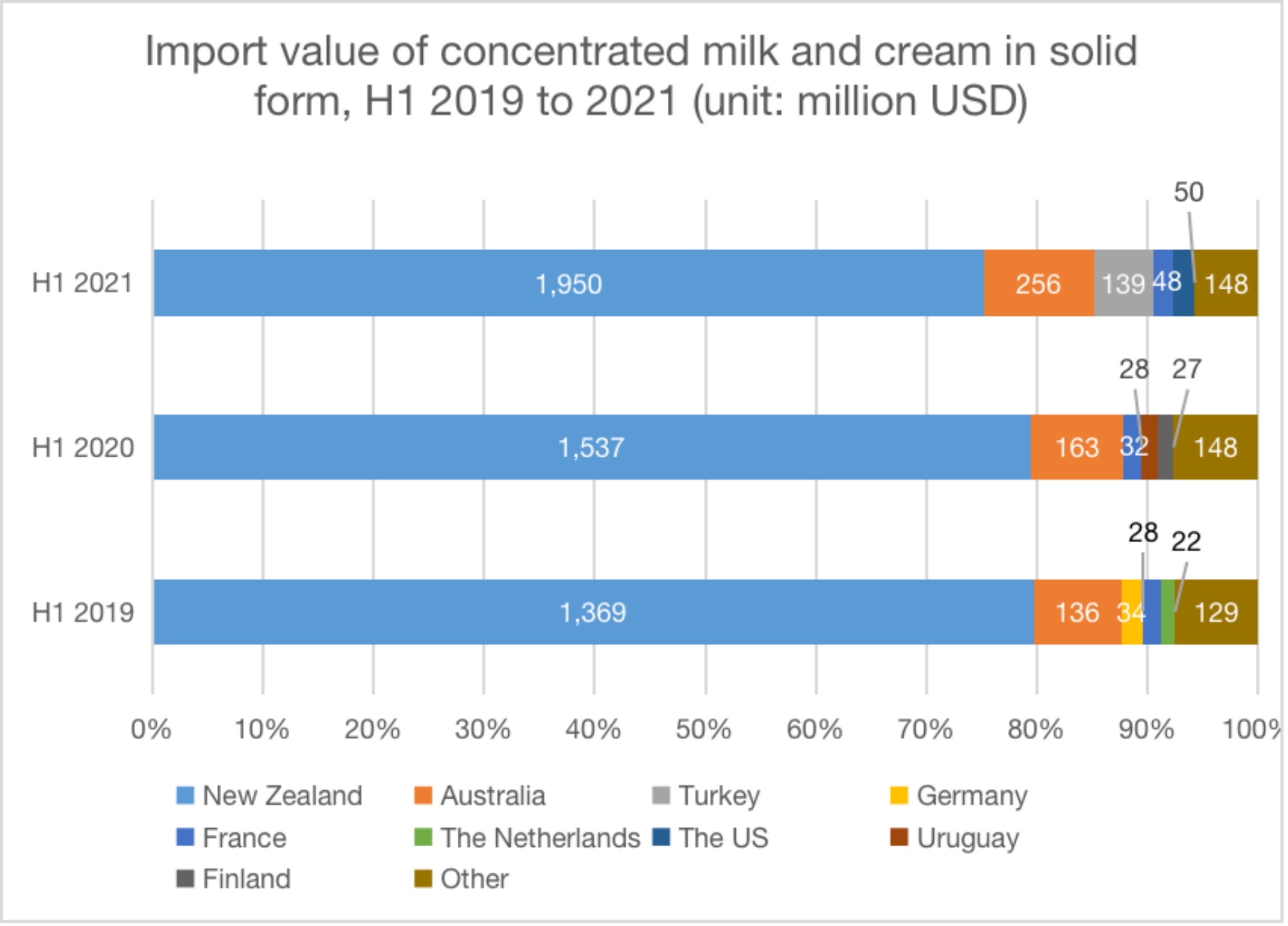
 Regarding the import value of concentrated milk and cream in solid form (powder, etc.), New Zealand and Australia maintained to be the top 2 exporters from H1 2019 to 2021. In H1 2021, the value of infant formula imported from New Zealand occupied 75% of the total import. What’s worth noting is that it is the first time for Turkey and the US to be one of the top 5 trading countries in H1 2021. ChemLinked assumes this is mainly due to China’s approval of milk import from Turkey and the implementation of the Sino-US Economic and Trade Agreement2 in 2020.
Cheese
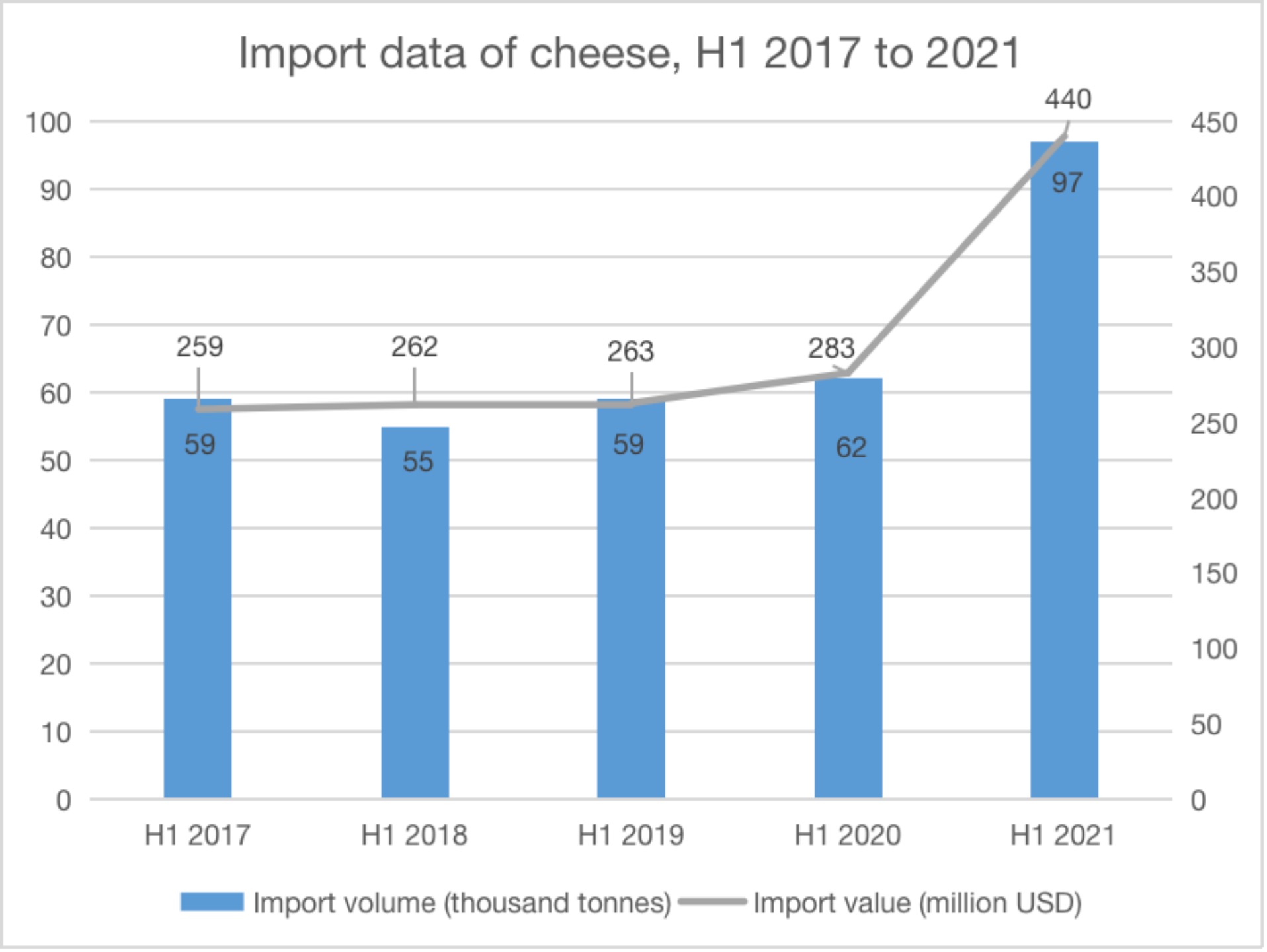
As ChemLinked reported previously3, China's cheese market is still in its infancy but is growing rapidly and characterized by a heavy reliance on imports and a steady increase in overall volume and value. Since H1 2018, cheese import has maintained a consistent growth. In H1 2021, the import value of cheese increased by 55% comparing to last year, which is a big leap.
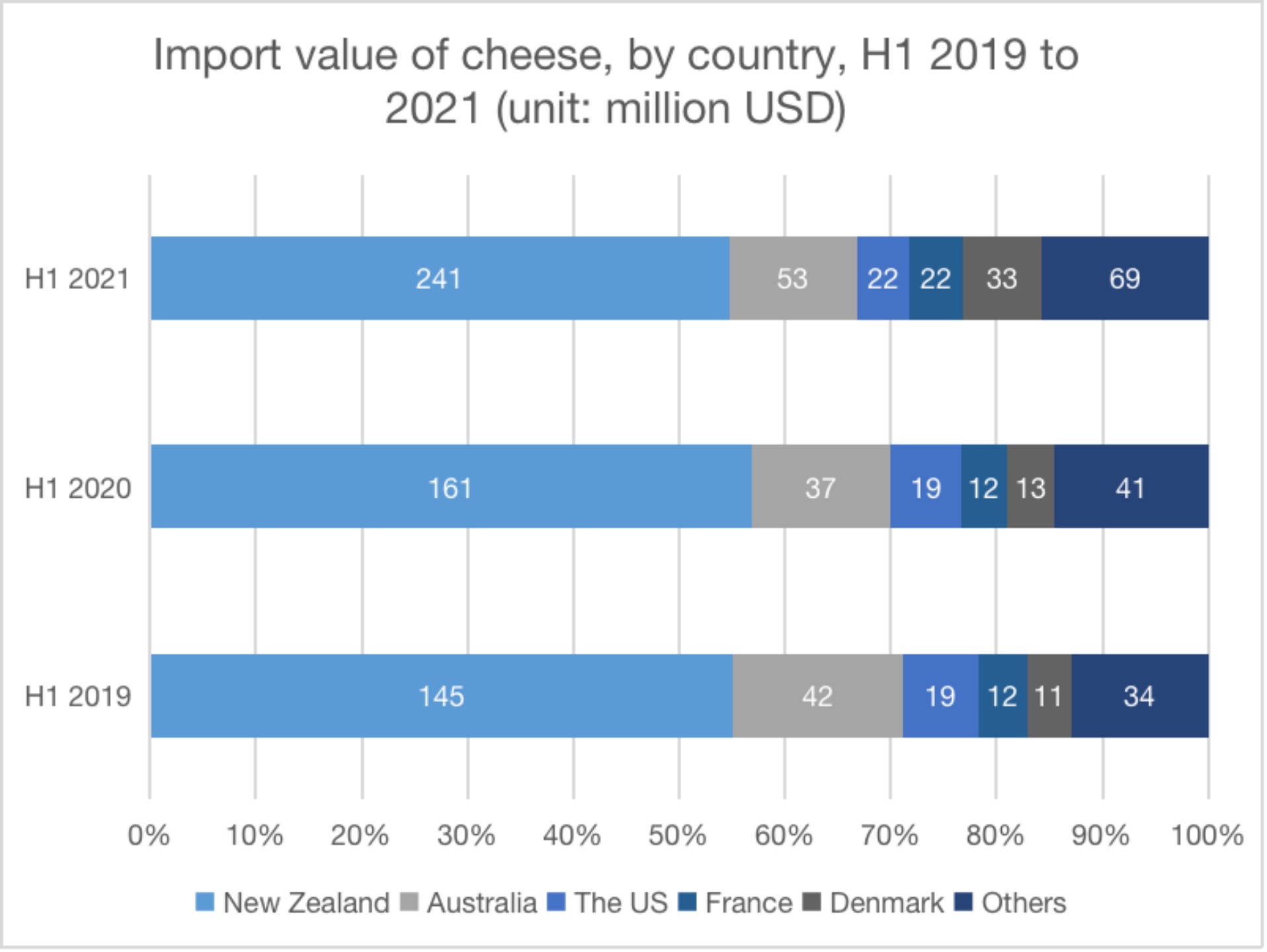
As for the main cheese exporting countries , the top 5 from H1 2019 to 2021 are New Zealand, Australia, the US, France and Denmark. In H1 2021, New Zealand’s cheese import value raised by 49.7% than last year.
Butter
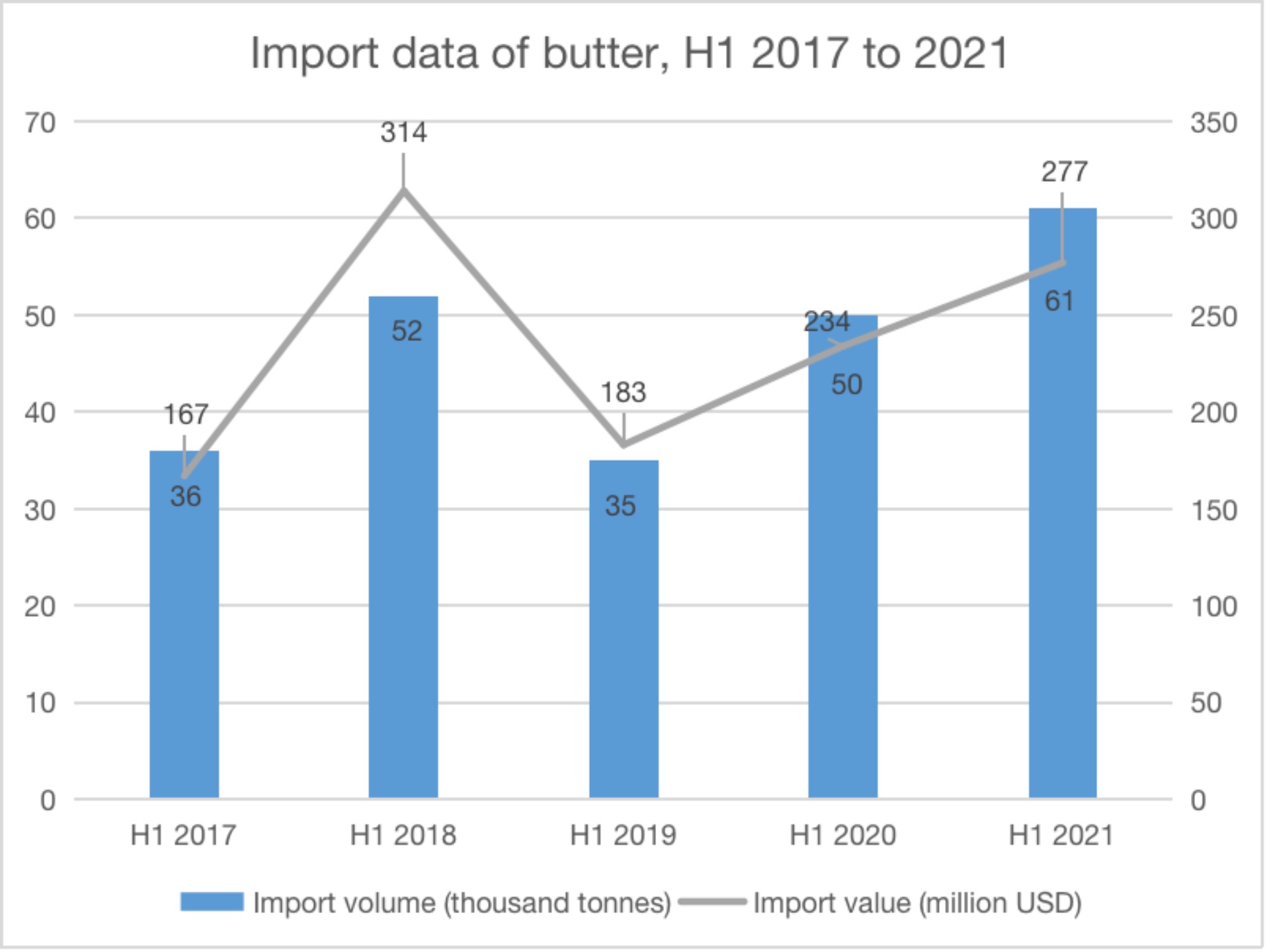
The import of butter kept increasing after 2019. ChemLinked believes the main reason is the development of China’s baking industry. New Zealand, France, Australia, the Netherlands and Belgium are the top 5 exporters to China from H1 2019 to 2021. In H1 2021, the import values of them are USD 208 million, USD 23 million, USD 15 million, USD 9 million and USD 8 million, respectively. Among the five countries, the import value of New Zealand accounts for 75% of the total imports, which has the giantest share.
Yogurt
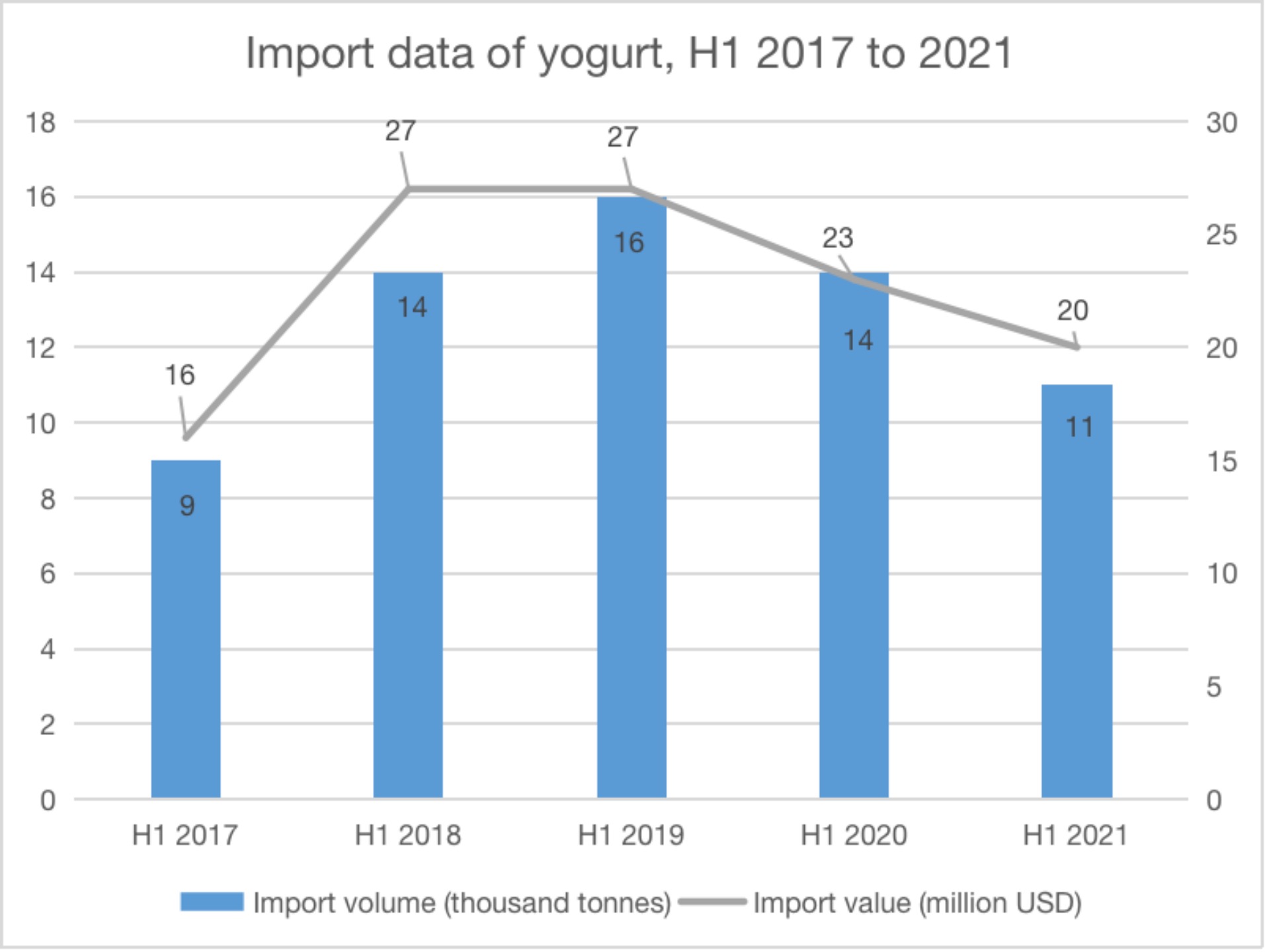
The import of yogurt kept decreasing after H1 2019. ChemLinked holds the opinion that it will tend to reach a stable performance in the following years. Germany, France, Austria and Spain are the top 4 exporters from H1 2020 to 2021. In H1 2021, their cheese exports to China were USD 11.5 million, USD 3.6 million, USD 1.6 million and USD 853 thousand, respectively.
2. Rejection Data
Overview
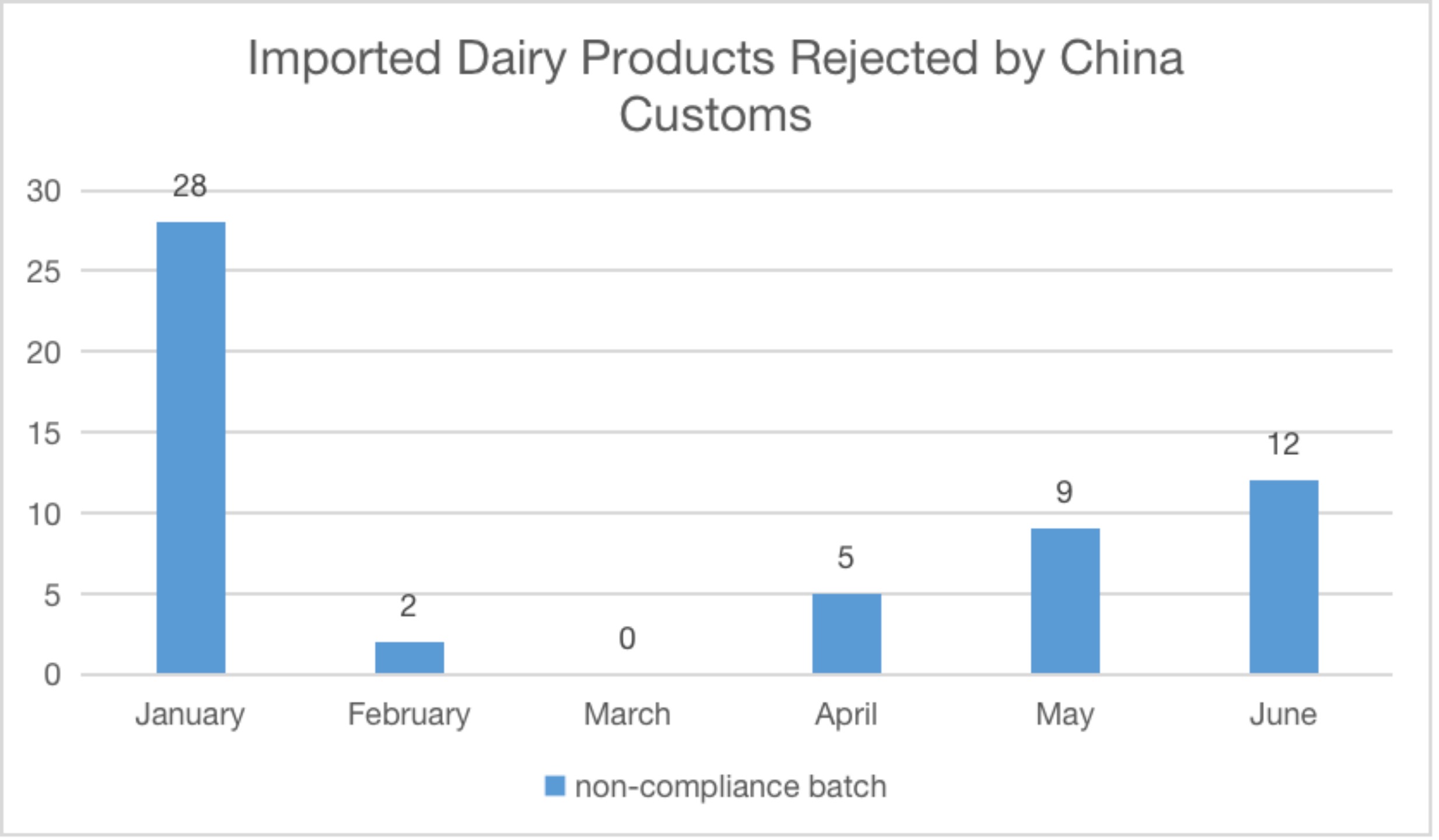
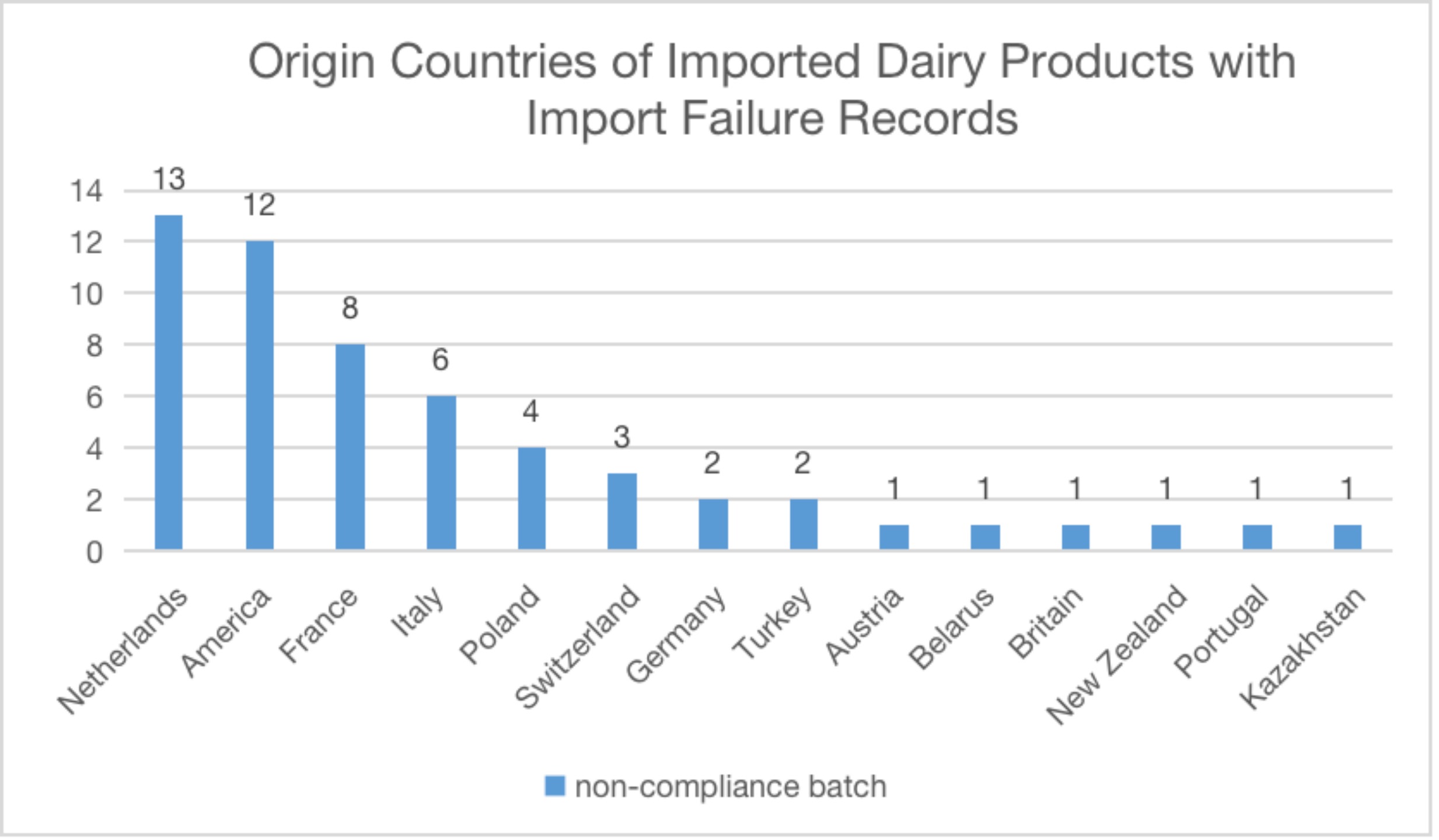
As revealed by the non-compliant food product lists released by the General Administration of Customs of China (GAC) every month, 56 batches of imported dairy products from 14 countries were rejected in 2021 H1. Dairy products were even among top five food categories rejected by China customs in January, May and June.
Dairy categories & Origins
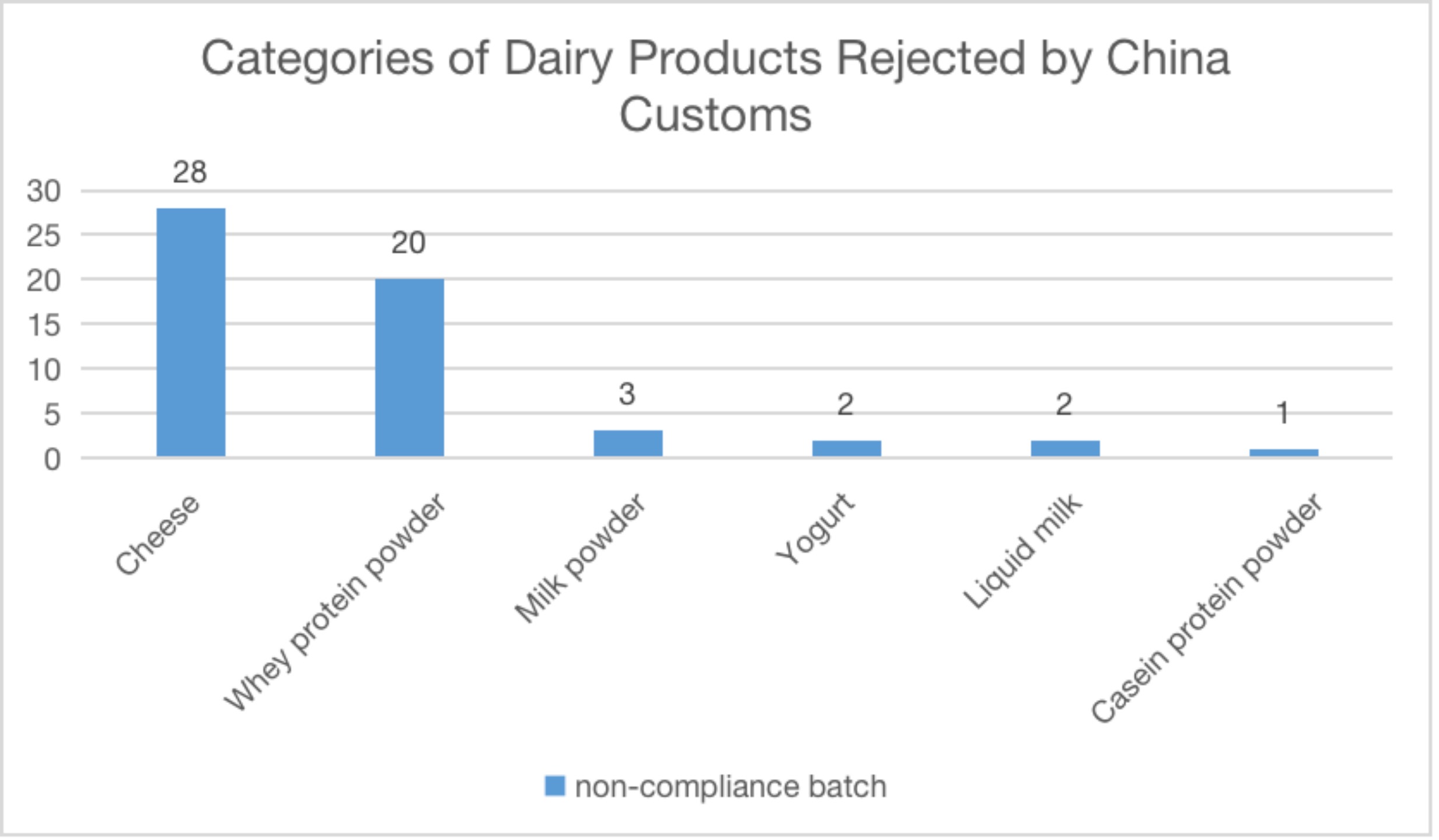
There are seven categories of dairy products with import failure records during the past six months. Among them, cheese became the top category with most non-compliance batches, followed by whey protein powder. These two categories account for over 85% of all rejections. As regards the origins, most of them come from Europe. Netherlands dairy products (all cheese) were rejected by GAC most, followed by American (all whey protein powder) and French products (cheese and whey protein powder).
Reasons for rejection
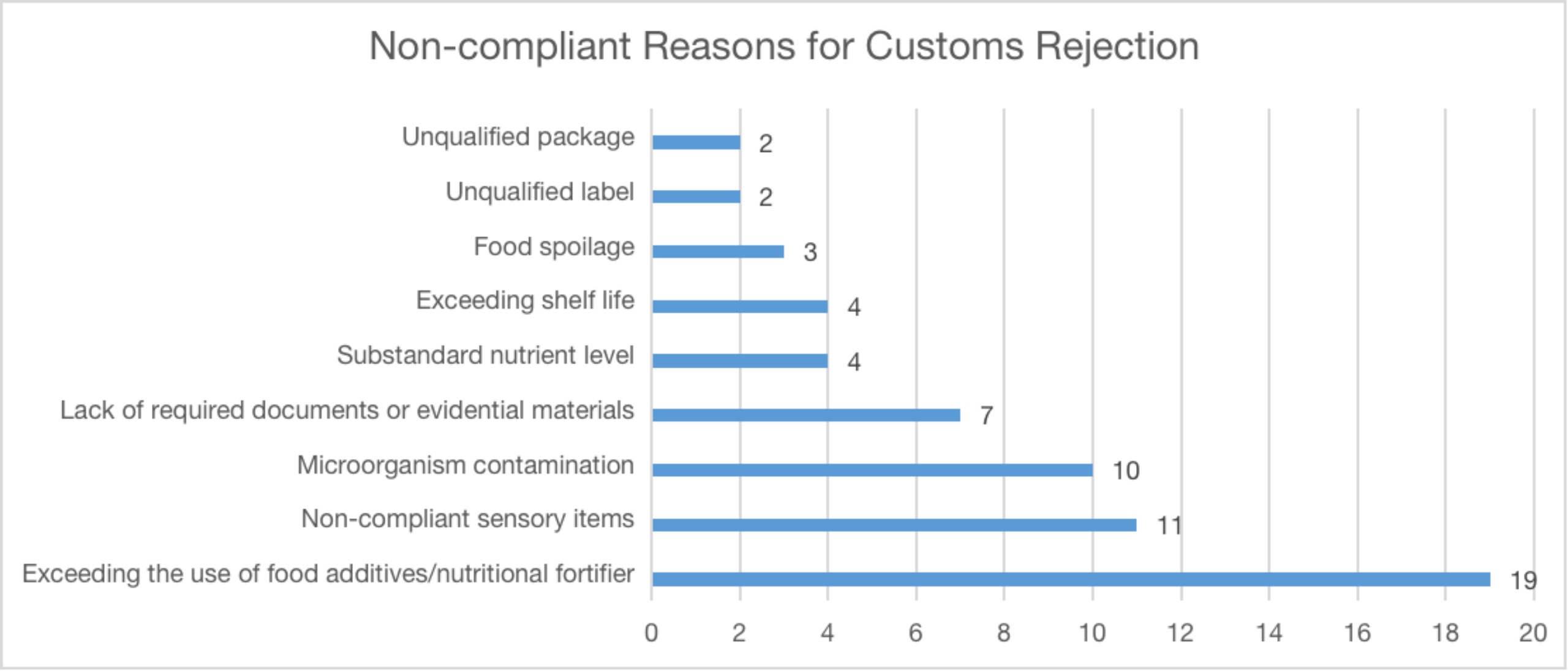
As the chart shows, all 56 batches of dairy products failed import for nine reasons. The most common reason is the excess use of food additives or nutritional fortification substances. Since China has very stringent control over the use of food additives and nutritional fortification substances, please check China Food Additives Database4 to learn the correct use of them. Besides, non-compliant sensory items and microorganism contamination also resulted in many import failures. Before exporting products to China, overseas manufacturers should check the corresponding GB standard for their products, eg. GB 5420-2010 Cheese5, which stipulates the specific requirements for a qualified product including sensory items and microbial limits. It is noticeable that some batches met with rejection due to exceeding shelf life or food spoilage, overseas enterprises should always take shelf life into consideration while arranging import issues, so as to avoid the import failure caused by long shipping or customs clearance time.
 We provide full-scale global food market entry services (including product registration, ingredient review, regulatory consultation, customized training, market research, branding strategy). Please contact us to discuss how we can help you by