Request a Demo
On Jan. 21, the Second Annual Conference of China Dairy Quality [1] was held in Beijing. High ranking officials from the State Administration for Market Regulation, National Health Commission, Ministry of Industry and Information Technology were in attendance. Key points of the conferences were:
Review of 2018 Dairy Industry
According to National Statistics Bureau, a total of 589 dairy companies (above a designated scale) were in operation in the first 11 months of 2018, gaining 308.6b CNY in revenue, up 10.02% YoY. Total profits were valued at 22.1b CNY, up 4.71% YoY. According to product sampling results released by SAMR, the overall quality of China’s dairy products is reassuring.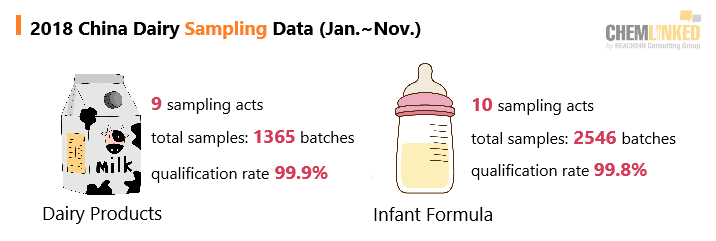
Infant formula was subject to much more stringent supervision compared with other dairy categories. In 2018, SAMR granted approval to 243 infant milk powder products and 254 cases of registered product alteration, according to stats offered by deputy director of SAMR Special Food Department, Ma Fuxiang. In addition to administrating the registration of product and manufacturer, Chinese competent authorities also administrate all aspects of its domestic infant formula sector including product sampling and regular manufacturing facility inspection.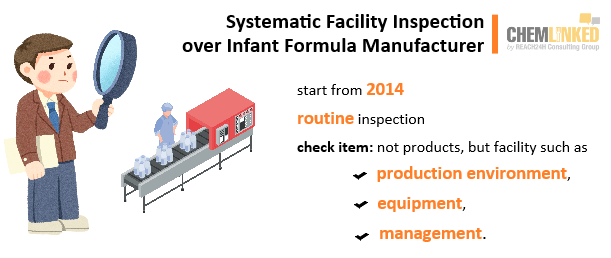
However, unlike domestic manufactures, overseas counterparts are exempt from regular facility inspection which has been a sore point for domestic interests and a major bone of contention addressed during the conference.
2019: Administration to be Further Strengthened
Ma also stressed requirements related to the supervision of infant formula and outlined work plan in this sector going forward:
Firstly, SAMR shall stick to requirements for registration of infant formula recipe with scientificity and safety in mind, and strengthen onsite inspection during manufacturer registration. SAMR will also strictly regulate and punish any inconsistencies found between information submitted in the registration dossier and the actual situation during inspection.
Secondly, SAMR will initiate a new round of systematic facility inspection to monitor infant formula manufacturers dynamically. During the note speech, Ma seemed to overlook complaints made by several domestic industry insiders relating to the fact that domestic enterprise were treated differently than overseas enterprise, leaving many to believe overseas routine inspection will also be implemented.
Thirdly, it welcomes third party professionals to engage in management of special food safety. Relevant detailed work scheme has not been unveiled yet.
Editor’s opinion:
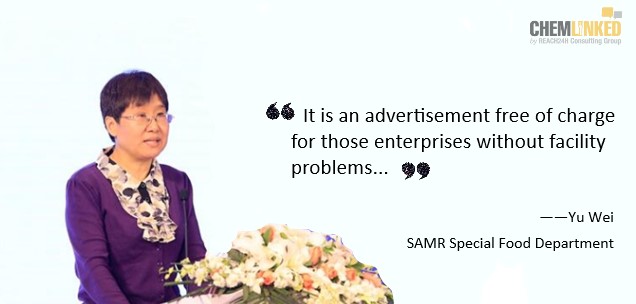
In my opinion it is highly unlikely that China will require routine inspections of overseas facilities which must be carried out by authorities that are from a staffing and technical capacity standpoint already stretched thin and also bound by tight budgetary constraints. Indeed the officials were quick to point out that routine investigations of overseas enterprise might actually benefit them, given that results of positive inspections are publicized and would essentially offer free marketing and promotion.
 We provide full-scale global food market entry services (including product registration, ingredient review, regulatory consultation, customized training, market research, branding strategy). Please contact us to discuss how we can help you by