Request a Demo
On June 11, 2020, a new COVID-2019 case was found in Beijing, after 56 days of no cases. As of June 14, 2020, 51 cases were confirmed [1] from June 11 to 14. Contact tracing efforts and genomic analysis of the virus showed that the origin of the virus of this new Beijing cluster is from Europe. According to the responsible person at the wet market, the competent authority detected Coronavirus on a chopping board used to cut imported salmon [2], although this tenuous link is still subject to intensive investigation to rule out other causes. Meanwhile, all the imported salmon products were removed from supermarkets, restaurants, and online community stores in Beijing.
Is Salmon the Source of Infection?
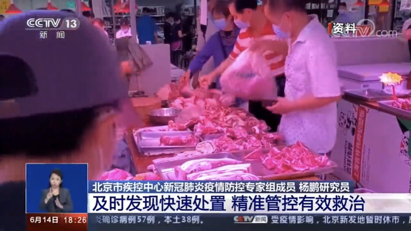
According to an official from Beijing NHC, analysis of objects in the wet market showed that some of the positive tests are from the chopping board, but some were not. On June 14, Yang Peng, an expert in Beijing Diseases Prevention and Control Center, told CCTV, the source of infection is still under investigation. By sequencing the entire genome, experts found the virus originated from Europe. However, it is unclear if fomite contamination was due to cross-contamination from customers browsing the market or were directly linked to the salmon.
 “A large number of people and goods passed through the wet markets every day. Up until now (June 14), most positive specimens are from the basement of the market, the sales area for beef and mutton. This area is crowded with people. Furthermore, aquatic products, beef, and mutton need to be stored in low-temperature places. Such conditions make the survival and transmission of Coronavirus much easier,” Yang Peng explained.
 So is it possible for food to be a source of infection? On March 9, 2020, EFSA, in its article [3], said, “There is currently no evidence that food is a likely source or route of transmission of the virus.” Experts in China also believed animals like salmon couldn’t get infected. But Zhu Yi, a vice professor at the China Agricultural University, believes that we still cannot 100% exclude the possibility that food may still be a route of transmission, especially fresh food, which is transported and stored in refrigerators. The virus can live longer, and fresh food like salmon can be contaminated by droplets, etc. from food operators.
Any Further Safety Control Measures on Imported Food?
For the time being, the examination of Coronavirus is not listed in the GAC quarantine and inspection items. Experts are now urging Chinese authorities to intensify food safety inspections during the importation process and to make Coronavirus testing mandatory during customs and quarantine inspection. On June 14, GAC replied [4], “At present, we don't test for Coronavirus during quarantine procedures and testing of imported fresh food. But it doesn’t mean it won’t be an inspection item in the future.”
 We provide full-scale global food market entry services (including product registration, ingredient review, regulatory consultation, customized training, market research, branding strategy). Please contact us to discuss how we can help you by