Request a Demo
As revealed by a Treasury Wine Estates's release [1] issued on April 10, 2020, Treasury Wine Estate (TWE) finally got the Chinese trademark "奔富" (Ben Fu) registered for its wine brand "Penfolds" after ten years of litigation.
Case Review
Penfolds entered China early in the 1990s [2] [3]. In 1995, Penfolds' agent in China successfully registered the Chinese trademark "奔富" (herein "Ben Fu"). Sometime after this, the company let its trademark registration expire. During the period when Penfolds Chinese trademark registration had lapsed, a trademark squatter registered the trademark "Ben Fu" in 2009 and then in 2015.
Penfolds reapplied to register its trademark in 2011. The application was rejected, as it had already been registered. This marked the beginning of Penfolds 10 year legal battle in China. In 2017, the Trademark Review and Adjudication Board in China (now the National Intellectual Property Administration) revoked the squatter’s trademark permission [4] (trademark registration NO.: 5662026). Despite an appeal made by the squatter, the verdict was upheld in 2018. On April 10, 2020, TWE finally announced the successful registration of "Ben Fu".
The Ongoing Fight with Other Copycats: Penfolds VS. Penfunils
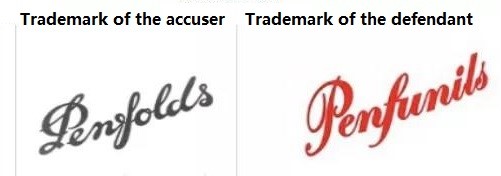
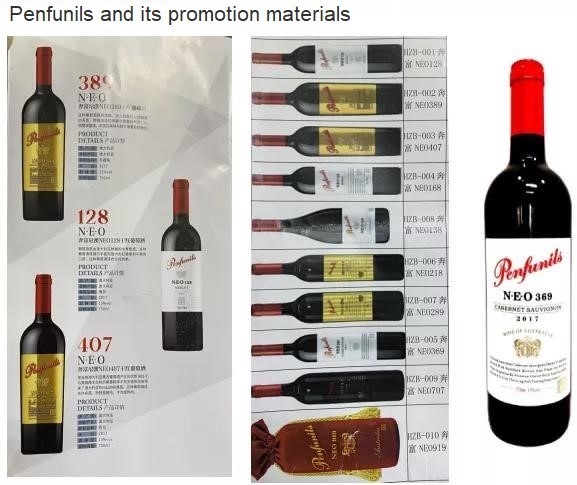
Penfolds has faced a large number of copycats. In 2019, the National Intellectual Property Administration (CNIPA) invalidated the trademark "奔富尼澳" [6] and also rejected the registration of "Penfunils" [7] for alcoholic drinks, including wines.
Both the CNIPA and the court judged that the use of trademarks like "奔富尼澳" and "Penfunils" on wine products violated the IP rights of Penfolds. According to the judgment [8] made by Nanjing Intermediate People's Court in 2020, China's trademark law protects not only the rights of registered trademarks but also the rights of well-known trademarks. In this case, the English name of Penfolds forms a steady relation with the Chinese trademark "Ben Fu". Thus, according to Article 14 of China's Trademark Law [9], "Ben Fu" shall be recognized as a well-known unregistered trademark. Because the defendant had applied for many similar trademarks and disobeyed the principle of good faith, the court issued a fine punishment of 1 million yuan.
The Significance of Penfolds Case
Penfolds' victory was an important milestone and a warning to those engaged in predatory trademark squatting. Due to cultural and language barriers, many enterprises enter China without a Chinese trademark. It is a lesson for all stakeholders that enterprises planning to enter China should register English, Chinese, and other defensive trademarks.
In order to optimize the business environment, China has been implementing the Iron Fist Action [10] to strictly regulate IPR (including trademark infringement) in the market and also revised its Trademark Law last year, which came into effect on November 1, 2019. As we outlined in this article [11], trademark squatting (e.g., registration of trademarks "not for use") will come to an end, and trademark violations will be subject to more stringent punishment.
 We provide full-scale global food market entry services (including product registration, ingredient review, regulatory consultation, customized training, market research, branding strategy). Please contact us to discuss how we can help you by