Request a Demo
As revealed by No. 29 Presidential Decree [1] issued in Apr. In 2019, China officially passed the amendment to “Trademark Law” [2]. The new law became effective on Nov. 1, 2019. The rationale for the reform of China’s Trademark Law was heavily influenced by the pervasiveness of trademark squatting and other unethical practices.
China’s trademark registration system follows a “first-to-file” principle, which has traditionally been exploited by both enterprises and individuals for unethical gains at the expense of legitimate businesses. For example, an engineer in Beijing spent 1000 RMB to trademark a white spirit alcoholic beverage under the name “Mo Yan Zui” (“莫言醉” in Chinese). Shortly after, in 2012, Mo Yan won the Nobel Prize, causing a massive spike in demand for the trademark, which was purchased from the engineer by a large liquor producer for 10 million RMB shortly after. 
Interpretation of the regulation amendment
1. An end to trademark squatting: Registration of trademarks "not for use" will be rejected.
Article 4 adds the statement that any attempt at malicious trademark registration, which is for purposes other than business usage, shall be rejected by the competent authority. Additionally, it also provides a standard to define "abusive registration". Since 2018 China’s Trademark Office has rejected lots of applications deemed as attempts at malicious registration or trademark squatting. However, under China's old trademark law, these behaviors were ill defined, and there was no apparent legal reference for regulators to impose sanctions on violators, which meant that enforcement was piecemeal. Legitimate enterprises have also voiced concern on whether new requirements will affect the ability to register a “defensive trademark." Defensive trademarks are where enterprises register to expand the application scope of their registered trademark or register trademarks with similar pronunciation or appearance to their original one. Legitimate enterprises also sometimes register trademarks in advance, in anticipation of the future launch of a product. It remains unclear whether this practice will also be impacted.
In response to the issue, renowned solicitor Zhang Yin, co-founder of JT&N law firm, stated that “the rejection is based on the condition of "not for use" and "malicious". They are entirely subjective criteria, so the Trademark Office shall judge case by case. Generally speaking, the registrants are not required to submit supporting documents to prove their “intent to use” a trademark. However, applicants must be able to provide these materials on request by the competent authority [3].
2. The obligations of trademark agencies are underscored.
Article 19 stipulates that a trademark agency cannot proceed with a trademark application on behalf of its client if it knows the trademark can be deemed as malicious, unethical or “not for use” and fits criteria outlined in article 4, 15, and 32 ("article 4" is newly included). Trademark registration agencies have full access to information such as the trademark type, trademark name, and the registrant’s business scope before signing agreements. This type of information allows agencies to predict to a high degree of certainty the sincerity of a registration application.
3. Trademark violations will subject to more stringent punishment.
With reference to article 63, the compensation or penalties for violation of the Trademark law will be commensurate with the losses incurred by the victim, the benefits accrued by the violator, or a multiple of the trademark permission fee. However, for severe trademark infringement cases, the compensation could be raised from 1 to 5 times the fixed value (it was 1 to 3 times in the previous regulation). In Apr. 2019, SAMR and the Intellectual Property Office (IPO) jointly issued the 2019 'Iron Fist Action Plan' for IPR Enforcement to crack down on infringement of trademark and patent intellectual property rights and other illegal activities. You can click here to read more.
How will the new trademark law be practically implemented?
State Intellectual Property Office has published the supporting regulation named “Provisions on Standardizing Trademark Registration Application” [4], which defines the scope of trademark infringement and trademark squatting. It also outlines corresponding punishments for violations. If the enterprise or individual is judged to be guilty of malicious trademark registration, their application will be rejected. Additionally, the enterprise will be blacklisted on China’s enterprise credit system, which will impose additional demands and subject the company to additional administrative checks and balances during all subsequent business activities. This regulation will come into effect on Dec. 1, 2019. In practice, the competent authority will evaluate the registrant’s business scope, use capacity, trademark registration history, the number of registered trademarks, originality, and so on.
Suggestion for overseas enterprises
It is highly suggested that enterprises planning to enter China’s market should register both English, Chinese, and other defensive trademarks. If the original trademark is squatted on by local enterprises or individuals, the original name may have to be changed to comply with Chinese regulations. Companies can also face extortion in the form of costly trademark transfer fees from the company squatting on their trademark. The following 2 case studies highlight key issues:
Case 1
“Monster” is the second largest energy beverage in America. It was acquired by Coca-Cola in 2015 and was later introduced to the Chinese market. However, earlier in 2014, the trademark “怪兽” (Monster’s name in Chinese) was registered by Mansite beverage (Shanghai) CO., Ltd. Monster beverage was forced to change its original Chinese name to “魔爪," which significantly impacted its brand in China [5].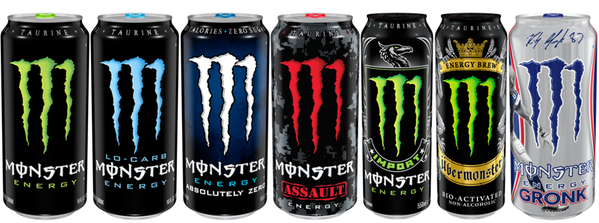
Case 2
“Instinct" is a popular pet food product in America (sub-brand of Nature's Variety), and it is also extremely popular among Chinese consumers. The manufacturer registered “Nature’s Variety”, "Instinct," and several other of its product names as trademarks in China. It failed to register its corresponding Chinese name “百利本能." In 2017 a Chinese pet food operator registered the trademark “百利本能”. Later he accused domestic “Instinct” distributors of trademark infringement and claimed for substantial financial compensation [6].
Please feel free to contact ChemLinked if you need any help regarding trademark issues.
 We provide full-scale global food market entry services (including product registration, ingredient review, regulatory consultation, customized training, market research, branding strategy). Please contact us to discuss how we can help you by