Request a Demo
South Korean confectionary maker Orion entered the Chinese market in the early 90s. With its signature choco pie, Orion rapidly swept China and many other overseas markets. In 2020 alone, it reaped 1.09 trillion won in China, accounting for 75% of the total overseas sales volume. Orion's choco pie has even topped the most recommended pie product on the Chinese market for six times. However, lately Orion found itself at the center of the storm, seriously derogating the brand's reputation in China.
The Simmering Dispute
In early March, Chinese netizens found Orion lifted prices in only China and Russia and chose to use inferior cocoa butter substitute in the Chinese market. However, Orion is continuing to use pure cocoa powder in other overseas markets. The topic quickly went viral on China's Twitter-like social media Weibo with over millions of views and a plethora of discussions and criticisms towards Orion. Chinese netizens were outraged after finding out that the brand's choco pies in China are increasing in price while using inferior ingredients which contain trans-fat. Voices like boycotting Orion and its sub-brands are all over the Chinese Internet.
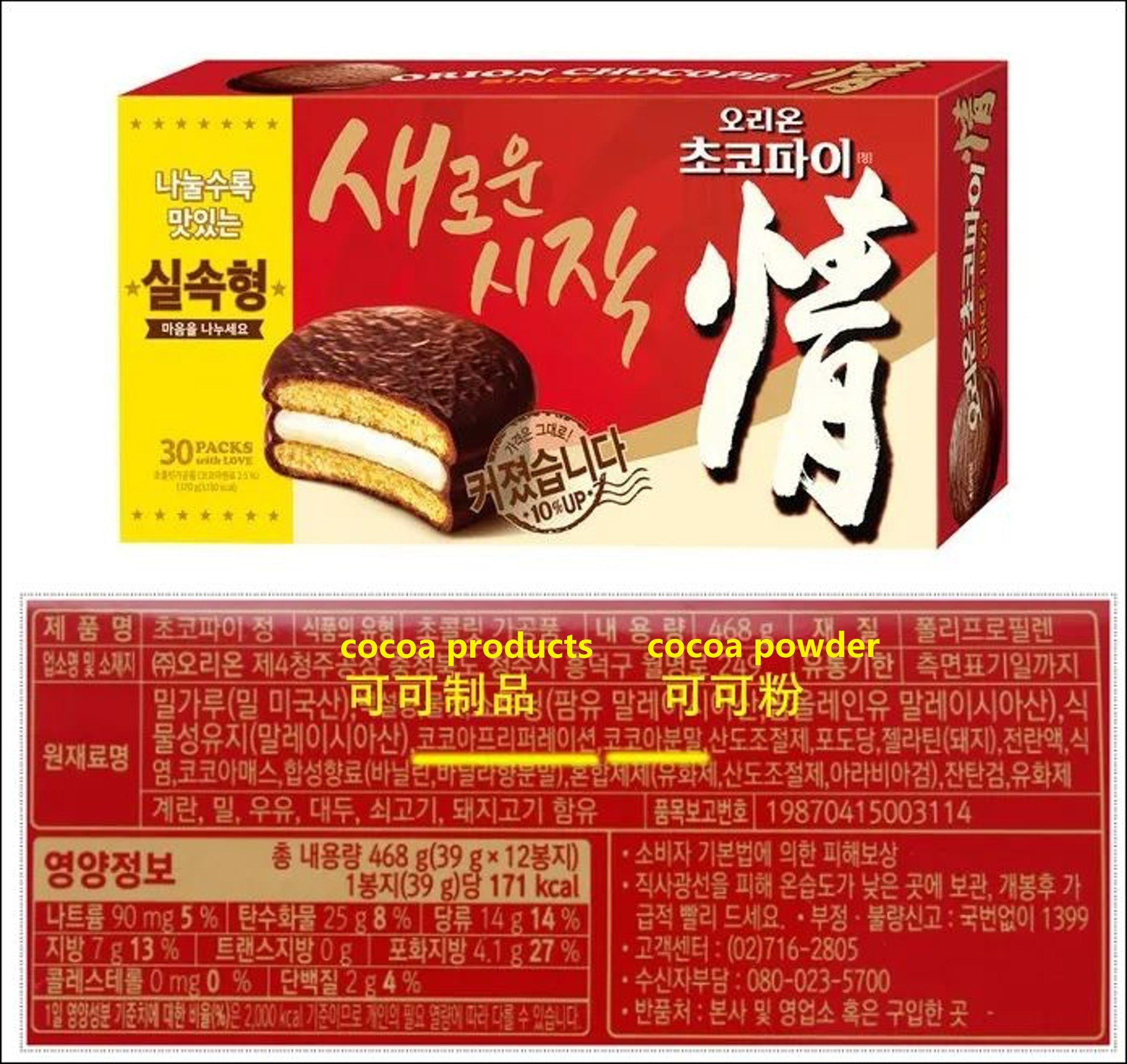
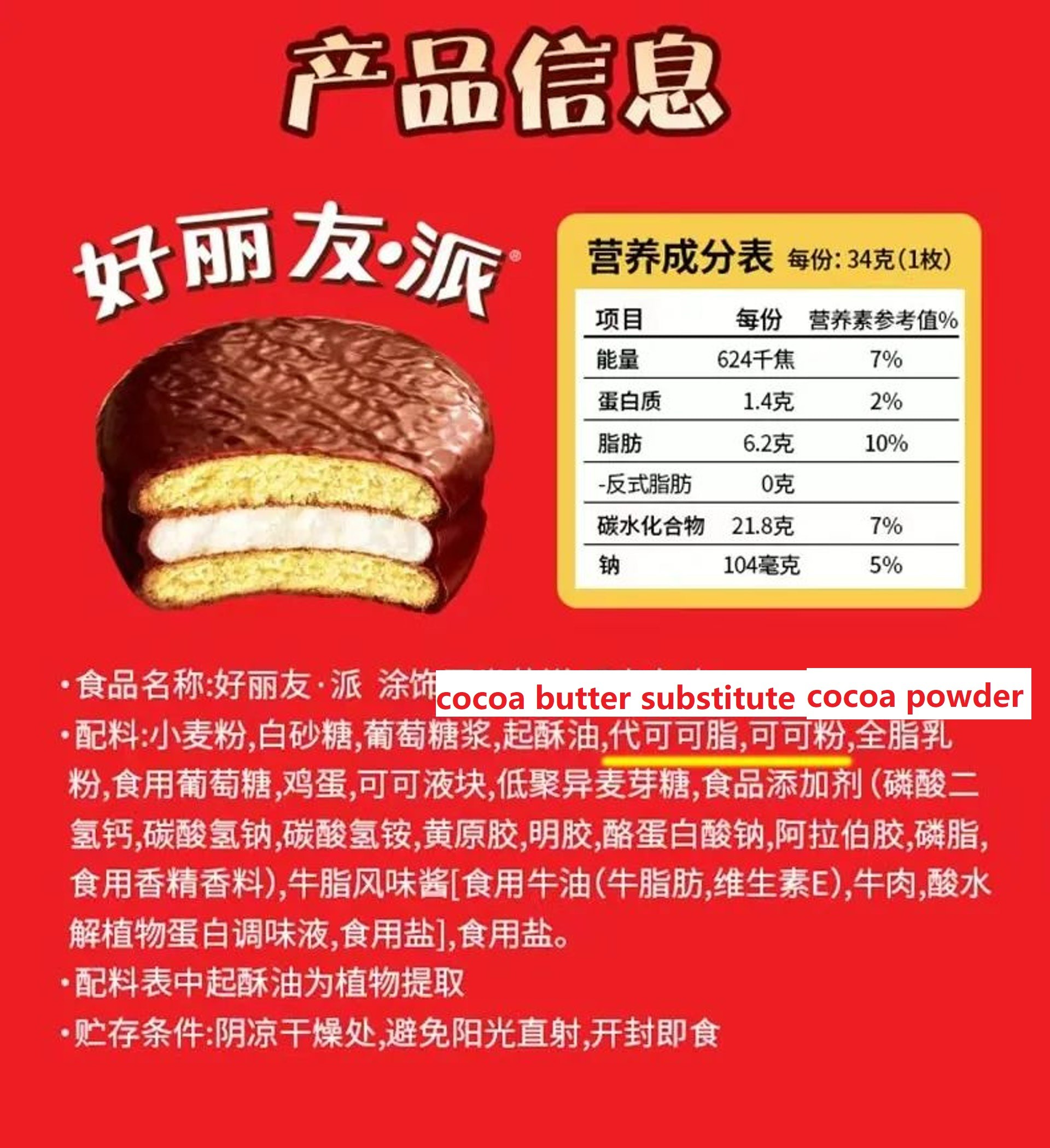
Orion choco pie labels: S.Korean version vs Chinese version
Orion's Respond
As resentments peak at the boiling point, at the midnight of March 1, Orion responded to a series of accusations on Weibo by posting a screenshot of memo. In the memo, Orion said prices of its products in Chinese market were basically unchanged over recent years. It only adjusted prices of some pie products that were heavily affected by the rise in raw material last September, while the prices of other products, such as puffs, biscuits and sweets, remained unchanged. The brand claimed that due to the rising cost of raw materials and labor vary in different countries, it made different price adjustments. In response to the dispute over the use of inferior raw materials in China, Orion said that the main raw materials used in its products worldwide are the same, and the dispute was caused by the inaccurate translation of the ingredient list of overseas products.
Attacked by criticisms towards the memo, for netizens suspecting the brand’s sincerity on the issue, on March 2, Orion posted a formal statement with consistent position, insisting that the so-called “double standard” was definitely a misunderstanding and Orion’s products fully complied with Chinese regulations.
Voices to Push Food Standards Tightened
Orion’s official statement still failed to stem the tide of wrath. Price hike aside, even though Orion’s products are fully compliant and allowed by Chinese regulatory authority to sell on the Chinese market, Chinese consumers are alarmed by the fact that Orion’s products do contain trans-fat despite “zero trans-fat” was indicated on the product label, since according to GB 28050-2011 General Rules for Nutrition Labeling of Prepackaged Foods, a product can claim “zero trans-fat” only if its trans-fat content is no more than 0.3 g per 100 mg or ml. Hence, voices demanding a stringent national standard are growing among Chinese consumers, as they deem a stricter limitation of trans-fat can effectively prevent those food manufacturers by exploiting the “loophole”.
Views & Suggestions from ChemLinked
Indeed, Orion's products don’t constitute a violation as long as the test result is legally acceptable. In addition, some rational comments pointed out that the price hike was not a news since long time ago and it is likely as a clickbait to stir up strife especially at such a sensitive timing for involved countries.
However, there are several things that do matter, from which food enterprises should take warning. First, Chinese consumers do concern prices. What they more concern is whether the price and the quality matched. Food enterprises should consider any price adjustment with caution and announce the decision to public timely and transparently. Second, from Magnum to Orion, déjà vu occurs over and over again. They were both tripped for things revealed from their labels. Owing to the rising awareness of food safety and health, today Chinese consumers are paying unprecedented attention to food labels, which makes unhealthy food has nowhere to hide. Last but not least, to win the heart of consumers in China or any other market, food enterprises need to do more beyond the regulatory level, e.g., learning consumers’ demand and keeping good communication with consumers. As the Chinese saying goes, “the water that bears the boat is the same that swallows it”, to a large extent the water now reflected in consumers’ supports. Brands can conquer the Chinese market by gaining popularity, and may also suffer a public backlash for losing popularity.
 We provide full-scale global food market entry services (including product registration, ingredient review, regulatory consultation, customized training, market research, branding strategy). Please contact us to discuss how we can help you by