Request a Demo
China realized 6.6% GDP growth in 2018, however this healthy growth fails to convey the pervasive sentiment of fear amongst both investors and consumers. Despite an increase in the spending power of average Chinese, consumers are tightening purse strings in anticipation of a downturn in China’s economic fortunes. These developments couldn’t come at a worse time for China and it must at all costs allay consumer fears and ensure continued spending, a goal which is reflected in policy changes across numerous sectors and with broad impact on trade and foreign policy.
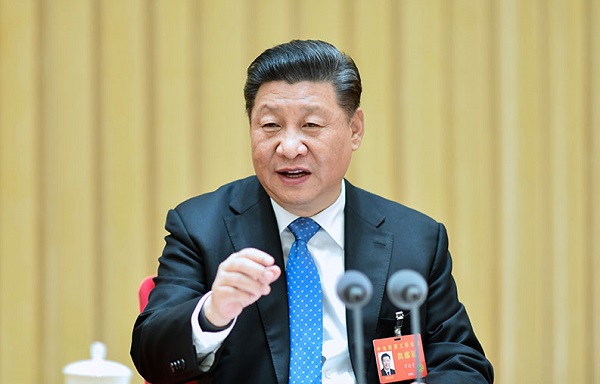 Despite ongoing reforms China is bracing itself for impact with high profile experts from think tanks like the Chinese Academy of Social Science projecting an inevitable decline in China’s economic fortunes in 2019 as outlined in an article published by Institute of Economics[1]. ” In an attempt to stem this tide, President Xi Jinping outlined China’s 2019 economic. Trade stimulus measures revolving around the introduction of new tariffs, facilitated customs clearance, expedited market access, optimized routes to market and much more are in the works and will be outlined in this article.
Opening up 2.0: New Policies Foreshadow Growth in Imports
◆Customs clearance optimization
On Jan. 2, 2019, Premier Li Keqiang outlined China’s plans to upgrade comprehensive bonded zones[2] and develop new technologies, processes and solutions to expedite clearance, reduce costs and increase the variety of imported products on offer to Chinese consumers. Under new plans enterprises operating within the confines of the bonded zones will be subject to favorable taxation, streamlined procedures and facilitated logistics.
Since Feb. 2, imported food products that are subject to laboratory testing at comprehensive bonded zones are cleared right after sampling and before testing results are released. This will be an extremely welcome change for the food industry, particularly stakeholders dealing in fast moving consumer goods and spoilable products with a limited shelf life.
Take pasteurized milk for example, compared to UHT milk (which is preferred in China due to its longer shelf life), pasteurization allows maximum retention of nutrients and improved sensory qualities. Unfortunately, pasteurized milk has a shelf life of only 21 days give or take. On Mar. 20, 4248 bottles of pasteurized milk from Australia underwent full customs clearance procedures within an hour[3].
Under the new supervision model, imported fresh milk enters refrigerators at bonded zones after inspection and quarantine at port, then GAC officers will check over the cold logistics record, packaging, labels and sensory quality. After these steps, samples are selected and sent to a laboratory. The products are then released and delivered to retail locations or local storage facilities, but cannot be sold to consumers until the testing results are back. This new method of customs clearance has reduced time to retail by 3 days, or, viewed from another perspective has added an average of 3 days to the shelf life of goods. The change does not mean a reduction in regulatory requirements. On the contrary, it requires stakeholders to establish a robust product recall and post-release rectification system and also bear full legal liability for the safety of their goods.
◆Optimized label inspection
In March, a leaked internal document pointed to a likely revision to Imported Prepackaged Food Labeling Inspection Requirements[4]. Label filing for prepackaged food imported for the first time is proposed to be canceled. If passed successfully the new requirements will mean label inspection of foods imported for the first time will be regarded as a normal sampling inspection item for customs release.
◆Tariff reductions
In 2019 Regulations on Import and Export Duties[5], tariffs imposed on New Zealand, Peru, Costa Rica, Switzerland, Iceland, Australia, South Korea and Georgia were further lowered. Mainland China also reduce tariffs to zero on all goods originating from Hong Kong and Macau Special Administrative Regions as stipulated in Free Trade Agreements.
In another document List of Provisional Tariff on Imported Goods[6] released by Ministry of Finance towards the end of 2018, 706 items of imported goods were subject to low duties, including seafood, dairy products, fruits, animal oil and fats, baby food and liquor.
| Duty type | MFN duty | General duty | Provisional duty | Conventional duty |
| Definition | Tariff on imports from other members of the WTO, unless the country is part of a preferential trade agreement. | Goods from countries/regions that have no FTA or MFN. It is the highest rate, but not often used in practice. | Duties on certain goods in certain span of time that are usually MFN. | It is tariff stipulated in Free Trade Agreements, and is usually lower than MFN duty. |
| Scope | Most countries/regions such as France, Ireland, Germany, Denmark, Italy, Netherlands | / | Same as MFN | 23 trade partners such as New Zealand, Australia, ASEAN members, South Korea |
| e.g. Infant formula | 15% | 40% | 5% | New Zealand 0% Switzerland 6% … |
ANZ baby food: duty free
Infant formula and complementary infant food from Australia, New Zealand, Peru, South Korea, Costa Rica, Iceland, and Georgia enjoyed 0% tariffs thanks to bilateral FTAs with China. Swiss infant milk powder is subject to 5% provisional duty. Notably, provisional duty on infant foods for special medical purposes (FSMP) is zero and its MFN duty is reduced to 10% from 20%, pointing to a broad government goal designed to increase importation of this category of food product.
| MFN | Provisional duty | New Zealand | Australia | Switzerland | S. Korea | |
| Infant formula | 15% | 5% | 0% | 0% | 6% | 0% |
| Complementary infant food | 15% | 2% | 0% | 0% | 6% | 0% |
| Infant FSMP | 10% | 0% | 0% | 0% | 0% | 6.6% |
According to customs import data, China imported 365.5 thousand tons of milk powder over the first two months of 2019, up 26% compared with the same period of last year. Imported infant formula amounted to 47.3 thousand tons, accounting for nearly 13% of total powdered milk.
Dairy products
| MFN | Provisional duty | New Zealand | Australia | Switzerland | S. Korea | |
| Spotted or veined cheese | 15% | 8% | 0% | 0% | 0% | 9% |
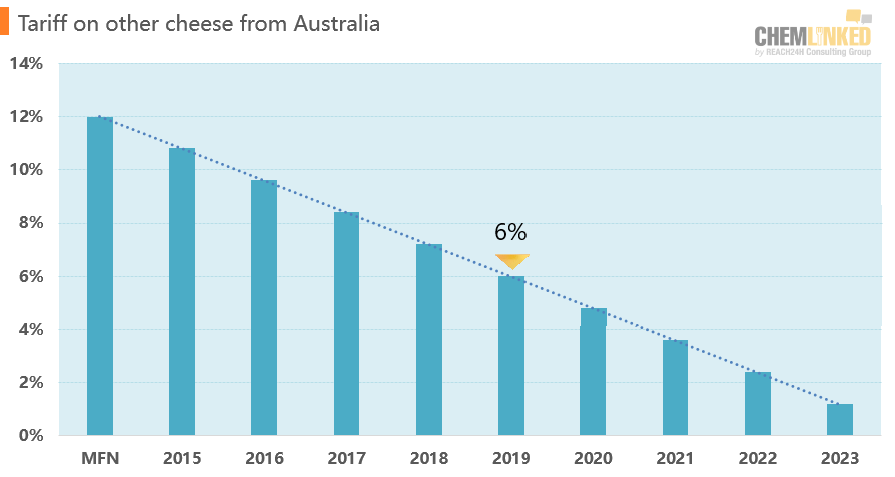
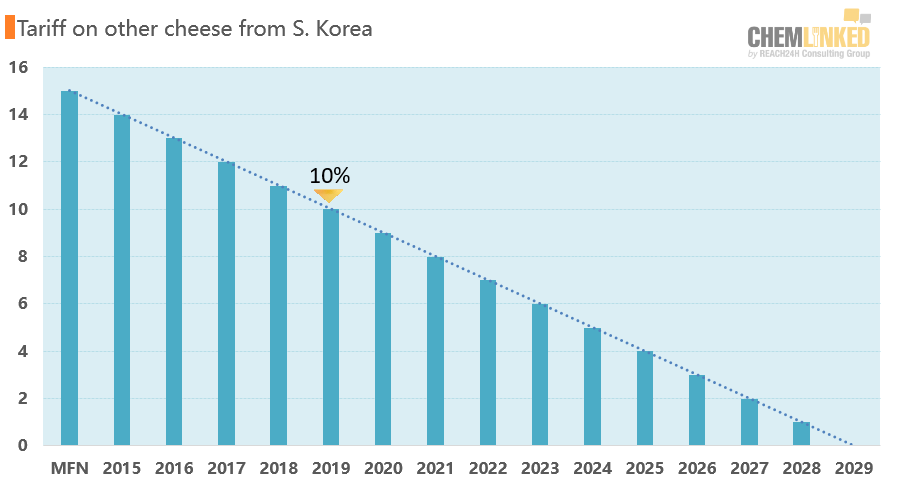
| Other cheese | 12% | 8% | 0% | 6% | 6.8% | 8% |
| Whey | 6% | 2% | 0% | 0% | 0% | 3.6% |
| Butter | 10% | - | 0% | 5% | 0% | 6.6% |
Other dairy products subject to reduced duties include cheese, whey, butter etc. Based on the tariff schedules of China’s various FTAs, tariffs on some goods will be reduced in stages. The following are some examples.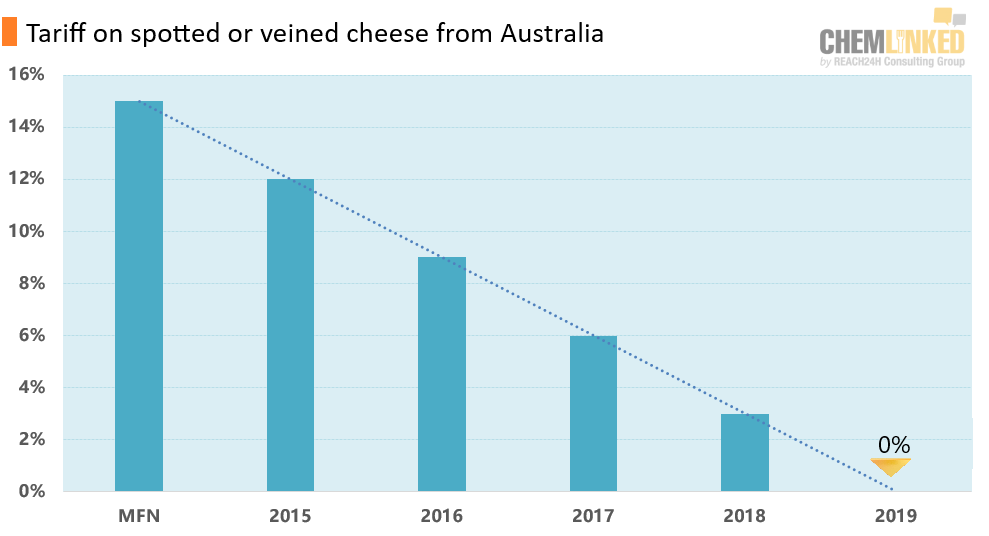
◆Cross-border ecommerce: A key mechanism for expansion in imports
Beginning in 2014, CBEC has emerged as a unique and highly lucrative trade channel and market access option for international stakeholders. Unfortunately, in the past, much of the benefits associated with CBEC were diminished by a lack of policy stability and uncertainty revolving around future regulation of the sector.[7] At the end of 2018 the government issued various statements indicating that CBEC policy would remain stable over the next several years and pledged to introduce additional incentive measures to promote growth in the sector. CBEC offers 3 major advantages for the international food industry:
CBEC-traded special food (including infant formula, health food and food for special medical purposes) will not be subject to complicated pre-market approval.
The positive list of CBEC will be appended to include 63 types of new highly demanded products/commodities (including wine, ale etc.).
The CBEC transaction limit (places limit on eligibility for preferential tax policy based on total value of purchases) will be raised from 2000 RMB to 5000 RMB per transaction and from 20,000 RMB to 26,000 RMB per person per year.
In general trade channels, depending on the product category, pre-market approval encompassing registration/filing/label inspection etc., can take anywhere from 1 month to 3 years. In the infant formula sector manufacturer registration is additionally required which involves onsite inspection of manufacturing facilities. Cross-border ecommerce represents a much easier route to market.
CBEC Consumer demographics:
Consumers with wages of over 10,000 RMB were responsible for nearly half of all CBEC purchases, 80% were without any dependents, and 60% were white collar workers.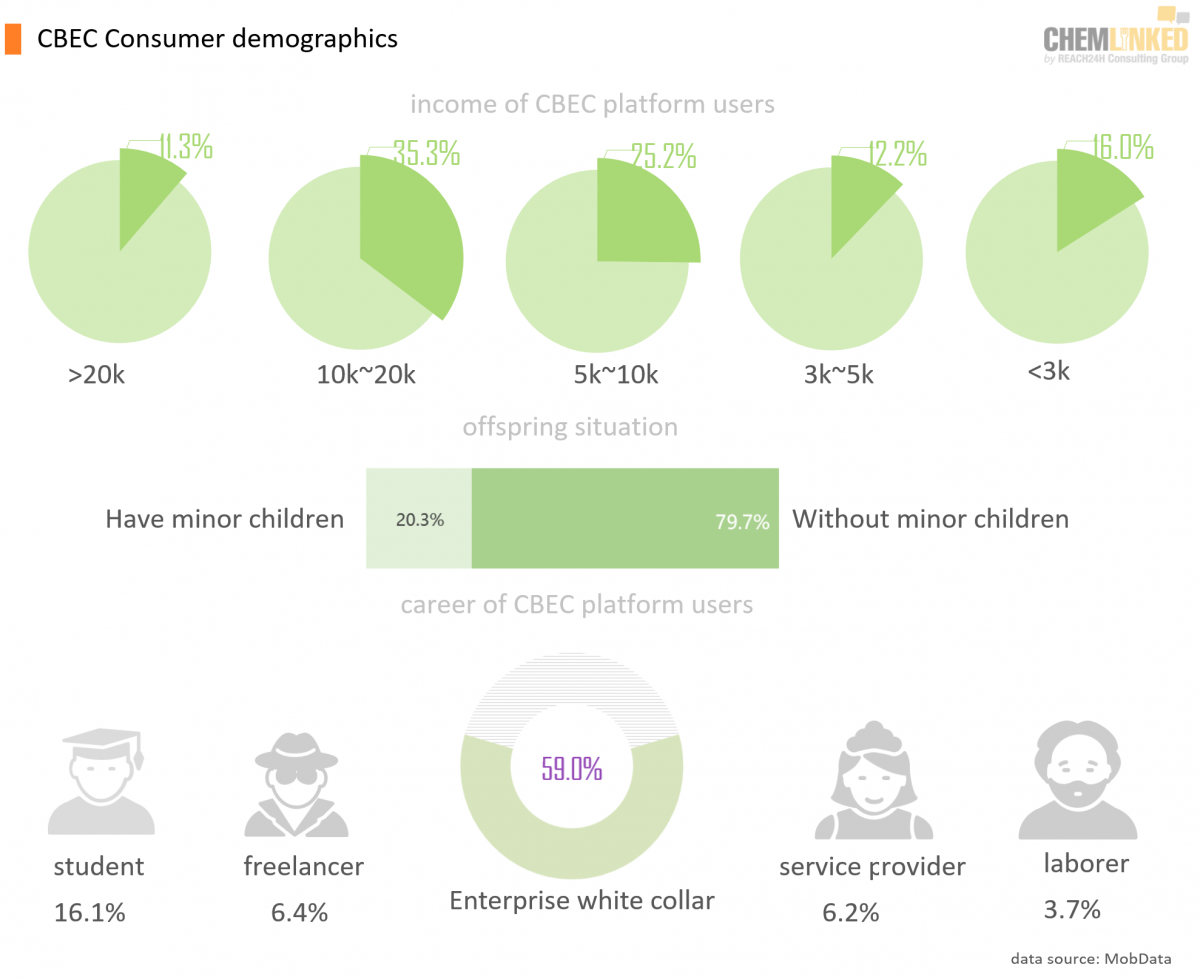
Tax incentives
Along with the preferential CBEC policy, Chinese government also reduced value-added tax (VAT) to 13% (down from 16%) in sectors such as manufacturing and to 9% (down from 10%) in sectors such as transportation since 1 April, 2019 (please refer to analysis on VAT reform for more info[8]). The massive cuts of VAT rate will directly contribute to a significant reduction in CBEC comprehensive tax—— a combination of consumption tax and vat. For CBEC the tax on imported foods are:
| Category | Items | VAT | Consumption tax | Updated Comprehensive rate | ||
| before | after | before | after | |||
| infant formula, adult milk powder, health food | 16% | 13% | 0% | 11.2% | 9.1% | |
| ordinary food | cereal-based snacks, dried fruits, chocolate, nuts, coffee, mineral water, soft drink, chewing gum, flavorings, beer, ready-to-eat bird nest, etc. | 16% | 13% | 0% | 11.2% | 9.1% |
| seed oil, olive oil, linseed oil, natural honey | 10% | 9% | 0% | 7.0% | 6.3% | |
| wine and sparkling wine | 16% | 13% | 10% | 20.2% | 17.9% | |
New Market Environment Breeds New Opportunities
◆Stoking the furnace of consumption
In 2018, China's per capita disposable income stood at 28,228 yuan ($4,165), up 6.5 % YoY. A big contributor to this increase in national disposable income comes from the narrowing of the urban-rural income gap power. This was achieved in part by China amending the individual income tax law[9] and raising the tax threshold from 3,500 RMB to 5,000 RMB. Based on a gross salary of 10,000 RMB, most consumers have a net increase of 455 RMB each month.
| Salary | Individual Income Tax Before 1 Oct. 2018 | Individual Income Tax After 1 Oct. 2018 |
| 5,000 | 45 | 0 |
| 7,000 | 245 | 60 |
| 10,000 | 745 | 290 |
| 15,000 | 1870 | 790 |
| 50,000 | 3120 | 1590 |
Besides, the State Council also implemented temporary special individual income tax deductions[10] with effect from 2019. Expenditures covering children's education, continuing education, healthcare, housing loan interest, rent and elderly care can be deducted.
Further evidence showcasing China’s successful efforts to bridge the rural-urban divide is outlined in the Global Digital Economic Development Index 2018[11] jointly released by AliResearch and KPMG Digital Ignition Centre, which shows that in third- and fourth-tier cities’ online consumption grew at a faster pace than first- and second-tier cities.
◆CIIE: A global pathway to China’s markets
China’s inaugural China International Import Expo (CIIE) concluded in 2018 and was a resounding success. The event saw over 5,000 imported goods enter China for the first time. The event was also the location for the signing of numerous high profile trade deals (see picture below). The State Council announced its decision to establish a CIIE Committee to take charge of the event in future.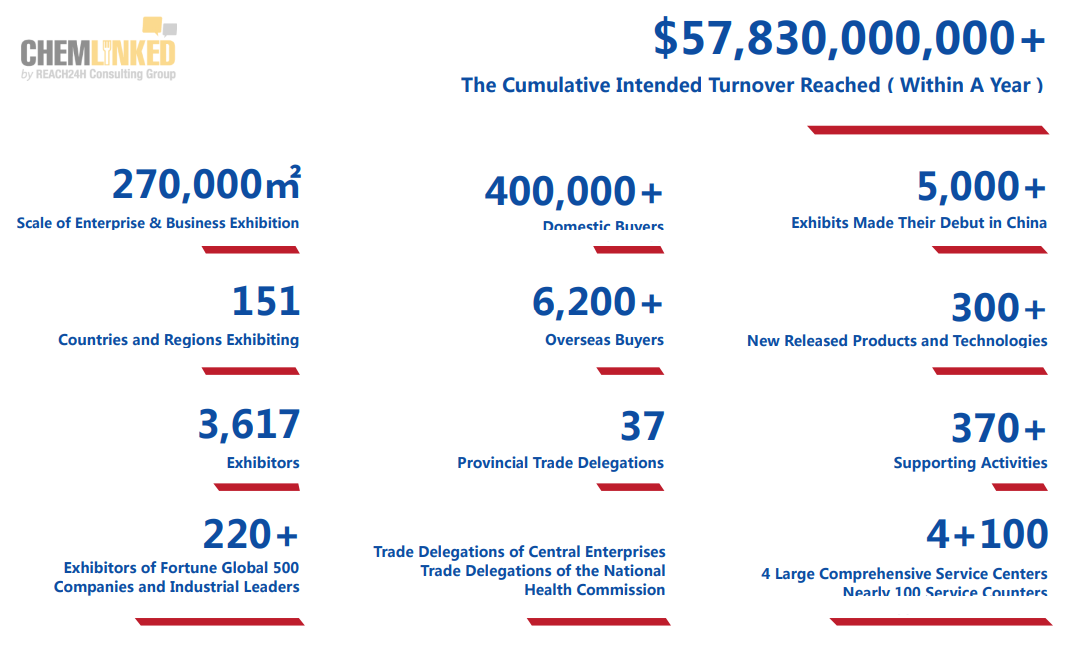 The 2nd CIIE will be held from 5 Nov to 10 Nov and an expanded area of 300,000 square meters, has been allotted to the event. By 2nd of April, 12 guest countries and 55 participating countries have officially joined the expo[12].
◆Intelligent logistics system
In Nov 2018, the State Council blueprinted its modern logistics system during an executive meeting. Later in Dec, National Development and Reform Commission and Ministry of Transportation launched National Logistics Pivot Deployment and Construction Plan. The plan aims to establish 212 logistics control points in 127 cities, and encourages private sector and foreign investment.
It is estimated that comprehensive measures would bring down logistics costs by 120.9b RMB in 2019, revealed in a press conference of State Council Information Office[13]. The past three years saw costs reductions of 55.8b, 88.2b and 98.1b RMB respectively.
| Year | Logistics costs reduction |
| 2018 | 98.1b CNY |
| 2017 | 88.2b CNY |
| 2016 | 55.8b CNY |
 We provide full-scale global food market entry services (including product registration, ingredient review, regulatory consultation, customized training, market research, branding strategy). Please contact us to discuss how we can help you by