Request a Demo
In this article, we selected the 10 most important food regulatory updates in India in 2017. Noteworthy updates include the ban on the import of milk and dairy products from China, the implementation of the new version of the Food Safety Standard (Import) Ordinance and new provisions on aquatic products.
I, Food Management Regulations
In Jan. 2017, the Indian government issued regulations on the strengthening of food control in order to raise the national nutrition level and strengthen the supervision of fortified foods. The plan that flour, cooking oil, milk and salt product manufacturers to use nutritional claims need government approval. The Indian government said it will step up regulation of fortified foods sold in schools and other public systems. Later in Aug. 2017, India FSSAI announced that the fortification logo (+F logo) is now a mandatory labeling requirement on all fortified food labels. The name of the nutrition enhancer must also be indicated using the statement “Fortified with ......... (Name of the fortifier)” (see ChemLinked News).
II, Imported food safety standard regulations (2017 version)
Released in March 2017, this regulation consists of 13 chapters. The main contents are Importer licensing, Imported Food Clearance, official permission to import food, storage and sampling of imported food, laboratory analysis as well as 15 blank Forms to be used in different phases of import procedure.
III, Foods Fortification
In May 2017, FSSAI issued the revised FSSAI Food Safety and Standards (Fortification of Foods) Regulation. The circular consists of three main chapters and two annexes covering the terms and definitions, general principles, applicable standards, trace element content, quality assurance and so on. Among other things, it now includes standardized milk among the foods fortifiable with Vitamin A and D.
IV, Application requirements to import non-Indian formula food for severe patients
In June 2017, FSSAI released the application requirements to import non-Indian formula food for severely ill patients. Any person who has a life-threatening illness who requires special formula food not produced in India and with no applicable national standard may file it in person or by e-mail to FSSAI or the Indian Customs Declaration of the format of the annex material.
V, Extension of the ban on Chinese dairy products
In June 2017, FSSAI decided that the ban on imports of milk and dairy products (including those containing milk or solid milk), confectionery from China should be extended until June 23, 2018. This ban has been in place since 2008.
VI. India Amends the Code of Food Safety Standards Aquatic Products Regulations
Affected aquatic products include frozen shrimp, frozen fish, frozen fish fillets, canned aquatic products, frozen cephalopods, smoked aquatic products, instant curry fish shell soft cans, sardines in oil, edible fishmeal, fish sauce, frozen minced fish, Frozen dried shrimp, frozen clams. Its various chapters include the definition, quality requirements, food additives, health, toxic and harmful substances and residues and packaging labels.
VII. Manual for Food Imports
On Nov. 8, 2017, India released the Manual for Food Imports, detailing food import procedures, documentation requirements, clearance process, and products review (see ChemLinked News). This document has the purpose to outline the clearance of customs clearance systems and imported food into India. The manual includes an overview, the purpose of imported food, imported food steps and so on.
VIII. Unified organic food regulations
In November 2017, FSSAI released a uniform organic food regulation.
The regulation incorporates two organic food management systems currently in existence in India under the National Organic Food Program (NPOP) and the Indian Participation Certification System (PGS-India) and provides for a common organic food logo, identified as "Jaivik Bharat". An “Indian organic database" was also released so that consumers can effectively identify organic food from India (official press release).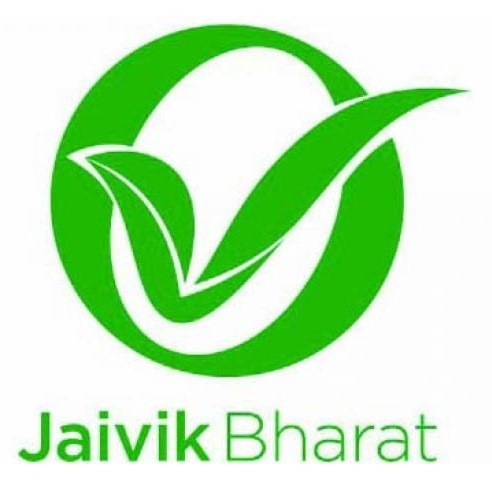 IX. Recommendations on dairy vitamins requirements
In November 2017, FSSAI issued recommendations on vitamin fortification in dairy products. Products mainly include skim milk, reconstituted milk and standardized dairy products. The recommended values for nutrient fortification are as follows: vitamin A is 770 IU / L; vitamin D Is 550 IU / L, in order to reach the level of 15-30% of the daily demand of related nutrients.
X. Labelling requirements for instant noodles
In December 2017, FSSAI issued labeling requirements for instant noodles, stating that the food category name “Instant Noodles” should be shown on product label, but product with existing label can still be sold for six months in the country (until 30th June 2018). FBOs shall comply with standards prescribed for instant noodles as specified in the notification.
If you would like to learn more information about food regulations in India, take a look at our foodpedia: Food Regulation in India
 We provide full-scale global food market entry services (including product registration, ingredient review, regulatory consultation, customized training, market research, branding strategy). Please contact us to discuss how we can help you by