Request a Demo
On June 25th, 2019, the Healthy China Promotion Committee was established at the national level and detailed the Healthy China Action Plan (2019-2030)[1], clarifying the tasks and goals raised in the Guidelines for Healthy China Action[2]. Here are the details.
Main Content
Regulating towards healthier dietary practices in China
 According to this document, the average sugar intake per capita in China is around 30g more than the recommended daily intake of 25g suggested by WHO. The adult obesity rate in China was up 67.6% in 2012 compared to 2002.
To combat major risk factors heavily implicated in the development of several chronic diseases, China’s government is advising people to choose low fat, low sodium and low sugar products and advising people to consume 200-350g of fresh fruit every day. (Read more at the Fresh Fruit Sector in China: An Analysis of Market Performance & Market Access Requirements [3])
The following initiatives will be implemented:
Encourage the production and consumption of low fat, low sodium, low sugar products
Enterprises are encouraged to produce low-sodium salt and help consumers lower salt and fat intake. They are also encouraged to use sweeteners to replace added sugar.
Supermarkets and stores are encouraged to set up a specialized area for low fat, low sodium and low sugar food products.
Accelerate the establishment of a national food nutritional standard
- The government will accelerate the formulation of food standards designed to restrain the production and sale of high-sugar foods and promote the production and consumption of low sugar or sugar-free products.
- Accelerate the development of national food standards for healthy and nutritious foods.
Foster development of agricultural and food processing systems that promote the production of healthier foods.
Formulate the maximum limit of sucrose in children’s products.
Revise the General Rules for Nutrition Labeling of Prepackaged Foods; add compulsory labeling of sugar, such as sucrose; encourage enterprises to use claims like “low-sugar” or “sugar-free”.
Promote the use of FOP (Front-of-package) labeling in food packages and strengthen the supervision of nutritional labeling of prepackaged products
Educate Chinese consumers.
Measures for different groups
For pregnant women: favored condition for nutrient supplements
| 2013 | Target value in 2022 | Target value in 2030 | |
| The anemia rate of pregnant women (%) | 17.2 | <14 | <10 |
According to the data from the Healthy China Action Plan, there is still a high prevalence of anemia amongst pregnant women, children and the elderly. In addition, micronutrient deficiencies are common and there is an unacceptably high prevalence of calcium, iron, Vitamin A, Vitamin D deficiency. Lack of dietary fiber is also a major concern.
China’s government advises citizens to:
take more nutrients like protein, calcium, iron, Vitamin A, Vitamin D, Vitamin B12, folic acid, etc.;
taking more iron supplements under the guidance of doctors;
supplementing folic acid three months before and after the pregnancy.
The plan also underscores the importance of women’s health. Industry has already been serving demand in this regards with products like Swisse’s High Strength Cranberry performing extremely well on Tmall clocking monthly sales of over 5500 bottles.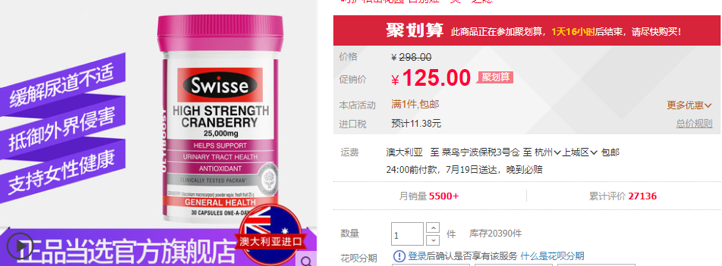
For infants: narrowing down stage 1 infant formula market
 As revealed by a CDRF (China Development Research Foundation) report[4], the exclusive breastfeeding rate in the first six months of infant life is just 29.2% in China, much lower than the global average of 43%. The goal listed in the National Nutrition Plan (2017-2030)[5] released by State Council, is 50% by 2020.
The Action Plan advises Chinese mothers to breastfeed babies exclusively in the first six months of life and offer auxiliary foods from 6-24 months, such as food with more iron content. This information should interest infant formula stakeholders and may help explain and help predict downward trends in the sale and consumption of stage 1 infant formula.
For students in primary and middle school: short-sighted young generations
For young kids and teenagers at school, myopia and obesity are two major health issues. In 2018, the prevalence of myopia among kids and teenagers in China was 53.6%. The plan emphasizes the importance of decreasing myopia and will penalize schools and other institutions with a higher prevalence of myopia.
| Group | Myopia rate |
| Six-year-old kids | 14.5% |
| Primary students | 36.0% |
| Middle school students (around 12-15 years old) | 71.6% |
| High school students (around 16-18 years old) | 81.0% |
On July 1st, 2019, the myopia issue was once again thrust into the public spotlight as one school in Hangzhou made the decision to penalize students with deteriorating eyesight[6].
Food for the elderly set to grow
 China has the largest population of senior citizens in the world. According to this document, it has 249 million senior citizens who are older than 60 years old, accounting for 17.9% of the whole population, among which 180 million are suffering from a chronic disease.
This action plan will focus on improving the health of China’s senior citizens using a multidisciplinary approach that will emphasize physical exercise, health monitoring and mental health checks.
Enterprises are encouraged to offer more health-related service for the elderly
Universities and colleges are encouraged to set up geriatrics care courses on nutrition, psychology and other problems.
The market environment is expected to be increasingly influenced by governmental policies which will likely translate to greater opportunities in the food for the elderly segment. In Sep 2018, NHC released the consultation draft of the National food safety standards General rules for elderly food[7], which is the first national standard for food for the elderly.
Insomnia
15% of citizens suffered from insomnia in 2016. In the action plan, China outlines its plans to solve this issue. In China Embracing Global Plant-Based Nutrition Movement: Whole Foods, Organic and Plant-Based Trending Hard[8] we predicted the growth in sleep-aid supplements. New policies outlined in the action plan are further cementing our resolve on the strong potential of sleep-promoting supplements and foods.
Major Disease Control
In China, there are:
 270 million hypertensive patients
13 million patients with cerebrovascular disease
11 million patients with coronary artery disease patients
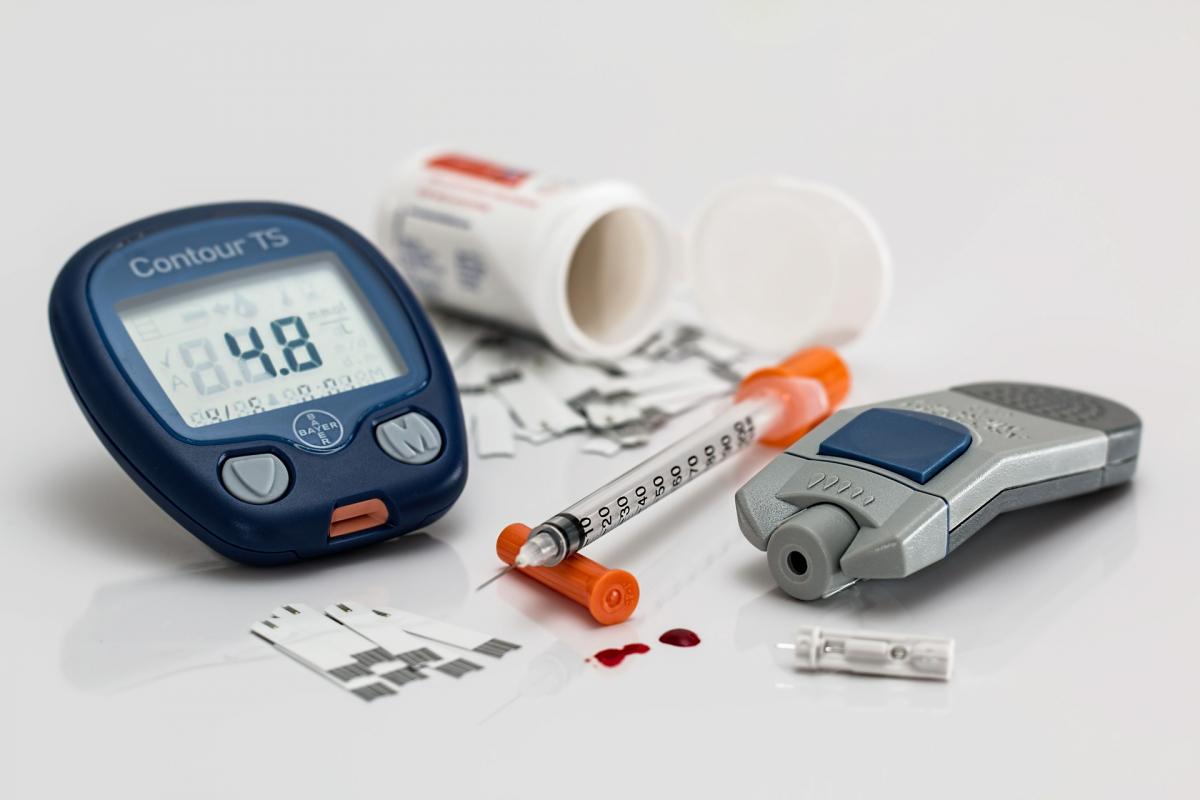
97 million diabetic patients
150 million pre-diabetic patients
100 million patients with COPD
3.8 million new cases of cancer each year (an annual increase of 3.9%)
Teng Jiacai, the vice director of former CFDA (now SAMR) emphasized the significance [9] of developing China’s FSMP industry and promoting the construction of a Healthy China. According to the vice director, the government has earmarked the FSMP sector for significant development as a means to improve patient outcomes and decrease medical expenditure on a national level. On Sep. 7th, 2018, NHC released a consultation draft of a national standard, Clinical Application Rules for FSMP[10], which standardizes the criteria for prescribing FSMP.
Mitigating Environmental Impact
Pollution of various kinds is a major contributor to morbidity and mortality in China and is associated with the development of cardiovascular, respiratory disease and several other diseases. As part of its policy to address environmental issues, China is promoting the use of sustainable and environmentally friendly products. For the food industry, this will mean phasing out reliance on the use of plastic packaging and plastic utensils. Minimizing the use of plastic packages and promotion of environmentally friendly “green packaging” will be a major trend going forward. Click here[11] to see details on China’s first green packaging recommended national standard.
 We provide full-scale global food market entry services (including product registration, ingredient review, regulatory consultation, customized training, market research, branding strategy). Please contact us to discuss how we can help you by