Request a Demo
Sparked by rapid development of the Chinese children food industry in recent years, it is unavoidable to see chaos in the children food market. As a result, supervision on children food has been gaining widespread public attention. Many food products marketed towards children with cartoon images or self-labelled "children" are found to contain high levels of salt, fat and/or sugar, despite being more expensive than similar products that are not claimed as children food. This contradicts consumer's perception that children food is healthier.
It is widely believed that the market chaos in the Chinese children food industry is due to the lack of regulation, which has spurred the public demand for proper supervision of children food. By examining the market and the current supervision measures, this article explores the future direction of regulation in the Chinese children food industry.
1 Market of Children Food in China
The children food market in China has huge potential, among which children snack is one of the essential sub-tracks with great business opportunities. According to the White Paper on Survey of Children Snack Market1, Children snack market is estimated to grow steadily at a CAGR of 10% to 15% from 2019 to 2023. In 2019, China's leisure snack market reached 571.3 billion yuan according to this white paper. Children snack market may be a new driving force for the leisure snack market in China. In addition, children food is often correlated with health enhancement, a lasting hot spot due to the increasing health awareness in recent years, especially during the COVID-19, which makes children food popular among child-rearing families. According to a survey conducted by the China Youth Daily Social Investigation Center, 84.8% of parents are inclined to buy food products claimed as children food.
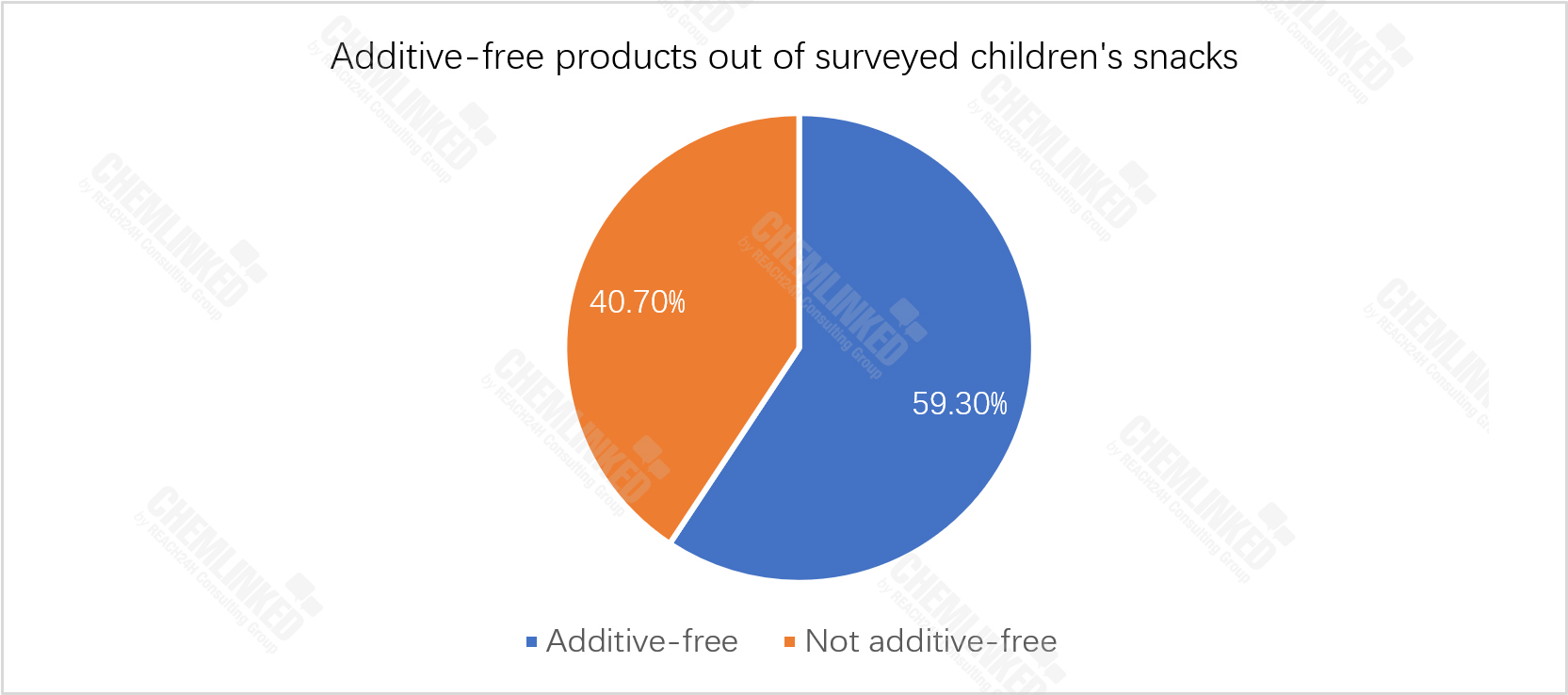
Though the market potential is bright, chaos exists in the market of children food. It seems that some children food products simply use "children" as a marketing gimmick to cater to the consumer’s demand for children’s health, such as low sugar and salt, simple ingredients, functional ingredients and high nutritional value. Whether the product is additive-free and with simple ingredients is the top factor that parents care about. According to TIMON's report2, 40.7% of children snacks are found to be against parents' additive-free wishes. TIMON also investigated the sodium content of children condiments and found that over 90% of children condiments were high in sodium. Consumer's health demand is far from being satisfied.
2 Current Supervision on Children Food in China
In order to provide context for current supervision on children food in China, it is important to first understand the hierarchy of standards. China's standards are structured into five levels: national, industry, local, group, and enterprise standards. The most important and authoritative of these is the National or GB standard, which can be mandatory (GB) or recommended (GB/T). In fact, GB standards serve as the primary reference for imported products. In cases where no GB standard exists, other levels of standards may be used.
The chaos in the Chinese market is largely due to the lack of food regulations, especially food safety standards for children food. Businesses regard "children food" more as a marketing strategy instead of a specific category that requires strict compliance. Despite this fact, we can still see quite a lot of efforts in China to supervise children food.
On June 15, 2020, China's Non-stable Food Circulation Association released a group standard on General Requirements for Children Snacks3, which was China's first standard specifically for children food. In China, group standard is recommended standard developed by associations, different from compulsory regulations formulated by national authorities. This standard defines children snack as snack suitable for consumers aged 3 to 12 years and specifies technical and labelling requirements.
On May 30, 2022, three group standards4 related to children food were released by China's Non-stable Food Circulation Association, including the revision of General Requirements for Children Snacks, and Children Candy, Chocolate and Other Products. In addition to that, the past few years have seen the publication of some children-related group standards, involving meat products, beverages, jelly, nutritional noodles and quick-frozen wheat flour, as well as rice products.
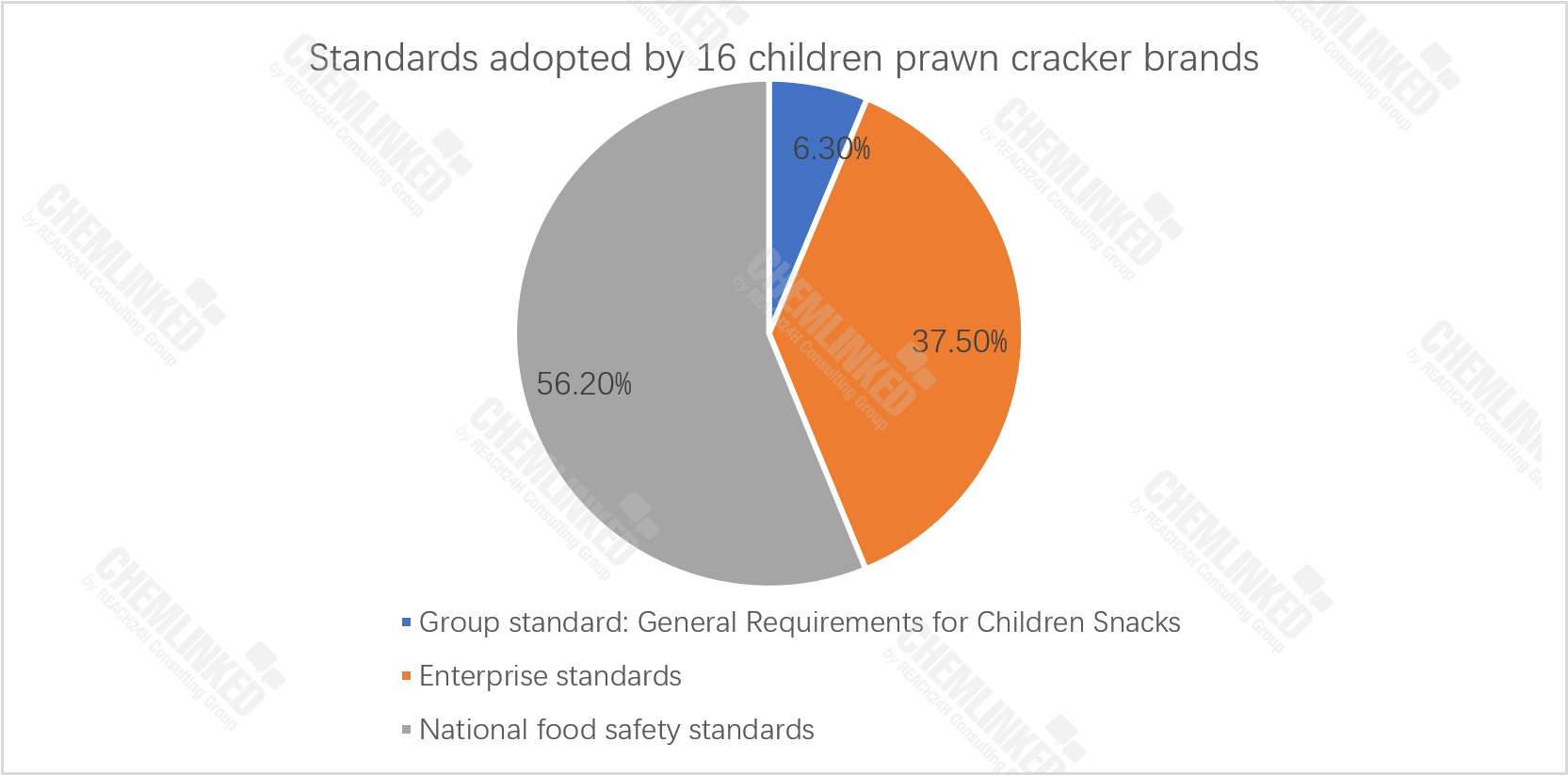
However, not many children food enterprises in the market implement the group standard specifically for children. According to a survey in TIMON's report2, 37.5% of the participating children prawn cracker brands implement the enterprise standards, 56.2% carry out the national food safety standards, and only 6.3% implement the group standard General Requirements for Children Snacks.
Currently, there are no national food safety standards specifically for children food, but some mandatory GB standards mentions children. For instance, GB 14880 Standard for the Use of Nutritional Fortification Substances in Foods involves the use of nutritional fortifiers for children milk powder. GB 22570 Complementary Food Supplements applies to complementary nutritional foods for infants aged between 6 to 36 months and children aged between 37 to 60 months. In addition, State Administration for Market Regulation (SAMR) has also released administrative measures involving children food, such as Announcement Regarding Strengthening the Quality and Safety Supervision of Solid Beverage. SAMR requires that solid beverage labels, instructions and promotional materials shall not contain texts or graphics to show or imply that the product is suitable for minors below 18 years old.
3 Future Trends on Regulating Children Food in China
In the future, China may strengthen the supervision of labels related to children food. In the past few years, the public has proposed many concerns over the chaos in the children food market. In response to those concerns, National Health Commission (NHC) released an official reply5 in late 2022, mentioning the authority was revising GB 28050-2011 and planning to require mandatory labels to warn children to avoid excess intake of salt, fat and sugar. Also, China has already proposed restrictions on the labels that can be related to children food in the market. When promoting children food, some businesses like to advertise "no xx added" such as "no sugar added", causing a lot of confusion. The consultation of GB 7718 proposed to ban the use of negative content claims or related terminology such as "does not contain" or "no xx added", in order to regulate the market and avoid misleading consumers. Additionally, SAMR released a draft of Administrative Measures for Supervision of Food Labels, which proposed to stipulate that food labels shall not contain texts or graphics to show or imply that the product was suitable for specific consumer groups such as children.
It is quite unlikely that China sets a new GB standard specifically for children food, despite proposals made by the public. In late 2022, China National Center for Food Safety Risk Assessment (CFSA) held a seminar discussing the supervision of children food. The meeting reaches a consensus that the current national food safety standards have covered the safety and nutritional requirements for "foods claimed to be suitable for children". What is needed to do is to strengthen the science-based awareness of parents and minors to understand food labels. Related national-level nutrition guidelines for consumers like children are possible to be published in the near future.
4 Suggestions for Overseas Companies
The first suggestion for overseas companies interested in children food is to produce high-quality children food products with science-based nutrition. With consumer's increasing awareness of nutrition and health, more and more consumers are beginning to review the nutrition label of each children food product to ensure its suitability to their nutritional needs, rather than being misled by deceptive marketing tactics. Consequently, it is imperative to prioritize the quality of children food products. It is suggested that overseas food enterprises focus on enhancing the nutritional performance of their products as a means of reinforcing their brand reputation.
There are also some food giants who take the social responsibilities in the marketing of children food, from which food enterprises can learn a bit. For instance, Nestlé plans to cease the direct advertising of products high in sugar targeting children below 16. This policy will be applied globally since July 1, 2023. Unilever also announced to stop promoting its food and drink products to children under 16 since January 2023 and examine the nutritional performance of its food products as per various nutrition evaluating systems in different countries.
Additionally, food enterprises should keep abreast of the latest developments in the supervision of children food, especially labels and claims. It is highly possible that China will strengthen supervising labels of children food in the future, such as drafting children-related contents in GB 28050 General Rules for Nutrition Labeling of Prepackaged Foods. Also, Chemlinked is a good platform that can help you in compliance with the regulatory updates.
For customized report service, please contact us.
 We provide full-scale global food market entry services (including product registration, ingredient review, regulatory consultation, customized training, market research, branding strategy). Please contact us to discuss how we can help you by