Request a Demo
Introduction
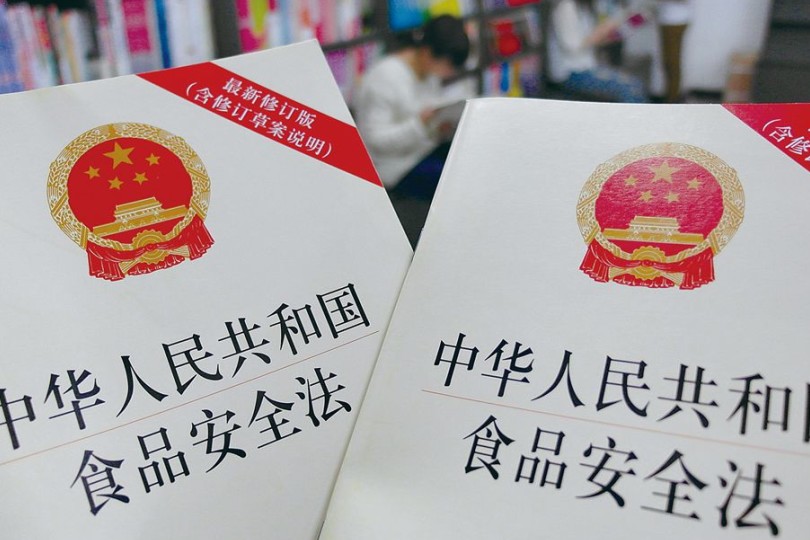
The second draft of China’s food safety law was published by the State Council on 22 December, 2014, seeking public comments. Food regulatory experts from REACH24H offered a webinar titled “Requirements and Impacts on Imported Food in the Second Draft” on 15 January, 2014 and prepared this report to summarize and analyse the relevant provisions pertaining to general imported food and particularly to health food and infant formula. In addition, relevant announcements and implementing measures published by the CFDA, NHFPC and AQSIQ, which are the major Chinese government bodies tasked with handling food regulation, as well as expert articles from food.chemlinked.com are included to help exporters better understand any pending provisions that will affect market entry and regulatory compliance requirements.
Summary: To date, 722 health foods imported have successfully registered with CFDA (China Food and Drug Administration). If the notification for vitamin and mineral supplements proposed in this draft takes effect, regulatory burden posed on exporters will be lightened and Chinese market will be opened up for vitamin and mineral supplements.
Relevant Provisions
Article 70 (in part): Health food that is imported for the first time shall have been marketed in the exporting countries or areas.
Article 71: Health food shall be registered with the CFDA departments if using new food material and imported for the first time. However, vitamin and mineral supplements, a subcategory of health food, imported for the first time shall be notified to the CFDA departments.
Relevant implementing measures
Administrative Measures on Health Food Registration (CFDA, 2005)
Unofficial translation from PUNTO FOCAL see http://www.puntofocal.gov.ar/notific_otros_miembros/chn160_t.pdf
CFDA Announcement No.194 -2011: Key Points in Administrative Approving Health Foods保健食品行政许可受理审查要点
Expert analysis on health food regulation from food.chemlinked.com, please see at:
China Health Food: New Regulations on Nutritional Supplements
China Health Food: Analysis of Latest Significant Regulatory Updates
Infant formula
Summary: It was reported that Chinese market for infant formula will be worth 33 billion by 2017. In 2013, CFDA (the competent authority in charge of domestic food safety management) released the Announcement No.43 which prohibits producing infant formula via sub-contracting, re-branding and sub-packaging. This vital regulatory change has been incorporated into the draft of revised Food Safety law as Article 75.
Relevant Provisions
Article 75: China strictly regulates, inspects and supervises infant formula products.
Producers of infant formula products shall develop and maintain a quality control system covering the whole production process from raw materials to end products. Each batch of infant formula shall be tested at the final product stage to ensure product safety.
Raw materials, such as raw milk, and auxiliary material, such as food additives used in the manufacture of infant formula products shall comply with China’s law, administrative regulations and national food safety standards, and shall provide sufficient nutritional compositions that are necessary for infant growth and development.
Infant formula producers shall notify the CFDA departments the raw materials and food additives used, product formula and labels for recording purpose.
Infant formulas were not allowed to be produced by sub-contracting, OEM, or sub-packaging. Furthermore, one producer is prohibited to use one formula to produce different brands of infant formula.
Note: Currently, the ban is applicable to domestically made infant formula only. It is still unclear whether the government will extend the ban to imported baby formula products under the revised law.
Relevant implementing measures
CFDA Announcement No.43 on Order to Ban Entrustment and OEM Production and Repackaging of Infant Formula Milk Powder
Expert analysis on Announcement No.43 from food.chemlinked.com, please see at:
Food Imports
Summary: All food and food additives imported into China must comply with all relevant Chinese regulations, rules and Chinese national food safety standards. Consideration must also be given to other importation issues, such as product certificates. AQSIQ Announcement No.72 includes food and food additives permitted to be exported to China without additional safety assessment, accompanied with the corresponding national standards. Food standards newly released will be incorporated into the Announcement automatically. When initially exporting food and food additives not regulated under Announcement 72 i.e. the national standards for them are not developed, exporters and importers should apply to the NHFPC and submit food safety assessment materials at the same time.
Relevant Provisions
Article 83: China Entry and Exit Inspection and Quarantine (CIQ) departments inspect and supervise the safety of food imports and exports.
Article 84: Imported food, food additives and food related products shall comply with China national food safety standards.
Imported food and food additives shall pass CIQ inspection according to the laws and administrative regulations pertaining to entry and exit commodity inspection.
Imported food and food additives shall be exported with certificates attached according to the CIQs requirements.
Article 85: When exporting food, the national food safety standards of which is not established, or exporting new food additives and food related products for the first time, the overseas exporters, producers or importers entrusted shall submit an application to the NHFPC, attached with food safety assessment materials. NHFPC, in conformity with the Article 36 of this Law, shall determine to approve the application or not and establish the corresponding national standards in a timely fashion.
When exporting the aforementioned food, food additives and food related products, the application approval granted by the NHFPC shall be submitted to the CIQs. CIQs shall follow NHFPC’s requirement in inspection.
Article 36: Any production unit or individual producing food using new food material, or new food additives and food related products, shall submit relevant food safety assessment materials to NHFPC for assessment. NHFPC shall conduct assessment within 60 days upon receipt of the assessment application. For applications that comply with national food safety requirements, a certificate shall be granted and made public, otherwise, NHFPC shall reject the application with an explanatory note in writing.
Article 86: Overseas exporters and producers shall ensure that food, food additives and food related products exported comply with China’s laws, administrative regulations and national food safety standards. In addition, they shall be responsible for the contents of food labels and package inserts.
Importers shall establish a verification system for overseas exporters and producers, verifying the items aforementioned. Products that fail to pass verification shall not be imported.
In the case that imported food is not compliant with Chinese national food safety standards or poses human health risks, importers shall immediately stop importing such food, and recall products pursuant to Article 61 of this Law.
Article 87: In the situation that food safety accidents occurred in other countries and areas that may affect the safety of food in Chinese market, or serious food safety concerns are caused by imported food, food additives and food related products, CIQs shall declare a risk alert or take control measures, and immediately notify CFDA departments, NHFPC, and Ministry of Agriculture (MoA). CFDA, NHFPC, and MoA shall take control measures timely.
CFDA departments at the county level or above inspect and supervise the imported food and food additives sold on the Chinese market. Where serious food safety concerns are detected, CFDA departments shall notify the CIQs timely. CIQs shall take actions without delay.
Article 88: Overseas exporters or agents and importers shall be recorded at AQSIQ. Overseas producers shall be registered with AQSIQ. In the event that the producers are registered with false materials or responsible for severe food safety accidents due to their imported products, their registrations shall be revoked, which shall also be made public.
AQSIQ will publish the list of recorded and registered overseas companies on a regular basis.
Article 89: Imported pre-packaged food and food additives shall have Chinese label and package insert (when required). The labels and package inserts shall comply with this Law and other Chinese laws, administrative regulations and China national food safety standards, shall indicate country of original as well as the name of domestic agents, address and contact information. Pre-packaged food without qualified Chinese label and package insert pursuant to this Article shall not be imported.
Article 90: Importers shall establish and maintain an import and sales recording system for food and food additives, which shall faithfully record the name of food and food additives, and specification, quantity, manufacture date, production or import batch number, best before date as well as the name of overseas exporters and purchasers, address, contact information, and delivery date. Importantly, the records and other recording documents shall be kept in compliance with Article 49 (2) of this Law.
Article 49 (2): Food producers shall establish and maintain a record system for food materials, food additives and food related product, faithfully recording the name of food materials, food additives and food related products, specification, quantity, manufacture date or production batch number, shelf life, buying date, as well as the information on sellers, such as the name, address and contact information. The aforementioned record shall be kept at least 6 month after the best before date of products; for products without an indicated best before date, record shall be kept for no less than 2 years.
Article 91: Chinese exporters shall ensure that food products exported shall comply with the standard requirements stipulated in the importing country (region) and fulfil contract requirements.
Producers of exported food and farms that plant and breed raw materials for export shall be recorded with AQSIQ.
Article 92: CIQs shall collect and consolidate information on imported and exported food safety, and notify to the relevant departments, institutions and enterprises in a timely way:
Food safety information obtained in the CIQ inspection and quarantine for imported and exported food;
Food safety information reported by food industrial associations and consumers;
Food safety information and risk alerts issued by international organization and overseas governments, as well as food safety information reported by overseas food industrial associations and consumers;
Other food safety information.
CIQs shall supervise food importers, exporters and producers by using a credit record system. The credit records shall be published. For importers, exporters and producers with bad record, CIQs shall tighten individual inspection and quarantine procedures .
Article 93: CIQs may assess and examine the food safety management system in and food safety status of exporting countries and areas, and set the inspection and quarantine requirements on the basis of results of assessment and examination.
Relevant implementing measures
AQSIQ Announcement No.72 on Standards for Inspection on Import Food and Food Additives
AQSIQ Announcement No.43 on Rules of Bad Records Administration on Imported Food
Expert analysis on AQSIQ Announcement No.43 from food.chemlinked.com, please see at:
Legal liabilities
Summary: A fine and penalty for the violation of the Law concerning imported food are laid down in Article 120 and Article 117 respectively.
Relevant Provisions
Article 120: In the violation of this Law upon occurrence of following circumstances, CIQs shall impose punishment pursuant to Article 115 of this Law:
Importing food, food additives and food related products that are not compliant with China national food safety standards, or such imports are not attached with qualified certificates as required;
Importing food, the national food standards of which are not developed, or importing new food additives and food related products for the first time without undergoing NHFPC safety assessment;
Exporters exporting food in breach of this Law;
Exporters refuse to recall products after the competent authorities ordered recall of the products.
Importers who fail to establish and maintain an import and sales record system for food and food additives, as well as the overseas food exporters and producers verification system, which breaches provisions of this Law, shall be subject to CIQ punishment pursuant to Article 117 of this Law.
Article 115 (in part): where a crime is established, the person concerned shall be prosecuted according to law; where the activity has not yet established, CFDA departments at county level or above shall confiscate the illegal gains and benefits, food and food products illegally produced, as well as tools, equipment and raw materials used for illegal production and trading; if the total value of the illegally produced or traded commodity is less than RMB10,000, food producer or traders shall be subject to a fine of RMB 50,000 and RMB100,000; if the total value exceeds RMB10,000, food producers and traders shall be subject to a fine of 10 and 20 times of total value; for serious violation, the business license will be revoked.
Article 117 (in part): In violation of the Law with one of the following circumstances, the CFDA departments at county level or above shall order food producers or traders to make a correction and issue a warning; when refusing to make correction, they are subject to a fine of RMB 2,000 to 20,000; and for serious cases, they shall be ordered to stop production or business; business license will be revoked for severe violation.
 We provide full-scale global food market entry services (including product registration, ingredient review, regulatory consultation, customized training, market research, branding strategy). Please contact us to discuss how we can help you by