Request a Demo
As a vital part of modern food industry, food additives generate an important impetus to the technical progress and innovation of the industry. In China, every year the industry witnesses an enormous amount of research effort on food additives, such as the feasibility study of new substances as food additives, and the expansion study of the scope and dosage of existing food additives. Meanwhile, with the regulatory support of Administrative Measures for New Varieties of Food Additives, food enterprises are able to apply for new food additives, so as to boost the development of themselves and China's food industry.
In order to understand the trends and hotspots of R&D on food additives in the Chinese market, ChemLinked reviewed the regulatory updates of food additives in 2022, from the three major links in the new food additive application process, namely, the acceptance, proposal and approval of the application.
Notes: In China, new food additives include new substances and existing substances with expanded use socpe or dosage. Except for common food additives, enzyme preparations, nutrition fortifiers and processing aids are all regualted as food additives.
1. The Approval of New Food Additive Application
The approval of new food additives in 2022
32 new food additive applications obtained approvals from National Health Commission (NHC) in 2022, including:
16 new substances (13 enzyme preparations, 1 food additive, 1 nutrition fortifier, 1 processing aid);
16 existing substances with expanded use scope or dosage (13 food additives and 3 processing aids).
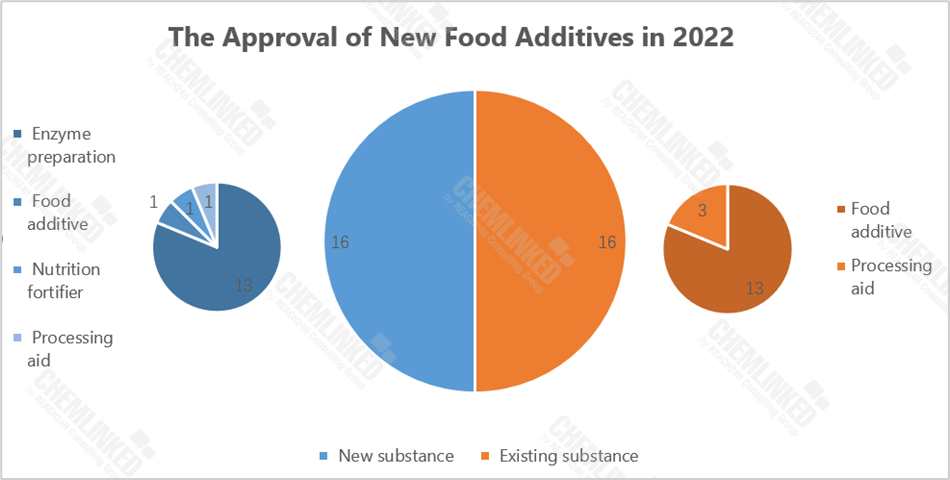
It is worth noting that two food additives, namely, glutamine transaminase and lutein were expanded to be used in some dairy products within the limits, such as flavored fermented milk and cheese.
To view all new food additives approved in 2022, please refer to the following resources:
A Look Back at 2022 with ChemLinked: Global Food Regulation Updates. Check the Food Additives and Raw Materials in Part 1.
Foodlist of Chinese Mainland: Food Additives, Nutrition Fortifiers, Processing Aids, Enzyme Preparations and Flavoring. Look up the substance name in these lists and view corresponding use restrictions.
The approval of new food additives in recent years
From 2015 to 2022, a total of 248 new varieties of food additives were approved by NHC. The approved number were fluctuant in early years, but over the past few years, the number remained around 30, which shows China has formed a more standardized and stable system for the management and approval of new food additives.
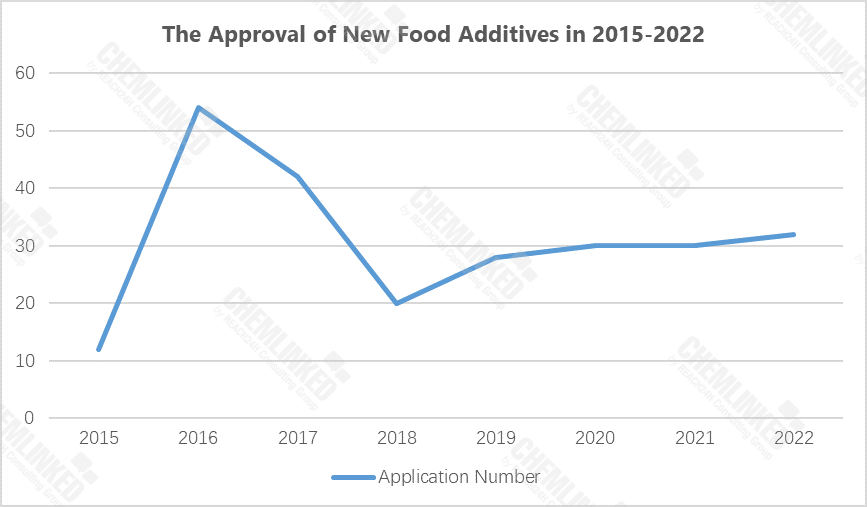 In addition, among the 248 substances, the majority of them were approved substances applying for changes, accounting for 60%, mostly common food additives. 40% were new substances, mostly enzyme preparations and flavorings.
2. The Proposal of New Food Additive
The proposal of new food additives in 2022
Over the past year, NHC issued 6 notifications, involving 46 proposed new food additives. Among them, 33 were new substances and 13 were existing substances with expanded use scope or dosage.
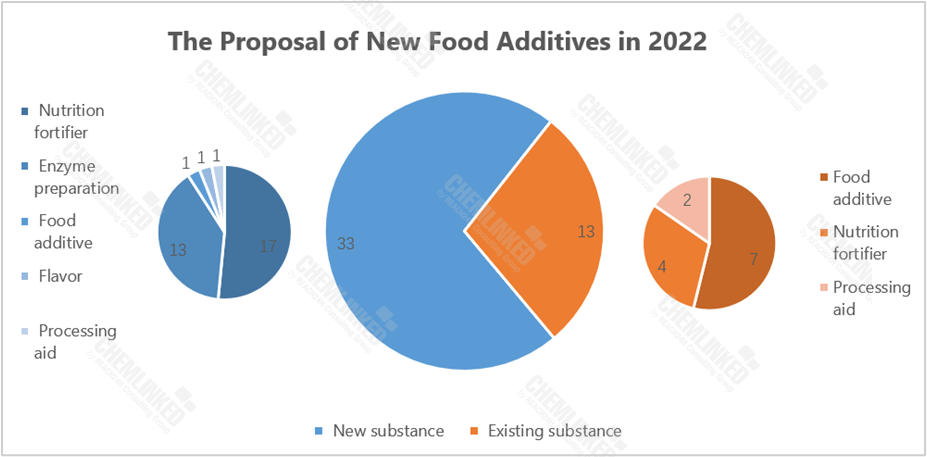
Among the approved new food additives in 2022, several substances are with high attention, such as 2'FL and LNnT that were intended to be used as new nutrition fortifiers in modified milk and infant formula. In addition, it is noteworthy that eight substances proposed in 2022 were approved in the same year, including two varieties of food additives, two processing aids, and four enzyme preparation.
To view all new food additives proposed in 2022, please refer to the following resources:
China CFSA Proposes Six New Food Additives [Historical Resources Included]. Check the latest and historically proposed food additives.
A Look Back at 2022 with ChemLinked: Global Food Regulation Updates. Check the Food Additives and Raw Materials in Part 1.
The proposal of new food additives in recent years
From 2019 to 2022, NHC proposed 156 new food additives for public comments. The number of proposed new food additives showed an upward trend over the past years, which could be attributed to the increasing number of applications and the improved application mechanism.
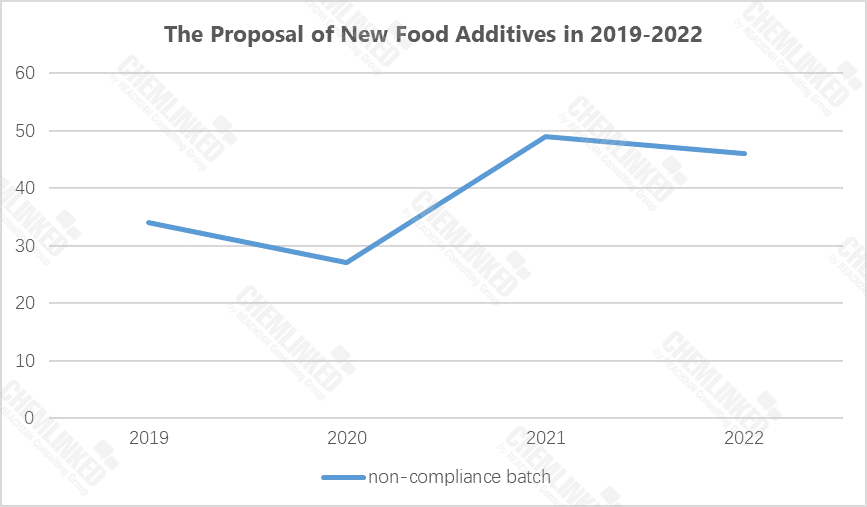
Furthermore, 55% of them were new substances, mostly enzyme preparations and nutrition fortifiers. In the rest 45%, the majority was common food additives.
3. The Acceptance of New Food Additive Application
The acceptance of new food additive applications in 2022
In 2022, NHC received a total of 72 new food additive applications, including 31 brand new substances, which reflected the strong innovation momentum of food enterprises. The other 41 were all existing food additives that had gained approval. It can be speculated that food enterprises may have made new research achievements in technology or the use of these 41 substances.
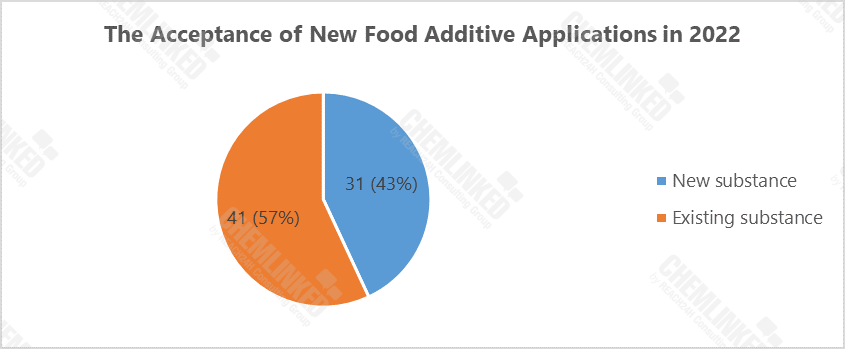
Notably, among the 72 applications accepted in 2022, 29 were postponed for review, and 6 were even postponed for two times, which was an alarm for enterprises to make full preparations as per the application requirements.
The acceptance of new food additive applications in recent years
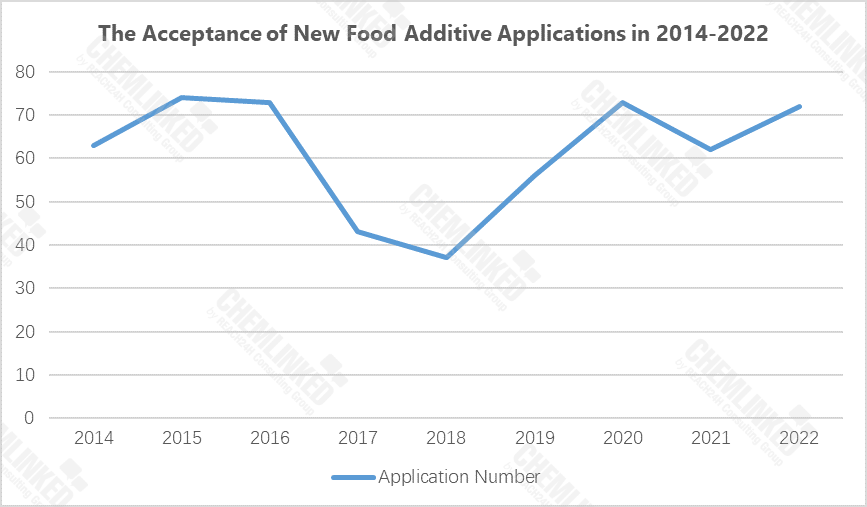
Over the past years, the number of new food additive applications accepted by NHC kept a relatively high level in most years, while only slumped in 2017 and 2018. It is foreseeable that the acceptance of new food additive applications will keep at a stable level in the future.
4. Summary and Suggestions
The number of new varieties of food additives approved in 2022 was basically close to that in 2021 (an increase of 2 varieties). The main approved new varieties were enzyme preparations (13 varieties), including 12 new varieties of enzyme preparations involving transgenic technology, which is also a common trend of new enzyme preparations in recent years. In addition, since NHC opened the application and acceptance channel for other genetically modified (GM) food additives in 2021, food additives involving GM organisms other than enzyme preparations can also be applied. At present, one food additive involving GM organisms, 2′-FL, has passed the technical review by the expert review committee, and has entered the public consultation stage.
From the acceptance to proposal, then to the approval of the application, the onerous requirements for the required materials render a longer application cycle once material omissions and errors occur. ChemLinked reminds enterprises to ensure the research quality, comprehensively improve the application files, and make sufficient preparation for the technical review for the new food additive before application, so as to greatly shorten the application cycle.
With rich experience and expertise, as well as strong communication and negotiation ability with applicants and competent authorities, Reach24H together with ChemLinked provide new food additive registration service to enterprises. Click here to see what we can help you in food additive regulatory services in China.
 We provide full-scale global food market entry services (including product registration, ingredient review, regulatory consultation, customized training, market research, branding strategy). Please contact us to discuss how we can help you by