Request a Demo
In the wake of the COVID-19 pandemic, heightened health consciousness has fueled a global surge in demand for nutrition and well-being products. Southeast Asia (SEA), boasting stable GDP growth and a thriving e-commerce landscape, presents a lucrative market for health products, where both local and international brands stand to thrive. However, intensified competition, new technologies and the complicated regulatory barriers pose challenges. This article delves into the flourishing e-commerce market for health supplements in Southeast Asia while highlighting the recent significant regulatory developments that are reshaping the industry.
The thriving e-commerce market of health supplement in the SEA
In June of 2023, the e-commerce market of health supplements in the SEA has reached over 100 million USD, according to the report titled "Health Supplements Sales in Southeast Asia Ecommerce". The report cites the data from two largest E-commerce platforms in SEA, namely, Shopee and Lazada, and centers on the status quo of the online health supplement market in six SEA countries.
In terms of the market share, Indonesia has the largest market share, reaching a striking 36.3%. Followed by Thailand, which occupies 20.4% of the market share. The rest four countries, namely, Vietnam, the Philippines, Malaysia and Singapore, have a relatively smaller digital market of health supplement, each with a market share of around 10%.
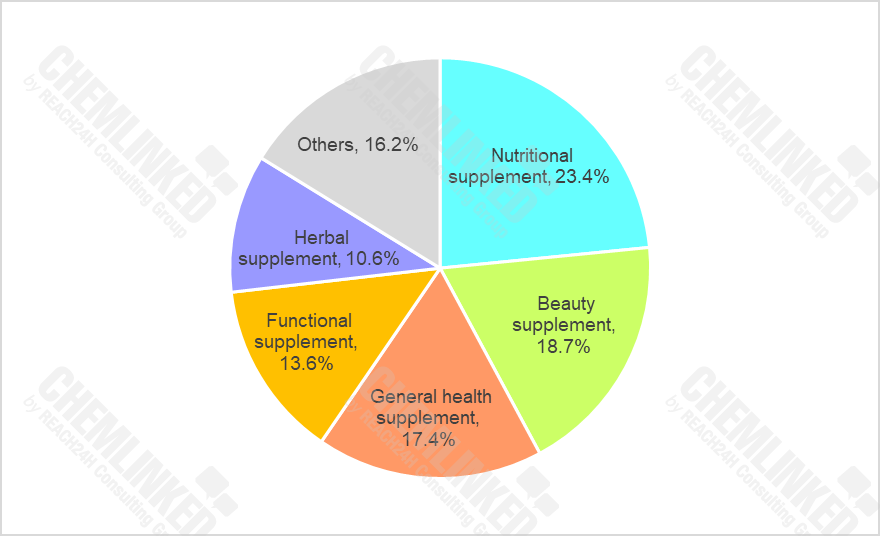
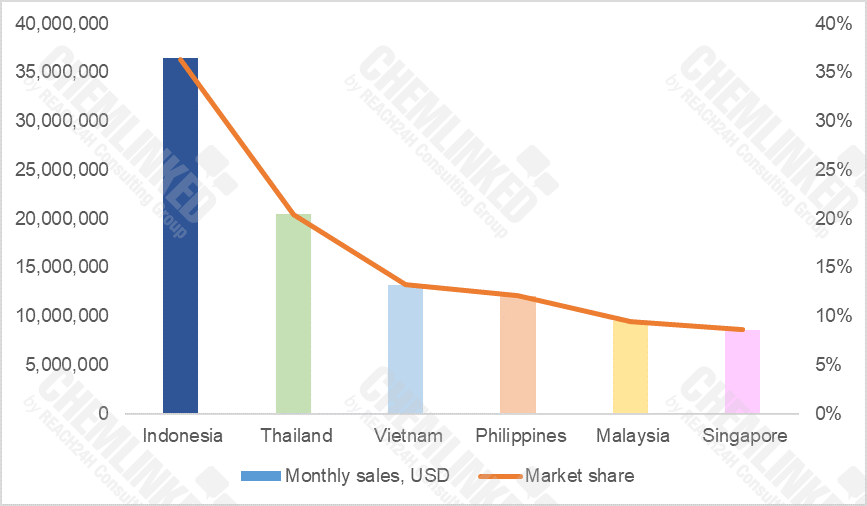 Online Market of Health Supplement in the Six SEA Countries in June 2023In the SEA market, health supplement products can be roughly divided to five main segments, with nutritional supplement being the biggest segment, whose sales occupies 23.4% of the total market, followed by beauty supplement, general health supplement, functional supplement, and herbal supplements.
 Market Share of Health Supplement Segments in the Six SEA Countries
However, preferences of health supplement still vary among the six SEA countries. To be more detailed, nutritional supplement is very popular in Singapore and Vietnam; Beauty supplement performs well in the Philippines; General health supplement has the highest market share in Thailand; Indonesian market prefers functional supplement and herbal supplement.
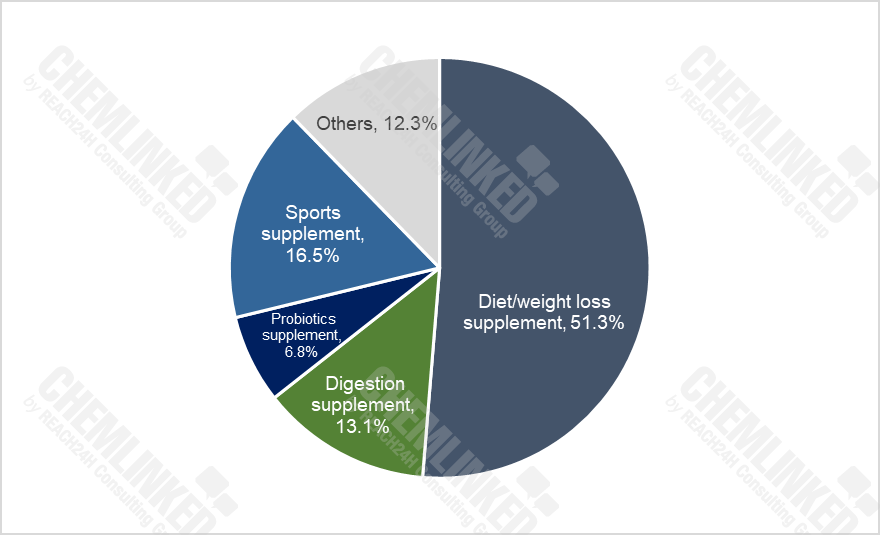
Notably, due to the diversity of health supplement products on the market, there are quite a few subcategories under each segment. As the biggest segment, nutritional supplement products can be further classified into five subcategories, namely, diet/weight loss supplement, digestion supplement, probiotics supplement, sports supplement, and other nutrition supplements.
 Market Share of Nutritional Supplement Subcategories in the Six SEA Countries
Generally speaking, diet/weight loss supplement dominates the functional supplement segment, with a market share of 51.3%, which is the highest among the five subcategories in five out the six countries, with Singapore as the only exception. Sports supplement is the second biggest subcategory in the six countries, with a particular high market share in Vietnam, reflecting the high level of interest from SEA consumers towards fitness and workout.
In terms of pricing, in five out of the six countries, nutritional supplement products priced between $20-50 are the bestsellers. In Indonesia, the situation is different, with the majority of the revenue coming from products priced between $5-10, mirroring that lower-priced products are more attractive to Indonesian consumers.
In terms of brand, take the six SEA countries as a whole, Optimum Nutrition leads the nutritional supplement brands, followed by YANHEE and Flimty. Notably, Optimum Nutrition tops the brand list in Malaysia, the Philippines and Singapore. YANHEE and Flimty dominate Thai and Indonesian market respectively. The No.1 nutritional supplement in Vietnam is BeAlive, which ranks No.7 in the whole six countries' market.
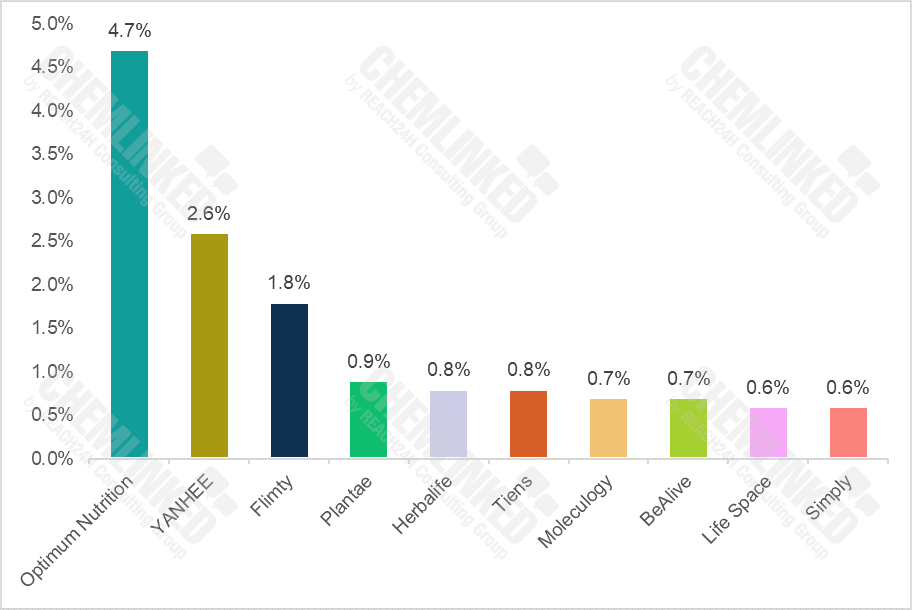 Market Share of Top 10 Nutritional Supplement Brands in the Six SEA Countries
Latest regulatory dynamics of health supplements
In 2023, many SEA countries released new regulations and drafts for health supplements, which reshapes the regulatory landscape in the region.
Indonesia is one of the SEA countries that was active in formulating health supplement legislations. In 2023, Indonesia Food and Drug Supervisory Agency (BPOM) published several important regulations for health supplements, such as the Regulation No. 16 of 2023 on Supervision of Circulation of Traditional Medicines, Quasi Medicines, and Health Supplements, outlining the supervision mechanism for health supplement products, circulation permit holders, and health supplement producers. BPOM also unveiled Revised Regulation on Supervision of Importation of Drugs and Food to change the required import permit of health supplements from "SKI Post Border" to "SKI Border". Furthermore, BPOM enacted Regulation No. 24 of 2023 on Safety and Quality Requirements for Health Supplements to specify new safety and quality requirements, and request corresponding enterprises whose products have already obtained circulation permits to ensure the compliance with this new regulation within two years.
Vietnam released two new regulations for health supplements in 2023. Firstly, Vietnam issued Consolidated Document of Circular No. 48/2015/TT-BYT Stipulating Food Safety Inspection Activities in Food Production and Trading Under the Management of the Ministry of Health, changing the requirements for required certificates for health supplements. As per the Circular, certificates like HACCP, ISO 22000, IFS-international food standard, BRC-British retail consortium, and FSSC 22000 are all acceptable. Secondly, as per Consolidated Document of Circular No. 43/2014/TT-BYT Regulating the Management of Functional Foods, Vietnam revised the requirements on the content claims and health claims for health supplements.
Malaysia updated the Drug Registration Guidance Document (DRGD) in 2023, greatly affecting the registration of health supplements. For example, health supplement products with disease risk reduction claims now shall contain consumer medication information leaflet (RiMUP) at the outer carton, immediate container or blister/strips. Besides, before this update, registered product was required to have the same label artwork for all pack sizes, but now minor differences are allowed in the color code to differentiate pack sizes.
In 2023, Thailand proposed to set the nutrient intake level in health supplements. Later on January 5, 2024, Thailand FDA publicized the proposal, which will take effect from July 2, 2024, while a three-year grace period will be given to industrial stakeholders.
In addition, when it comes to regulatory dynamic of health supplements in SEA, the ASEAN health supplements harmonization agreement should be mentioned. Since 2004, ASEAN Member States have been actively working towards harmonizing standards and requirements for health supplements. The ASEAN Agreement on Health Supplements holds legal binding authority, compelling Member States to amend their laws and regulations to align with the harmonized technical requirements. While several plans for signing the agreement were expected in the past, the most recent meeting in November 2023 did not yield a consensus to proceed with the signing. Please stay tuned with ChemLinked for future developments regarding this long-awaited agreement.
 We provide full-scale global food market entry services (including product registration, ingredient review, regulatory consultation, customized training, market research, branding strategy). Please contact us to discuss how we can help you by