Request a Demo
Naturally occuring and administered probiotics
Breast milk, far from being sterile, contains on average as many as 600 different species of probiotic bacteria, including Bifidobacteria and Lactobacilli. These are some of the first microorganisms that newborns come into contact with and contribute to the initial establishment of the microbiota in the newborn’s gut, which is crucial for the subsequent development of the immune system. Some of their benefits cannot be artificially generated but industry is doing its best to create formulae with properties mimicking that of human breast milk.
For years, the only way to do so was adding probiotic infant supplements to baby diets, either through mixing them with infant formula or through direct consumption.
In recent times, studies on the effects of administering probiotic-supplemented infant or follow-on formula on infant growth and intestinal antibody response showed appreciable positive results, and so did clinical studies on their effect on various diseases. The next, obvious step was the marketing probiotic IF products which has proven to be favorably welcomed by customers, both in China and abroad.
What Kind of Probiotics are being added to Infant Formula?
Many species of probiotics can be beneficial to infant health but only a few of them are currently being sold as supplements and even fewer can be found in infant formulae. To get an insight on this, we analyzed the ingredient composition of 10 probiotics-supplemented Infant Formulae (5 Chinese and 5 imported) sold on an online shopping platform. Most are generic ones, one is addressed at infants with colic and one is suitable for babies with cow milk allergy: probiotic-supplemented infant formula is generally not aimed at babies with special medical conditions.
In the following table, we show the species we found, some of their proven health benefits, the products they were added to and whether they are permitted or not in China.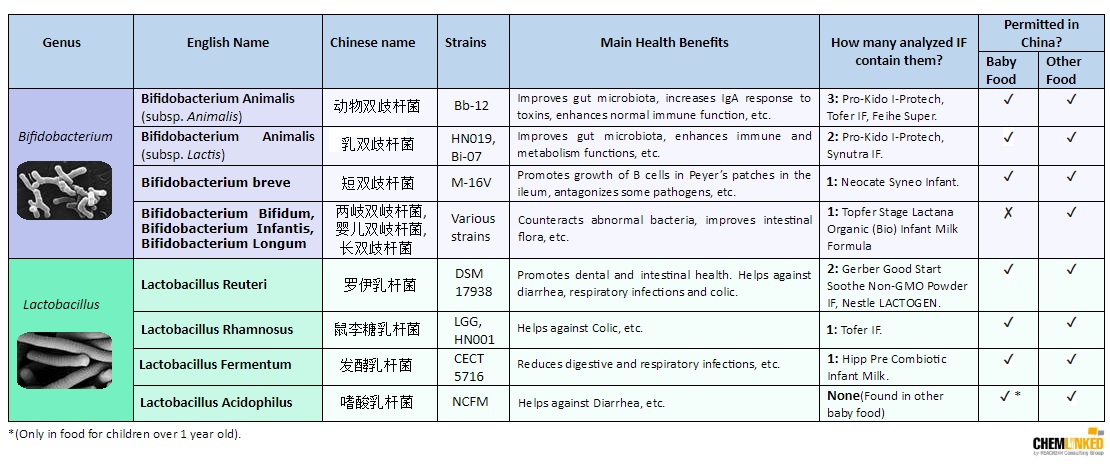 As shown, we only found 12 selected strains of 10 species of Lactobacillus and Bifidobacterium Genus Bacteria in the analyzed products. This has to do both with the strain-specific nature of the efficacy of probiotics and with their availability, as these are the most widely manufactured ones. Another feature we can derive from the table is that most producers only add one probiotic per product, maximum two. This has to do with the fact that the interaction of a bigger number of different bacterial cultures is prone to undesirable outcomes in the very complex infant gut microflora and so the industry prefers to be cautious until new scientific evidence is available.
How are probiotics in Infant Formula Regulated in China?
Judging from the table, except for B.Bifidum, Infantis and Longum, all the bacteria found in the analyzed products are permitted in baby food in China, but how are these organisms regulated?
The main sources of law for infant formula in China are
-GB 10765-2010 National Food Safety Standard Infant Formula (for 0-6 months infants)
-GB 10767-2010 National Food Safety Standard Older Infants and Young Children Formula (for 6-12 months old infants and 12-36 months young children)
-GB 25596-2010 National Food Safety Standard General Standard for Infant Formula for Special Medical Purposes (for 0-6 months infants in special medical conditions)
while the NHFPC and MOH statements on Bacterial Cultures permitted in Baby Foods can be summed up in our F-list“Bacterial Cultures that Can be Used in Baby Foods in China”.
Let’s analyze the combined effect of these provisions. Adding probiotics to infant formula is legal in China, all of the three aforementioned standards show identical technical requirements when it comes to regulating them, as explained in the note b of table 9 “Maximum levels of microorganism”:
the number of active bacteria of active probiotics in products should be ≥ 106CFU / g(mL)
As we can see, these standards don’t set a maximum allowed percentage for these microorganisms but only 7 Bacterial species can be used in baby food in China, totaling 9 strains, with one strain (Lactobacillus Acidophilus) only allowed in food for children over 1 year old. Infant formula producers should keep this in mind, as they are the only bacterial cultures clinically proven to be safe and effective.
Talking about the labeling of these bacteria, their presence has to be indicated but it is not mandatory to show their percentage. While it is common to read health claims linked to probiotics in IF abroad, in China the situation is quite different, as GB 7718-2011 Standard for the Labeling of Prepackaged Foods states that “any content related to the function of disease prevention and treatment shall not be stated or implied. Health function shall not be presented or suggested on the label of non-health food”. In addition to this GB 13432-2013 Standard on Labeling of Food for Special Dietary Uses (regulating the labeling of all Infant Formula) affirms that the labeling of this kind of food, apart from obeying the requirements of GB 7718-2011, “shall not relate to functions of disease prevention and treatment”. Thus, we can conclude that in China there is no room for health claims related to probiotics in infant formula.
Perspectives
The probiotics business is growing globally and booming in China, where its value grew almost 50% in the last three years. Some foreign manufacturers of Probiotics decided to build their own production facilities here to allow customers to reach ready-to-market probiotic formulations, but their development as an ingredient of infant formula recipes needs to be analyzed separately.
On one side, R&D departments will probably bring more and more clinically tested strains of probiotics into infant formula recipes and recent tariffs cut on special infant formula could help stimulate developments in this industry. On the other hand it is unlikely that these new strains would be added to the list of bacterial cultures permitted in baby food in the near future, and more stringent product and plant inspections as well as increased registration difficulties could stymie developments in this sector.
 We provide full-scale global food market entry services (including product registration, ingredient review, regulatory consultation, customized training, market research, branding strategy). Please contact us to discuss how we can help you by