

 Request a Demo
Food packaging plays a vital role in ensuring the safety, quality, and shelf life of food products. It serves not only as a protective barrier against external contamination but also as a medium for communication, providing consumers with critical information. As the food industry grows and consumers demand more eco-friendly packaging, sustainable packaging has become an essential part of doing business. In this article, ChemLinked outlines the complex food packaging requirements in the Philippines, focusing on regulatory frameworks, safety requirements, voluntary certifications, and the push toward sustainable packaging practices.
1. Competent authorities
The regulation of food packaging in the Philippines falls under the jurisdiction of the Food and Drug Administration (FDA), which operates under the Department of Health (DOH). On the other hand, when it comes to sustainable packaging, regulations from the Department of Environment and Natural Resources (DENR) and Environmental Management Bureau (EMB) should be followed.
2. Safety requirements
According to the Food Safety Act of 2013, food in containers containing any toxic or harmful substances is considered adulterated. Regarding food packaging, the Act stipulates that the DOH is responsible for ensuring the safety of all food processing and product packaging activities. Besides, food operators must confirm the source of packaging materials, food, and other supplies.
General safety requirements for food packaging are laid down in some government orders and notifications. As per DOH Administration Order No. 153 S. 2004 Revised Guidelines on Current Good Manufacturing Practice in Manufacturing, Packing, Repacking or Holding Food, food packaging must ensure product safety and quality, using materials that are sanitary, non-toxic, and protective against contamination. Stakeholders should adopt appropriate quality control operations procedures to ensure that food packaging materials are safe and suitable.
Furthermore, in Bureau Circular 2006-016 Updated List of Food Additives, the Philippines FDA declares that any food packaging material that may become a component of food, or may otherwise affect the characteristics of food, and is safe under its intended use conditions, is considered a food additive.
Notably, special attention needs to be paid on Bisphenol A (BPA), which has been banned from the manufacturing of infant feeding bottles and sippy cups in the Philippines, as per FDA Circular No.2019-004.
The Philippine FDA recognizes the food contact substance permits of the United States and Japan, and the US Food Code and FDA regulations are the main reference guidelines for the Philippine FDA's policies on good manufacturing practices and suitability of food packaging materials.
3. Voluntary FCA certification
The Philippines FDA issues FDA Circular No. 2022-0011, which outlines guidelines for the voluntary certification of Food Contact Articles (FCAs) used in prepackaged processed food products. Establishments involved in manufacturing or distributing FCAs can apply for certification to demonstrate product suitability and safety.
Covered scope
The guidelines cover both local and imported FCAs in finished or final form, with or without applied adhesives and/or printing inks, including FCAs directly or incidentally contact with processed food products having materials such as metal, glass, ceramic, enameled, resin, etc. Stakeholders engaged in the manufacture, importation, exportation, sale, offering for sale, distribution and transfer of FCA may secure voluntary certification prior to utilization, selling, and commercial distribution.
Application procedures
Step 1: Pre-Application Query
The applicant may access a pre-application query through either online portal (via email to [email protected]) or onsite methods (by sending letter of inquiry to the Food and Drug Action Center (FDAC)).
Step 2: Application Filing
The applicant may choose to finish application filing through either online portal or onsite methods, which requires to submit the scanned copy of the required materials (specified in Annex A of FDA Circular No. 2022-0011).
Take online application for example, the applicant shall submit the scanned copy of the followings to [email protected]:
Checklist of Required Information for Online Application
Item | Required information | Notes |
1 | Request letter stating the intended use of the FCA | |
2 | FCA information | Must include: - Technical specification - Intended use of the product (i.e., primary or secondary packaging/direct or indirect contact with food) - Overview of the production process
* For products with components made in recycled materials: - Recycling process - Source of starting material or major material that will be recycled |
3 | Certificate of Analysis/Quality Control Inspection Report | Must include: - The batch or lot number - Production date of the concerned product |
4 | Health and safety information/Safety Data Sheet (SDS) of the product | For finished product and raw material |
5 | Formulation/composition of the FCA | Must include: - Specific chemical name and corresponding percentage composition - Chemical Abstract Service Registry Number (CAS No.) - Percentage of all raw materials used (including the colorants and additives) * For FCA made from metals and its alloy, the specific alloy should be indicated with its elemental composition. * For FCA with components in recycled materials, all the chemicals used in the recycling process must be reflected. |
6 | Analysis report from an FDA accredited lab | Must include: - Batch/lot number |
7 | Clear photo of the FCA | All parts, including inner and outer parts. |
8 | Proof of payment | E.g., Official Receipt, Landbank Oncoll Machine-Validated Payment, verified and posted payment of the FDA Cashier |
Step 3: Evaluation and Issuance
The applicant may choose to finish application filing through either online portal or onsite methods, which requires to submit the scanned copy of the required materials (specified in Annex A of FDA Circular No. 2022-0011).
The FDA will evaluate the submitted documents and samples based on the type of FCA and its intended use, as stated in the request letter. Test results and other information will be assessed against adopted standards and relevant regulations including:
1) Specifications and Standards for Foods, Food Additives, etc. Under the Food Sanitation Act (Abstracts) of the Japan External Trade Organization (JETRO);
2) Specifications, Standards and Testing Methods for Foodstuffs, Implements, Containers, and Packaging, Toys, Detergents of JETRO;
3) Code of Federal Regulation Title 21 Part 170 to 199 of the US Food and Drug Administration;
4) Other references for FCAs recognized by ASEAN member states;
5) Regulatory requirements of the importing country for products intended for export.
If the FCA is deemed suitable for its intended use, a certification will be issued. Otherwise, a letter of disapproval will be provided. The decision will be made within 12 working days of acceptance by the FDA. If the initial application is disapproved, a re-application can be submitted once the issues are addressed, along with the required application fee.
4. Requirements for sustainable packaging
In the Philippines, the regulatory framework for sustainable food packaging is centered on the post-consumer phase of plastic packaging, primarily through the implementation of the Extended Producer Responsibility (EPR) framework. Complementing this, voluntary ecolabeling programs offer an avenue for companies to demonstrate their commitment to environmental sustainability.
Extended Producer Extended (EPR)
The Philippines introduced a mandatory EPR system in 2022, compelling companies to assume responsibility for the entire lifecycle of their products—from production and use to end-of-life disposal. This framework is underpinned by three pivotal regulations: namely, RA 11898 – An Act Institutionalizing the Extended Producer Responsibility on Plastic Packaging Waste, Amending for this Purpose Republic Act. 9003, Otherwise known as the ‘Ecological Solid Waste Management Act of 2000″, DAO No. 2023 – 02 – Implementing Rules and Regulations of Republic Act No. 11898, and DAO No. 2024 – 04 – Compliance Reporting and Audit Guidelines for Republic Act No. 11898 or the Extended Producer Responsibility Act of 2022.
The EPR scheme applies exclusively to large product producers generating plastic packaging waste, classified as Obliged Enterprises (OEs). These entities include brand owners, manufacturers, or importers with total assets exceeding 100 million PHP. To assist companies in determining their classification, the Philippines provides a self-assessment tool. The EPR framework currently encompasses four categories of plastic packaging: flexible plastic packaging, rigid plastic packaging, plastic bags and polystyrene.
Three steps to fulfill the EPR requirements are outlined as followings:
1) OEs must register an EPR program with the National Solid Waste Management Commission (NSWMC). They may opt to register independently or collaborate with a Producer Responsibility Organization (PRO). An EPR program should include information about the specific types of materials used, volume and weight of plastic packaging, as well as the targets for recovery, reuse and recycling.
2) OEs shall pay the EPR registration fees and annual compliance monitoring fees, then start implement their programs.
3) Annually, OEs must submit an EPR Compliance Audit Report (ECAR), certified by an independent third-party auditor, by July 30.
Voluntary ecolabeling
The National Ecolabelling Programme – Green Choice Philippines (NELP-GCP) serves as a voluntary third-party ecolabeling initiative, fostering sustainable consumption and production practices. Ecolabeling not only acknowledges companies' environmental stewardship but also confers a competitive edge to products adorned with the GCP seal.
Products that satisfy the GCP criteria are eligible to apply for the GCP seal, which can be prominently displayed on packaging to signify its eco-friendliness. The GCP criteria span 44 product categories, including "paperboard", "polyethylene-polypropylene packaging materials", and "packaging products". Notably, GCP Criteria for Packaging Products also sets forth requirements for packaging products to claim to have recycled content.
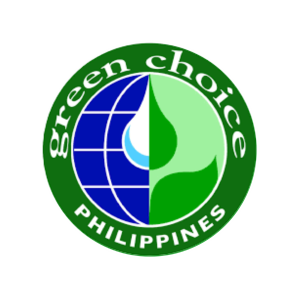 Green Choice Philippines (GCP) sealThe application procedures of the GCP seal include:
Step 1: Inquiry
Contact the NELP-GCP Administrator to learn about the certification process.
Step 2: Application Submission and Required Documents
Submit both physical and digital copies of the required documents along with the processing fee.
Step 3: Initial Evaluation
The NELP-GCP Administrator reviews the submitted documents and may request additional information if needed.
Step 4: Site Visit
A surveillance audit is conducted to verify the submitted documents on-site. Applicants must address any recommendations from auditors within 90 days.
Step 5: Post-Evaluation
The evaluation report is prepared and reviewed.
Step 6: Approval and Awarding
Once approved, the NELP-GCP Administrator notifies the applicant. Licensing fees must be paid before the GCP License is issued.
If you need a comprehensive report on sustainable packaging regulatory requirements in the Philippines, please feel free to reach out for more details.
 We provide full-scale global food market entry services (including product registration, ingredient review, regulatory consultation, customized training, market research, branding strategy). Please contact us to discuss how we can help you by








