Request a Demo
1. China—Asia's Largest Infant Food Market
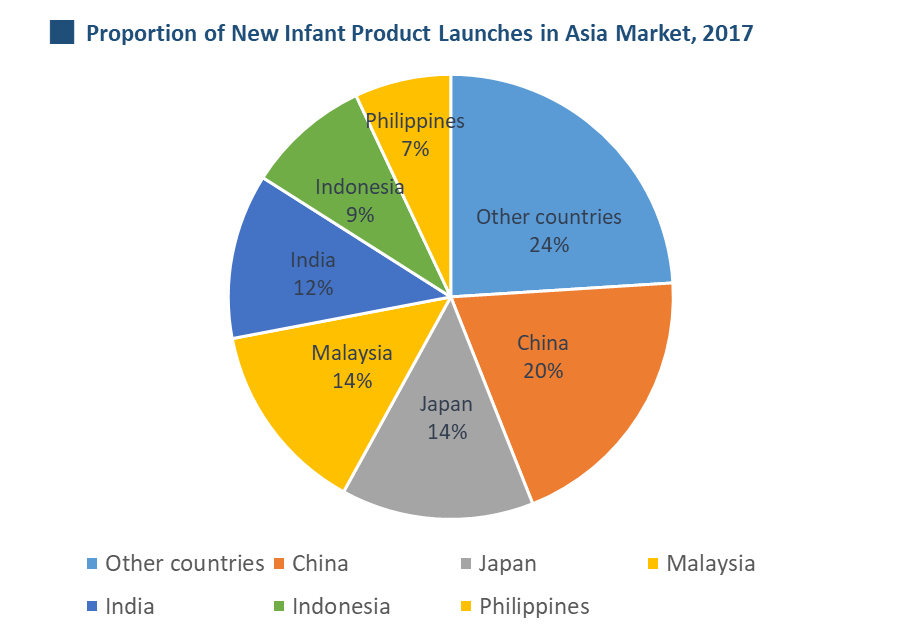
Data source: Innova Market Insights
Data source: Innova Market Insights
Growth Rate of New Product Launches in Chinese infant market higher than Asian and Global Market Average
The growth of disposable income, increasing population of career women and the execution of "Two-child Policy" in China have all catalyzed the development of the infant foods sector.
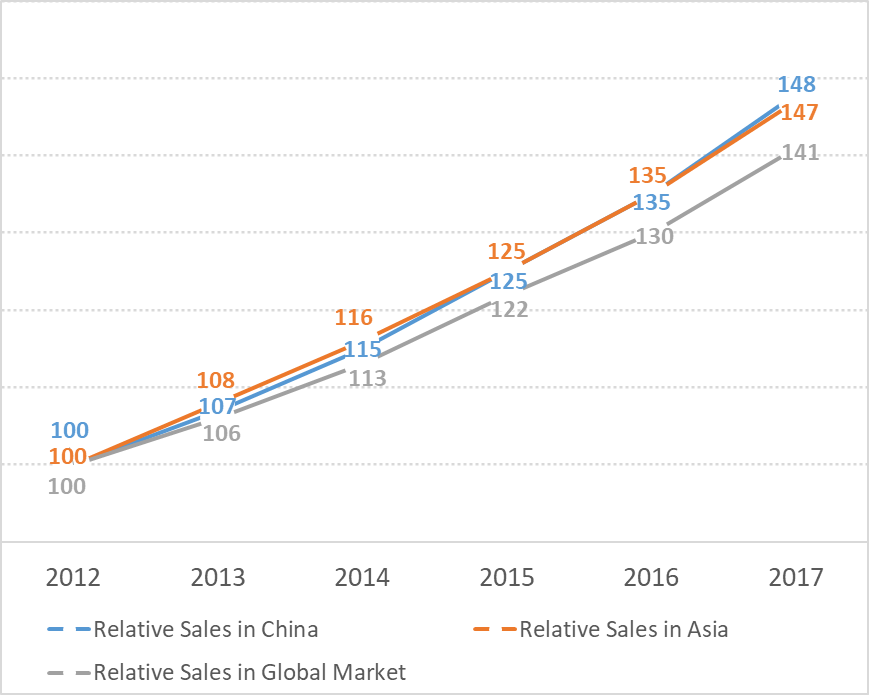
█ Comparison chart of relative infant products sales among China, Asia and global market
Data source: Innova Market Insights
Growth rate of infant product sales in China keeps pace with that in Asian and global market
Strict food safety requirements and market demand for premium, safe and natural products (additive free/preservative free, organic, imported) have all contributed to the stellar growth seen in China's market.
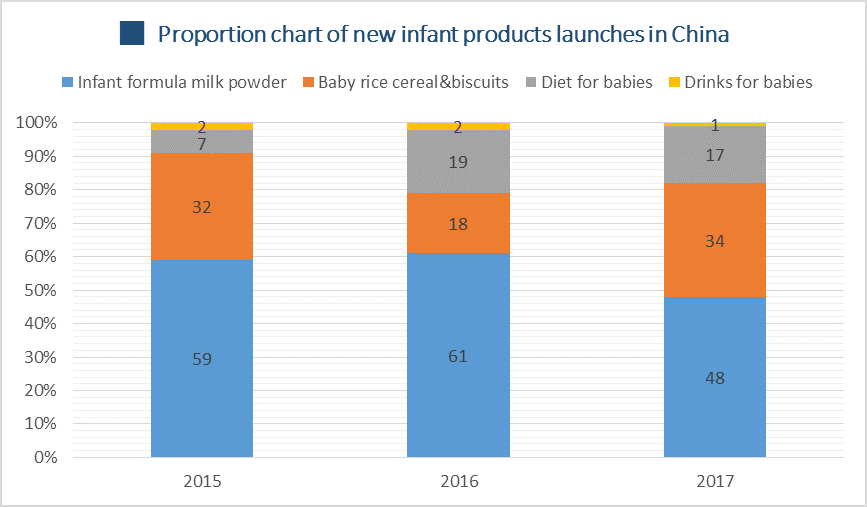
Among new infant food launches, infant formula accounted for the most significant percentage from 2015 to 2017, taking up an average annual rate of 56%.
Data source: Innova Market Insights
The launch of new products increased from 2012 to 2014, but was subject to a relative decline thereafter.
From 2012 to 2017, the CAGR (Compound Annual Growth Rate) of newly launched Chinese infant products was 32.6%, while the annual growth rate of turnover and volume were 9.1% and 16.5%.
2. Trend of claims
In 2017, China claims associated with improvement in physiological parameters associated with gastrointestinal health dominated. In the overall Asian market "additive free/preservative free" was the most widely used claim. Here are top 5 claims.
➤ Most important claim: digestive system health
Source: Innova Database
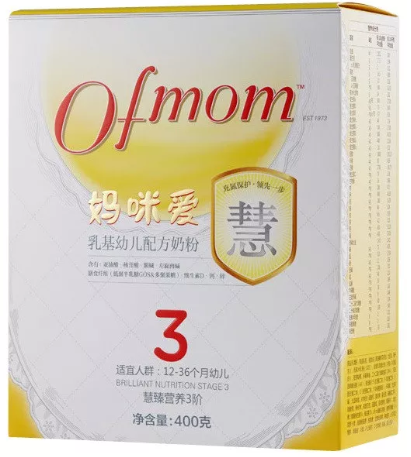
Mamiai HUI (intelligence) infant formula, Ofmom (China market)
Product description: formula milk for babies (12-36 months); five-vitamin nutrition. Long chain FOS and short-chain GOS prebiotics provide a healthy environment for gut flora and help baby's intestinal tract to maintain normal intestinal function and help soften baby's faeces.
➤ Important claim: DHA
Source: Innova Database
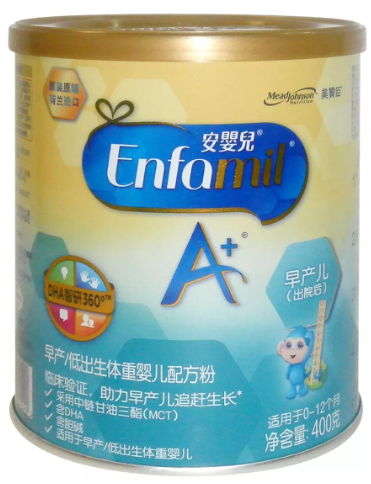
Enfamil A+ Premature Formula (China market)
Product description: infant formula, designed for premature babies under 12 months or with low birth weight; package type: metal cans; containing medium chain triglyceride (MCT) , DHA and choline.
➤ Vitamin/Mineral-infused products
Source: Innova Database
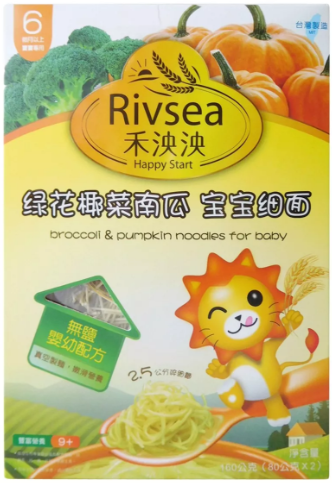
Rivsea broccoli & pumpkin noodles for baby (China market)
Product description: packaged in boxes; containing two bags of salt-free dried noodles made of wheat, broccoli and pumpkin; rich in minerals and vitamins; designed for babies beyond 6 months.
➤ Leading advantage of claiming organic
Source: Innova Database
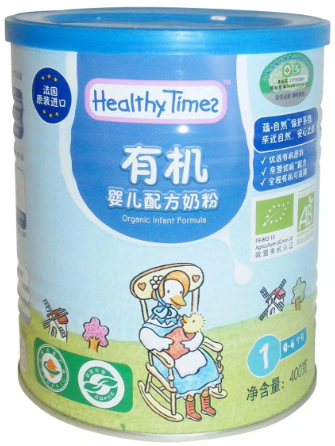
Healthy Times organic infant formula Stage 1 (China market)
Product description: organic infant formula; designed for babies under 6 months; packaged in metal cans; net weight: 400g.
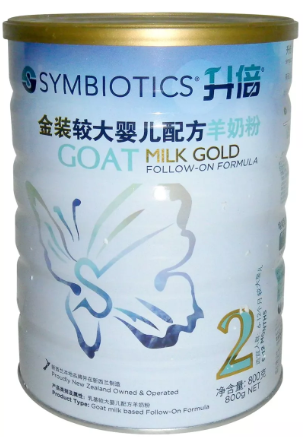
➤ Goat milk powder product launches
Source: Innova Database
Symbiotics goat milk gold follow-on formula (China market)
Product description: goat infant formula; for babies from 6 to 12 months; packaged in metal cans.
Other popular labeling claims for infant foods in China in 2017 were: high-fiber/fiber sources, high-protein/protein sources, probiotic, antioxidant-infused and organic.
3. Flavoring Trends
Diversified flavors in China and other Asian countries
High performing flavors in China in 2017: Fish, pork, chicken, beef, walnuts, broccoli, tomatoes and Chinese yams.
New released flavors in China, 2017: the flavor of Greek yogurt, spareribs and tofu.
Here are top 5 flavors.
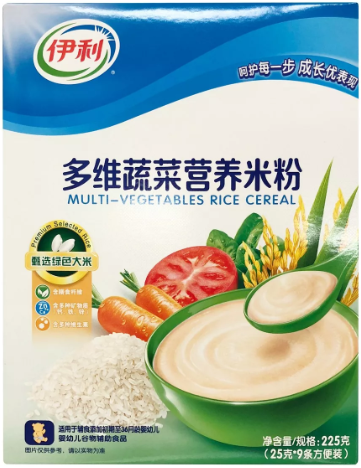
➤ Leading flavor: vegetables
Source: Innova Database
Yili multi-vegetables rice cereal (China market)
Product description: rice cereal containing multi-vegetables; designed for infants under 36 months; packaged in boxes; nine bags (25g each) in one box.
➤ Top 2 flavor: Bananas
Source: Innova Database
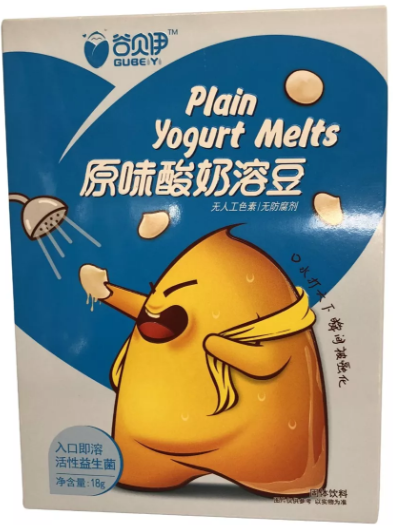
Yinglegu calcium-rich yogurt melts (China market)
Product description: four bags of calcium-rich yogurt melts in one box; designed for infants over 6 months. Eat directly or melt them into warm water or milk.
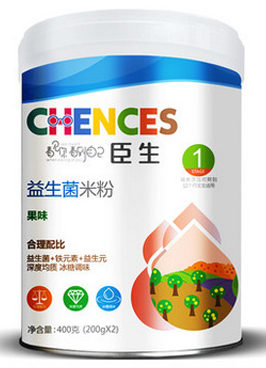
➤ Common flavor: apples
Source: Innova Database
Chences probiotic rice cereal, fruit flavor (China market)
Product description: containing apple and banana, selected high-quality ingredients, northeast rice of China and south rice with embryos and husks, which making the product more nutritious and flavored.
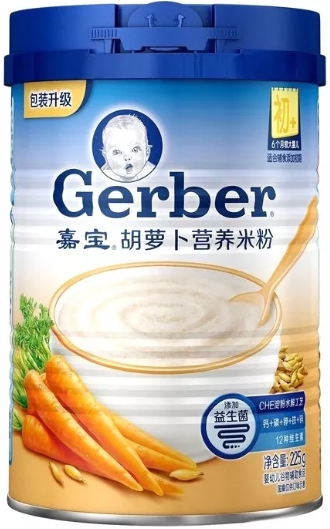
➤ Popular flavor: carrots
Source: Innova Database
Gerber baby cereal — rice with carrot (China market)
Product description: nutritious rice cereal with carrots; designed for infant over 6 months; packaged in metal cans; net weight: 225g.
➤ Yogurt flavor
Source: Innova Database
Gubeiyi plain yogurt melts (China market)
Product description: plain yogurt melts; designed for infants; package type: one plastic bag in box.
4. Five Key Considerations during New Product Development
1. New Product Launch Rates Tend to Fluctuate in China. China's market outperforms the rest of Asian Markets
In recent years, the rate of new product launches in the Chinese market trend has fluctuated but has generally kept pace with Asian and global markets. In China, new product launches peaked from 2012 to 2014. Although a subsequent decline was seen in 2016, the 5-year average growth rate was still higher than seen in the Asian and global market. In terms of sales, the Chinese market is in line with the Asian market, and is slightly higher than the global market.
2. Diversification of product lines
Infant formula is still the most popular infant food, but its market share has fallen from 59% in 2015 to 48% currently. More convenient products have gained traction such as baby complementary food, whose market share rose from 7% to 17% during this period. Baby cereals/cookies also rose from 32% to 34%, while baby drinks now account for the fourth largest market share, with a market share of 1%.
3. Decentralized market exhibiting high demand for imported products
The infant food market is still extremely competitive. The top five companies still only accounted for 5% of the total new product launches in 2017. Domestic manufacturers are still dealing with negative associations with past scandals, precipitating a concomitant increase in demand for products manufactured overseas.
4. Application of "health" claims, especially the clean label
Products have applied more health claims, expanding on scope of claims beyond digestion/intestinal health and DHA claims (these two claims occupied the first and second place in 2017). The range of ingredients is expanding, such as vitamins/minerals, proteins, fiber, probiotics and prebiotics. Besides, the use of clean labeling terminology is also growing, especially claims of "additive-free/preservative-free" and "organic".
5. Targeted demographics
The market is becoming more segmented based on development of products targeting specific niche demographics. Products tailored to meet the specific physiological requirements of dairy sensitive populations such as lactose free, goat milk etc. are also gaining traction.
*Note:
◆ Labeling Claims for Infant Foods
On May 25, 2017, China CFDA released the finalized version of "Technical Guidance for Labeling of Infant Formula Recipe Registration" to better regulate infant formula labels. In this labeling regulation, the product/trade name on the labeling must not contain the following terminology or infer any of the following concepts:
• False, exaggerated and superlative terminology, and those in violation of scientific principle.
Eg: Premium; Gold; Champion; Genius
• Functional expressions explicitly expressing or implying alteration of normal physiological functions;
Eg: Probiotics; Smart baby; Boost intelligence
• Disease prevention and treatment function expressions; Explicitly expressing or implying the healthcare function;
Eg: Delete the content claims for nucleotide, DHA, choline and folic acid
For more prohibitive statements/claims/representations, please visit The Regulatory Landscape in China Post Infant Formula Registration: An Overview of Labeling Requirements
◆ Labeling Claims for Complementary Food to Infants & Children
Manufacturers must indicate information of general requirements, storage condition, consumption methods and application scope, etc on the packages of products. Besides, the label cannot be indicated terminology related to disease prevention and/or treatment. Visit Guideline on Complementary Food for Infant and Young Children in China for more information.
Recommended Resources
Handbook on Food Label Claims in China
Chinese source: FBIF
 We provide full-scale global food market entry services (including product registration, ingredient review, regulatory consultation, customized training, market research, branding strategy). Please contact us to discuss how we can help you by