Request a Demo
In June 2020, China’s Ministry of Commerce [1] released a report called E-commerce in China 2019 [2], which summarized the e-commerce development in China and worldwide. According to the report, APAC countries are still the forerunners in the global e-commerce market. Ever after 2013, the APAC area has been the largest online retail market in the world and maintained a growth rate of over 20% annually. In 2019, the growth rate of online sales in APAC countries reached 25%.
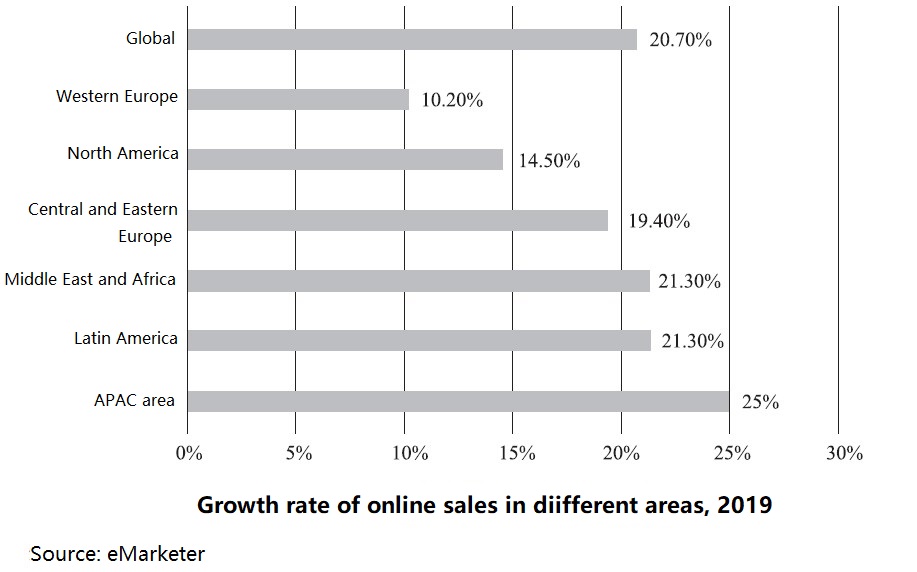
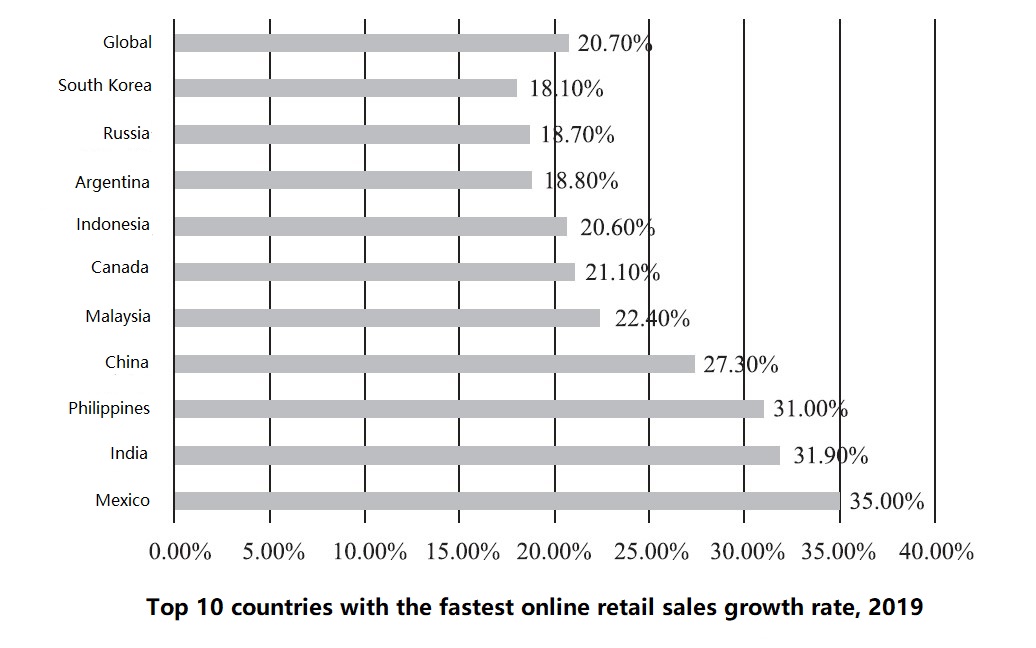
Among the global top 10 countries with the fastest growth rate, six of them are from APAC. They are South Korea, Indonesia, Malaysia, China, the Philippines, and India.
In terms of the ranking of online retail sales, four APAC countries were listed in the top 10 countries, and the total online retail sales of them accounted for 70% of the global online sales value. The four countries are China, Japan, South Korea and India.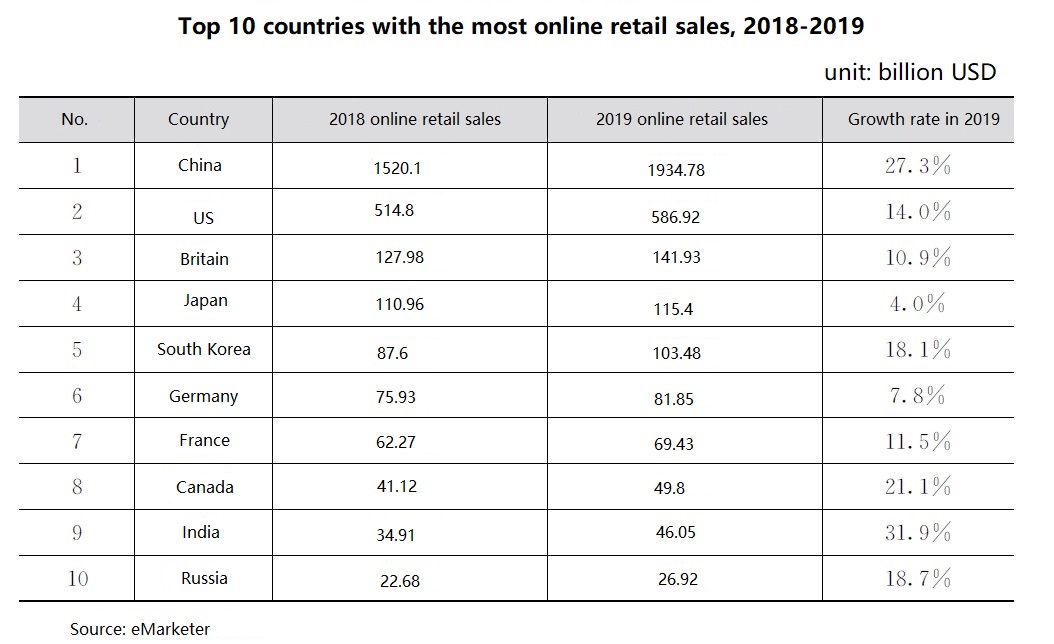 Here is the main abstract of this report about the E-commerce development in China and attached an overall introduction of the situation in Japan and South Korea.
China
1.1 Status quo of the industry
1.1.1 E-commerce in China
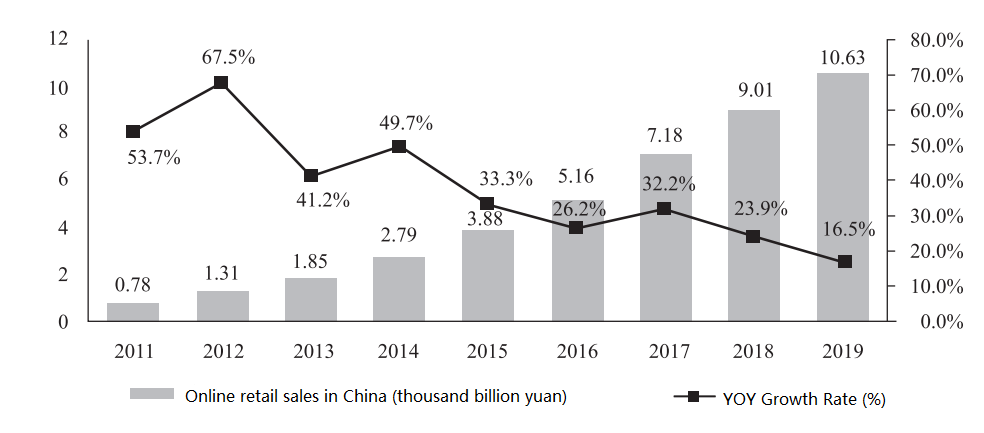
As revealed by the data from the National Bureau of Statistics [3], the total online retail sales in China reached 10,630 billion yuan in 2019, increased by 16.5% than last year. Among the total online retail sales, the online retail sales of physical goods amounted to 8,520 billion yuan, with a YoY growth rate of 19.5%, and accounted for 20.7% of the retail sales of consumer goods. And the attribution made by online retail sales of physical products to the total retail sales growth of consumer goods was 45.6%.
 Market entities— the number of online stores in major E-commerce platforms was 19.469 million, increased by 3.4% than last year, nine million of which were physical goods stores.
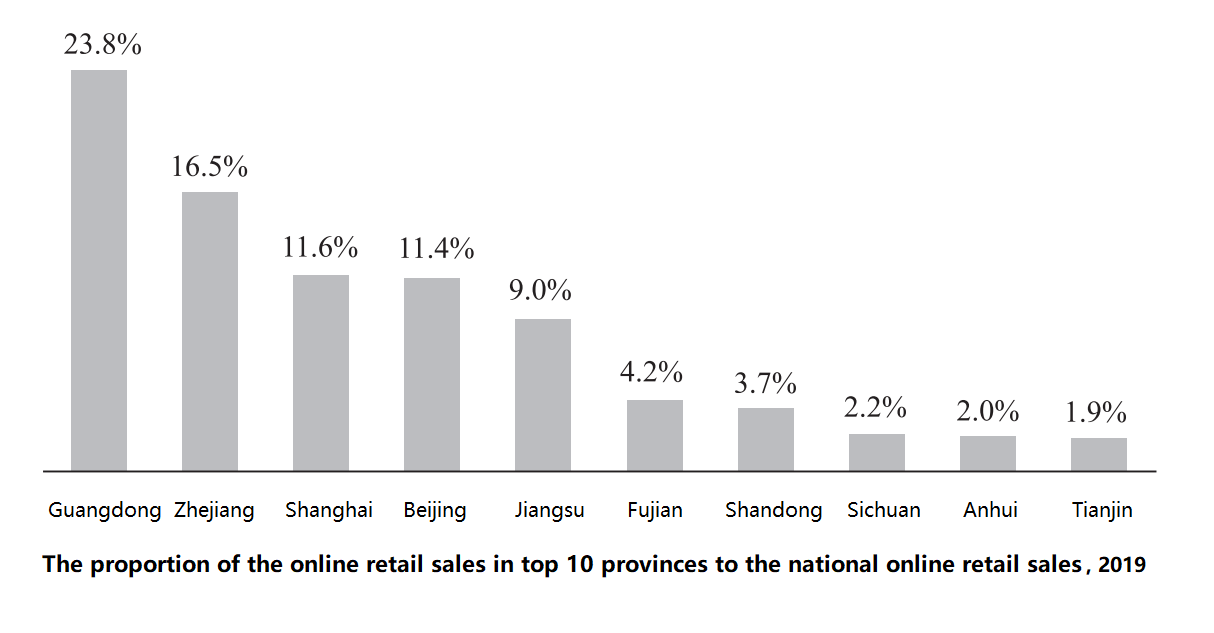
Users and regions—the number of online shopping consumers totaled 0.7 billion people, 0.1 billion more than that at the end of 2018 (data from China Internet Network Information Center [4] ). And the top 10 provinces with the most retail sales are Guangdong, Zhejiang, Shanghai, Beijing, Jiangsu, Fujian, Shandong, Sichuan, Anhui, and Tianjin. The retail sales of the ten provinces and regions took up 86.3% of the national retail sales.
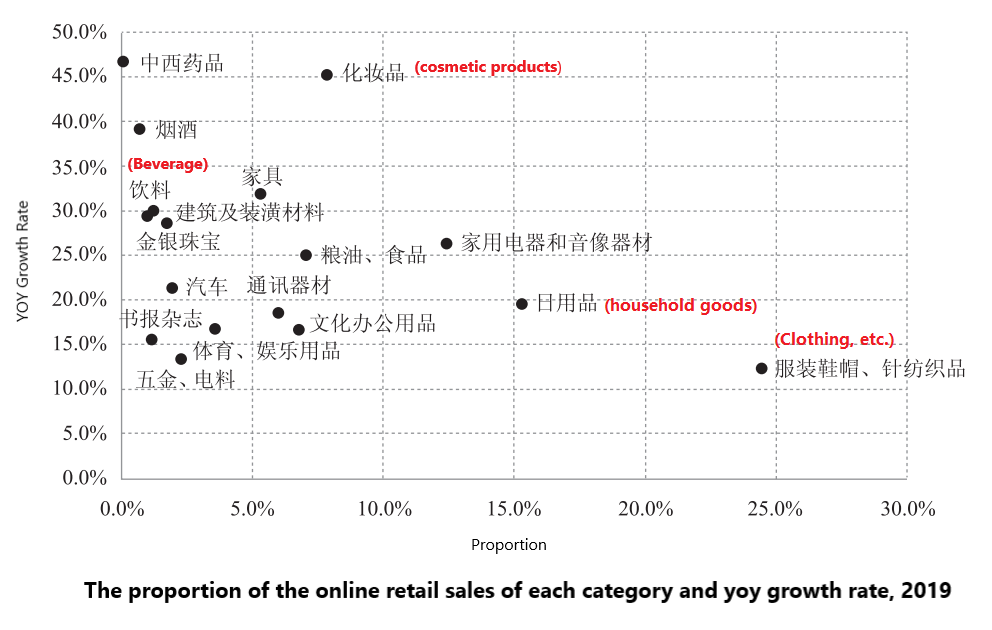
Commodity category—Clothing and household goods ranked the top 2 places among all categories. The online retail sales of cosmetic products enjoyed a rapid growth rate of around 45%, followed by the online sales of beverages, with a growth rate of around 30%.
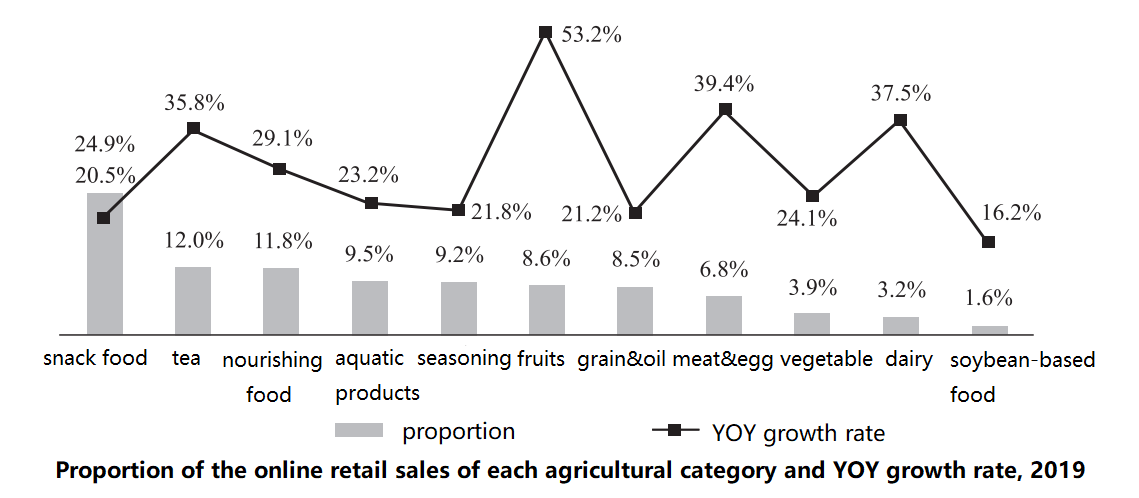
Agricultural products—as for the online retail sales of agricultural products, fruits, meat & egg products, and dairy products were the top 3 categories with the soaring growth speed, with a YOY growth rate of 53.2%, 39.4%, and 37.5% respectively.
1.1.2 Status quo of Cross-border E-commerce
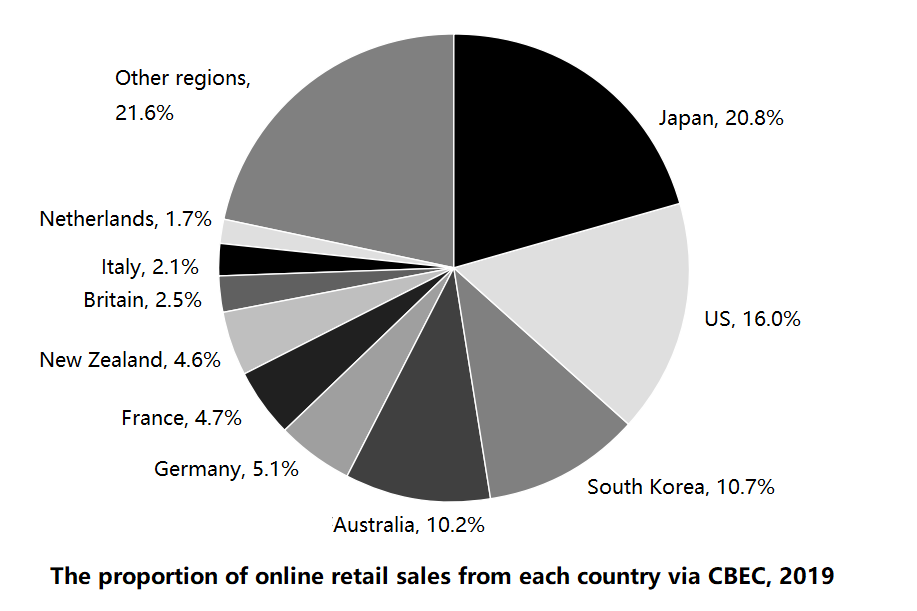
In 2019, the imported retail value of goods via CBEC channel was 94.4 billion yuan, with a YOY growth rate of 68.2%. Japan, the US, South Korea and Australia were the top four most significant trading partners.
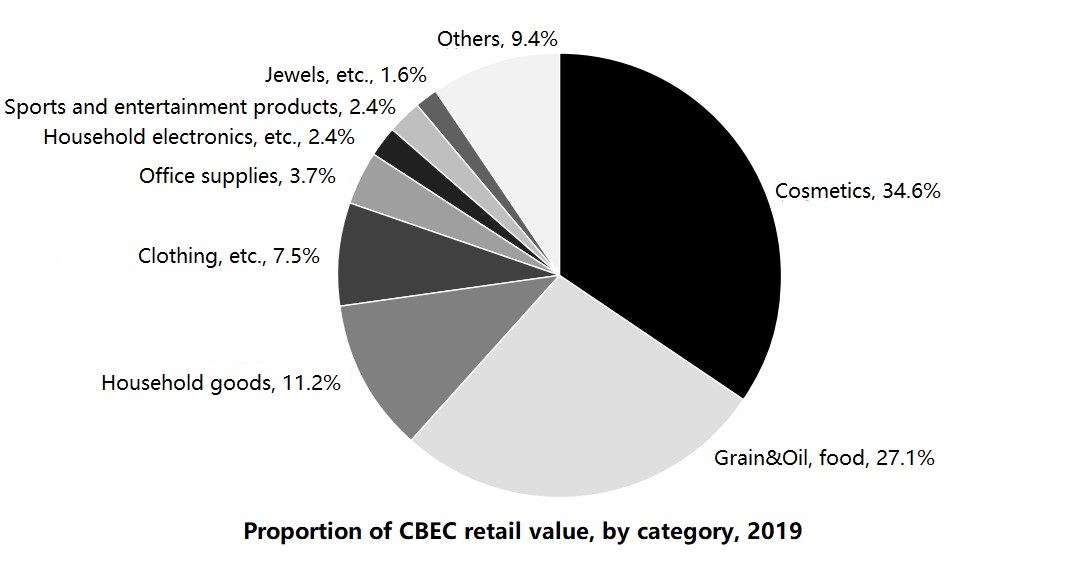
 Cosmetics and food products (including grain and oil) accounted for 61.7% of the total CBEC retail sales in 2019.
1.2 Development features and trends in China
1.2.1 Consumption innovation and trend
Live streaming—in 2019, live steaming was expanding at a wild pace, which significantly propelled the upgrading of shopping experience and provided diversified options to consumers. At present, 0.26 billion people have joined the live steaming e-commerce, which accounted for 37.2% of the total online consumers.
In 2019, the total market size of live steaming reached 433.8 billion yuan, 226% higher than last year. On the right day of the double-11 festival in 2019, the transaction amount of live steaming e-commerce on Taobao amounted to around 20 billion yuan. It is now a new channel to gain traffic and fortify the connection with users.
Quality-oriented consumption—Brand and quality are gaining traction among consumers. In 2019, the B2C model took up 78.0% of the total online retail sales, which increased by 15.2% than last year.
1.2.2 Opportunity for online sales of fresh foods
The e-commerce market of fresh food developed rapidly in recent years and is regarded as one of the most lucrative sectors due to the high unit price, high repeat purchase rate, and a high level of consumer stickiness. At the same time, the rising competition also prompts an innovative sales model called new retail mode, which is most typically represented by Hema Fresh, combining online sales with offline sales and catering. (View more at ChemLinked’s analysis in New Retail in China’s Fresh Food Sector [5])
Moreover, the sudden outbreak of COVID-2019 also provided welcome reassurance that the purchasing habit of fresh foods was transferred to online shopping during the lockdown and also influencing people’s preference after the lockdown. Affected by the pandemic, more and more consumers gained a deeper perception of purchasing fresh foods online and were aware of the convenience and safety.
However, although lots of new entrants joined this competition, quite a lot of small and medium players quitted this game owing to the high cost of cold chain logistics and the whole supply chain system. To solve this problem, in 2020, the government also released documents to speed up the cold chain construction of agricultural products. And it is the fourth time that cold chain construction was mentioned consecutively ever after 2017. As of 2019, MOFCOM has supported the construction of 837 cold chain logistic projects of agricultural products. The following establishment is expected to promote the e-commerce development of fresh foods further.
1.2.3 New markets: low tier cities
The market in low-tier cities contributed to the leading growth of e-commerce development. Areas like third-tier cities and the below are often with a large number of population and vast geographic range, which resulted in the high cost of circulation service under the traditional model. But it provides opportunities for E-commerce platforms. In 2019, the population of active E-commerce users in low-tier cities was around 0.4 billion people, 57.4% of the total active mobile e-commerce users in China. Meanwhile, China also witnessed the trend that consumers in low-tier cities care about product quality and cost-performance-ratio at the same time. Hence, mid-range brands are more prevalent in these cities.
1.2.4 Fast growing Cross-border E-commerce
As of 2019, China expedited cooperation with international logistic enterprises and considerably shortened the delivery time. Up until the end of 2019, Cainiao (菜鸟), a logistic group in China, established the cooperation with over 100 overseas logistic enterprises like Correos, Singapore post, etc., and made it possible to deliver goods to China on the second day.
What’s more, CEBC platforms also made efforts to keep attracting more foreign merchants. In 2019, Jingdong International built over 1,000 international shipping routes and newly introduced over 3,000 imported brands to China by means of its dominant position in logistic layouts. And its global supply chain system has already become a fast lane for goods importation.
Japan
2.1 Status quo of the E-commerce industry
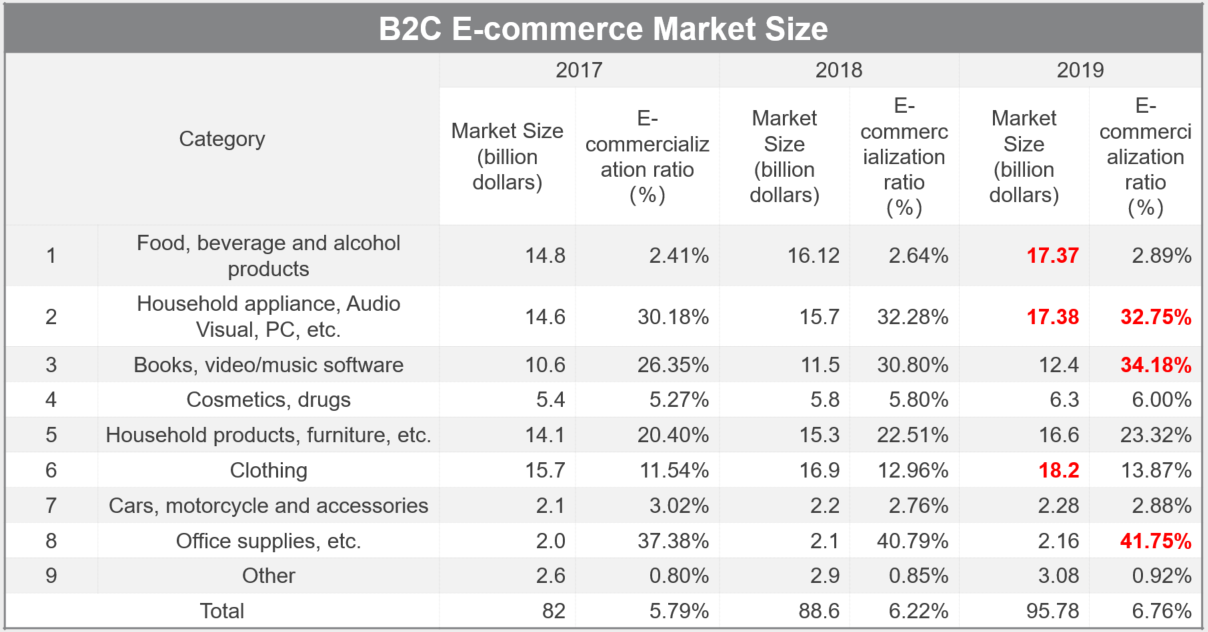
Japan is a country with an optimized internet infrastructure and logistics system, which ranked 12th and 5th on these two dimensions respectively worldwide. Estimated by eMarketer, Japan’s online retail sales totaled 115.4 billion dollars in 2019, 4% higher than last year. The survey conducted by Japan’s Ministry of Economy, Trade and Industry also indicated, the B2C market size in Japan maintained an upward trajectory. In 2018, the domestic B2C market size reached around 170 billion dollars, increased by 8.96% than last year. And the e-commercialization ratio of the B2C market is 6.22%. Rakuten, Yahoo and the Japan portal of Amazon are the major E-commerce platforms in Japan.
Top selling categories in 2019: clothing, food, beverage and liquor
“Food, beverage and liquor” is the second largest category in Japan’s E-commerce market, with the growth rate of 7.77% in 2019, and also the largest category in Japan’s retail sector. In 2019, the estimated consumption (including online shopping) of this category was around 565 billion dollars, 25% of the personal consumption.
 Source from:Ministry of Economy, Trade and Industry[6]
2.2 CBEC development
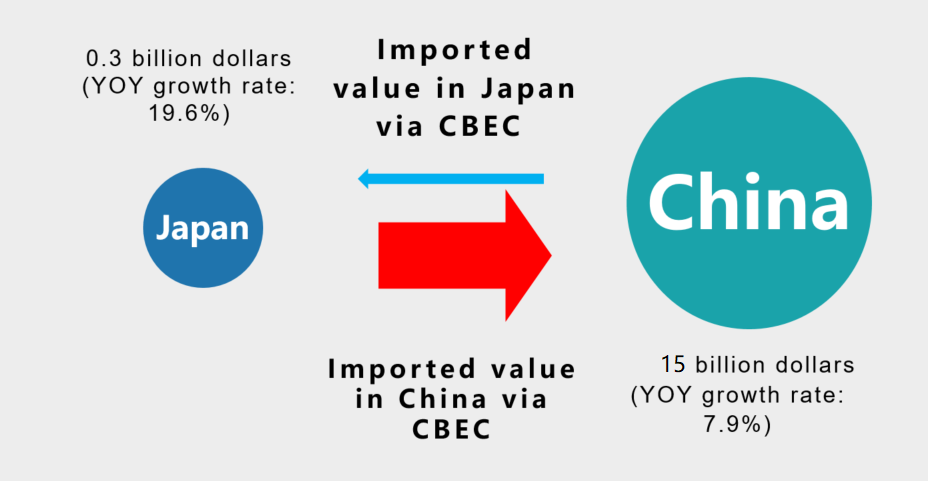
CBEC is now a powerful tool to help Japan explore the overseas market and also one of the main driving forces for Japan’s economic development. In 2019, China was Japan’s largest trading partner of food, beverage and cosmetic products under the CBEC mode. 46.2% of Japanese food & beverage products were exported to China through CBEC, and the percentage of CBEC cosmetics was 69%.
2019 CBEC market size between China and Japan
Source from:Ministry of Economy, Trade and Industry [6]
South Korea
3.1 Status quo of E-commerce development
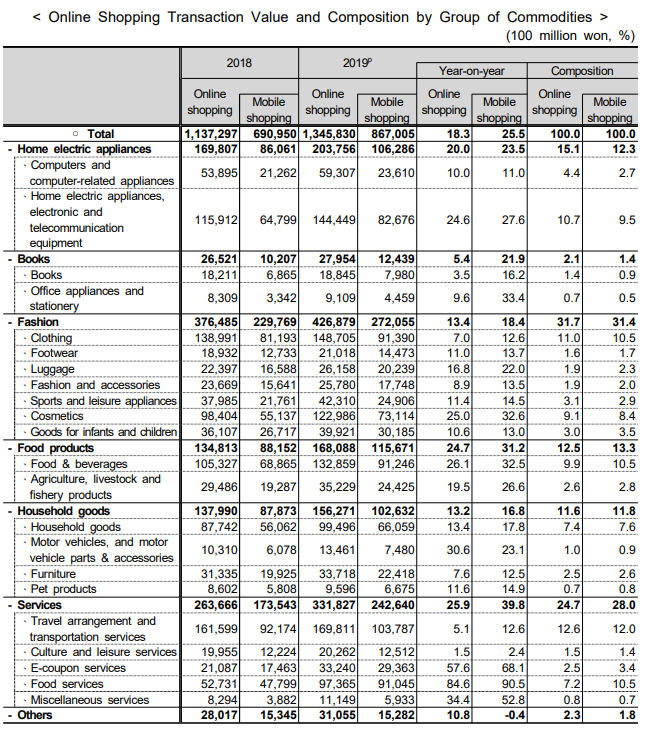
South Korea is a country with an optimized internet infrastructure and logistics system, which ranked 9th and 25th on these two dimensions respectively worldwide and is the third e-commerce market in East Asia. As revealed by eMarketer, the online retail sales in South Korea was 103.48 billion dollars in 2019, over 18.1% higher than that in 2018. And mobile phone shopping started to be the mainstream in Korea’s e-commerce industry. In 2019, the retail sales via mobile e-commerce accounted for 64.4% of the total online retail sales.
As for the online shopping transaction value by commodities, all groups of commodities showed a year-on-year increase. In particular, the online shopping transaction value of “Food services”, “Food & beverages” and “Home electric appliances, electronic and telecommunication equipment” rose by 84.6%, 26.1% and 24.6%, respectively.
 Source from: Statistics Korea [7]
Major E-commerce platforms:
C2C e-commerce platforms: Gmarket, 11th street, Auction
Social e-commerce platforms: WMF, TMON, G9, CJ shopping
3.2 Overseas Direct Online Purchases in 2019
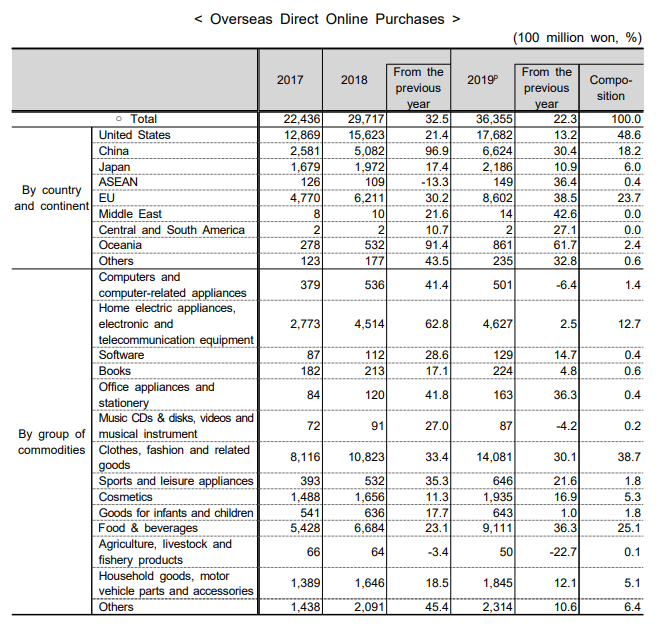
As revealed by Statistics Korea [7], the overseas direct online purchases amounted to 3.6355 trillion won (3 billion dollars) in 2019, which rose by 22.3% from 2018. Compared to 2018, the overseas direct online purchases showed an increase in all countries. In particular, the overseas direct online purchases from EU, the United States and China grew by 38.5%, 13.2% and 30.4%, respectively.
Most welcomed goods category—the overseas direct online purchases of ‘Computers and computer-related appliances’ and ‘Agriculture, livestock and fishery products’ fell by 6.4% and 22.7%, respectively, compared to that of 2018. In the meantime, the overseas direct online purchases of ‘Clothes, fashion and related goods’, ‘Food and beverages’ and ‘Cosmetics’ rose by 30.1%, 36.3% and 16.9%, respectively.
 Source from: Statistics Korea [7]
 We provide full-scale global food market entry services (including product registration, ingredient review, regulatory consultation, customized training, market research, branding strategy). Please contact us to discuss how we can help you by