Request a Demo
In an official notice1 dated January 19, 2024, China’s State Administration for Market Regulation (SAMR) proposed a consultation draft of China’s Food Safety Law, introducing a new requirement for the registration of liquid infant and young children formula (Stage 1-3). To be specific, the proposal suggests amending the existing references to "powdered infant and young children formula" in Articles 81, 82, and 124 to "powdered (liquid) infant and young children formula."
Any feedback or opinions can be sent to [email protected] prior to February 19, 2024.
Background of the Revision
In China, infant and young children formula (hereinafter, infant formula) can be divided in two forms, liquid and powdered. In most situations, they are subject to similar supervision approach. Both types must be produced adhering to the national food safety standards —— GB 10765-2021 for infant formula, GB 10766-2021 for older infant formula, and GB 10767-2021 for young children formula. Additionally, both types require overseas manufacturers to finish the GACC manufacturer registration. However, until now, only powdered infant formula has been subject to recipe registration.
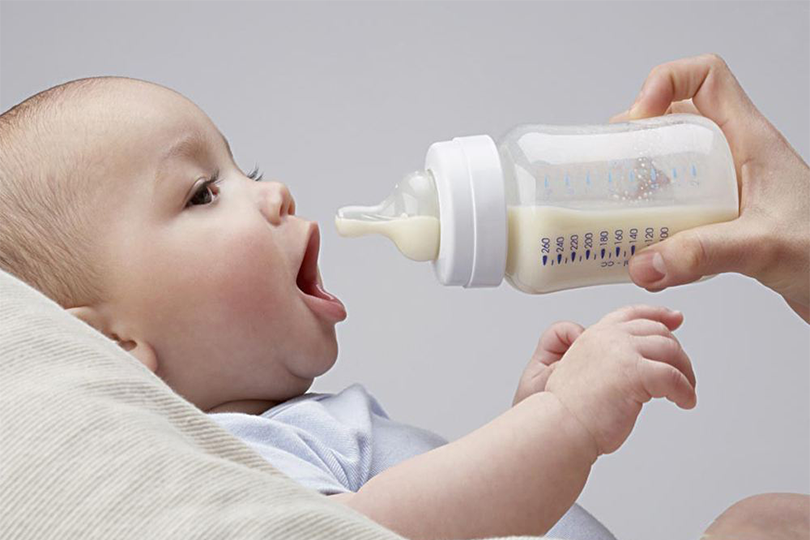
As explained by the Notice, liquid infant formula is a novel product type that has emerged in recent years. Consequently, the recipe registration requirement for liquid infant formula was not included in the 2015 amendment to the Food Safety Law. To better supervise such a product, SAMR has organized multiple safety arguments and researches in collaboration with experts in recent years. According to the safety argument, liquid infant formula has the characteristics of high moisture content and rich nutrition, which makes it require higher technical requirements in terms of microbial control, stability, product packaging, and other aspects of production quality control compared to powdered infant formula. Therefore, implementing registration management at the national level is deemed necessary.
Market Status
ChemLinked did some researches on the liquid infant formula market in 2019. Researches found that several Chinese domestic companies once launched such a product in the market between 2015to 2017. However, their production gradually ceased. According to Mintel2, in 2018, only 1% of the infant formula product in China were in liquid form.
Over the past five years, no reports revealed the change in the liquid infant formula market. As the SAMR notice indicates, there is currently no domestic production of liquid infant formula in China. Factors such as short shelf life, relatively high prices, and dietary habits prevalent among the Chinese population have hindered the significant market development. Currently, products available in the market are all imported.Despite being a niche market, ChemLinked still considers the liquid infant formula sector as a promising one just as what we analyzed in 2019, particularly in view of the current saturation of the powdered infant formula market and the more open mindset of young generations. However, it requires more time to cultivate consumer acceptance. For deeper insights, please refer to the article "China Slow to Accept Liquid Infant Formula3".
 We provide full-scale global food market entry services (including product registration, ingredient review, regulatory consultation, customized training, market research, branding strategy). Please contact us to discuss how we can help you by