Request a Demo
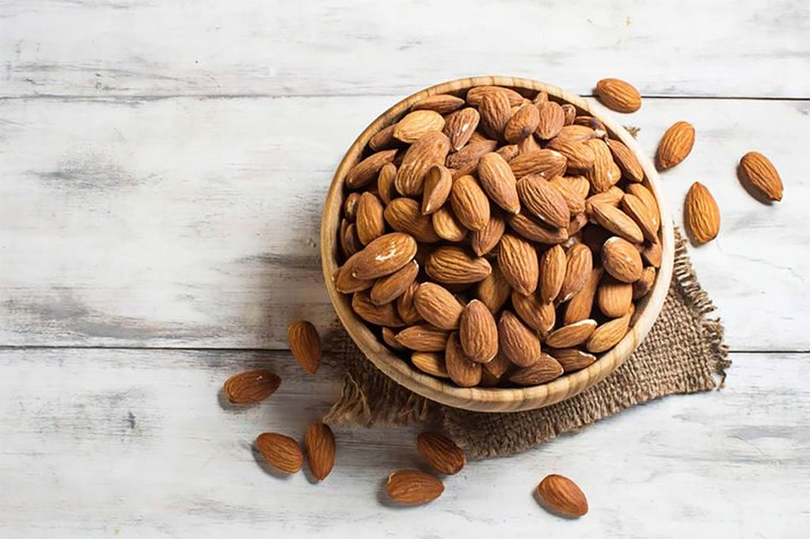
On July 5, 2019, at the Cabinet Office Consumer Commission Food Labeling Section Meeting, the Consumer Affairs Agency (CAA) announced that "Almond has been added to the list of foods recommended to use allergen labeling" and "Walnut has been designated as a food subject to mandatory labeling". I would like to summarize the background of the amendment and the future schedule.
Background and result of a survey
On May 31, 2019, a report which is a summary of the result of "National survey of state of health damage caused by immediate food allergies" (survey in the 2018 fiscal year) was published ("Report on survey and research business of food labeling related to food allergy"). This is a periodic survey performed approximately every 3 years, and the background of the amendment is the fact that the number of allergy cases for almond and walnut was increasing at the time of the most recent survey compared with the last one (the fiscal year of 2015) and the one before (the fiscal year of 2012).
Considerations based on the report are summarized as follows.
From "Consideration and Conclusion" about labeling for foods containing allergen
 Among all cases, 7 items of specific ingredients account for 77.0% (3,733 people) and if 20 items of specific ingredients are included, they account for 94.5% (4,584 people). Also, among 524 people with cases of shock, 7 items of specific ingredients account for 76.5% (401 people) and if 20 items of specific ingredients, are included, they account for 94.0% (493 people). The data above is a proof that 27 items of specific ingredients, etc. are enough as a subject to control allergy food labeling in Japan.
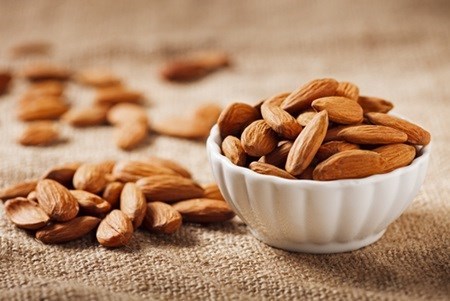
Almond accounted for the most cases of foods which are not covered by specific ingredients, etc. in the last survey, and it was also at the top twice in a row. There are enough cases of almond even compared to banana, cashew and sesame which were ranked up to specific ingredients, by halfway.
Based on these results, the necessity of considering the addition of almonds as a food being subject to recommended labeling has been shown. Also, we need to pay close attention to the sudden increase of patients allergic to nuts including walnuts which are in the lead.
About food labeling for foods containing allergen based on "Discussion Subjects"
| Substance that causes allergy | Classification | Fiscal year of 2012 | Fiscal year of 2015 | Fiscal year of 2018 | Correspondence |
| Walnut | Number of immediate allergy cases | 40 | 74 | 251 | Consideration to make labeling mandatory |
| Number of shock cases | 4 | 7 | 42 | ||
| Almond | Number of immediate allergy cases | 0 | 14 | 21 | Consideration to add to recommended items |
| Number of shock cases | 0 | 4 | 1 |
About the current system
"Allergen labeling" according to the Food Labeling Standard is labeling stipulated to indicate that some foods such as processed foods contain certain ingredients regarding the level and occurrence of past health damage in the view of preventing consumers who are allergic to certain foods from incurring health damage.
"Specific ingredients are classified as "specific ingredients (7 items of mandatory labeling)" and "those equivalent to specific ingredients (20 items of recommended labeling)", and the following items are subject to this labeling.
| Specific ingredients, etc. | Reason | Mandatory labeling | |
| Specific ingredients | Shrimps, crabs, wheat, buckwheat, eggs, milk, peanuts | Ingredients with an especially high necessity of labelling considering the number of occurrences and severity of cases | Mandatory labeling |
| Ones equivalent to specific ingredients | Abalones, squid, salmon roe, oranges, cashews, kiwis, beef, walnuts, sesames, salmon, mackerel, soybeans, chicken, bananas, pork, matsutake mushrooms, peaches, Japanese yams, apples, gelatin | Ones which continuously cause certain numbers of cases and people to present severe symptoms but less than specific ingredients | Recommended to put labeling (Voluntary labeling) |
The methods of labeling are as follows. (Individual labeling in principle. Collective labeling is allowed only as an exception.)
Labeling example: individual labeling
Ingredients: potato, carrot, ham (containing egg and pork), mayonnaise (containing egg and soybeans), hydrolyzed protein (containing beef, salmon, mackerel and gelatin) / seasoning (amino acid, etc.)
Labeling example: group labeling
Ingredients: potato, carrot, ham, mayonnaise, hydrolyzed protein / seasoning (amino acid, etc.), (partially containing egg, pork, soybeans, beef, mackerel and gelatin)
Future schedules
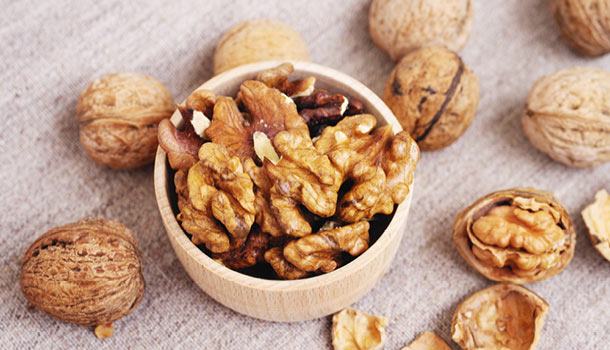 Regarding the designation of walnuts as an item of mandatory labeling, since the discussion subjects are summarized as "It is necessary to check if this number of cases is temporary" and "If walnut is designated as an item subject to mandatory labeling, it is necessary to develop a testing method and evaluate validity from the viewpoint of securing enforcement", preparation is proceeding to enforce it in 2 or 3 years. Adding almond to a list of recommended labeling is planned to be enforced from this autumn.
In case the 27 items including ones subject to recommended labeling are written on labeling for all the products, it is necessary to add an entry of "almond" from the specifications management phase. Also, in labeling systems in many foreign countries, walnut, cashew, almond, etc. are written as "Tree Nuts" on labeling. Therefore, they are managed as Tree Nuts in many of ingredients specifications. Especially when ingredients imported from foreign countries are used and when foods are imported from foreign countries, this amendment needs attention, so I would recommend to check the CAA material, "About food labeling for foods containing allergen", in the early stage of the process.
"About food labeling for foods containing allergens (CAA)" is posted on the website of the Cabinet Office Consumer Commission, and "Report on Survey and Research Business of Food Labeling related to food allergy" is posted on the website of CAA. You can also see the results of the survey including the percentage of each food causing allergy (egg, milk, wheat, etc.) among all cases and a percentage of each food causing allergy by case (immediate type symptom, shock symptom). For people in charge of business practices for food labeling, it is important to grasp technical information such as information about regulation amendment and ingredients, but it is more helpful to properly know information about the actual state of the background of amendment in order to prevent mistakes in labeling and to handle the situation when an accident happens.
 We provide full-scale global food market entry services (including product registration, ingredient review, regulatory consultation, customized training, market research, branding strategy). Please contact us to discuss how we can help you by