Request a Demo
Trends and Innovation in China’s Juice Industry
The 21st century has witnessed the ups and downs of the juice industry: downs for conventional juice from concentrate (FC) and ups for juice not from concentrate (NFC) and cold pressed juice (also known as high pressure pasteurized/processed juice). Noteworthy case studies which highlight important changes in China’s juice sector are the 2015 performances of Meizhiyuan and Chunguole, two large manufacturers of FC juice, which both experienced drops of 32.4% and 11.6% in sales. Despite the dispiriting performance of FC, an overall annual growth rate of 5% for China’s juice sector has been projected by Zenith International.
Traditionally tables at Chinese banquets would be set with three bottles of non-alcoholic beverages (Pepsi-Cola/Coca Cola, Sprite and orange juice from concentrate. In recent years, it is not uncommon to see these drinks substituted (even in very rural areas) with coconut juice, blueberry juice and similar. The pursuit of health and wellness with the goal of fostering longevity and safeguarding against chronic disease is surely shaping consumer purchasing decisions and consumptions trends in China, with major benefactors being the NFC and “cold pressed”, high pressure pasteurized juice sectors.
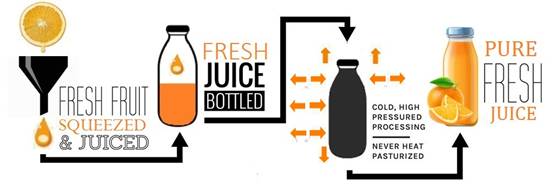
Compared with NFC, cold pressed juice is a product that has undergone high pressure pasteurization —— a technique extending shelf life to 30~45 days. HPP minimizes losses to nutrition, flavor, etc. Globally cold pressed juice enjoys a CAGR of 7% in online shopping platform alone and forecasters have put an expected $300 million valuation on this sector by 2024.
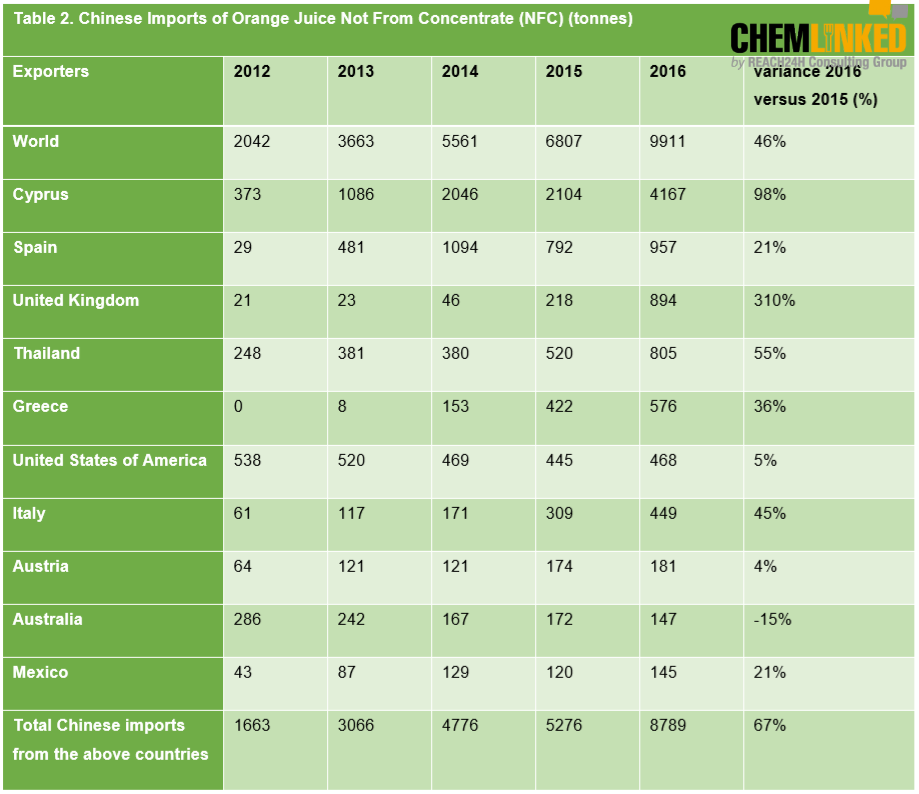
The volume and value of imported NFC juice has increased over the last several years. Take NFC orange juice for example, according to data published by Fruit Juice Focus last year, from 2012 to 2016 there was a dramatic drop in Chinese imports of FC and a rise in that of NFC.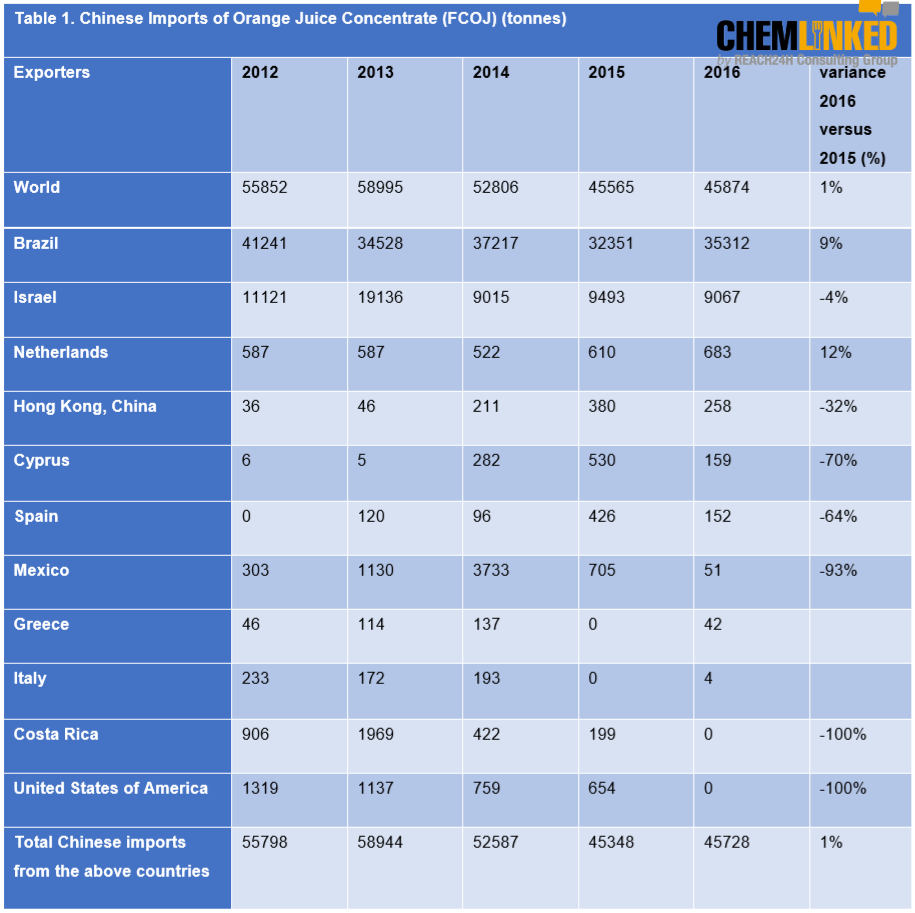
 Innovative fruit & vegetable beverages are also gaining popularity exemplified by products such as “Naked Pressed” made by Pepsi, Innocent series made by Coca Cola Global, Hey Juice, FS juice etc. Naked Pressed consists of 9 products which are combinations of different fruits and vegetables, botanicals and a wide range of other innovative and trending ingredients.
Compliance Challenges
There are four major compliance issues commonly associated with imported juices:
Fail to provide certification
Expired products/shelf life issues
Use of unpermitted food additives or overuse of food additives
Non-compliant labeling
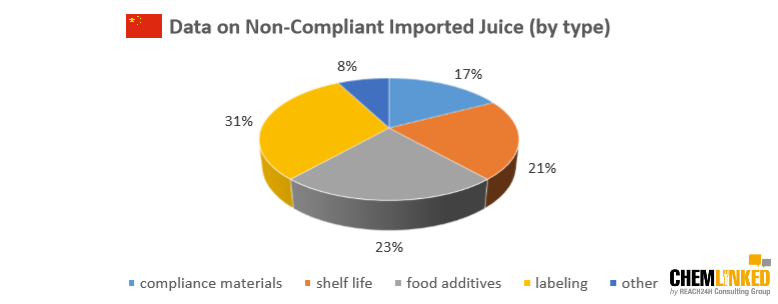
Other factors are packaging, bacteria, etc.
Regulatory Knowledge and Practice
Fruit and vegetable juice products shall comply with the following directly related standards:
GB 17325-2015 National Food Safety Standard Concentrated Fruit and Vegetable Juice for Food Industry
GB 19297-2003 Hygienic Standard for Fruit and Vegetable Juice
GB/T 31121-2014 Fruit & Vegetable Juices and Fruit & Vegetable Beverage
Product types under “fruit & vegetable juices and their beverage”
Fruit & vegetable juice (puree) |
Not from concentrated fruit juice |
Fruit juice (fruit juice from concentrated) |
Vegetable juice |
Fruit puree and vegetable puree |
Blended fruit & vegetable juice (puree) |
Concentrated fruit &vegetable juice (puree) |
Fruit & vegetable juice (puree) beverage |
Fruit & vegetable juice beverage |
Fruit nectar |
Blended fruit & vegetable juice beverage |
Concentrated fruit & vegetable juice beverage |
Fermented fruit & vegetable juice beverage |
Fruit beverage |
Raw materials’ compliance
China Food Safety Law and National Food Safety Standards stipulate that food raw materials must be ordinary food ingredients or new food ingredients whose use in food production are approved by the National Health Commission (formerly NHFPC: 2013-2018 and Ministry of Health prior to 2013)
Food additives & nutritional fortification substance compliance
Additives and nutritional fortification substances added to juice shall comply with GB 2760-2014 National Food Safety Standard for Food Additives and GB 14880-2012 National Food Safety Standard for Nutritional Fortification Substances respectively.
In China’s food classification system, “fruit and vegetable juice or beverage” is designated with the classification number (Using GB 2760: appendix e-table 1 as reference). Using this reference number it is possible to check the scope of food additives and nutritional fortification substances permitted to be used.
Among the non-compliant imported fruit and vegetable juice and beverage products mentioned previously, 23% of failures are due to misuse of food additives, for example, a brand of apple vinegar contains DL-alanine which is not listed in the food additive standard. However a new standard for DL-alanine as a new food additive has already been developed and its draft version is currently undergoing public consultation.
Labeling and claim compliance
In addition to compliance with specifications listed in GB 7718-2011 National Food Safety Standard General Standard for the Labeling of Prepackaged Foods and GB 28050-2011 National Food Safety Standard General Standard for the Nutrition Labeling of Prepackaged Foods that regulate the labeling of juice in China, the following requirements are important:
Products which add sugar (including sugar and starch sugar that includes maltose, glucose, high fructose corn syrup etc.) shall have “sugar added” added to the label
Manufacturers shall inform consumers of the total concentration of fruit & vegetable juice and pulp etc. if it is fruit and vegetable beverage
Manufacturers are allowed to use “100%” in any place in the package of fruit and vegetable juice as long as it meet the requirements
If the product contains fiber, pulp, etc., manufacturers shall inform consumers of the total concentration of juice and these additional substances
A compliant label generally include the following information in Chinese and is attached to the product:
Product name
Ingredients list
Date of manufacture
Shelf life
Country of origin
Storage condition
Info of responsible company in China
Specification
Table of nutrients
 We provide full-scale global food market entry services (including product registration, ingredient review, regulatory consultation, customized training, market research, branding strategy). Please contact us to discuss how we can help you by