Request a Demo
In today's fast-paced world, where consumers are becoming increasingly health-conscious and mindful of their dietary choices, the importance of clear and informative food labeling cannot be overstated. By presenting key nutritional information in a clear and accessible manner, Front-of-Pack (FOP) labeling has emerged as a vital tool to empower consumers to make informed decisions about the prepackaged food products they purchase and consume.
With the potential to positively impact public health, FOP labeling contributes to the global effort to combat obesity, chronic diseases, and nutritional deficiencies. This article aims to provide an overview of FOP labeling requirements in several key F&B markets including EU, UK, US, Canada, Australia and New Zealand.
Editor's note: for an overview of FOP labeling requirements in other countries in Asia Pacific, please refer to Front-of-Pack (FOP) Nutrition Labeling on Food Products in the Asia Pacific.
European Union
According to the current EU regulations on nutrition labeling, it is not mandatory to indicate nutritional information on the front of the pack. Despite that, several EU member states have developed or plan to develop voluntary FOP labeling requirements, including Switzerland, Denmark, Lithuania, Finland, Slovenia, France, Germany, Spain, the Netherlands, Luxembourg, and Italy.
However, in the new "Farm to Fork" strategy launched in May 2020, the European Commission announced that it will propose a mandatory harmonized FOP nutrition labelling system to tackle the obesity issue. The harmonization may be in particular beneficial for small and medium enterprises (SMEs) as they would not need to comply with different national labelling schemes anymore and could apply the same FOP nutrition labelling scheme at the EU-wide level. However, the proposed deadline for this plan has passed in 2022 Q4. The proposal of harmonized FOP nutrition labelling schemes is expected to be postponed to 2023.
The United Kingdom
The United Kingdom (UK) introduced a voluntary FOP scheme, known as the "traffic light" scheme in 2013. The scheme combines color coding and the percentage of reference intakes, providing information on the content of fat, saturated fat, sugars, salt, and the energy value by serving or portion of the food. Colors are used to classify those nutrients as "low" (green), "medium" (amber) or "high" (red). Reference intake is shown in percentages, providing information on how the amount of fat, saturated fat, sugars and salt within that product fits into the daily recommended diet. Information is given on an "as sold" or "as consumed" basis. Portion size information is expressed in a way that is easily recognizable by, and meaningful to, the consumer: for example, a quarter of a pie or a single burger. Overall, the UK's voluntary scheme has proven to be a success. In 2018, the FOP scheme was adopted by two-thirds of the packaged food and drink market in the UK.
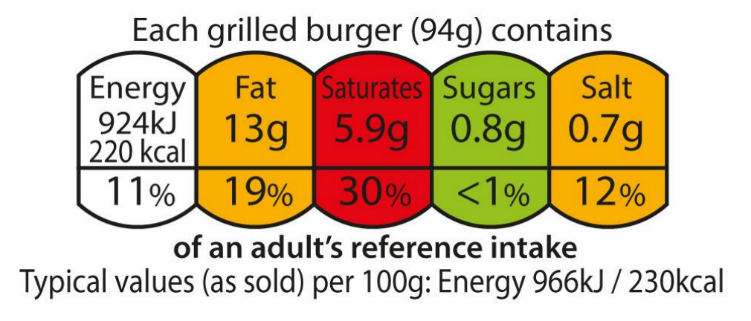 Figure 1: The
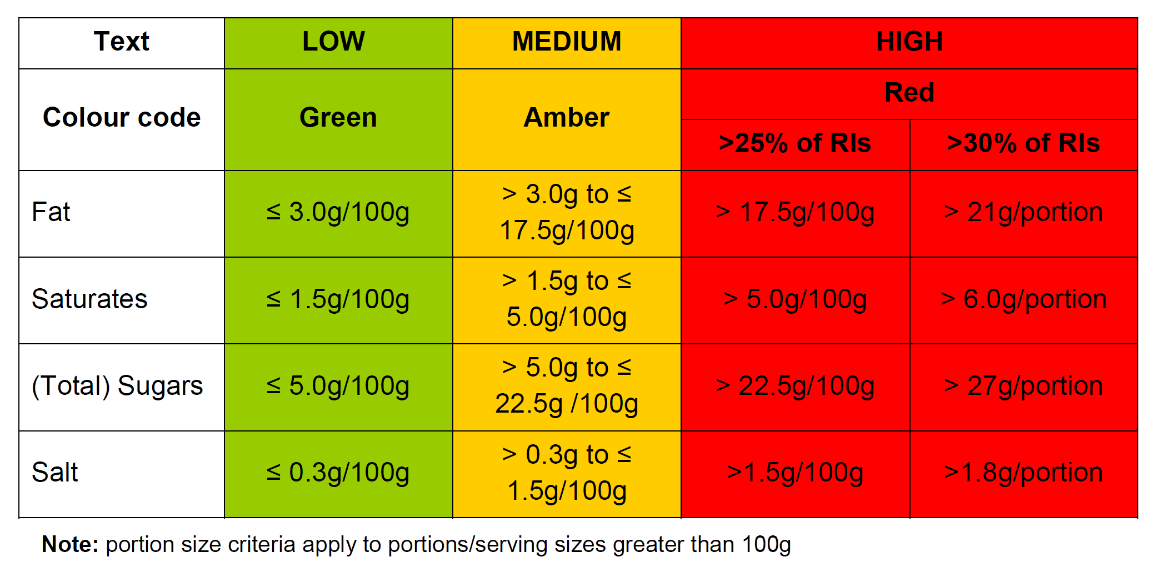 Figure 2: Criteria for 100g of food
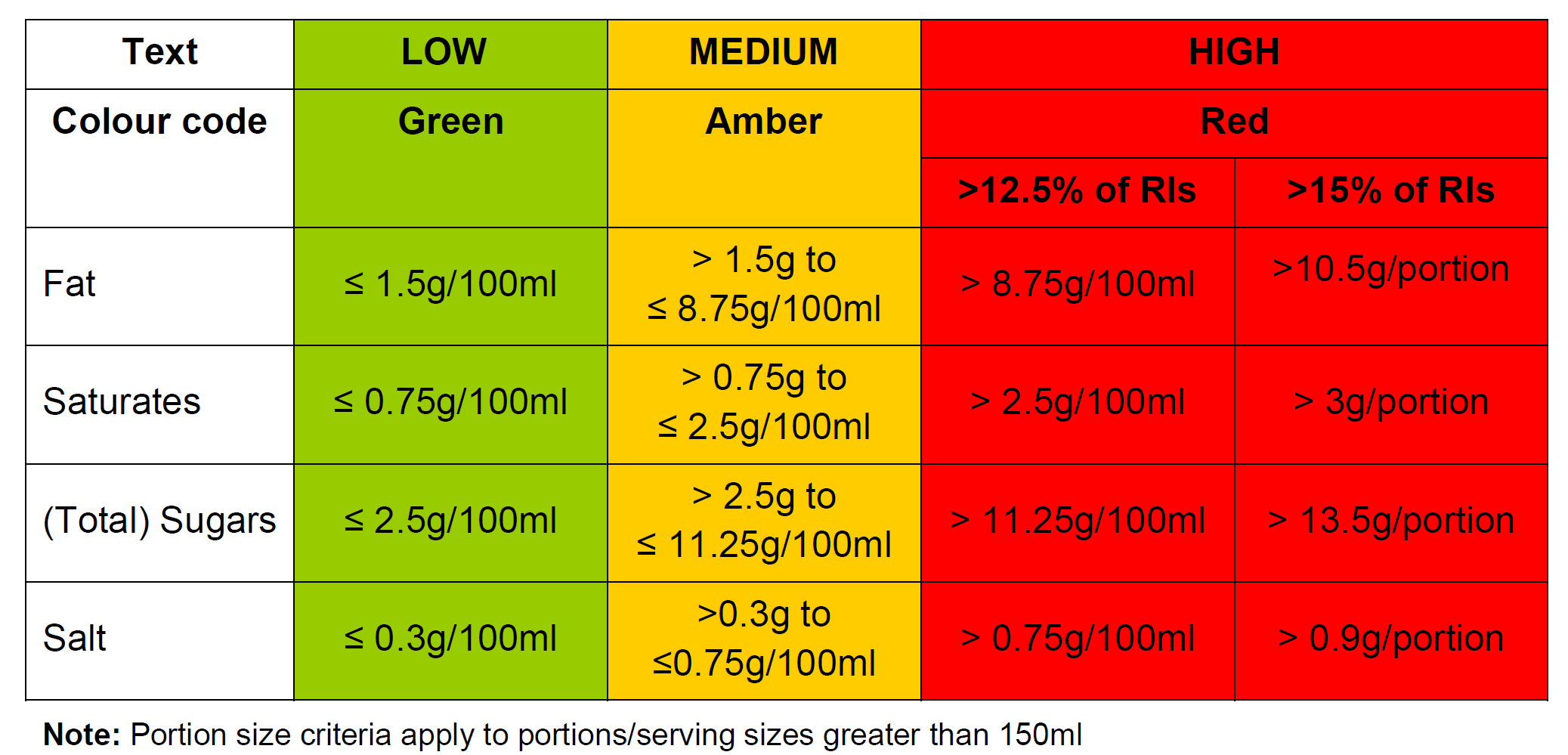 Figure 3: Criteria for 100g of drinks
The United States
Currently, in the United States, the FOP labeling is voluntary. Some US companies use a voluntary FOP labeling system called "Facts Up Front", which was developed in 2012 as a joint initiative of the Consumer Brands Association and the Food Industry Association. Facts up Front labels display the number of calories and the amount of saturated fat, sodium and total sugar contained in each serving of a food or beverage product. Some labels may also include information about other nutrients, such as dietary fiber and calcium.
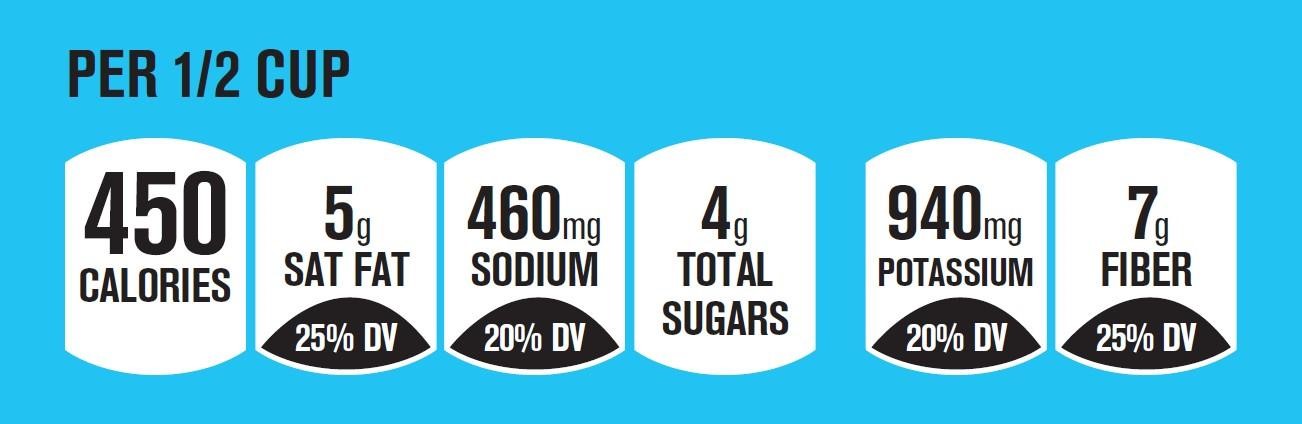 Figure 4: The Facts up Front labeling in the US
In 2022, the White House released a National Strategy, indicating that the US Food and Drug Administration (FDA) will propose developing a standardized FOP labeling system based on its ongoing consumer research on the development of a FOP nutrition labeling scheme. After that, the FDA will open the proposed rule for public comment. On January 26, 2023, the agency issued a 60-day procedural notice on its research plans and on June 15, 2023, issued a 30-day procedural notice.
Canada
In 2022, Canada amended its nutrition labeling regulations and established the FOP rules for food packaging, stipulating that packaged food which meets or exceeds the standard sodium, sugar, and saturated fat levels should be mandatory to be labeled with FOP from January 1, 2026. The FOP logo is black and white, with a magnifying glass that highlights the high content of sodium, sugar, saturated fat, or any combination. The logo is bilingual in English and France. Later in May 2023, Canada released an updated guidance document to help stakeholders in complying with the FOP nutrition labeling requirements. Click ChemLinked News for more details.
Table 1: Thresholds for the FOP nutrition logo in Canada
Scope | |
Prepackaged foods with a reference amount > 30 g or 30 mL that are not main dishes | ≥ 15% Daily Values (DV) of saturated fat, sugars or sodium |
Prepackaged foods with a reference amount ≤ 30 g or 30 mL | ≥ 10% DV of saturated fat, sugars or sodium |
Prepackaged main dishes with a reference amount ≥ 200 g or 170 g* | ≥ 30% DV of saturated fat, sugars or sodium |
Notes: 200 g for main dishes intended for children and/or adults and 170 g for main dishes intended solely for children between one to four years old.
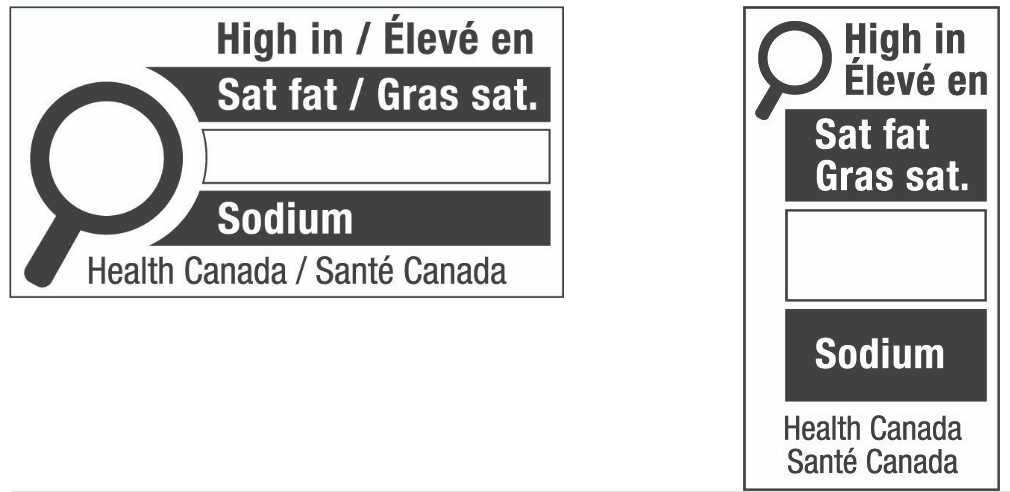 Figure 5: The FOP format in Canada
Australia and New Zealand
In 2014, Australia and New Zealand jointly launched the Health Star Rating (HSR) labeling system. The HSR system is government-backed, but voluntary and self-regulated. The health star rating provides a clear overall health rating for food, ranging from 0.5 star to 5 stars. The more stars, the healthier the food choice. The rating is essentially determined by evaluating the overall nutritional value of the product. Specifically, the number of stars is determined according to the assessment result of positive and risk nutrients in food. The assessment methodology is built in the calculator for quick calculation.
The HSR system is designed for packaged products sold in shops. Some products are specifically excluded from the system, including alcoholic beverages, infant formula, sports food, and FSMP.
HSR can appear on packs in two general ways. The first shows just the star rating of the product; the second displays the star rating plus additional specific nutritional information. Specifically, the HSR system offers four different labelling options:
Option A: Health Star Rating + energy icon + 3 prescribed nutrient icons + 1 optional nutrient icon;
Option B: Health Star Rating + energy icon + 3 prescribed nutrient icons.
Option C: Health Star Rating + energy icon.
Option D: Health Star Rating.
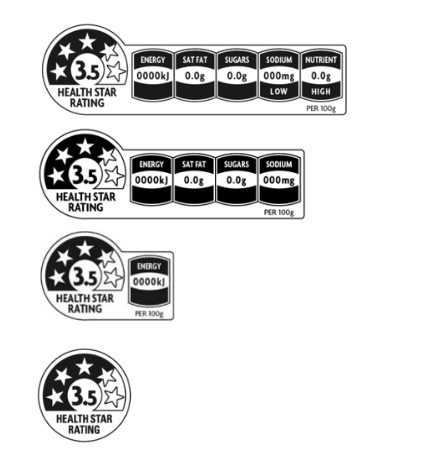 Figure 6: Four HSR labeling options in Australia and New Zealand
In conclusion, it is worth noting that, apart from Canada, none of the countries mentioned above have implemented mandatory FOP labeling schemes. However, it is important to acknowledge that there are intentions in certain regions, such as the EU and the US, to establish standardized mandatory FOP labeling in the future. For an overview of FOP labeling requirements in other countries in Asia Pacific, please refer to Front-of-Pack (FOP) Nutrition Labeling on Food Products in the Asia Pacific.
 We provide full-scale global food market entry services (including product registration, ingredient review, regulatory consultation, customized training, market research, branding strategy). Please contact us to discuss how we can help you by