Request a Demo
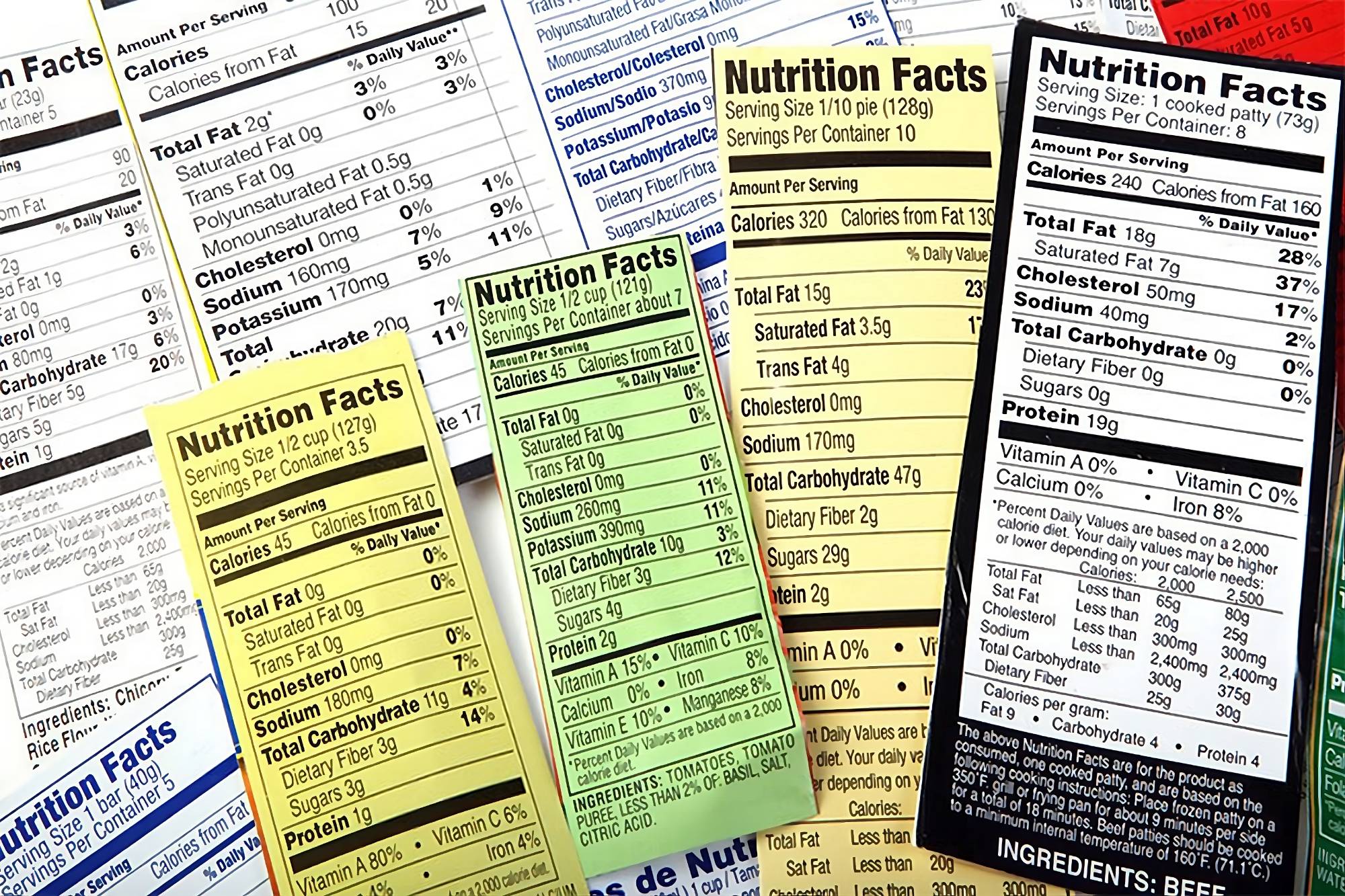
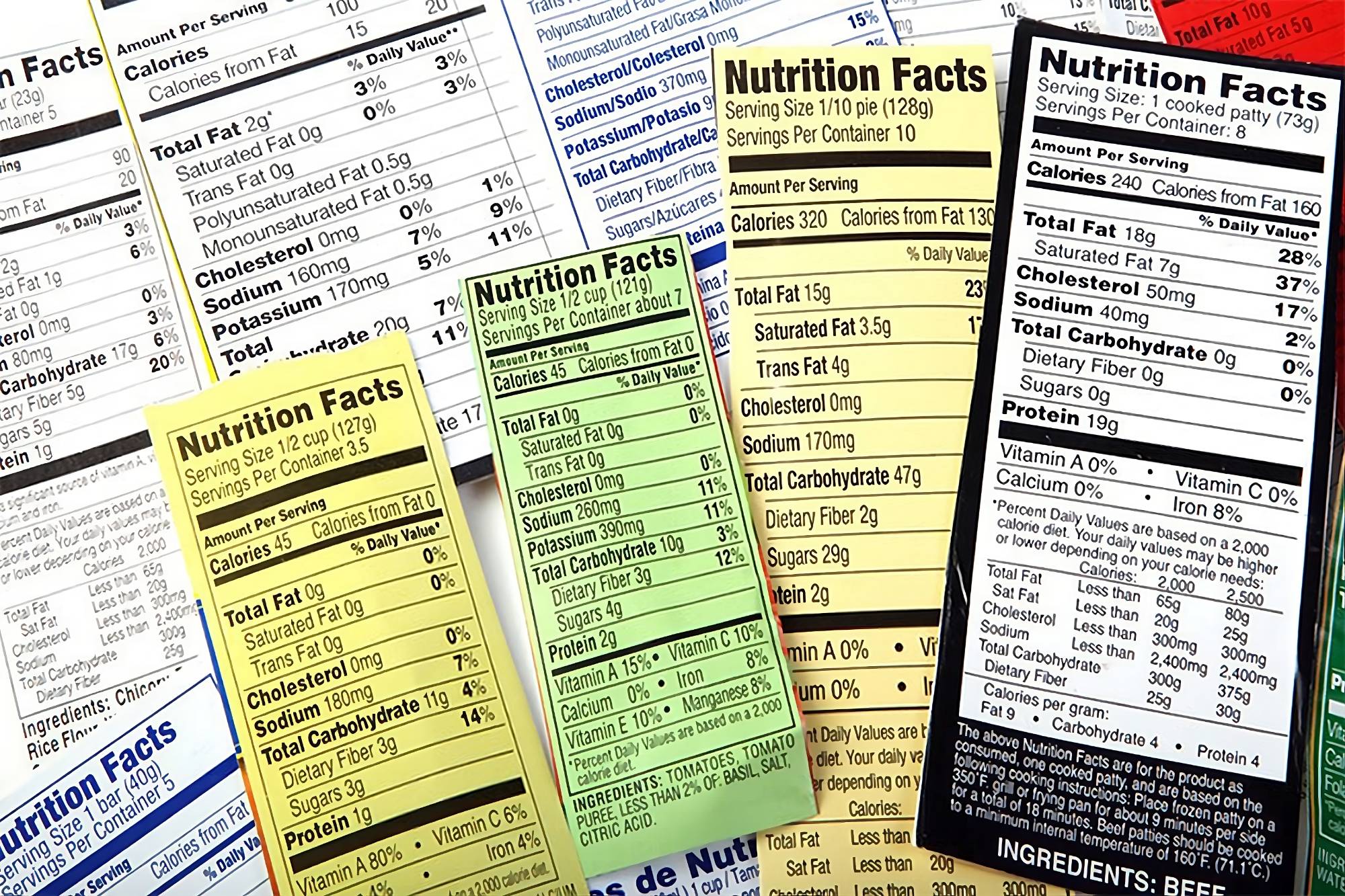
As revealed by an official notice on Sept. 26, 2021, China is now consulting 10 national food safety standards, i.e., one standard for general labeling and nine standards for nutrient fortifiers. Comments shall be submitted prior to Nov. 21, 2021.
The ten standards are:
No. | Standard Name | Status |
1 | General Rules for Nutrition Labeling of Prepackaged Foods (GB 28050) | Revision |
2 | Food Nutrient Fortifier Docosahexaenoic Acid Oil (Fermentation) (GB 26400) | Revision |
3 | Food Nutrient Fortifier Arochidonic Acid Oil (GB 26401) | Revision |
4 | Food Nutrient Fortifier Calcium Citrate | Revision |
5 | Food Nutrient Fortifier Yeast Beta-Glucan | Formulation |
6 | Food Nutrient Fortifier Electrolytic Iron | Formulation |
7 | Food Nutrient Fortifier Uridine 5'-monophosphate | Formulation |
8 | Food Nutrient Fortifier All-trans Retinol | Formulation |
9 | Food Nutrient Fortifier Copper Citrate | Formulation |
10 | Food Nutrient Fortifier Ammonium Molybdate | Formulation |
 Major Revisions to General Rules for Nutrition Labeling of Prepackaged Foods (GB 28050)
It is the third consultation draft of GB 28050. Compared to the current version (GB 28050-2011), here are key revisions.
The application scope of this standard is expanded. For prepackaged food that is not provided to consumers directly and food packages of storage and transportation, if corresponding nutrition labeling of prepackaged food is required, it should comply with the requirements of this Standard.
Definitions of energy, protein, fat, carbohydrate and sugar are added. E.g. Clarified the definition of sugar, “sugar in this standard consists of monosaccharides and disaccharides, excluding sugar alcohol”.
Definition of nutrient reference value is revised.
The concept of “per serving” and its labeling requirements is introduced into this Standard.
The expression “the nutrition labeling of imported prepackaged food shall comply with this standard” is added.
Compulsory labeling of the content of saturated fat (or saturated fatty acid) and sugar is added.
Newly added a warning that prepackaged products should be clearly marked “Children and teenagers should be careful to choose foods with high salt, high fat and high sugar”.
The limit of surface area for food exempted from nutrition labeling is changed to 40 cm2 (for the largest surface area).
Labeling requirements for nutritional components, nutrient reference value of nutrients in Annex A and claims of energy and nutritional component are revised.
View more details below.
Comparison between GB 28050-2011, the 2nd consultation draft and the 3rd draft
Items | |||
Scope | This Standard does not apply to nutrition labeling of health food and prepackaged foods for special dietary uses. | Addition: Applicable to prepackaged food provided to consumers directly. For prepackaged food that is not provided to consumers directly and food packages of storage and transportation, if corresponding nutrition labeling of prepackaged food is required, it should comply with the requirements of this Standard. | Same with the 2nd consultation draft |
Terminology and definition | / | Add the explanation of energy, protein, fat, carbohydrate and sugar.
Clarify the calculation method of energy and carbohydrate.
Further explain the application scope, calculation method and the reference basis of nutrition reference value (NRV). Eg, NRV applies to food for people over four years old. | Add the explanation of energy, protein, fat, carbohydrate and sugar.
Revise the calculation method of energy, carbohydrate as specified in the 2nd consultation draft.
Revise the definition of sugar, “sugar in this standard consists of monosaccharides and disaccharides, excluding sugar alcohol”.
Further explain the application scope, calculation method and the reference basis of nutrition reference value (NRV). Eg, NRV applies to food for people over 36 months. |
Basic requirements | / | / | Newly add the expression “the nutrition labeling of imported prepackaged food shall comply with this Standard”. |
Compulsory labeling content | / | Add the requirements of saturated fat (or saturated fatty acid) and sugar.
The content of energy and nutritional components should be labeled as per 100g or per 100 mL, etc. | Add the requirements of saturated fat (or saturated fatty acid) and sugar.
The content of energy and nutritional components should be labeled as per 100g and (or) per 100 mL, and (or) per serving, etc.
Newly add a warning that prepackaged products should be clearly marked “Children and teenagers should be careful to choose foods with high salt, high fat and high sugar”. |
Optional labeling content | / | It is optional to add the labeling calculated as per serving, involving 19 types of prepackaged foods.
Descriptions like “cal,” “kcal” and “calories” are allowed for the labeling of energy. | It is optional to add the labeling calculated as per serving, involving 18 types of prepackaged foods.
Descriptions like “cal,” “kcal” and “calories” are allowed for the labeling of energy. |
Labeling of nutritional components | / | Clarify the determination method of the content value of nutritional component.
When labeling several nutritional components, compulsory labeling content can be emphasized by using larger word size, changing font and color, etc.
Nutrition claims can be labeled anywhere, but the word size should be no greater than the largest size of the food name.
Units, rounding interval and limit value of “0” for nutritional components are revised, including the addition of those for n-3 polyunsaturated fatty acids, α- linolenic acid, EPA and DHA..
Lactose shall be labeled separately from sugar.
Delete the margin of error of vitamin A and D when calculating the content. | Same with 2nd consultation draft (some values are revised in this draft, such as the rounding interval of Vitamin B12). |
Prepackaged foods that can be exempted from compulsory nutrition labeling | Alcoholic beverage that contains 0.5% or more alcohol;
Non-prepacked food sold on the site where it is produced
Prepackaged foods of daily intake amount ≤ 10g or 10ml
The limit of surface area for food exempted from nutrition labeling is increased to 100 cm2 (for the total surface area) or 20 cm2 (for the largest surface area). | Alcoholic beverage that contains 0.5% or more alcohol and sugar content is less than 0.5%.
Non-prepacked food sold on the site where it is produced and bulk foods
Newly add a new category that can be exempted from labeling: simple dried and raw food with simple processing or cleaning.
Prepackaged foods or condiment with single raw material of which the daily intake amount is ≤ 10g or 10ml
The limit of surface area for food exempted from nutrition labeling is increased to 150 cm2 (for the total surface area) or 40 cm2 (for the largest surface area).
Added: Food that is packaged in a recycled glass (ceramic) bottle where labeling information cannot be printed. | Alcoholic beverage that contains 0.5% or more alcohol; Newly add a new category that can be exempted from labeling: dried food with simple physical processing and with zero addition of other ingredients, e.g. cereal, dried vegetable Prepackaged foods or condiment with single raw material of which the daily intake amount is ≤ 10g or 10ml;
Onsite-made-and-sold foods are deleted from the exemptions.
The limit of surface area for food exempted from nutrition labeling is changed to 40 cm2 (for the largest surface area). |
Annex A Nutrition reference value | / | Delete the NRV of cholesterol.
NRV of folic acid, choline, vitamin D, zinc, iodine, selenium and copper are revised. | Delete the NRV of cholesterol.
NRV of folic acid, choline, biotin, vitamin D, zinc, iodine, selenium and copper are revised.
Add a note “2000mg of sodium equals to 5g of salt.” |
Annex B Format of nutrition labeling | / | Add two recommended nutrition labeling formats. | Add two recommended nutrition labeling formats. |
/ | Add the function claim of sugar: long-term intake of high-sugar food is harmful for health.
Delete the content claim: low-protein.
Delete the function claim of cholesterol.
Add the function claim of α- linolenic acid, vitamin K, phosphorus, potassium.
Expand the function claim scope of protein, vitamin A, vitamin B6, vitamin B 12, calcium, zinc.
Delete a function claim of carbohydrate and folic acid respectively.
Revise the function claim of vitamin D. | Add the function claim of sugar and fat: long-term intake of high-sugar/fat food is harmful for health.
Delete the content claim: low-protein;
Requirements related to the content claims of fat, dietary fiber are revised.
Add the function claim of α- linolenic acid, sugar, vitamin K, phosphorus, potassium, selenium, etc.
Revise the function claim of vitamin C, etc. |
Contact ChemLinked for further translation service.
 We provide full-scale global food market entry services (including product registration, ingredient review, regulatory consultation, customized training, market research, branding strategy). Please contact us to discuss how we can help you by