Request a Demo
World Breastfeeding Week (WBW) is held from August 1 to 7 every year. On August 5, 2021, Chinese Nutrition Society, together with the support of the United Nations Children’s Fund (UNICEF) in China Office, organized a seminar in Beijing to promote the 30th WBW. Over 260 representatives from domestic research institutes, universities, associations, chambers of commerce as well as U.N. agencies attended the seminar.
In the seminar, Dr Chang Suying, a nutrition specialist in the UNICEF China office, opined that marketing activities of infant formula milk powder (infants refers to babies under 6 months) are counterproductive to breastfeeding. For instance, the more pregnant women are exposed to infant formula marketing, the more active attitude they will hold towards infant formula. Hence, Dr Chang advised that the marketing activity of breast-milk substitutes (including infant formula) shall be standardized through mandatory regulations. At the same time, the scope of high-quality infant feeding consultation service shall be expanded, family-friendly workplace policies shall be implemented, etc.
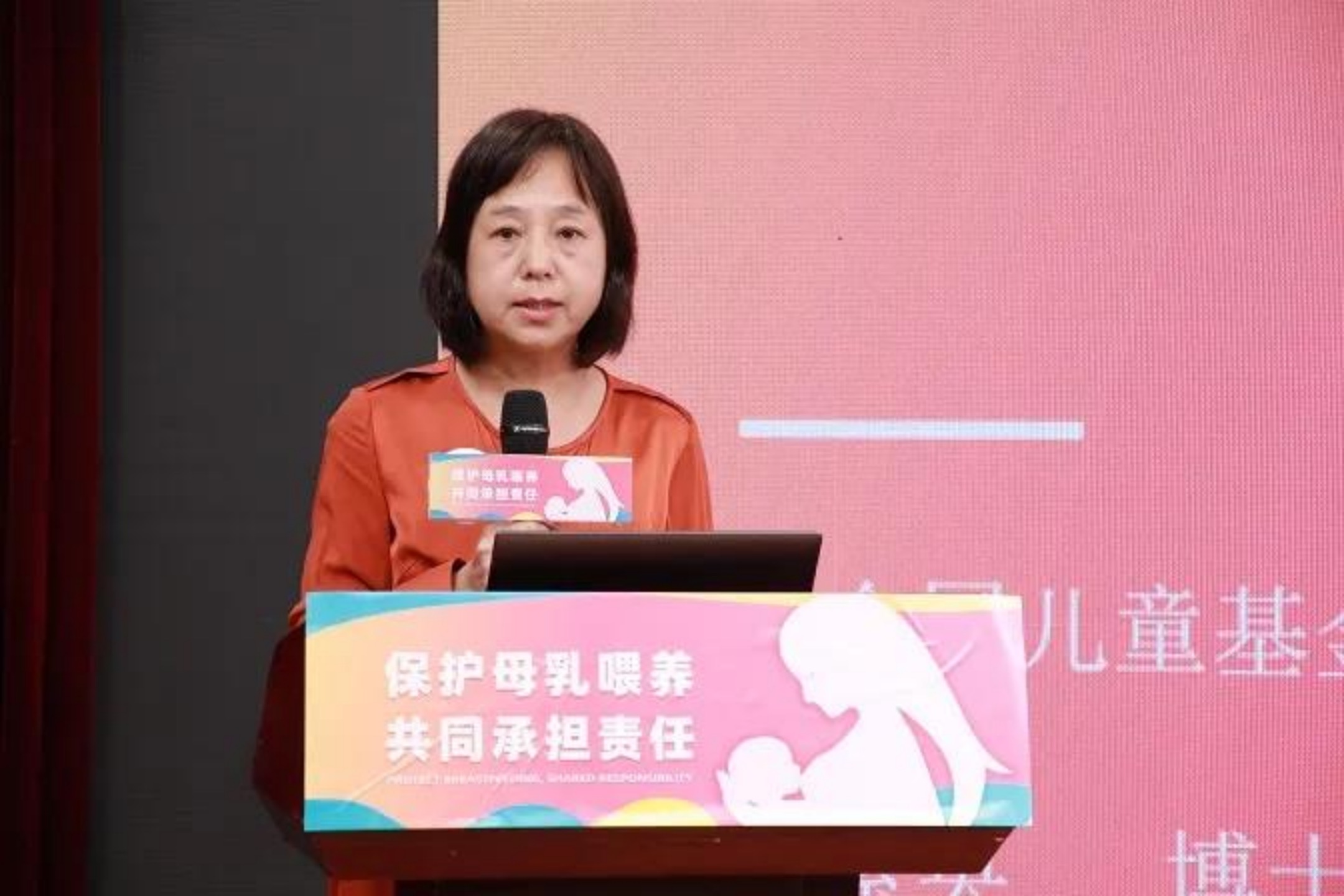
Chang is delivering the speech. Picture from Chinese Nutrition Society’s report1
Chang’s suggestions were reported by Xinhuanet2, one of China’s most important official news service websites. Soon, the report became a trending topic on Weibo, Twitter’s Chinese counterpart, and renewed the debate about feeding babies with infant formula against breast milk. Although insiders pointed out similar suggestions were raised every year around the WBW, stakeholders still pay close attention to it. Some insiders also interpreted this report as a signal to alert enterprises to the problem of excessive marketing. On August 6, 2021, the stock prices of China’s dairy group were all influenced. The stock price of Firmus once decreased by 9%, 6% for Yashili and over 5% for Mengniu Dairy.
Will China further standardize the marketing of infant formula?
After consulting relevant SAMR officials, ChemLinked analyst Lennie Tao comes to the conclusion that the government will formulate a specialized mandatory regulation to standardize infant formula marketing activities, but the new regulation won’t be a big hit to the industry. Major reasons include:
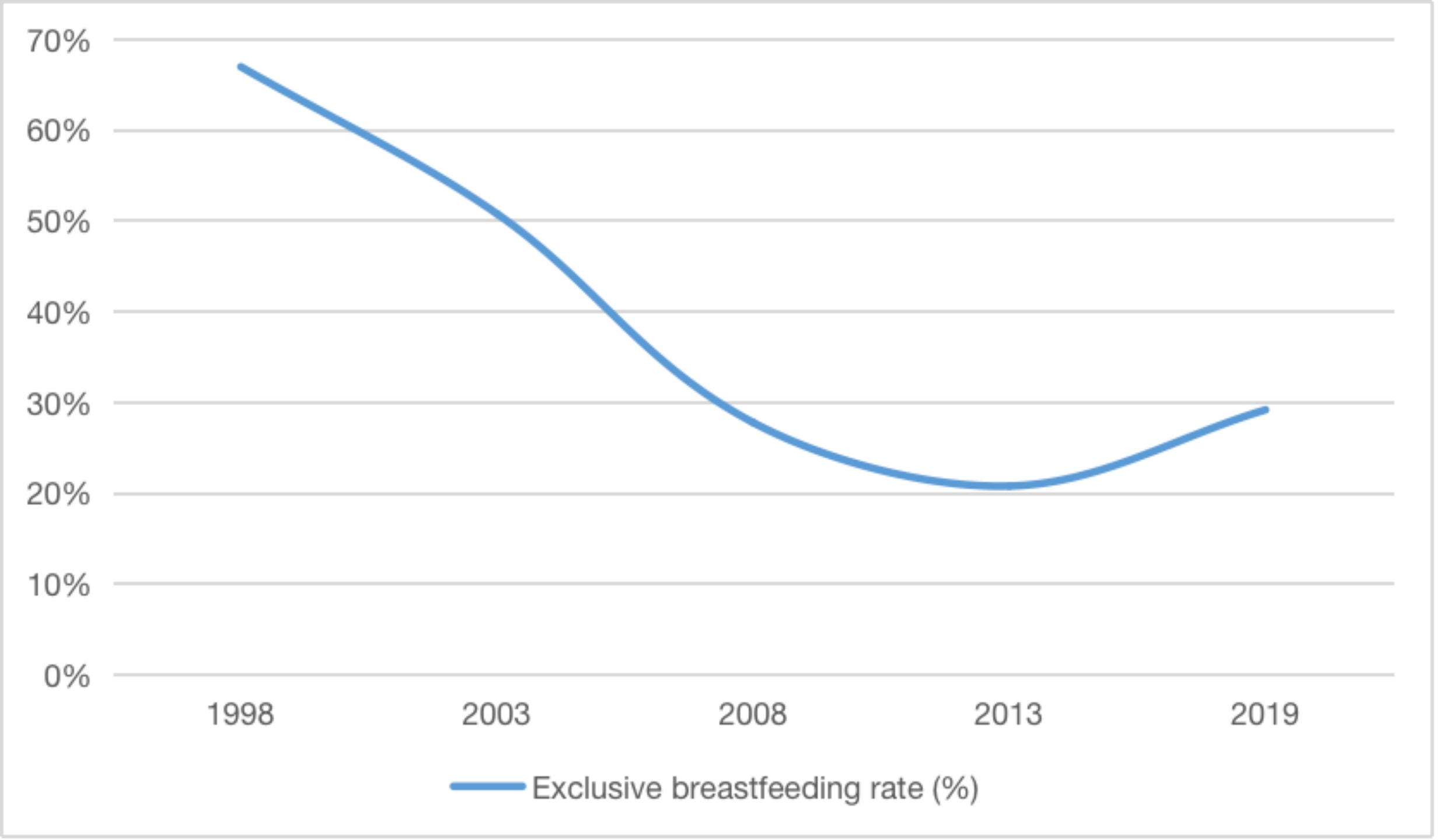
First, the low breastfeeding rate is an ongoing problem in China, which needs relevant regulations’ support to retard people’s preference towards infant formula. According to the National Nutrition Plan (2017-2030)3, the government was aiming to raise the exclusive breastfeeding rate in the first six months of birth to 50% by 2020. But as revealed by a China Development Research Foundation (CDRF) Report4, this rate was only 29.2% in 2018, which is much lower than the global average of 43%.
Exclusive breastfeeding rate in China
Second, China is a signing country of the International Code of Marketing of Breast-Milk Substitutes raised by WHO5. In 1995, the former Ministry of Health also issued a regulation called Administrative Measures on Marketing of Breast-Milk Substitutes 6 (the Administrative Measures) to specifically supervise infant formula marketing in China. However, it was repealed in 2017 due to a series of reasons, including the inconsistency of the old content with the 3 stipulation schemes (which adjusted the competent authority’s organizational structure, staffing and functions in 2018), etc. Hence, when experts suggest releasing a mandatory regulation to standardize infant formula marketing, they are referring to release a new regulation to take the place of the repealed Administrative Measures.
Third, although the Administrative Measures was repealed, most requirements have already been specified in other regulations. For example, in accordance with China’s Advertising Law (2015), it is prohibited to advertise infant formula through mass media and in public places. The Administrative Measures for Registration of Infant and Young Children Milk Powder Formula Recipes in 2018 forbidden false, exaggerated or extreme claims related to infant and young children formula. National standard of infant formula also stipulated that “Images of infants and women are not allowed to be added on labels; expressions such as humanized milk and maternized milk shall not be used.” In 2019, the National Development and Reform Commission of China issued the Promotion Action Plan of Domestic Infant Formula Milk Powder. It banned the advertising of infant formula designed for infants aged 0-12 months (Stage 1 and stage 2), with expanded prohibition scope than the Advertising Law. In this July, SAMR also revealed a consultation draft7 to further standardize infant formula labeling. Moreover, during the practice, competent authorities will keep supervising the sales of stage 1 infant formula in offline retail outlets, marketing in hospitals, etc. Therefore, the formulation of a new regulation afterwards will not substantially influence the current supervision requirements, since most requirements have already been carried out in practice. The major function of the new regulation is to serve as a more comprehensive legal basis for law enforcement, to better supervise the market, etc.
Fourth, it is possible that other requirements will be added into new regulation in the future to further regulate the marketing. Considering China is aiming to promote its domestic infant formula industry, ChemLinked assumes new requirements won’t be a blow to the whole industry but are rectification measures for certain behaviors like excessive marketing.
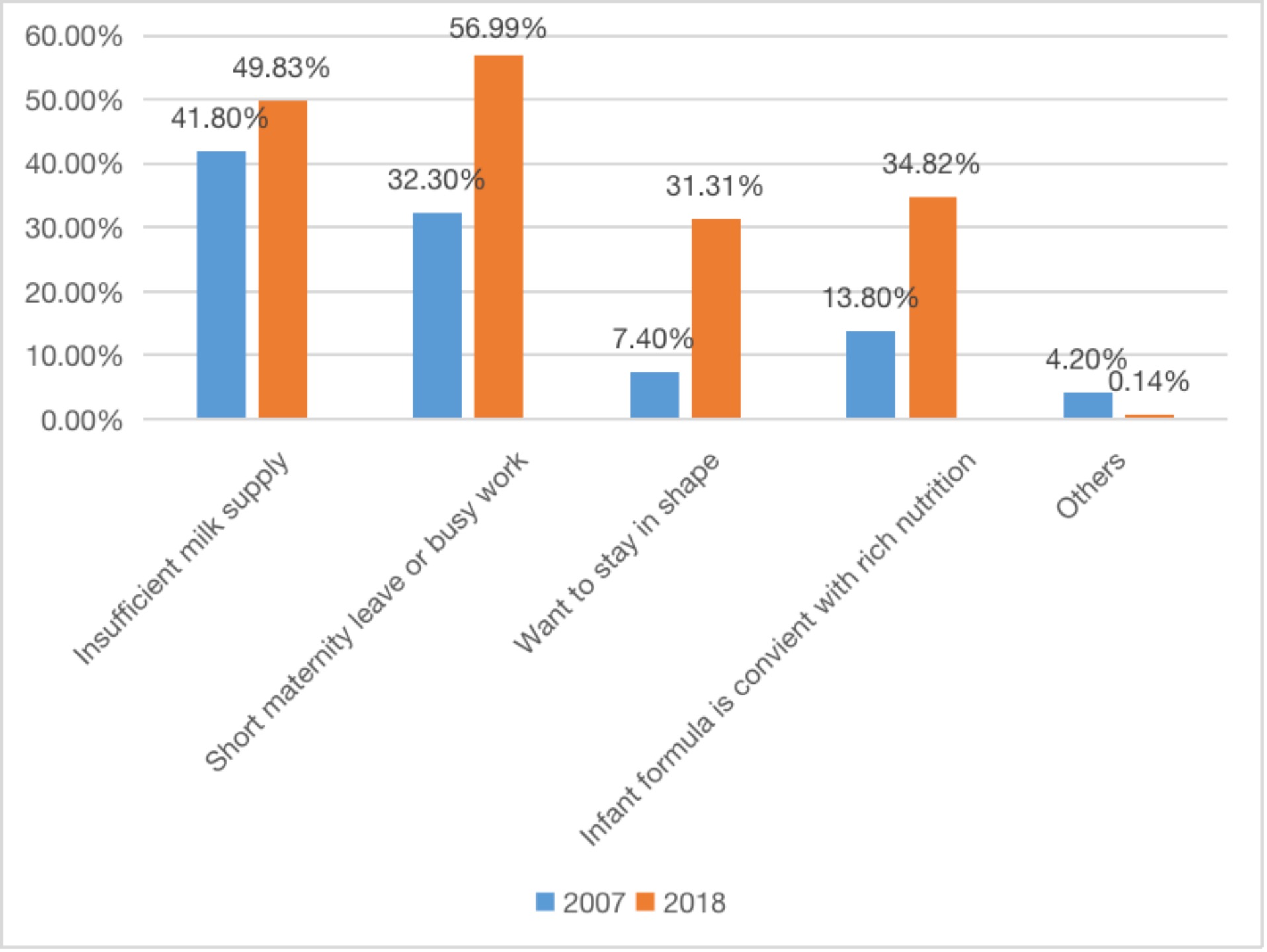
Fifth, infant formula marketing is one of the factors that effects the breastfeeding rate, but not the most vital factor. According to an investigation report by China Consumers Association8 on the sales and marketing of breast-milk substitutes in 2018, the top three reasons holding the breastfeeding rate back were insufficient milk supply, short maternity leave or busy work, and the convenience and nutrition that infant formula brings. Hence, these factors should also be spotlighted while tracing the cause of low breastfeeding rate. Under great work and competitive pressure, some mothers have to choose a more convenient way to feed their babies, which makes them consider infant formula as the best choice. To better solve this problem, further promotion of the benefit of breastfeeding is also needed.
Major reasons for failing to feed babies breast milk exclusively in the first six months
 We provide full-scale global food market entry services (including product registration, ingredient review, regulatory consultation, customized training, market research, branding strategy). Please contact us to discuss how we can help you by