Request a Demo
The 8th China Agricultural Outlook Conference1 wrapped up in Beijing on April 21, 2021. Supported by the Market Early Warning Expert Committee, of Ministry of Agriculture and Rural Affairs (hereafter referred to as MOARA), this conference gathers MOARA researchers to forecast the market trends of 18 major agricultural products in China in the following ten years. Here ChemLinked summarizes the prediction for dairy products as below.
Consumption — Increasing Need and Shifting Consumer Preference
In 2020, the consumption amount of dairy products in China totaled 53.54 million tons, 8.4% higher than that of 2019. Dairy consumption per capita reached 38.11 kg, with an increase of 2.8 kg than the previous year. With respect to the consumption structure, room temperature dairy product* is still the top category, while the consumption of low-temperature dairy product* has been increasing fast in recent years.
*Note: Room temperature dairy product mainly refers to ultra-high temperature processed (commonly mentioned as UHT) milk. Low-temperature dairy product refers to the category that highly relies on the low temperature storage condition, such as pasteurized milk, ultra-pasteurized milk, etc.
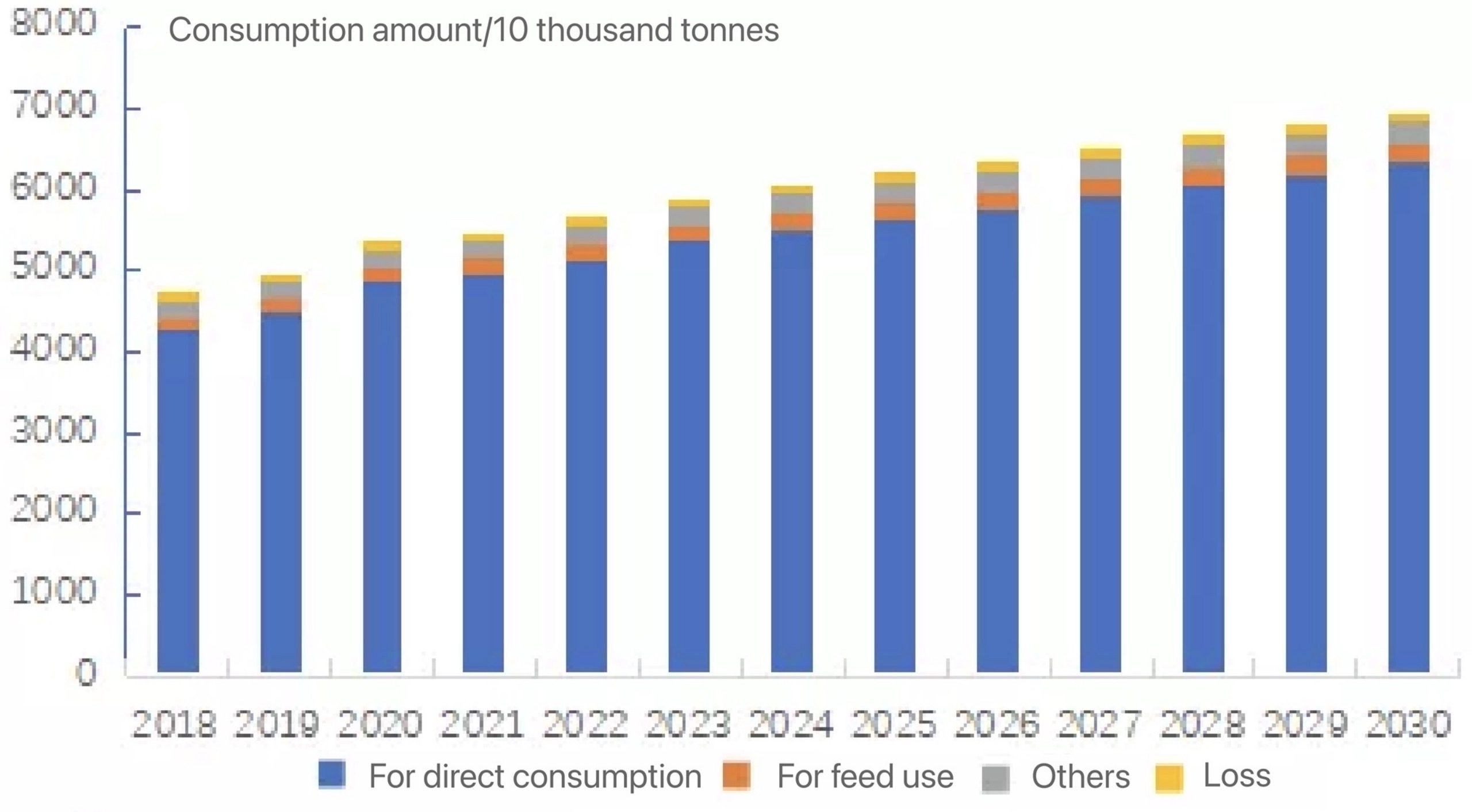
Looking into the future in the following ten years, the consumption group of dairy products is expected to be further expanded and bring a rise in the consumption amount. As explained by the researchers, this is mainly due to the increasing health consciousness of the post-70s/80s and the developing dairy consumption habit of the post-90s/00s. Researchers estimated that the dairy consumption amount will reach 54.62 million tonnes in 2021, 62.07 million tonnes in 2025 and 69.33 million tonnes in 2030, with an annual average growth rate of 2.7%. The industry is also predicted to witness a significant rise in the consumption of pasteurized milk and cheese from 2025 to 2030.
Consumption Amount of Dairy Products, 2018-2030
Source: China Agricultural Products Outlook, 2021-2030
Import — Slow Growth Rate in the Following Ten Years
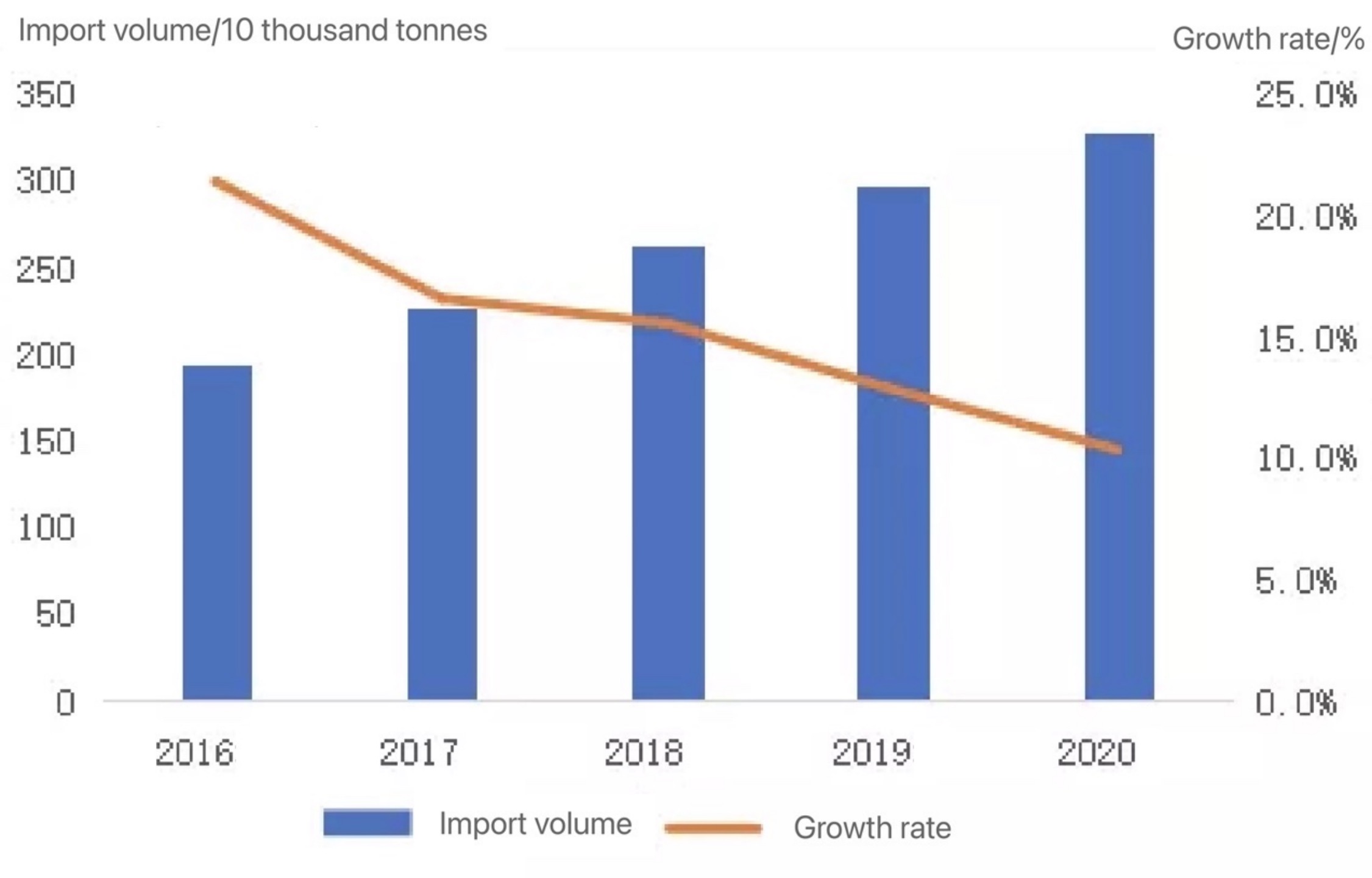
As revealed by the General Administration of Customs (hereafter referred to as GAC), the import volume of dairy products totaled 3.28 million tons in 2020, which is 10.4% higher than the previous year. The value of imported dairy in 2020 was 11.7 billion dollars, with a YOY growth rate of 5.2%.
Among all the categories, the import volume of milk powder decreased by 3.3%, while liquid milk and whey powder enjoyed the fastest growth rate of 16.0% and 38.2%, respectively. In 2020, China imported 1 million tonnes of liquid milk and 626 thousand tonnes of whey powder. As explained by China’s Customs2, the fast growth rate of whey powder import is because of the increase of whey powder for feed use. (Read What Could We Expect for China’s Dairy Industry In 2021?3 for the performance of specific categories and countries.)
Although the import of dairy products still keeps upward trajectory, the growth has been slowing down year by year. This is mainly influenced by China’s revitalization policy of its domestic dairy industry4, consumers’ resilient confidence in domestic product quality and the rapidly growing consumer preference towards low-temperature dairy products. Due to the high dependence on storage condition and the short shelf life (usually around 7 days), at present, the low-temperature dairy product sector is still dominated by local dairy enterprises.
Import of Dairy Products to China, 2016-2020
Source: GAC Data
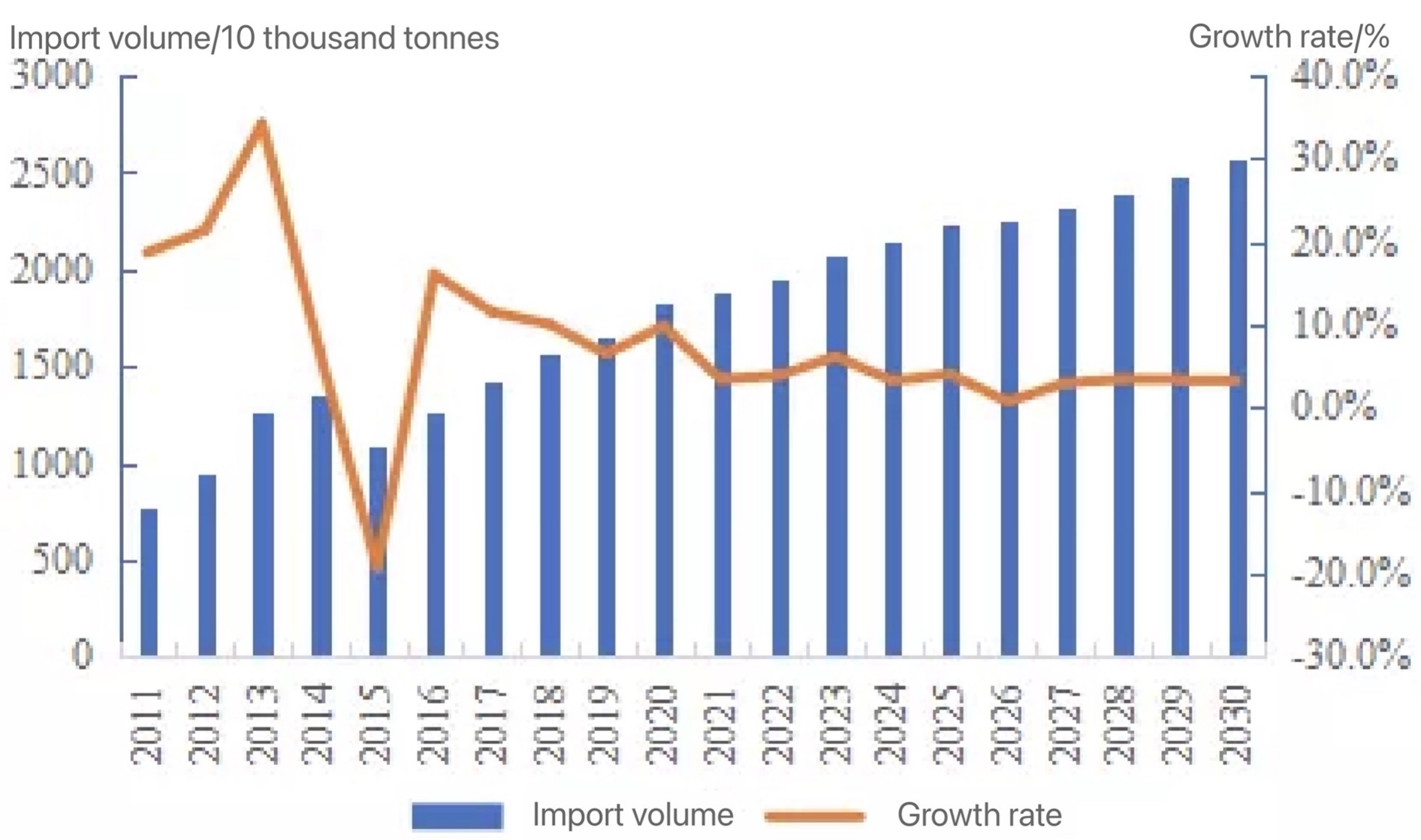
However, the increasing consumption amount still needs a number of imported dairy products, especially raw milk, to patch the supply gap (although China has already been intensifying efforts to increase the domestic dairy supply, the supply of domestic raw milk cannot fulfill the milk production demand). Hence, researchers predicted the growing trend of dairy product import will continue during the forecast period. The dairy import volume (converted into raw milk) is expected to reach 18.86 million tons in 2021, 22.35 million tonnes in 2025 and 25.63 million tonnes in 2030, with an average annual growth rate of 3.5% in the following ten years, which will be much lower than the average annual growth rate from 2010 to 2020 (9.9%). Dairy based powder will still be the major imported product, and products like fresh milk, cheese and whey powder will remain a fast growth. During the forecast period, New Zealand, the EU countries, the US and Australia are still the major trading partners.
Import Performance of Dairy Products to China, 2011-2030
Source: China Agricultural Products Outlook, 2021-2030
CL Note:
Compared with the previous Agricultural Outlook Report (2020-2029)5, report this year mainly tweaks specific figures to calibrate the prediction based on the latest data. For example, both the consumption and import value are adjusted to a higher amount.
 We provide full-scale global food market entry services (including product registration, ingredient review, regulatory consultation, customized training, market research, branding strategy). Please contact us to discuss how we can help you by