Request a Demo
As reported by a South Korea media [1] on October 14th, Swine Fever has severely impacted South Korea’s agri-foods sector. After the breakout of ASF, within a month, 14 hoggeries killed 150,000 pigs from September 17th to October 20th, which is around 58% of the pigs in these pig farms. (Reference: The number of pigs in South Korea totaled to 11.7 million pigs up to Sept 2019 according to the data from Statistics Korea [2].) The virus is still spreading despite the government and industry’s best efforts to control it. The impact on South Korea’s pork industry has been severe.
What’s more, the supply vacuum created by the large pig culls and the negative influence of ASF inevitably impacted the retail price of pork in South Korea. South Korea had a pig population of 11.3 million, and pork, cheaper than beef, was South Korea’s most popular meat, particularly pork belly for barbecue. According to the Ministry of Agriculture data, pork consumption per person in 2018 was 27.0 kg. Before the breakout of ASF, the average retail price was around 4000 SKW (USD 3.4)/kg in South Korea. During the initial outbreak period, the price of pork knee-jerked to 6201 SKW (USD 5.3/kg) due to the shortage of pork. However, one unforeseen aspect of the ASF outbreak has been its negative impact on consumer perception of pork. Despite there being no evidence for zoonotic potential, South Korean consumers are now avoiding pork, causing pork prices in South Korea to plunge nearly 40 percent in October according to Korea Bizwire [3].
Conversely, the price of beef and chicken is rising as reported by Economy News [4]. Taking just one supermarket in South Korea as an example, we can see that sales of pork decreased by 15% from Oct. 1st to 18th, while sales of imported beef and chicken increased by 22% and 12% respectively, which means consumers are now looking for other meat products to replace pork consumptions. In this context, plant-based meat would be another choice for South Korean consumers. Some people may argue that there are more acceptable alternatives than plant-based meat substitutes including beef and chicken. However, both beef and chicken prices have risen sharply.
Health Issues: Another Factor Driving Demand in the Plant-based Meat Market
Besides the ASF issues, the rising awareness of the benefits of plant-based diets on human health has also channeled energy towards the plant-based meat substitute sector in South Korea as reported by "Money Today" [5].
The health factors. According to several landmark studies and the now regular global burden of disease study, dietary factors are the most significant contributor to all-cause mortality in the developed world. Our biggest killers, chronic diseases like cardiovascular and cerebrovascular disease and the major risk factors for developing these diseases like diabetes, high LDL cholesterol and high serum triglycerides and hypertension have all well substantiated causal links with poor dietary habits.
Plant-based foods contain no cholesterol, tend to be low in saturated fat, high in iron and do not contain residual antibiotics or hormones. Additionally, according to an analysis published in the Journal of the American Medical Association, adopting a plant-based diet can lower risk of developing type 2 diabetes by 23% [6], conversely, eating red and processed meat has been linked to higher risk.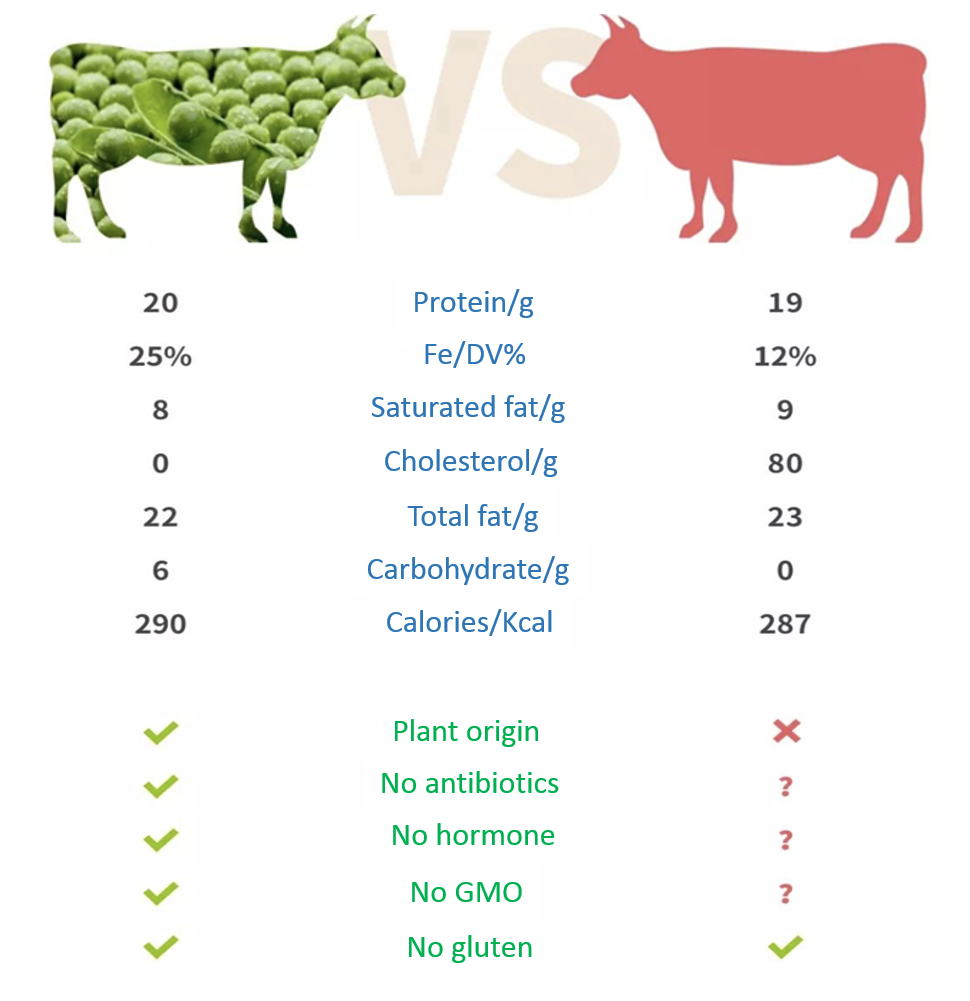 Appendix: Plant-based Meat Enterprises in South Korea
| Enterprises | Event |
| Dongwon F&B | Import and sell the famous US brand, beyond meat. *Beyond meat is the biggest competitor of Impossible Foods in the US. And Impossible Foods is going to export plant-based meat to China. (view more about plant-based foods in China [7] at ChemLinked) |
| Lotte Food | Launch the brand “Zero Meat (엔네이처 제로미트)” |
| Sempio | Has mastered the technology and is now preparing for the market launch |
| Biogenetics | Still developing the core technology, which will promote the industrialization of plant-based meat |
 We provide full-scale global food market entry services (including product registration, ingredient review, regulatory consultation, customized training, market research, branding strategy). Please contact us to discuss how we can help you by