Request a Demo
"Two sessions" is the literal translation of the hugely important annual plenary sessions of the National People's Congress (NPC) and the Chinese People's Political Consultative Conference (CPPCC). During the meetings, NPC deputies from all walks of life assemble to make suggestions on the country’s development. Development of China’s dairy industry was an important topic discussed during this year's sessions. A major focus was greater collaboration and interaction between China's top dairy enterprise, prioritization of R&D commercialization, regulatory reform, and development of preferential government policies to aid international M&A activities and streamlining and centralization of the supply chain/product lifecycle.
High quality of dairy products
Over the last several years China's dairy industry has been struggling with negative consumer perceptions and the lingering specters of a litany of food safety scandals. Foreign brands exert a stranglehold over certain high value sectors of the market which further hampers domestic development and overall trade balance. One of the solutions to this problem which seems to be gaining momentum are plans to develop a state of the art dairy management system.
To highlight this trend we can look at Yili's 597 million yuan investment in state of the art testing equipment in 2016. Li Cuizhi, NPC deputy from Yili Group, suggested that leading dairy enterprises should set quality standards and management systems equal to or even higher than international levels. Wei Lihua, president of Junlebao, stated that their current raw milk standard is stricter than European requirements and that an international standard management system has also been introduced. These stringent standards can guarantee product safety and allow domestic products to be marketed as ultra-high quality.
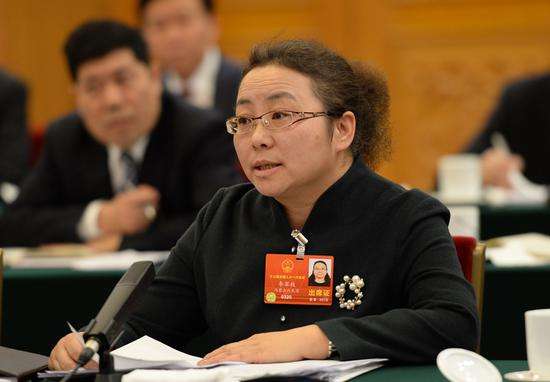 Li Cuizhi--NPC Deputy from Yili Group
It appears that regulatory authorities are also cognizant of current shortcomings in China's dairy regulatory framework. In Feb. 2018, organizations subordinated to MoA released proposed revisions to the national food safety standard for raw milk, pasteurized milk, sterilized milk and identification of reconstituted milk (read CL news here). The standards for milk were updated for the first time after they were issued 8 years ago.
Dairy industry innovation
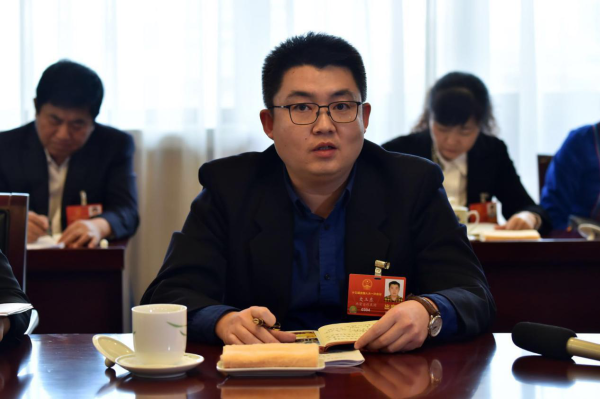 Shi Yudong--NPC Deputy from Mengniu Group Innovation is hugely important to meet the evolving demands of today's consumer and realize sustained growth. Current government policies in China fail to factor in the huge scientific developments in the field of human nutrition, medicine, food technology etc. which have occurred over the last decade. Take Human Milk Oligosaccharides (HMO) for example, which are the third most abundant component in breast milk, and play a fundamental rule in infant's growth. HMO has been commercially manufactured and utilized in infant formula in some countries. In China the use of HMO is prohibited (not recognized as a food additive), which has greatly hindered innovation in China’s infant formula sector (read CL article here). This single example is by no means an isolated instance and as such regulatory reform and prioritization of policies to allow development and implementation of R&D outcomes was also an important talking point during the sessions.
Shi Yudong (Mengniu NPC deputy) suggested that:
government should update standards and regulations that hinder innovation
release technical standards for new food raw materials and setup an innovation fast track
encourage enterprises to engage in overseas acquisition by offering preferential policies (taxation, deregulation etc.)
Currently, it takes a long time and lots of money to have a new food raw material approved. If the registration procedure could be accelerated, it is certain that it will promote further innovation.
Optimization of the industrial supply chain (product lifecycle)
The industrial supply chain (product lifecycle) was a term frequently mentioned during the two sessions. The whole dairy industrial chain mainly includes 4 sections, which are dairy farming, product processing, logistics and terminal sales.
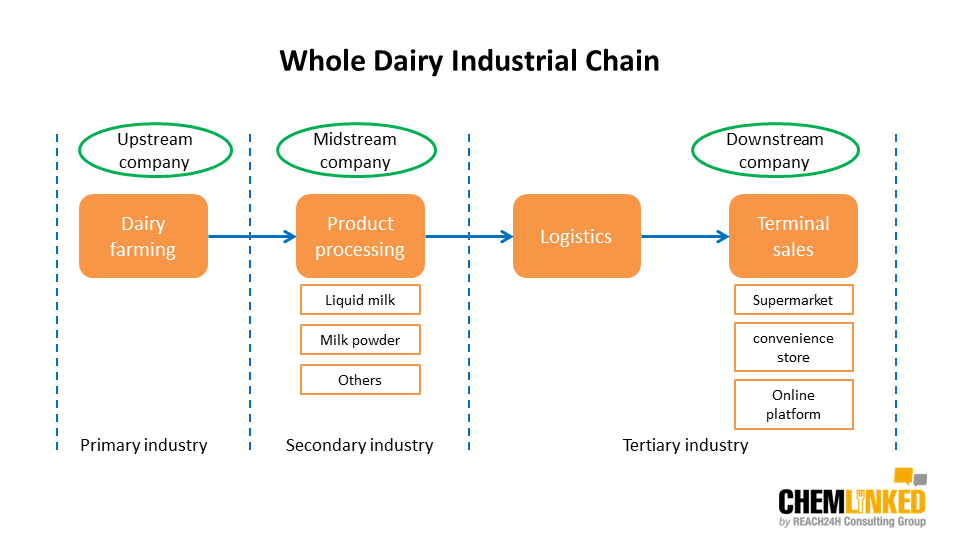
The dairy product lifecycle is made up of numerous elements. Currently, midstream companies involved in processing are usually profitable, while many upstream companies providing raw milk are suffering. The leading factor that is hurting these upstream companies is the large volume and value of imported milk powder entering China. Statistics show that the average price of domestic high-class raw milk is about 3.5 yuan/kg, while imported raw milk powder is only 3.1 yuan/kg. Many enterprises prefer to use imported raw milk which is damaging the whole domestic industry. As the largest raw milk enterprise in China, Modern Farming Group said its losses in 2017 were more than 900 million yuan.
At present China's relationship with international counterparts is somewhat of a zero sum game. While domestic manufacturers and brands can reap short-term profits from interactions with international raw material suppliers, in the long run they are severely undermining the competiveness of their domestic sector, impacting the quality of domestic produce and ultimately reinforcing consumer perceptions on the superiority of imported raw materials and products. To combat this NPC deputies are urging government to support the development of Chinese dairy farming. Liu Hailing suggested that the government subsidize pastures to decrease animal husbandry costs. They are also calling for widespread purchase and use of domestic raw milk (aided by the establishment of a raw milk classification and grading mechanism). Apart from preferential government policies and regulatory reform Yili's deputy director also called for a "big-brother" program in which industry leaders can help smaller farmers with finance, technology and other areas.
Parting Commentary
There is no denying that China's domestic dairy sector has made a remarkable recovery since the dark days of the melamine scandal. The qualification rate of domestic infant formula was 99.7% in 2017, which ranked top amongst all inspected food categories. In addition, more dairy enterprises are realizing that they cannot survive in a vacuum and that their ultimate fate is inextricably tied to the health of the domestic dairy sector as a whole. Greater industry cooperation, the development of updated regulatory mechanisms, prioritization of R&D and an overall internalization of focus are all key aspects in the next phase of China's dairy sector development. Consolidation and centralization of supply chain management and product lifecycle including greater use of self-owned pastures will all help greatly improve raw milk safety and quality, reduce costs and promote the domestic dairy sector. Confronted with rise of China's domestic dairy industry, overseas manufacturers may need to adopt new strategies or risk becoming irrelevant in China's rapidly evolving dairy sector.
 We provide full-scale global food market entry services (including product registration, ingredient review, regulatory consultation, customized training, market research, branding strategy). Please contact us to discuss how we can help you by