Request a Demo
Note: Unless otherwise specified, the data referenced in this article is from Insights of Young Generations’ Consumption Behavior of Alcoholic Drinks in 2020 [1], by CBN (Chinese Business Network) Data.
According to CBN Data [2], a market data research institution jointly set up by Alibaba and Chinese Business Network, the online sales performance of alcoholic drinks presents a steady and fast growth rate from 2018 to 2020. The top 5 popular types of alcoholic drinks in 2020 are Baijiu (Chinese liquor), wine, spirits, beer, and fruit-flavored alcoholic drinks.
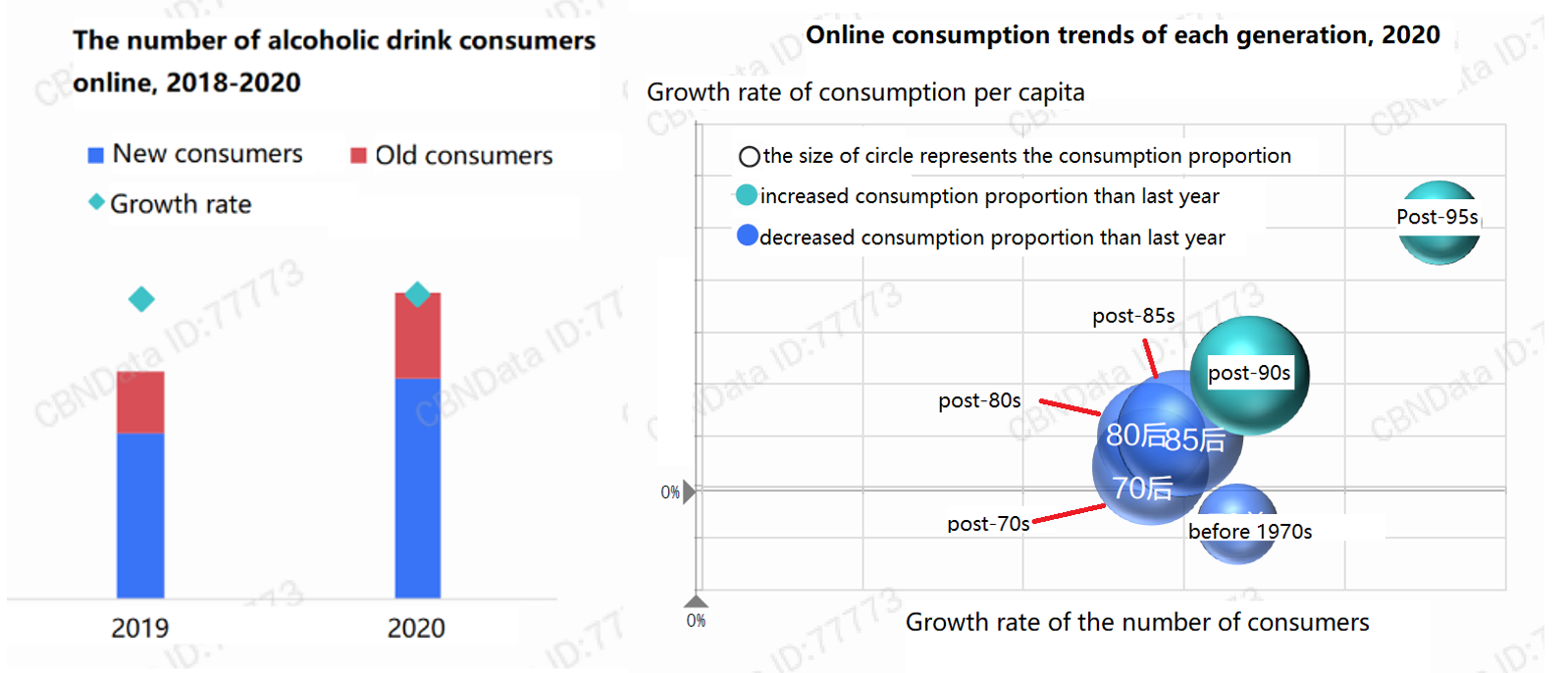
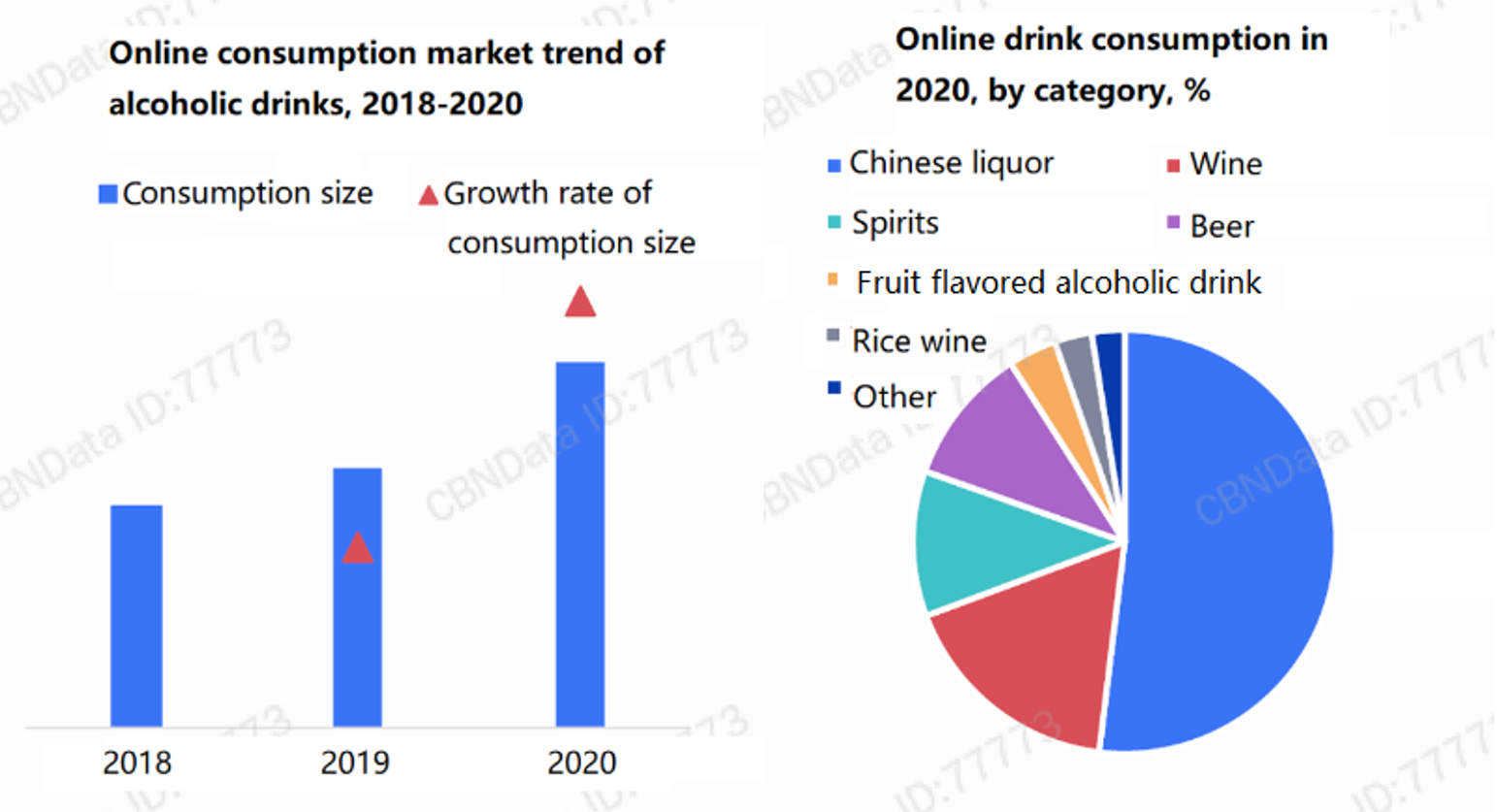 The fast increase of the online alcoholic drink market can be attributed to the rising young generations (refer to the post-90s and 95s in this article). In terms of alcoholic drink consumption, this group owns a fast growth rate in the consumption expenditure per capita and the number of consumers.
Who Are They?
By gender: female consumers are a key target.
According to the data from Guotai Junan [3], one of China’s largest investment banks and securities companies, the overall spending by Chinese women is estimated to have increased 81% in the past five years to USD 670 billion. Seeing the massive potential behind this phenomenon, industry insiders named the women-targeted market, “She Economy.”
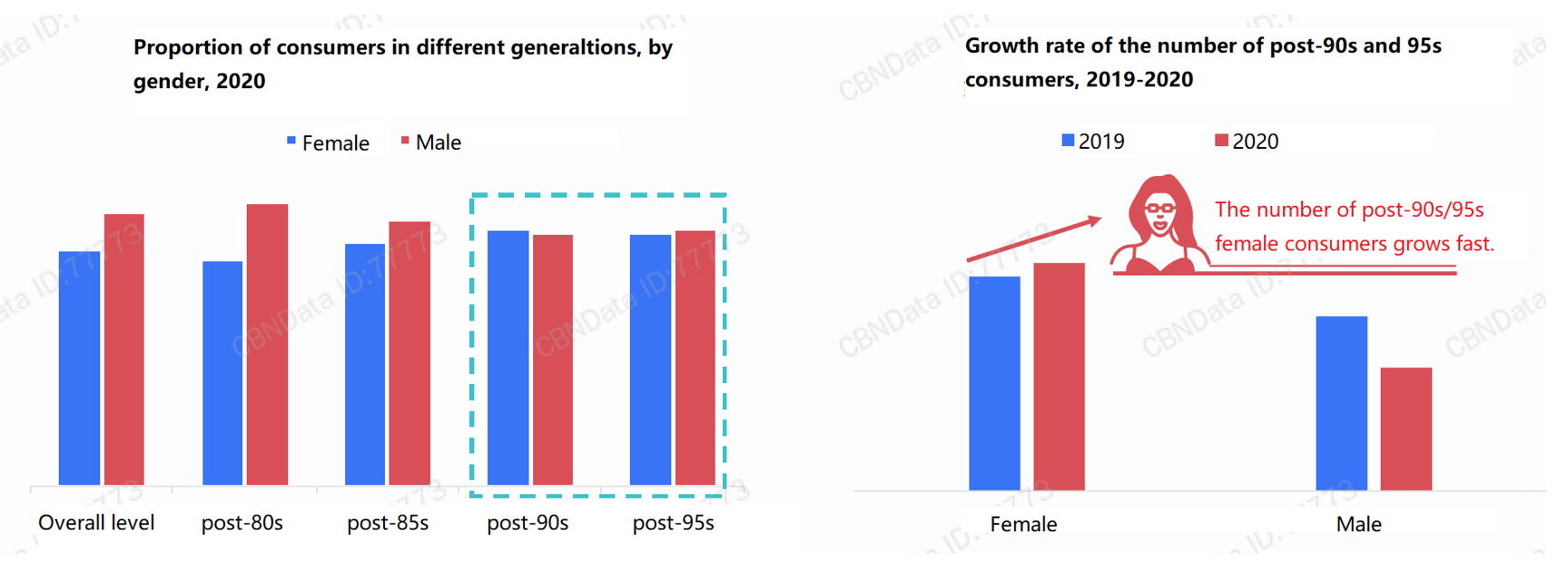
We can also see the influence when it comes to the alcoholic drink market. At present, female accounts for around half of the alcoholic drink consumers among the post-90s and 95s. The growth rate is still increasing compared to that of male consumers. In 2020, the number of female consumers (post 90s) even surpassed those of male consumers.
By different tiers of cities: young people living in towns and cities
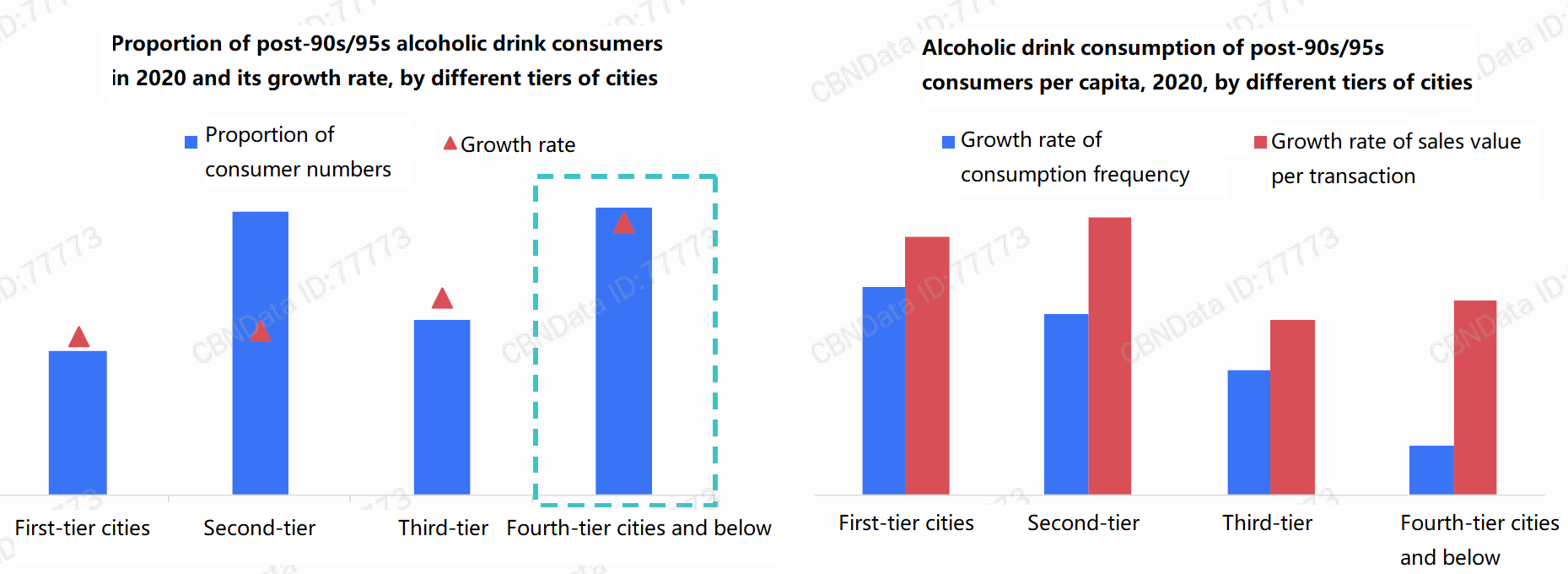
If we look at the market consumption from the perspective of different tiers of cities, town youth (living in Tier 3-4 cities) accounts for a majority of the consumption group. It also bears the rapid growth rate in the number of consumers. In comparison, young people living in Tier 1 and 2 cities buy alcoholic drinks more frequently and tend to choose high-quality products.
Special group: University students
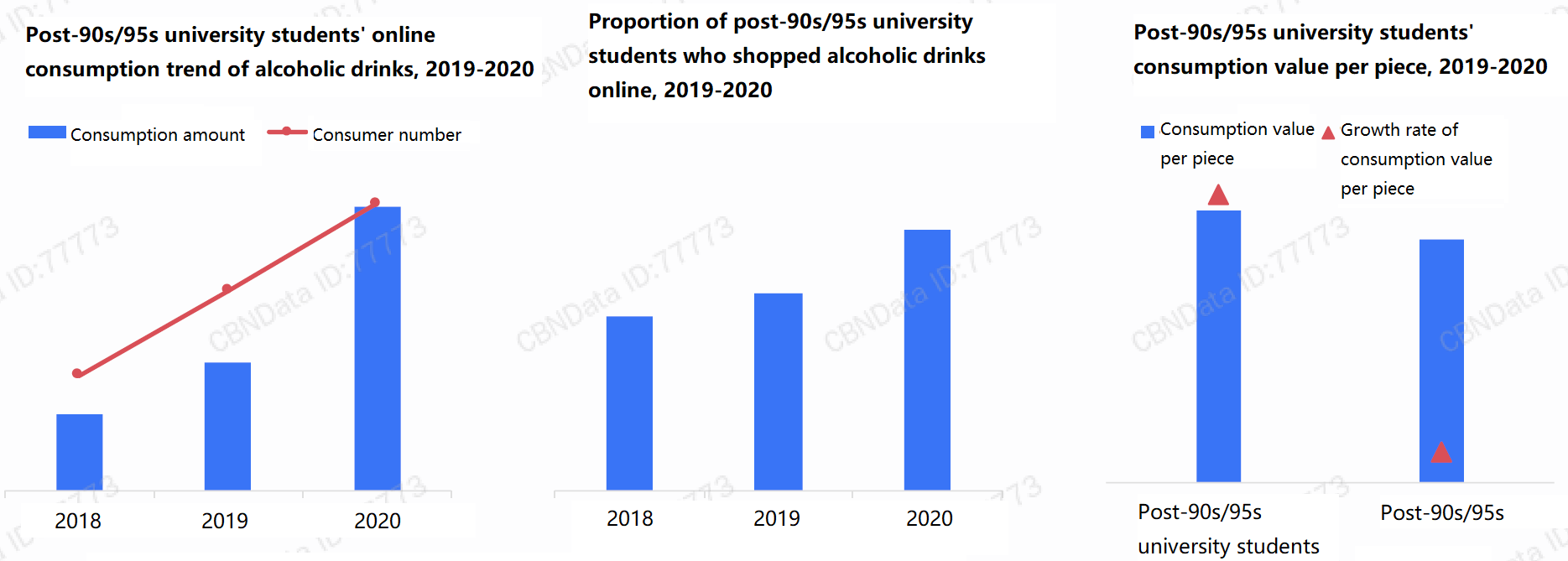
The consumption feature of university students is quite apparent. They are generous with the expenditures on alcoholic drinks. The consumption amount per piece of this group is higher than the overall level of the post-90s and 95s. Simultaneously, it still enjoys the soaring growth rate in the increase of the consumption amount per piece.
What do They Consume? Decoding the Consumption Motivations Behind Four Popular Products
Fruit-flavored drinks: the most popular flavor this year
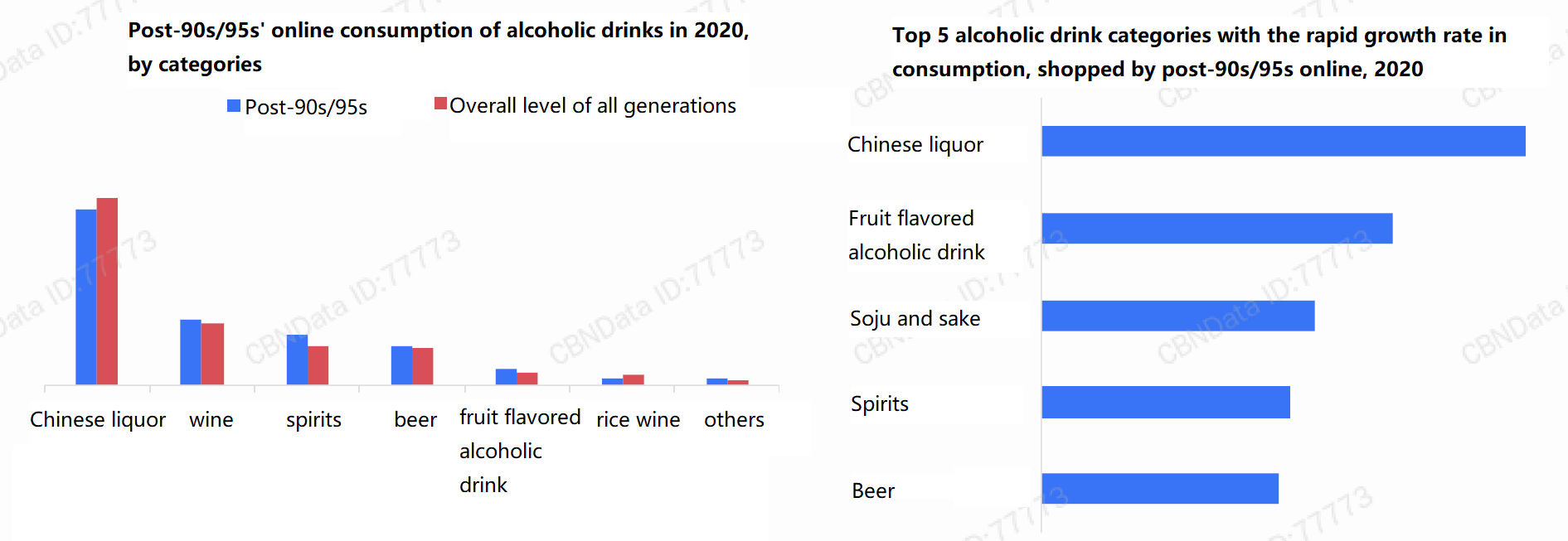
The young generation is increasingly diversifying their choices of alcoholic drink consumption. Although the top 3 popular categories are still Chinese domestic liquor, wine and spirits, the younger generation show a higher interest level in fruit drinks. In 2020, fruit drinks ranked the 2nd position with the most rapid growth rate among alcoholic drink categories.
 Why would fruit drink be so popular this year? First, as we mentioned above, the major consumption group is gradually shifting to the younger generations, who are willing to try new products and are more likely to consume low alcoholic drinks (view more in the second trend). Second, the beautiful color, fragrance, multiple tastes attract lots of female consumers. Third, to Chinese people, it is kind of a ritual to drink fruit wine in summer [4].
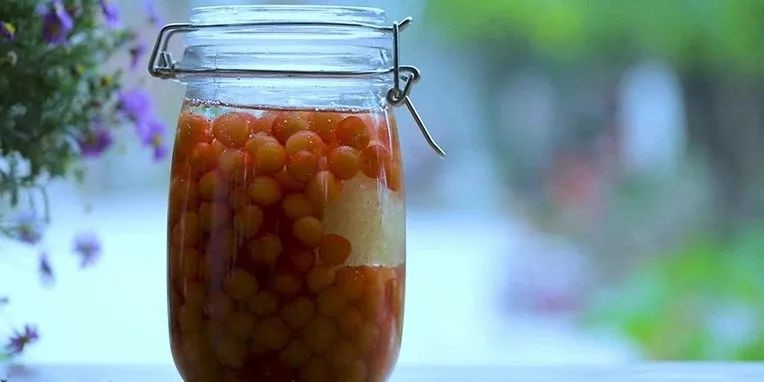
In some China regions, it is a tradition to make homemade fruit drinks in summer (to soak fruits in Chinese liquor, or other liquors, with sugar). Fruits like unripe green plum, waxberry, grape, apricots are all popular raw materials. After several months (some will even store the drink for a year), a successful homemade fruit drink will take on a beautiful color, clear and transparent. The sour taste from the fruit, together with sweetness from the sugar and the liquor’s fragrance, forms rich flavors. Older generations and some young people may still choose to make fruit drinks by themselves. But to most young people, prepackaged ones are the ones they opt for. They save much time, offer more options for tastes, and are made with secured food safety and quality.
 Beer + fruit flavor
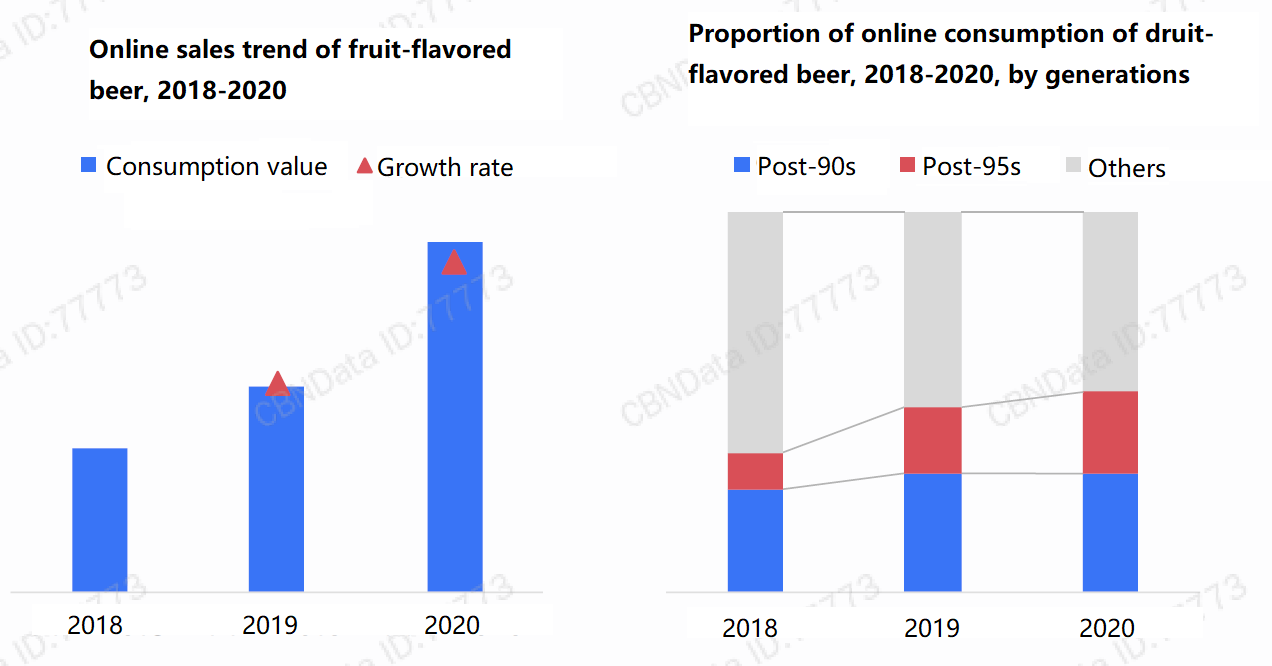
Seeing the popularity of fruit drinks, beer enterprises also managed to add “fruit flavor” into beer products. With the fragrance of fruit and malt, fruit-flavored beer is attractive to young consumers. Among the online consumption of fruit-flavored beers, post 90s/95s consumers took up around 50%. Strawberry, peach, rose, cherry, lychee, etc. are the most welcome flavors.
Wine: fruit/floral flavor + sweet + a little bit sour
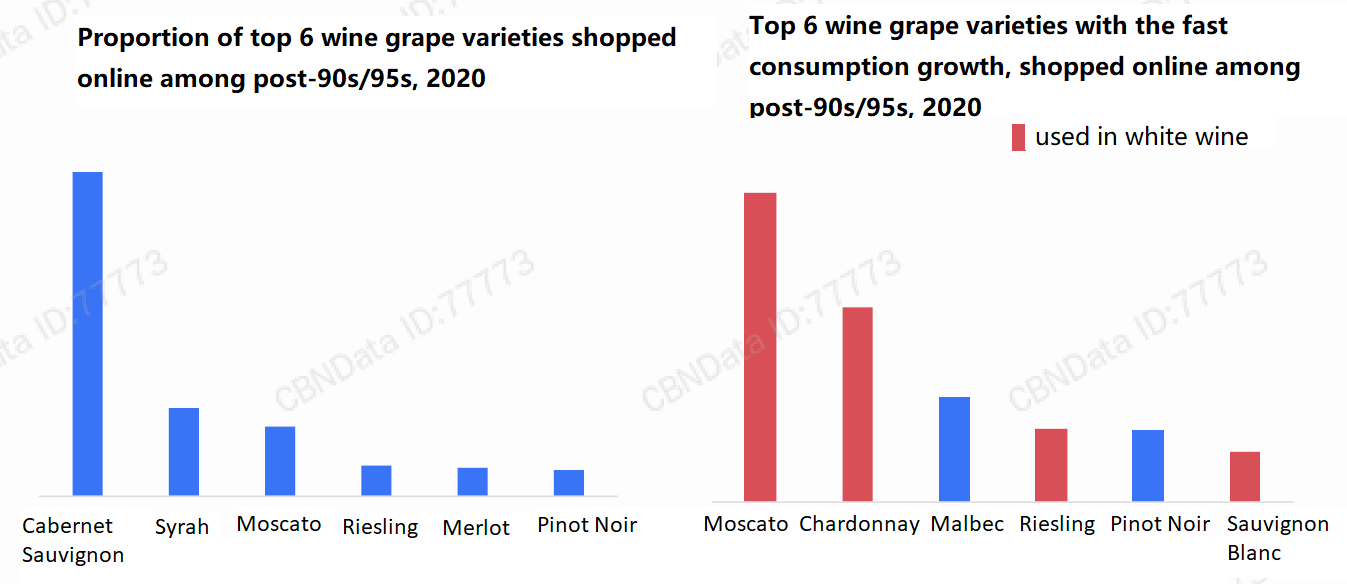
Cabernet Sauvignon is still the most popular wine grape variety among youth in 2020. However, the consumption of white wine products with rich fruit flavors grew rapidly this year, such as Moscato, Chardonnay, Riesling and Sauvignon Blanc.
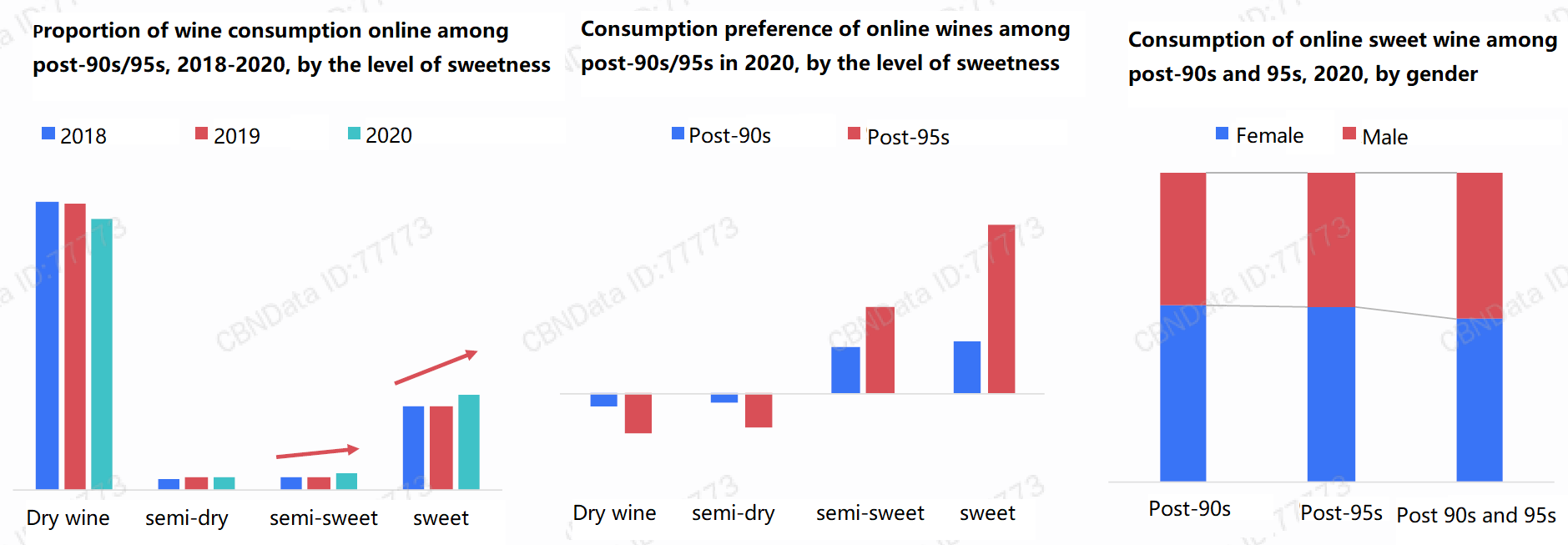
Besides fruit flavor, the trend of sweet taste is also evident among the selection of wine products. The report points out that both female and male consumers among the post-90s and 95s like semi-sweet wine and sweet wine.
Low alcoholic drinks: finding the balance between indulgence and getting drunk
Along with the health trend and sociocultural progress in China, the ideology of drinking behaviors is shifting from “getting drunk” towards “moderate drinking” or “getting tipsy.” Although the high alcoholic drinks have their own “loyal” consumers, low alcoholic drinks gained more traction in the market among the young generation, which echoes the global trend [5] ChemLinked saw in 2017.
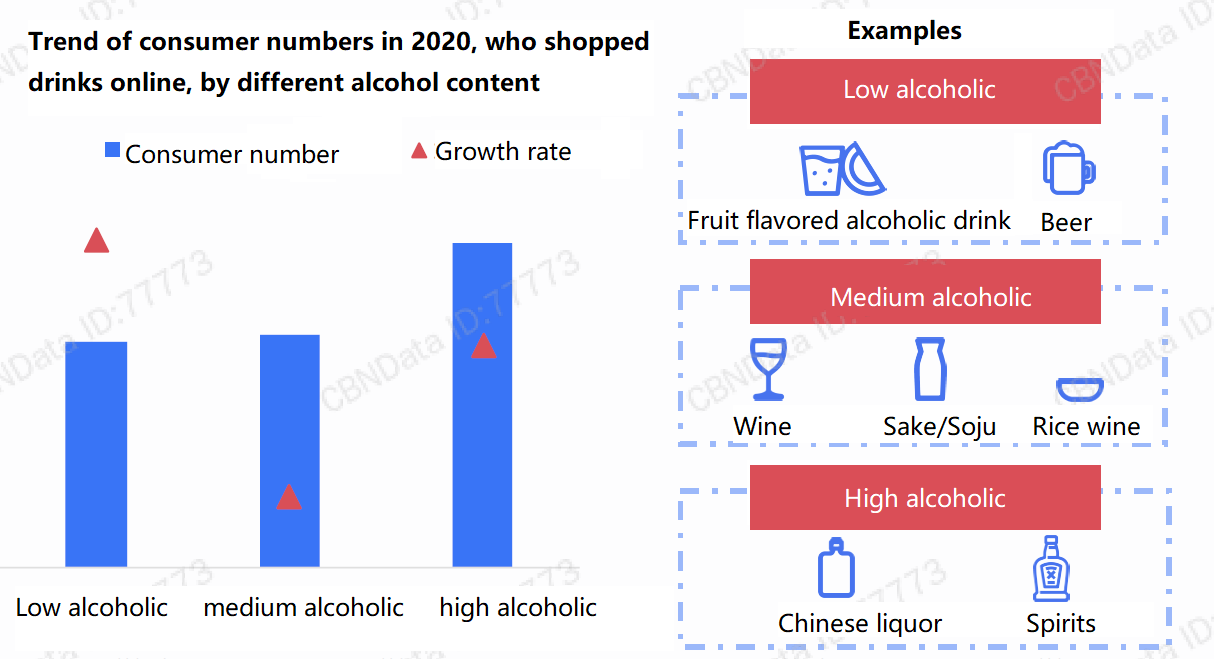 Why do young people show preference to low (ABV ≤3%) and non-alcoholic (ABV≤0.5%) drinks? (Read more at Market and Regulatory Compliance Analysis of Non-Alcoholic Beer in Asia Pacific Area [6]) There are five primary reasons:
First, the low alcohol content lowers the barrier for drinking, which is much friendlier to and easier to be accepted by female consumers and young people who do not have drinking habits. They can enjoy drinking without getting drunk.
Second, low alcohol drinks usually have more taste variety than Chinese liquor, such as fruit flavor, sparkling taste, etc. With low alcohol and differentiated flavors, it is hard for young people to reject new products. There’s also a huge development room for enterprises to research fancy products with interesting and new tastes.
Third, as we mentioned above, low alcoholic drinks can also be associated with “healthy claims” like low sugar/zero sugar, low calories, etc.. It is a better choice for young people who pay more attention to their body.
Fourth, people can consume low alcoholic drinks at more consumption situations. Young people can have it during traditional dinners, during the afternoon break, before sleep, when socialize with colleagues, etc. This also increases people’s consumption frequency on low-alcoholic drinks.
Five, the emotional value it brings. To young people, the consumption of drinks is a part of their lives, accompanying their emotions like sad, bored, tired, etc. For example, CBN data indicated that 57% of post-90s/95s are more likely to drink plum wine, sake (a Japanese drink), etc. when they feel tired. In this case, a low alcoholic drink that can get them tipsy can also help them get relaxed and comfort them after a long day work but won’t influence their work the next day.
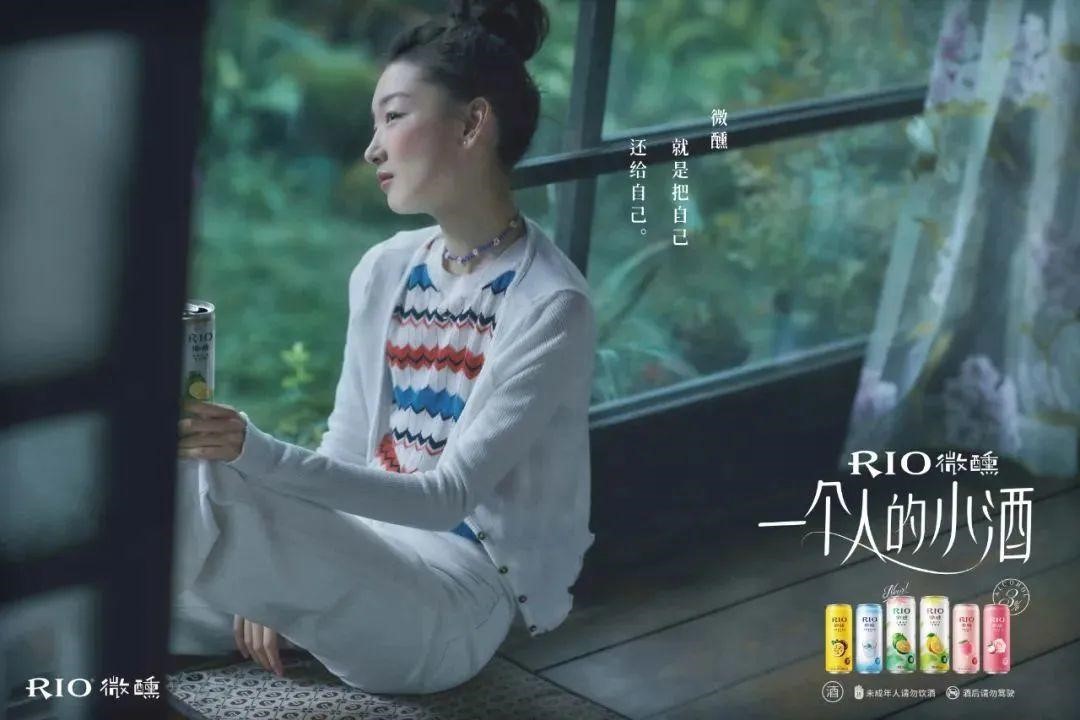
Rio used the fifth point quite well in 2018, it launched a product series called “getting tipsy,” which takes “getting tipsy (low-alcoholic),” “a drink for drinking alone” and “enjoying the time being alone” as its selling points. This market positioning helped the brand occupy the segment market quickly, increased the revenue significantly, and also promoted this low-alcoholic drink category to more young people.
*After the debut of this series in 2018, the growth rate [7] of sales revenue in the first three-quarters of 2019 of the company was 15%, 14% and 28% respectively.
Sparkling drink: interesting texture
Not just sparkling water [8], products like sparkling wine and cocktail, especially for girls, went viral in China under the context of “She Economy.” According to the data from CBN data, sparking wine ranked second place in terms of the consumer numbers among all wines’ sales (top 3 categories are wine, sparkling wine and white wine). It is also with the second-fastest growth rate in 2020. Sparkling Moscato is one of the hottest products. Statista [9] also revealed that the revenue in the sparkling wine segment amounted to USD 264 million in China in 2020. The market is expected to grow annually by 12.6% (CAGR 2020-2023).
The rise behind sparkling wine is mainly because sparkling in drinks can bring multiple tastes and is a fun experiment to consumers. According to the data from Innova Market Insights [10], 70% of consumers think the texture gives food and beverages a more interesting experience. 60% of consumers say the texture claims will influence their purchasing decision in food and drinks. Sparkling is just the perfect texture today for young generations to enjoy a multiple sensory experience.
Craft beer: An Exquisite feeling
Besides multiple tastes and engaging texture experience, young people today are also eager to experience an exquisite feeling. From 2018 to 2020, the number of craft beer consumers (post-90s and 95s) maintained a rapid growth rate. The consumption of craft beer counted for one-fourth of beer expenditure of the post-90s and 95s. Furthermore, they are more willing to pay for the exquisite experiences brought by craft beer.
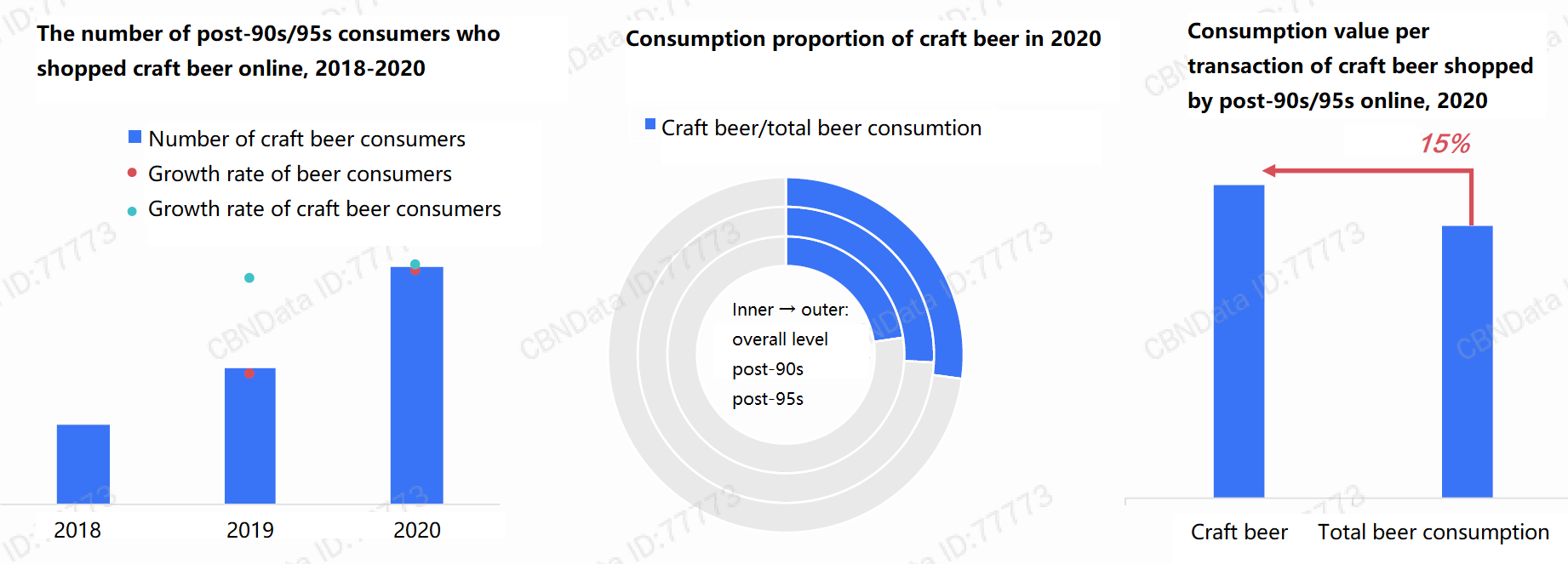
Early in 2018, a report from Alimama [11] pointed out the most important trend in the beer industry is the rise of craft beer, the turnover of which increased by 56% in 2017, higher than the growth rate of all other beers. Although domestic craft beer manufacturers’ sales volume accounts for only 1% of the market share, the annual growth reached 40% annually. China Alcoholic Drinks Association predicted that it would take up to 3%-5% of the future market share with over 3,000 manufacturers. View more at China Beer Sector Analysis: Market Data, Segmentation and Forecasts [12].
A Brief Reflections of Product Strategy
After seeing the four trends, we can sense that the boundary between alcoholic drinks and beverage drinks is gradually getting blurred. Compared to the past, the consumption situation of alcoholic drinks has been greatly expanded, especially after the popularization of low alcoholic drinks. Besides, drinking is associated with more emotions and also a way to feel a sense of exquisite.
To enterprises that target young generations as the main consumer group, despite developing proper products, it is also important to get an awareness of the following things:
Sales channel: for those that target young consumers, instead of traditional channels like supermarkets and specialty stores for wines, we suggest enterprises try convenience stores, music festivals, craft beer bars, e-commerce platforms like Tmall Global, etc.
Packaging: the design of packaging matters a lot [13] for consumers to make a purchasing decision. It is also an essential factor that constitutes the success of fruit drinks and low-alcoholic drinks. The specification can be around 200-300 ml. In this way, consumers can finish the drink at one time. Currently, we can see there are already canned wines in the Chinese market.
Marketing: it is important to build up a brand that is popular among the young generations. It could be exquisite with a high-end profile or be interesting in some way. Crossover cooperation is common at present. Other strategies also include finding a proper celebrity endorser, sponsor variety shows, etc.
 We provide full-scale global food market entry services (including product registration, ingredient review, regulatory consultation, customized training, market research, branding strategy). Please contact us to discuss how we can help you by