Request a Demo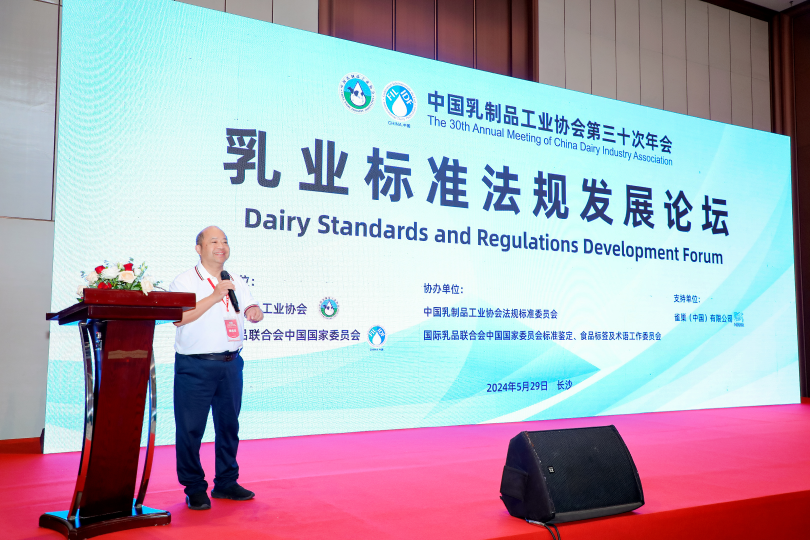
ChemLinked attended “The 30th Annual Meeting of China Dairy Industry Association and China International Dairy Technology Expo 2024” from May 27 to 29, 2024. This article presents insights shared by Chinese officials and experts regarding the recently issued national standards and the progress in drafting upcoming standards.
Involved sessions are:
Understanding the permit for liquid infant formula production
Revisions to GB 19644-2024 national food safety standard for dairy powder and modified dairy powder
Revisions to GB 2760-2024 national food safety standard for the use of food additives
Current drafting progress on GB 11674 national food safety standard for whey powder and whey protein powder
Current drafting progress on GB 19302 national food safety standard for fermented milk and GB 25191 national food safety standard for modified milk
Key points
1. Understanding the permit for liquid infant formula production
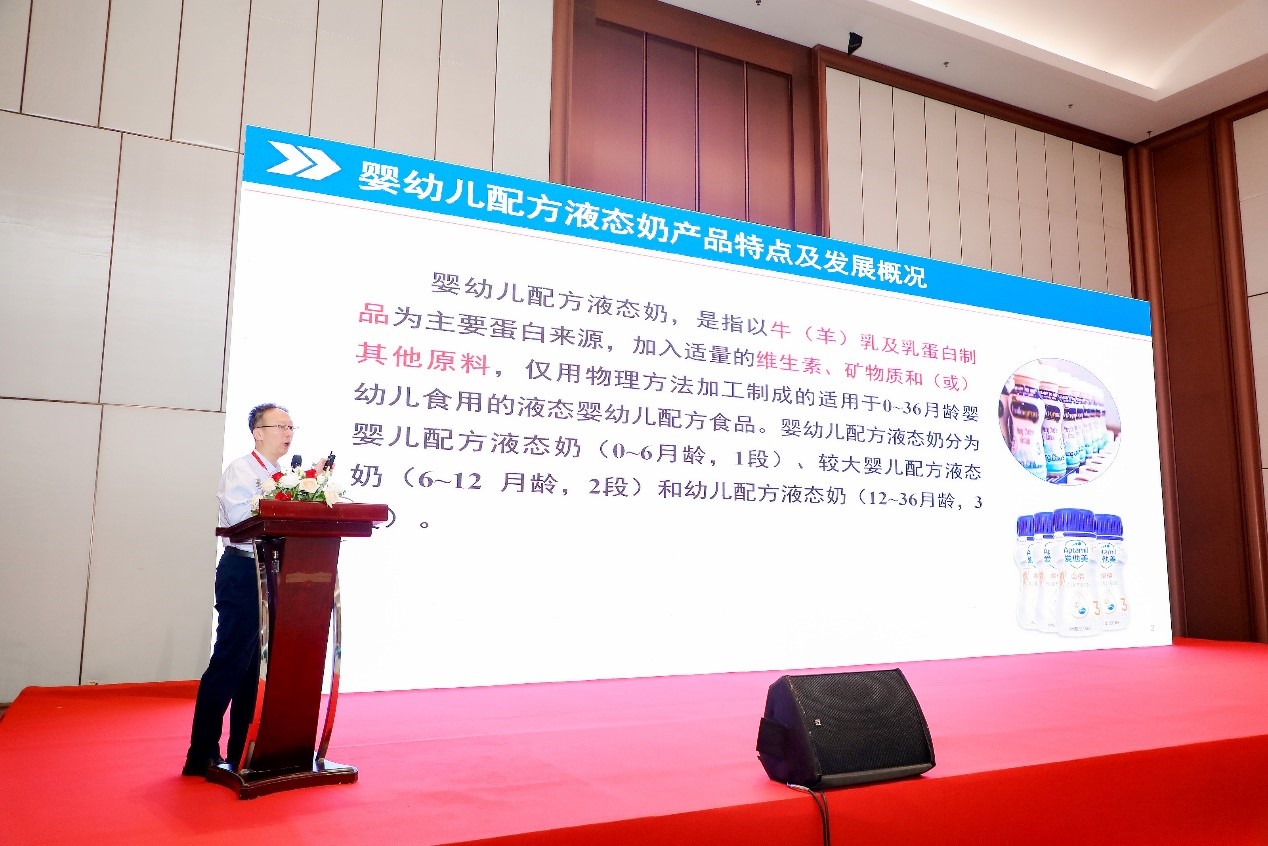
Jiang Yujun, Vice President of China Nutrition and Health Food Association (CNHFA) and Dean of the College of Food Science and Technology at Northeast Agricultural University, shared insights on liquid infant formula. He highlighted its market development in China and overseas. For example, he said around 2.7 million babies aged 1-3 will consume liquid infant formula in the US and in Finland, 80% of the infant formula market consists of liquid infant formula.
Moreover, Jiang discussed important factors worth attention during the recipe registration process, including the quality and safety of raw and auxiliary materials (raw milk, water, etc.), control of microorganisms, validation of sterilization, and product stability. Aseptic filling is the recommended processing method.
Recommended reading:
Jiang Yujun, Vice President of CNHFA and Dean of the College of Food Science and Technology, Northeast Agricultural University
2. Revisions to GB 19644-2024 national food safety standard for dairy powder and modified dairy powder
Wang Jun, Director of the Second Division of National Food Safety Standard, China National Center for Food Safety Risk Assessment (CFSA), provided an interpretation of the revised GB 19644-2024 standard, which were issued on March 12, 2024 and will come into effect on February 8, 2025. Read more at China Introduces the Updated Standard for Milk Powder and Modified Milk Powder.
GB 19644, previously named as "dairy powder" in the 2010 version, has undergone changes in the updated GB 19644-2024 standard, now named “dairy powder and modified powder”. While the requirements for dairy powder have remained largely unchanged compared to the 2010 version, the most significant and crucial change in this standard lies in the definition of modified dairy powder. The revised standard emphasizes that the milk solids content from the main ingredients must be no less than 70%. This revision aims to ensure that modified milk powder is fundamentally rooted in "milk powder" by prioritizing the presence of milk solids derived from raw milk. The emphasis on "from main ingredients" ensures that at least 70% of milk solids originate from raw milk, excluding those derived from other added ingredients during product formulation.
During the discussion, specific production inquiries were addressed as well. For instance, the use of both goat milk powder and cow milk powder as the primary raw materials for producing modified milk powder is not permitted. However, it is permissible to utilize goat milk powder as the main ingredient and incorporate extracted components from the milk of other species, such as lactoferrin derived from cow milk. Processing aids can still be employed in relevant products, provided they meet the applicable national food safety standards.
Furthermore, the inclusion of milk from other animal species within the standard's scope primarily arises from the increasing consumer demand and considerations for facilitating trade with countries along the "One Belt, One Road" initiative.
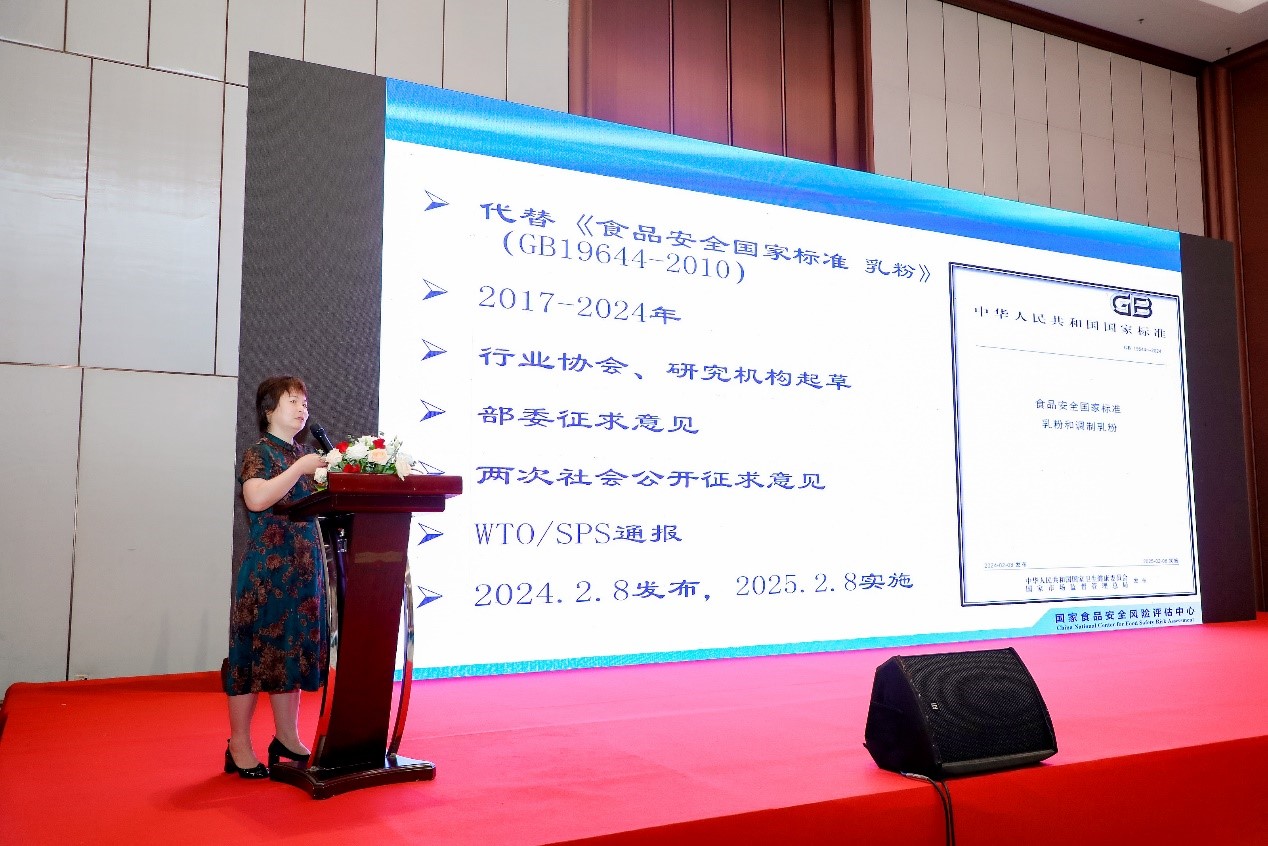
Wang Jun, director of the Second Division of National Food Safety Standard, CFSA
3. Revisions to GB 2760-2024 national food safety standard for the use of food additives
Wang Huali, Deputy Director of the Third Division of National Food Safety Standard, CFSA, explained the current management mechanism of food additive in China, the revisions to GB 2760-2024 and the considerations behind several key revisions.
For example, Wang explained the usage of flavorings with multiple functions, emphasizing the need to prepare such flavorings into essences before utilization. This measure aims to prevent the excessive use of flavorings. Similarly, adjustments were made in consideration of preventing the misuse of hydrogen peroxide as a processing aid. Consequently, the placement of hydrogen peroxide in the standard was shifted from Table C.1 to C.2, along with specified usage functions and application scope. More revisions can be found in the article China Unveils Food Additive Standard GB 2760-2024.
In the end of this session, Wang shared the management method regarding genetically modified (GM) additives. Currently, if enterprises intend to use a GM additive with the same specifications as those approved by the National Health Commission (NHC) through an official notice, they are still required to make a declaration. The NHC will then issue an "opinion notification letter" to the enterprise, allowing them to proceed with production. To expedite the approval process for GM additives, the NHC is collaborating with the Ministry of Agriculture and Rural Affairs (MARA) to review GM applications based on different classifications, aiming to enhance efficiency.
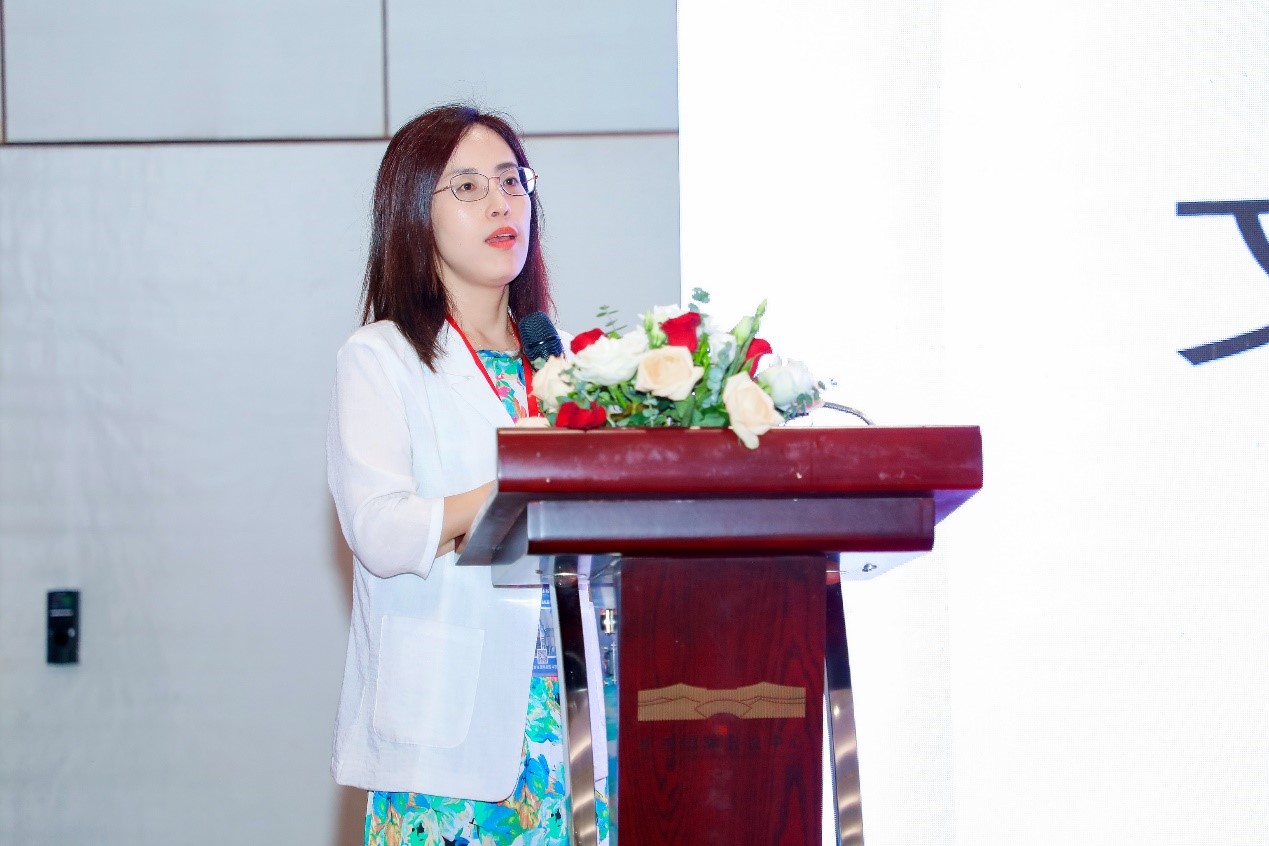
Wang Huali, deputy director of the Third Division of National Food Safety Standard, CFSA
4. Current drafting progress on GB 11674 national food safety standard for whey powder and whey protein powder
Wang Yun, Chief Regulatory Expert of the China Dairy Industry Association, presented an update on the ongoing drafting of GB 11674. She highlighted that, currently, China does not have domestic production of whey powder or whey protein powder and heavily depends on imports. However, in September 2023, China issued a notification that aims to bolster domestic supply capacity in the coming years
The most significant revision pertains to the protein content requirement for whey protein powder, which is “no less than 25%” in 2010 version and proposed to be no less than 50.0 g/100g in the current draft. Wang also highlighted the importance of retaining the term "demineralized whey powder" to avoid affecting product labels.
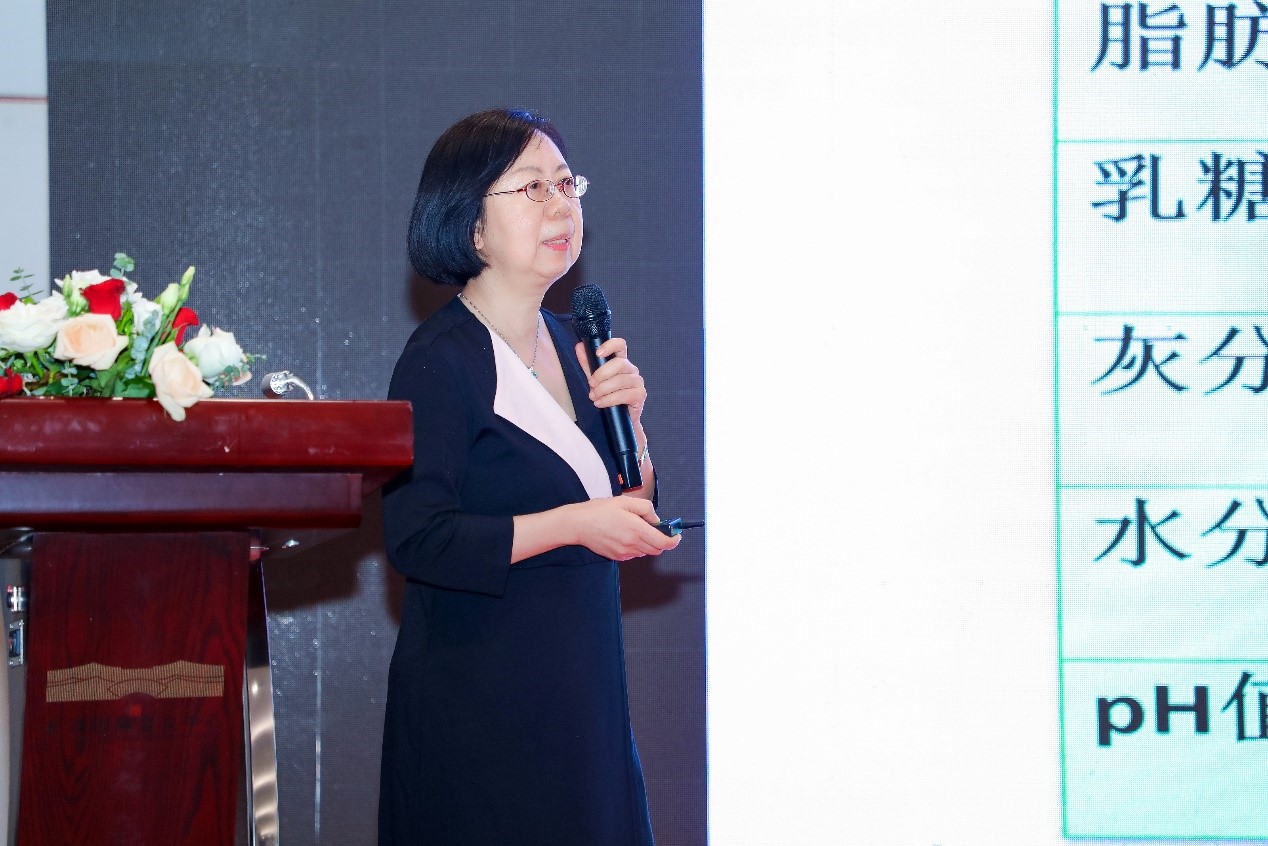
Wang Yun, Chief Regulatory Expert of China Dairy Industry Association
5. Current drafting progress on GB 19302 national food safety standard for fermented milk and GB 25191 national food safety standard for modified milk
Ruan Guangfeng, Deputy Director of China Food Information Center, provided an update on the drafting progress for national standards on fermented milk and modified milk.
Regarding the revisions on fermented milk, a significant change involves reducing the acidity indicator from 70°T to 60°T. This revision is driven by several factors. Firstly, it aims to shorten fermentation time, conserve energy, and improve production efficiency, thereby promoting greener production practices. Secondly, the previous acidity level of 70°T was deemed excessively sour for Chinese consumers, leading many companies to add sugar to their products. By reducing the acidity indicator, an estimated 8%-28% reduction in sugar content can be achieved. Ruan emphasizes that this adjustment does not pose any safety concerns. Additionally, condensed milk for food industry use is now allowed as a permitted ingredient. The limit for yeast has been removed because yeast is not a pathogenic bacterium and is present in certain food ingredients such as bacterial cultures. However, the requirements for mold are still retained in this version of the draft.
In terms of the revisions on modified dairy, condensed milk is also allowed as permitted ingredient. The most significant revision pertains to the physicochemical indicator for protein. The calculation method for protein content is now specified as "Protein from all dairy ingredients calculated as nitrogen (N) x 6.38, while for other ingredients, it is calculated as nitrogen (N) x 6.25."
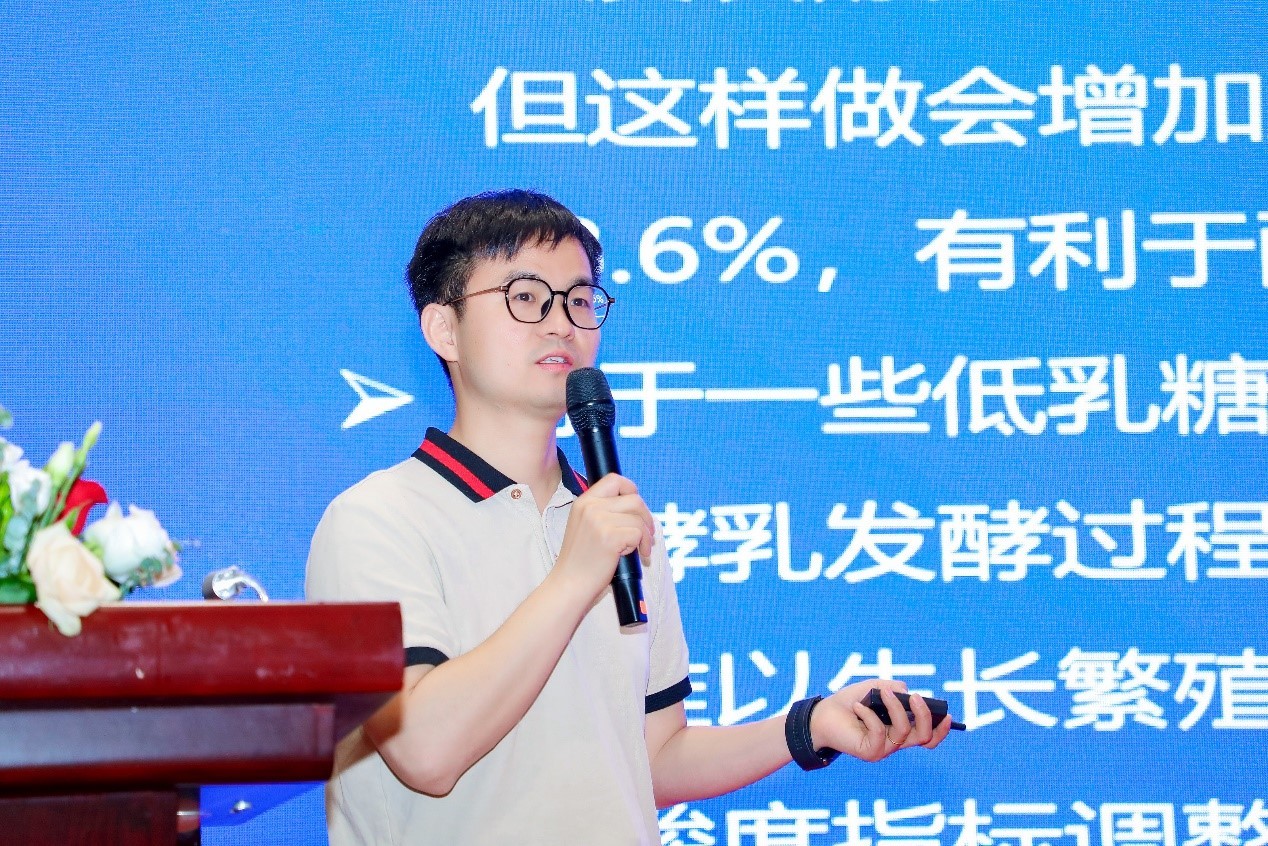
Ruan Guangfeng, the deputy director of China Food Information Center
For regulatory inquiries or translation service for legal documents, please email [email protected].
 We provide full-scale global food market entry services (including product registration, ingredient review, regulatory consultation, customized training, market research, branding strategy). Please contact us to discuss how we can help you by