

 Request a Demo
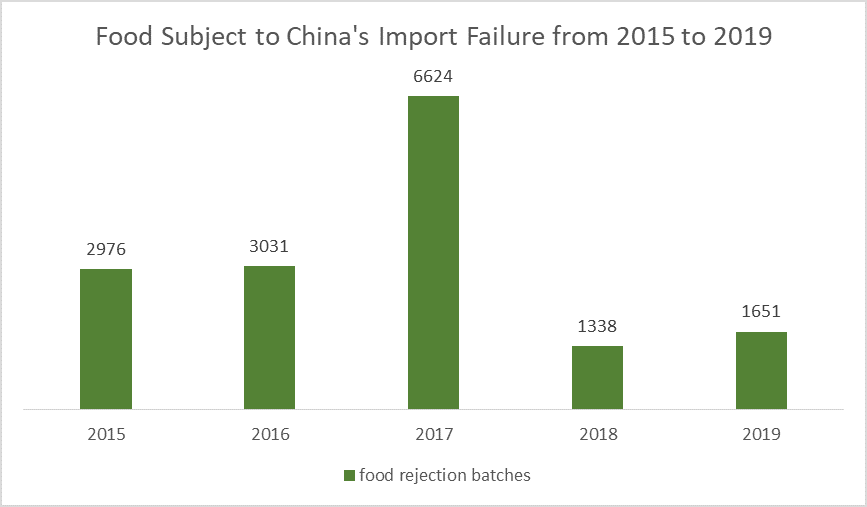
With reference to GAC data, 1651 batches of imported food products were rejected during customs inspection in 2019, an increase of 23.4% compared to 2018. All these non-compliant products have been returned or destroyed by Chinese Customs.
Import rejection by country
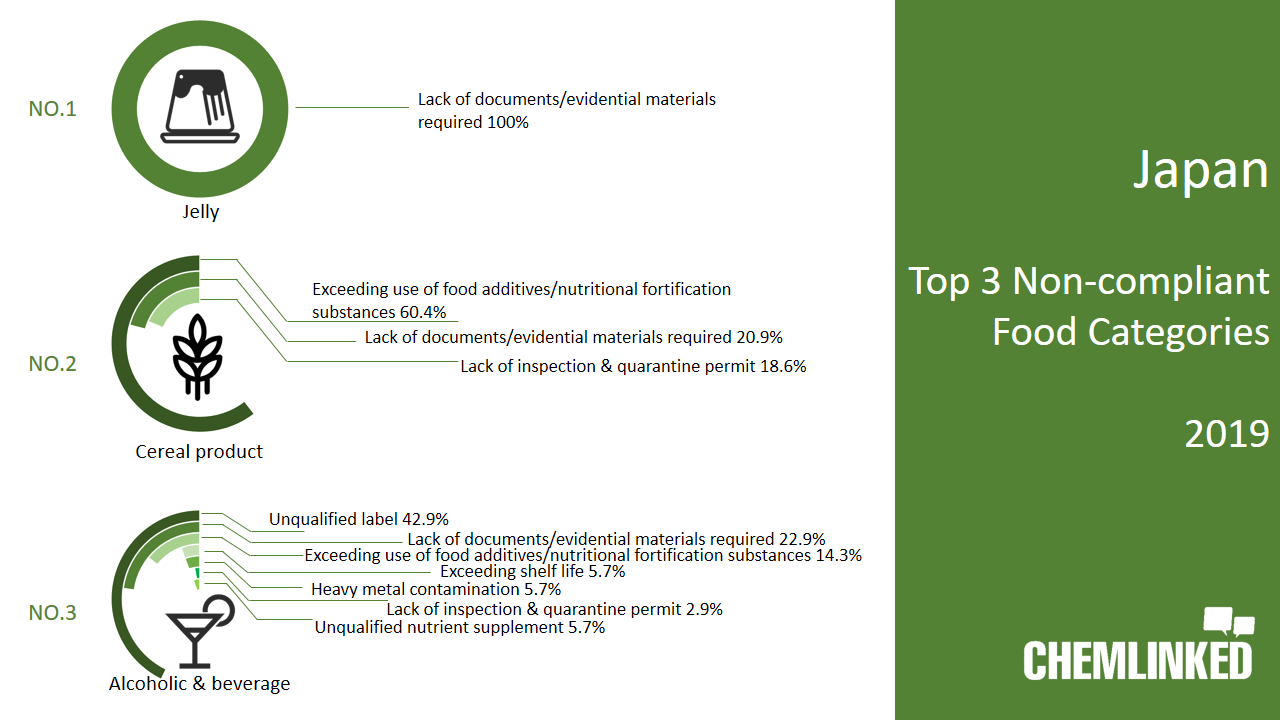
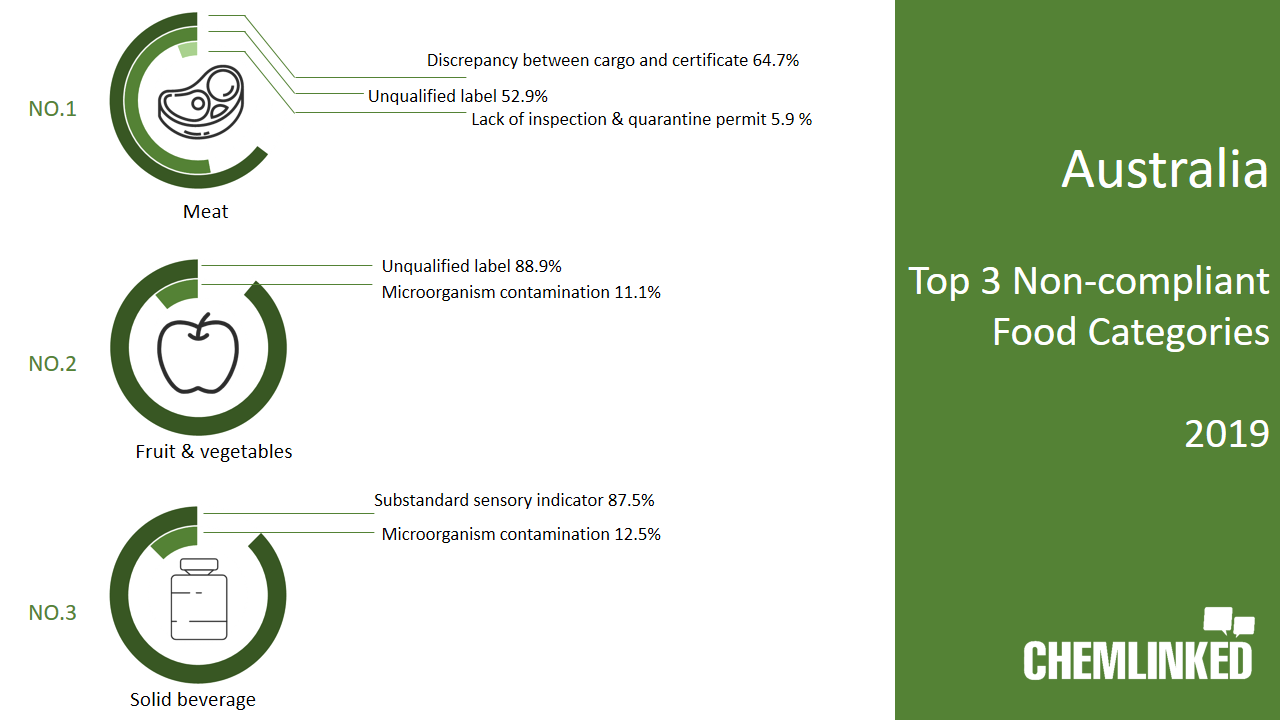
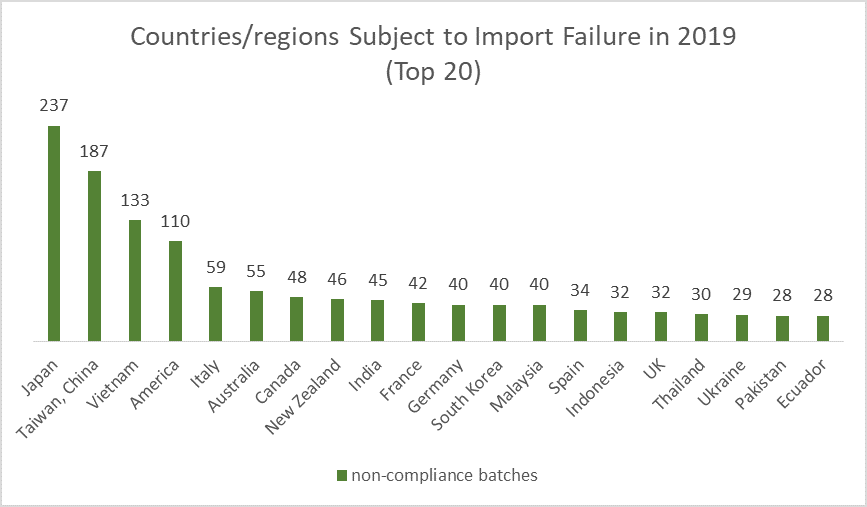 In 2019 77 countries/regions had food products rejected by Chinese Customs, and Japan was the country with the highest number of rejections (amounting to 237 batches), followed by China Taiwan (187) and Vietnam (133).
Import rejection by port
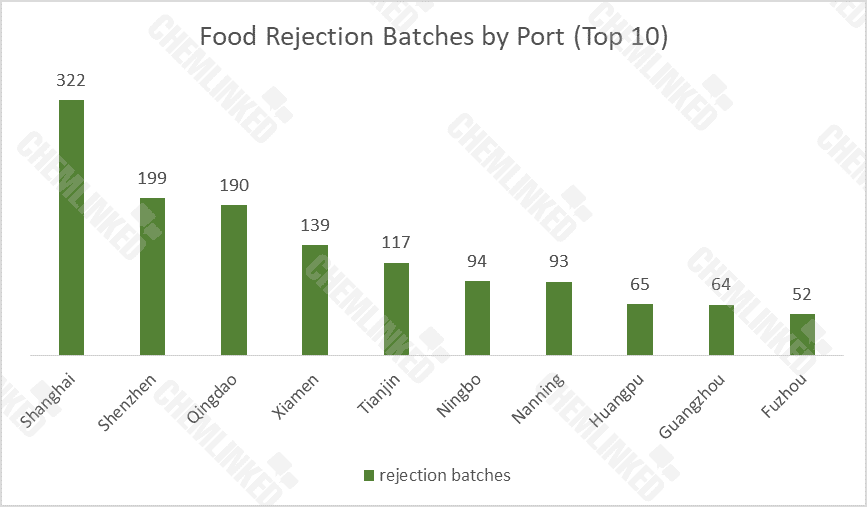
As the busiest port in China, Shanghai Customs recorded the highest value and volume of rejected imported food, amounting to 322 batches in 2019.
Import rejection stratified by product categories
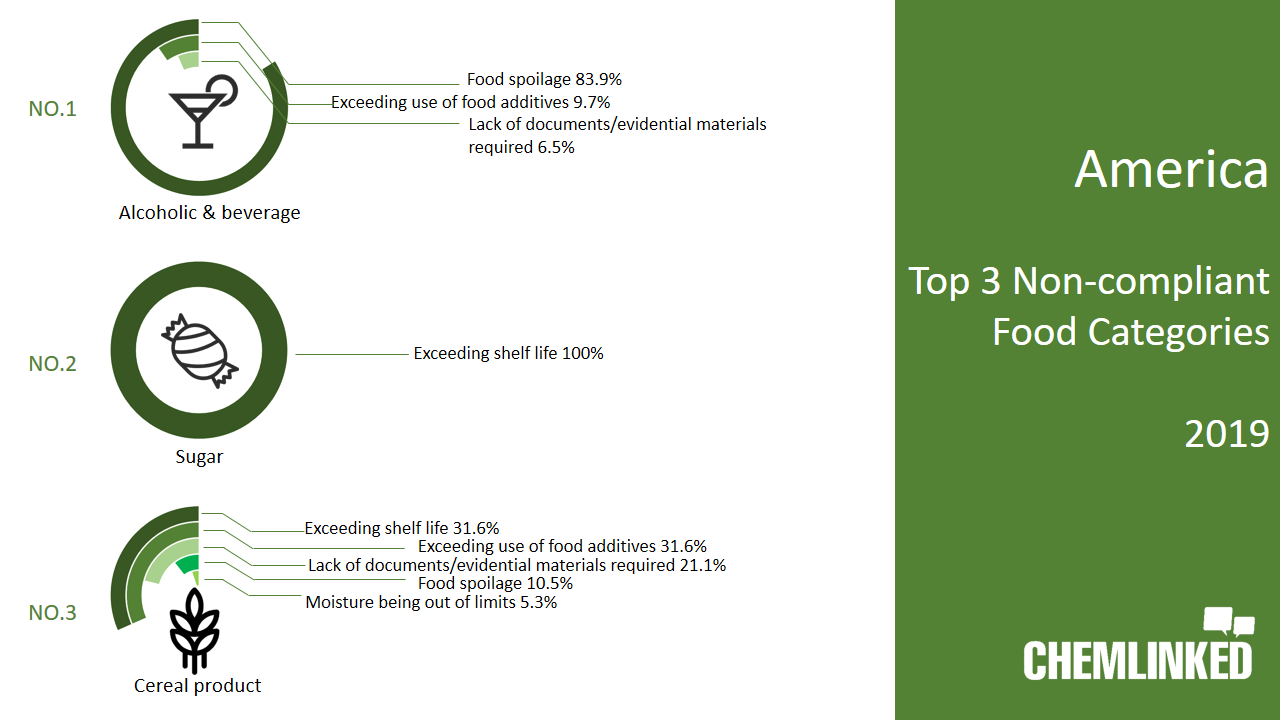
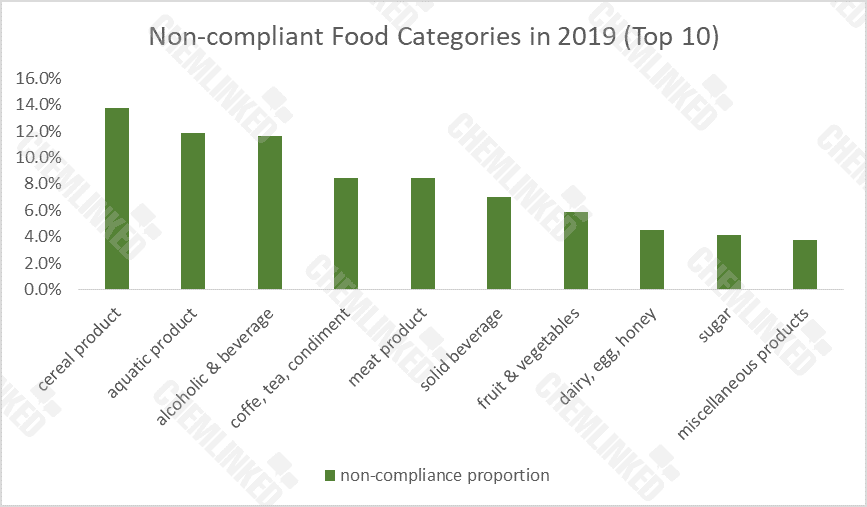
According to GAC data, approximately 13.7% of food products rejected were cereal products, the most significantly affected category in terms of volume. The leading reason for rejection by customs was excessive use of food additives/nutritional fortification substances. Aquatic products ranked No.2 in terms of the non-compliant food categories (11.9%), followed by alcoholic and beverage products (11.6%)
- Cheese
Twenty-three batches of cheese products were rejected in 2019, and 15 batches were from Italy. It is noteworthy that microorganism contamination is still the major reason for rejection. However, in 2019 China NHC consulted on the GB standard for cheese and processed cheese, and it is proposed to remove the maximum level of yeast and mold content in cheese products, which will greatly benefit international stakeholders.
Milk powder
Sixteen batches of milk powder were found non-compliant the last year, and eight batches of products are infant formula products. The rejection reasons include an unqualified label, exceeding shelf life, containing impurities, and lack of inspection & quarantine permits.
Brand | Manufacturer | Origin | Reason |
Augood | Dairy Park | Australia | containing impurities |
/ | / | Vietnam | lack of inspection & quarantine permits |
Viplus | Viplus Dairy | ||
Analac | Industrias Lacteas Asturianas | Spain | exceeding shelf life |
Reasons for food rejection by Chinese customs
Items | Percentage |
Unqualified label | 12.3% |
Lack of documents or evidential materials as required | 12.2% |
Lack of inspection & quarantine permit | 9.6% |
Exceeding the use of food additives/nutritional fortification substances | 8.1% |
The discrepancy between cargo and certificate | 7.9% |
Microorganism contamination | 7.3% |
Exceeding shelf life | 6.2% |
Food Spoilage | 5.5% |
Pest carried | 5.2% |
Substandard product quality | 4.4% |
Unqualified package | 3.6% |
Animal epidemic diseases | 1.7% |
Substandard nutrient level | 1.5% |
Pesticide or veterinary drug residue | 1.2% |
Heavy metal contamination | 1.0% |
Labeling issues are still the leading cause of the food import failure. In 2019 Chinese authorities announced a series of regulatory updates related to food labeling requirements. Starting on Oct.1, 2019, label filing for prepackaged food imported for the first time will no longer be required (click here for the detailed). On Nov. 21, 2019, China SAMR opened the draft version of “Food Labeling Supervision Administrative Measures” to public feedback, and one of the significant items is that the food label should be affixed to the product before cargo arriving in China. If this requirement is implemented in the future, importers will need to plan their regulatory compliance strategy more carefully as their products will be subject to heightened scrutiny during customs clearance. (watch ChemLinked free webinar for in-depth analysis)
Lacking documents or evidential materials was also a major cause of non-compliance. ChemLinked suggests that the overseas food manufacturers/exporters shall comprehensively understand China’s market access requirements before exporting and keep close tabs on China’s regulatory updates.
ChemLinked insight
COVID-19 initially started in China and is now a pandemic. As of Mar. 15, more than 140 countries/regions have been afflicted, amounting to approximately 75000 cases (excluding China) [1]. With reference to “Administrative Measures of Imported and Exported Food Safety” [2], Chinese Customs will conduct risk alert and corresponding control measures if the epidemic may affect the safety of imported food products. Imported agricultural and animal products will be subject to more stringent quarantine inspections, especially those from severely afflicted countries/regions such as Italy, Iran, and South Korea.
Contact ChemLinked for the collection of imported food non-compliance data from Jan. to Dec. 2019 (in Excel)
 We provide full-scale global food market entry services (including product registration, ingredient review, regulatory consultation, customized training, market research, branding strategy). Please contact us to discuss how we can help you by








