Request a Demo
On Jul 9, 2019,China issued Healthy China Action Plan (2019-2030).[1] According to data detailed within the Healthy China Action Plan, there is still a high prevalence of anemia amongst pregnant women, children and the elderly. (refer to Interpretation of Healthy China Action Plan 2019-2030).[2] In addition, micronutrient deficiencies are common and there is an unacceptably high prevalence of calcium, iron, Vitamin A, Vitamin D deficiency. The plan provides advice on promoting health of pregnant and lactating women at all stages and encouraging government and society to take corresponding measures.
This is not the first government document calling for attention to the health of young women of childbearing age. In June 2017, the State Council of China issued National Nutrition Program (2017-2030)[3] with an overriding emphasis on preventative strategies and nationwide dietary interventions using policy, legislation and regulatory reform as primary strategies to improve national health especially amongst special groups such as kids, pregnant women, the elderly and patients. (refer to China’s New Nutrition Goals 2017-2030: Huge Potential for Foreign Food Enterprise)[4]
Women’s Nutritional Requirements Change During Pregnancy & Lactation
Chinese Dietary Guidelines (2016) written by Chinese Nutrition Society highlights the importance of iron iodine and folic acid during pregnancy and lactation. Due to blood loss during women’s menstrual cycle and increased demand during pregnancy, iron deficiency anemia is common and can result in premature birth, growth restriction, low birth weight or anemia in the neonate. Lack of iodine, a vital component in production of thyroid hormone has profound impact on cognitive development and deficiency results in severe impairment. Lack of folic acid (vitamin b9) in the first several weeks after conception has profound impacts on the development of the baby’s nervous system. Careful family planning is necessary to ensure optimal folic acid levels are reached before and during pregnancy.
Pregnant and lactating women also have increased energy demands and demand for multiple nutrients such as quality protein, calcium and vitamin A. The following are excerpts from China’s dietary guidelines for pregnant and lactating women. (indicators in red suggested a higher demand).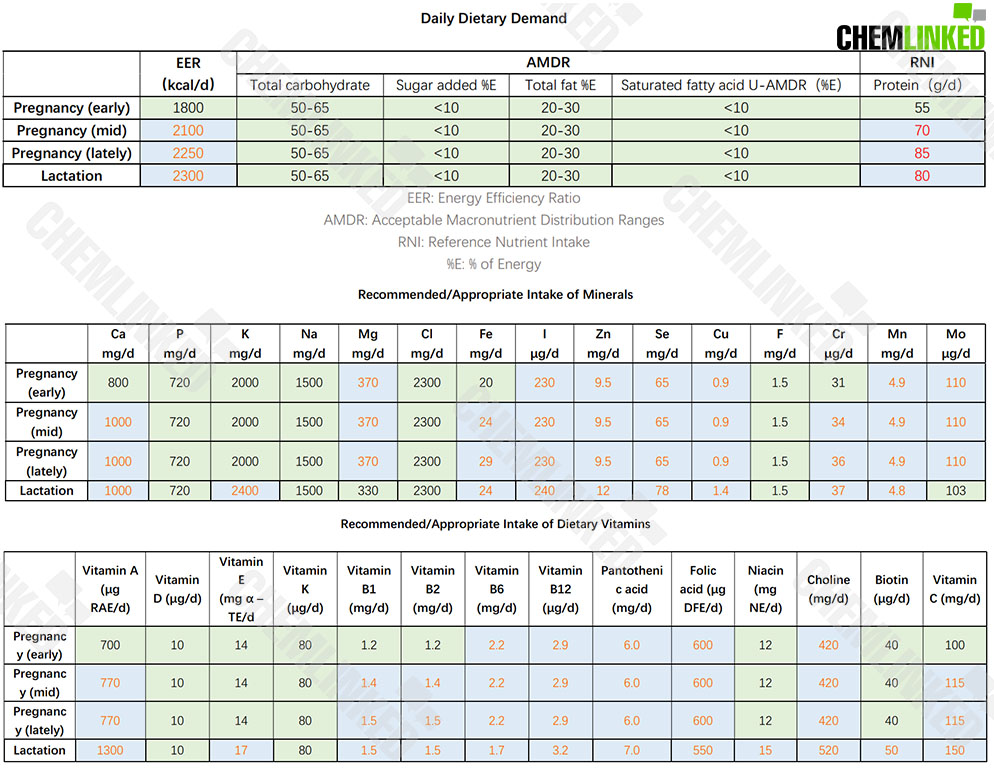
Imported Maternity and Baby Products Performing well on Crossborder Ecommerce
Seen from statistics on 9 imported goods categories on Tmall Global in 2018, maternal and baby goods ranked #2 by sales. Infant formula accounted for the largest proportion in this category. Interestingly the rate of growth of food products for pregnancy outperformed all other segments of pregnancy related products, highlighting growing consumer awareness of these products and increased demand.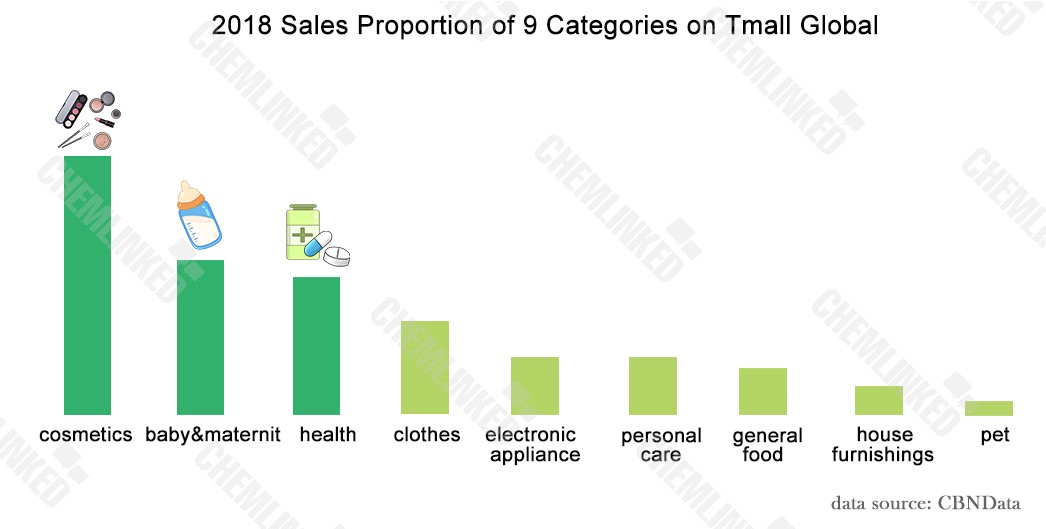
Unprecedented Growth in Pregnancy Nutrition Products
In all segments of pregnancy goods sold on Tmall Global, DHA, folic acid, multi-nutrients, probiotics and milk powder ranked #1, #4, #6, #8, #9 by sales value respectively. Crossborder ecommerce accounted for the majority of sales in the pregnancy nutrition sector and provides a sound rationale for greater investment in offline and general sales channels. 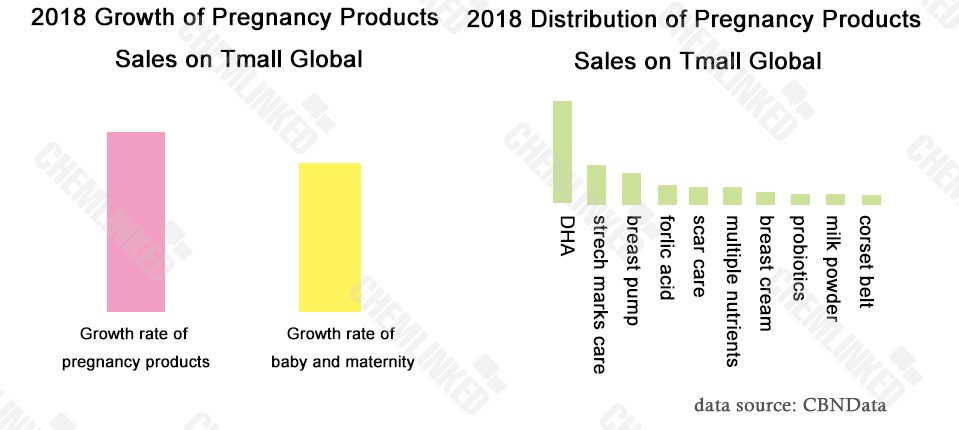 It was reported that, in 2018 the market share of pregnancy nutrition was small and valued at roughly 0.36 billion RMB (about 51 million USD). Of this 51 million USD valuation, fortified milk powder accounted for 0.26 billion RMB (about 37 million USD) of sales, growing by 42.33% from the previous year. The remaining market share was occupied by a variety of nutritional supplements in capsules, liquids and other delivery formats.
However, general trade and offline channels (bricks and mortar stores) have reacted slowly to consumer demand in the pregnancy nutrition segment. At a Bravo supermarket in Hangzhou (an imported food specialist supermarket with premium products and generally premium prices), ChemLinked managed to find several milk powder products for pregnant and lactating mothers. The products were interspersed on shelves dedicated to infant formula. No specific shelf for pregnancy nutrition were offered.
On UGC (user generate content) and ecommerce platforms, frequently recommended products or bestsellers are mainly nutrient supplements, pregnancy milk powder and probiotics. Most of them are sold on cross-border ecommerce (CBEC) platforms. Popular brands include Blackmores, Elevit, Swisse, BioIsland, Salus, Lifespace, Goodhealth, Nordic naturals, Red Sea etc.
ChemLinked thinks pregnancy nutrition has great potential both online and offline. Brands which are successful on Cross-border ecommerce could feasibly target offline channels. Under current cross-border ecommerce regulatory policies pregnancy nutrition products are not required to comply with GB standards. However, the regulatory barriers for this value-added dairy segment can be easily surmounted in comparison to other dairy products like infant formula, meaning that for most offline sales channels are a viable route to market.
GB 31601 – 2015 National Standard for This Special Dietary Product
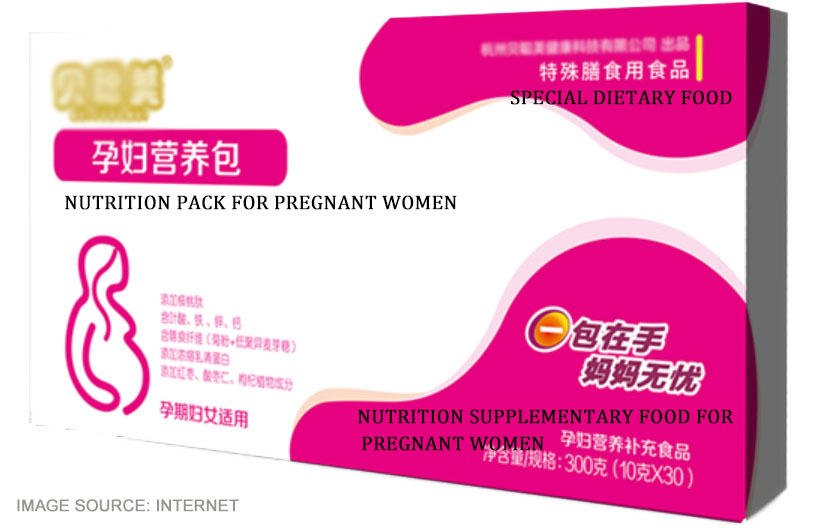 Overseas stakeholders can refer to GB 31601. Effective on Nov. 13, 2016, GB 31601 – 2015 National Food Safety Standard for Nutrition Supplementary Food for Pregnant and Lactating Women was publicized in 2015 to help develop products designed to improve the nutritional status of Chinese pregnant and lactating mothers and reduce risk of abnormal growth of embryo and infants. “Nutrition supplementary food for pregnant and lactating women” is defined as special dietary food added with quality protein and multiple micronutrients. Maximum intake is 50g per day, as stipulated in the standard.[5]
This national standard requires quality protein come from soybean, soybean products, dairy and/or dairy products and the concentration (by weight) should be 18%~35% in the product. Mandatory nutrients in the product include:
| Nutrient | Concentration in food for pregnancy | Concentration in food for lactation |
| Fe | 9~18 mg/d | 7~16 mg/d |
| Vitamin A | 230~700 μg/d | 400~1200 μg/d |
| Vitamin D | 3~10 μg/d | 3~10 μg/d |
| Folic acid | 140~400 μg/d | 130~400 μg/d |
| Vitamin B12 | 1.2~4.8 μg/d | 1.3~5.2 μg/d |
Other nutrients including Ca, Mg, Zn, Se, Vitamin E, Vitamin K, Vitamin B1, Vitamin B2, Vitamin B6, niacin, pantothenic acid, choline, biotin, Vitamin C and DHA are optional nutrients that can be added to the product.
As for labeling, the product shall be labeled as “nutrition supplementary food for pregnant women (孕妇营养补充食品)” or “nutrition supplementary food for lactating women (乳母营养补充食品)”.
Milk Powder (for Pregnant and Lactating Women)
GB 31601 is not the reference standard used for a general milk powder that can be used for pregnant and lactating women. According to a Q&A form circular released by China National Center for Food Safety Risk Assessment, although both nutrition supplementary food for pregnant and lactating women and milk powder are designed to supply extra nutrition for these groups, nutrients in the former category (GB31601) are more highly concentrated than the latter (general milk powder adapted for pregnant and lactating women).[6]
Milk powder catering to these groups are not special dietary food and falls under the category of milk powder in the national standard system. It is formulated milk powder that contains nutrition fortifiers and over 70% dairy solids. Standard for reference is GB 19644 National Food Safety Standard Milk Powder.[7]
The standard specifies the definition and classification of milk powder, technical requirements including raw materials, sensory and physiochemical properties, and microorganism parameters. Other safety indexes shall comply with corresponding normative standard: Upper levels of contaminants, mycotoxins should refer to GB 2762 National Food Safety Standard Maximum Levels of Contaminants in Foods[8] and GB 2761 National Food Safety Standard Maximum Levels of Mycotoxins in Foods[9]; Application of food additives and nutrition fortification substances shall comply with GB 2760 National Food Safety Standard for Uses of Food Additives[10] and GB 14880 National Food Safety Standard for the Use of Nutritional Fortification Substances in Food[11] as well as relevant NHC announcements on new varieties of food ingredients.
To be noted, in H1 2019, 11 batches of food products were rejected by customs at port due to non-compliant use of nutrition fortifiers including an Australian modified milk powder. Manufacturers should be clear what nutrition fortifiers can be used in milk powder for pregnant and lactating women and what cannot. According to GB 14880, the following nutrition fortifiers can be used within the stipulated dosage range: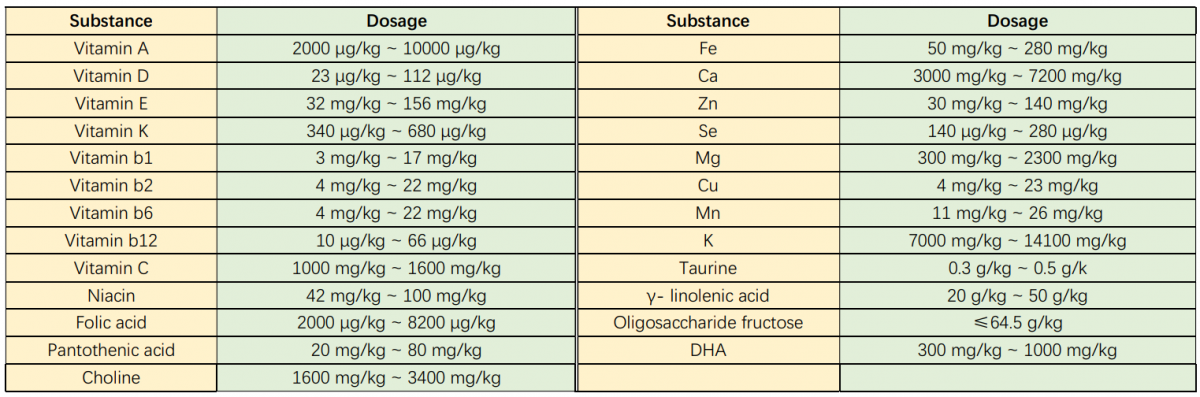 In contrast to special dietary food for pregnant and lactating women (GB31601), milk powder for pregnant and lactating women (GB 19644) is not permitted to be fortified with biotin.
Nutrition info of several milk powder products
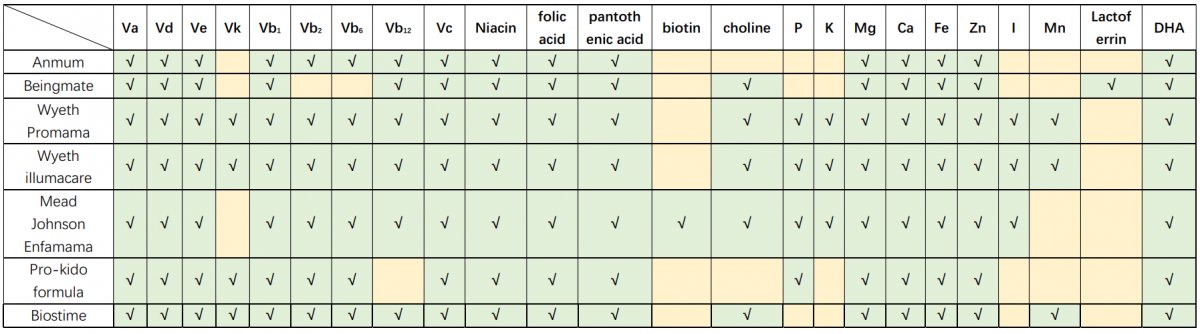 *Not all nutrients listed in the nutrition info table are added through nutrition fortifiers.
Vitamin, mineral & DHA supplements
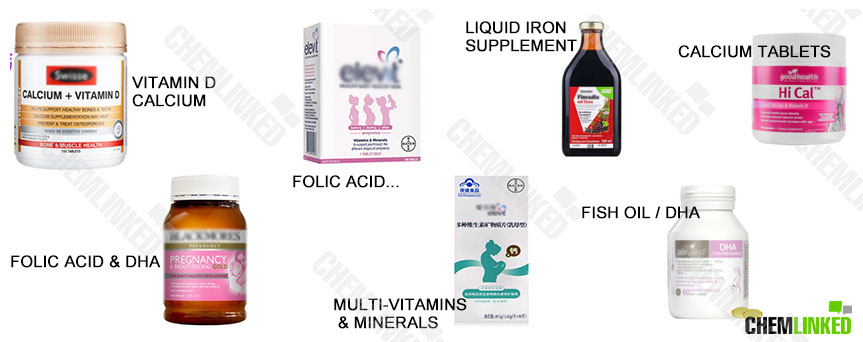 Vitamins, minerals, fish oil and algae oil supplements are also popular amongst pregnant mothers in China. The above 7 products are popular in China. They can be divided into two types from regulatory perspective: “blue hat” health food and non-“blue hat” health food.
“Blue hat” health food
The “blue hat” mark is granted by State Administration for Market Regulation or local competent authorities to nutrient supplements and health food with function claims. Stakeholders of vitamin and mineral supplements must file an application to the competent authority and submit required documents to gain a blue hat mark, which generally can be achieved within two months. (refer to officially issued Guideline for Health Food Filing Application)[12]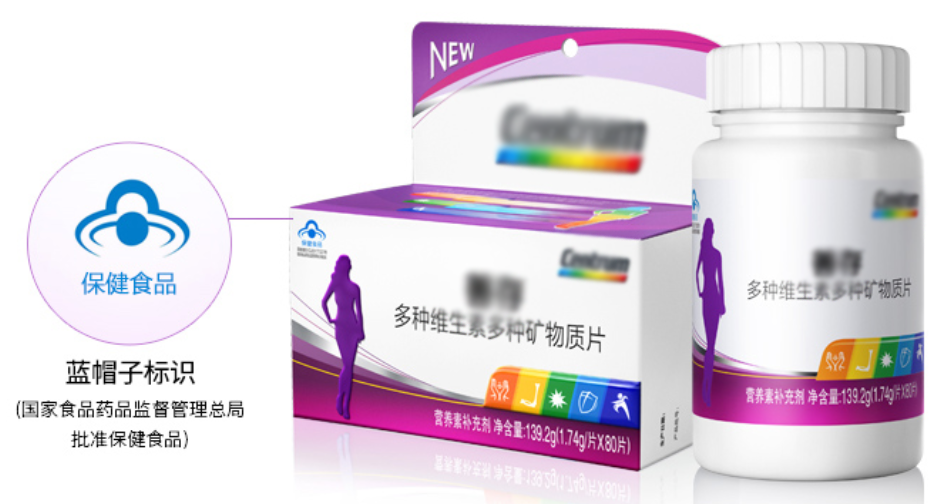 Products containing fish oil and with functional claims (e.g. help reduce serum triglycerides) are subject to registration. An important distinction between filing type health food and registration type is whether they require systematic evaluation (clinical, toxicological etc.) to substantiate any functional claims used on these products. Earlier in December 2016, China published Health Food Raw Materials Directory (1st Batch) [13], specifying the active raw materials that can be used in health foods subject to filing. At that time the directory only included vitamins and minerals. It has been proposed that 5 active ingredients (including fish oil) are added to this directory. The proposed amendment was opened to public feedback in March. (refer to China SAMR to Append Health Food Positive List with 5 New Functional Ingredients)[14]
Non-“blue hat” food
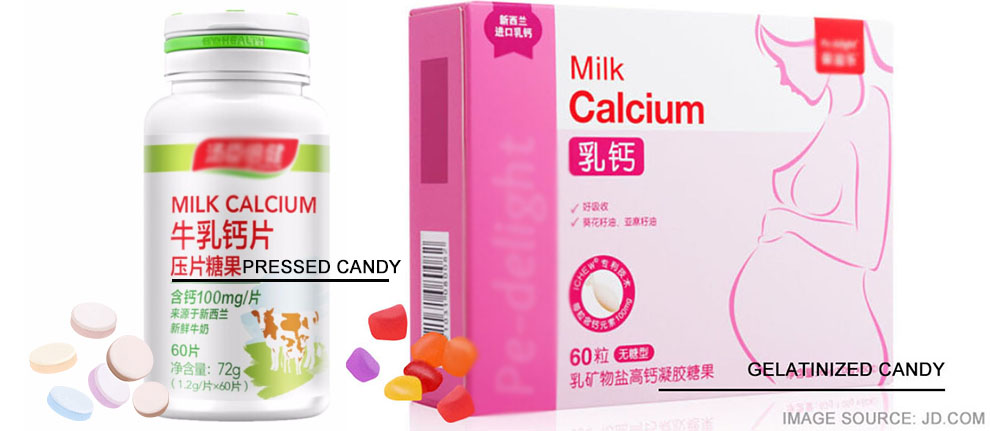 Some domestic and overseas manufacturers choose to avoid the complicated regulatory compliance requirements of health foods altogether and instead adopt a product development strategy which bypasses most of this red tape. One of the most prevalent examples are fortified pressed candy or gelatinized candy. Fortified candies without functional claims can avoid the “blue hat” certification requirement. The important reference standard to consider is GB 17399-2016 National Food Safety Standard Confectionery.[15] Nutrient fortification claims can be made and should be compliant with GB28850.
For dairy companies, pregnancy nutrition, especially pregnancy milk powder, offers an excellent business opportunity in an era when other related sectors have become saturated or entail excessively demanding regulatory compliance requirements.
 We provide full-scale global food market entry services (including product registration, ingredient review, regulatory consultation, customized training, market research, branding strategy). Please contact us to discuss how we can help you by