Request a Demo
Consumer purchasing preference of food products in China has been profoundly shaped by China’s shifting demographics[1], consumption upgrade[2], and demand for healthy foods[3]. As revealed by McKinsey, more and more consumers, especially the burgeoning upper-middle-class, can afford and are willing to pay a premium for high quality, safe, and healthy foods, which is stimulating growth in the high-end food and health food sectors.
Today, another new food category is emerging, which aligns with China's pursuit of health, beauty, and body management[4] called "meal replacement food." Riding on the wave of China’s increased interest in all things related to health and fitness, this new food category is making major gains in China.
*Note: Since there’s no standard for meal replacement food until November 27, 2019, the meal replacement we talked in the market part refers to the products that claim themselves as meal replacement food in the advertising.
Fitness and Slimming: Two Drivers for Growth in Meal Replacement Products
The primary target of meal replacement products is overweight and obese individuals and young women looking to improve their appearance. As revealed by the NHC report Nutrition Status and Chronic Disease Analysis of Chinese Citizens 2015[5], the obesity rate of adults is 11.9%, and the prevalence of overweight Chinese climbed to 30.1% in 2012 compared to 22.8% in 2002. What's more, research[6] also showed that in 2014, China had more obese men and women per capita than the US. In terms of morbid obesity, China moved from 60th place for men and 41st place for women in 1975, to 2nd in the world for both men and women in 2014. (Definition of obesity: BMI≥30 kg/m2; morbid obesity: BMI≥35 kg/m2).
To help people lead a healthier life, China's government has launched plans like “Health China 2030[7]”, “Dietary Guidelines for Chinese Residents 2016[8]”, “National Nutrition Plan 2017-2030[9]”, etc. and also released policies to encourage enterprises to manufacture healthier food products. (More CL analysis: China Embracing Global Plant-Based Nutrition Movement: Whole Foods, Organic and Plant-Based Trending Hard[10]; Interpretation of Healthy China Action Plan 2019-2030[11])
Meal replacement foods meet demand and offer Chinese consumers a new health solution, which offers low-calorie and balanced nutrition with macronutrient profiles that foster weight loss and muscle growth. Although the retail price of meal replacement foods is normally 40% to 200% higher than common food, as reported here[12] China's wealthy middle class are still willing to pay for these high margin products, especially females and white-collar workers. Weight lose/body recomposition is the primary motivation for consumers to purchase these products. Nutritional considerations are the second most important consideration, according to a report[13] released in Jan 2019 by the Guangdong countryside E-commerce Association.
Consumer demographics
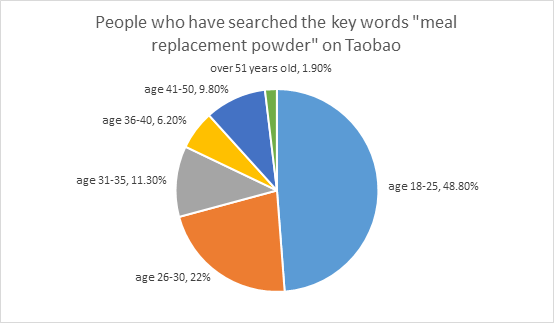
According to the data from Taobao[14] (the largest E-commerce platform in China), over 80% of consumers of powdered meal replacement products are female. 60% of them are company staff or university students. And over 70% of the consumers are aged between 18 to 30 years old.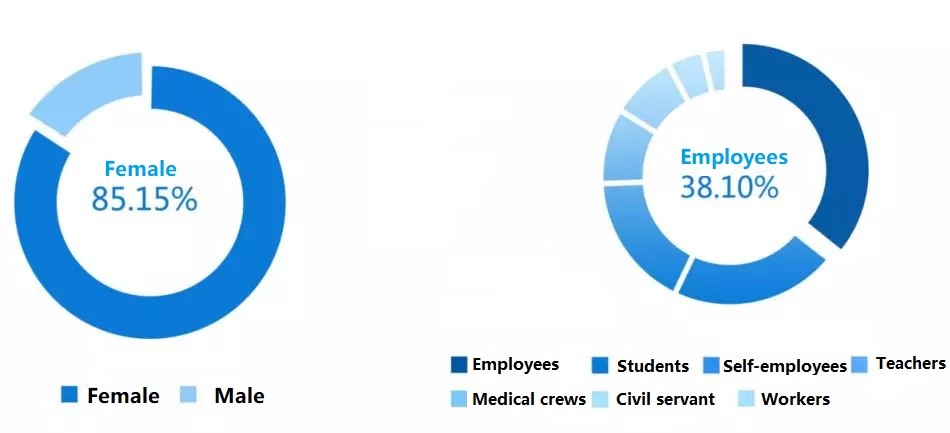
Market Performance in China
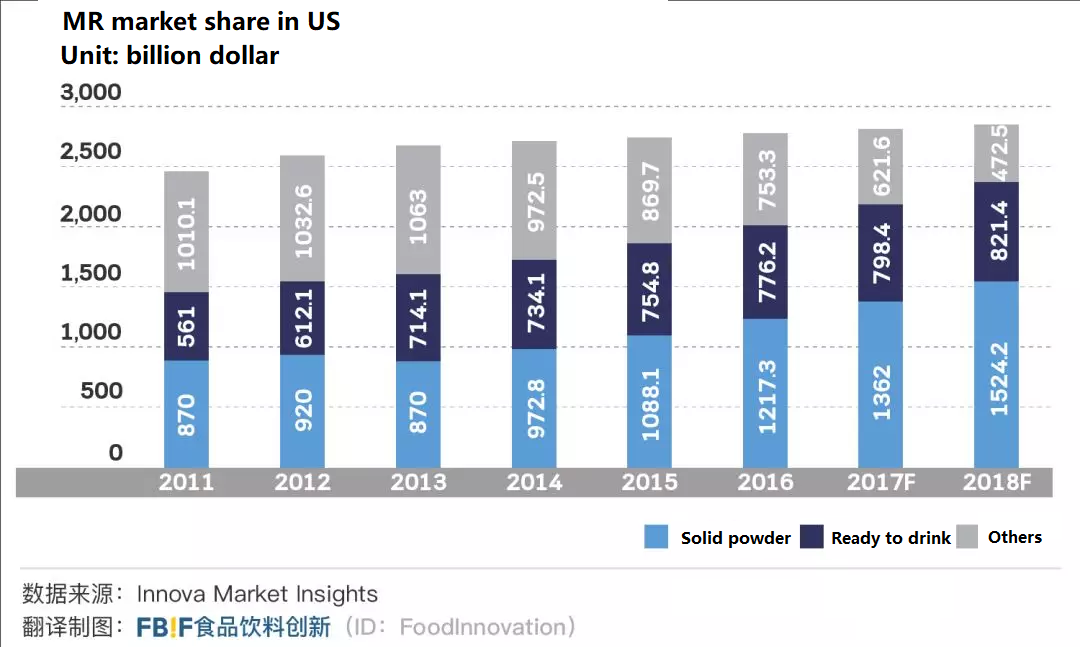
According to a Euromonitor report shared during the FBIF forum[15], the market size of “meal replacement” in China reached 5.7 billion RMB in 2017 and is forecasted to exceed 12 billion RMB in 2022.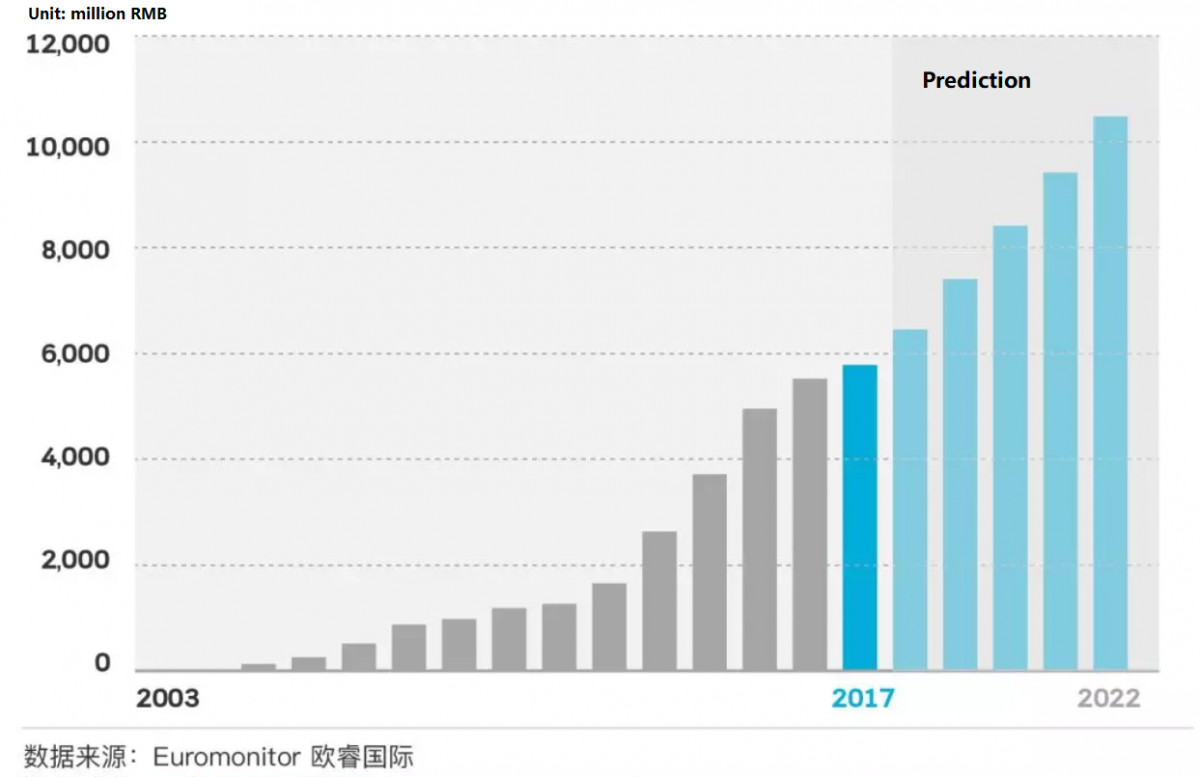 Take the most common form of meal replacement products, meal replacement powder, as an example. In the US, meal replacement powder occupied 44% of the market in 2016, converting to a value of US 1.5 billion (around 10 billion RMB). In China, the market size of meal replacement powder was 6 billion RMB in 2018, according to data reported in China’s first white paper of meal replacement powder market. Compared to the market in the US, China still has a long way to go. It is also said in the white paper that the market is estimated to grow at a rate of 30%.
 Also, during China’s biggest shopping festival (view more at China Single’s Day 2019 Food Sales[16]) this year, meal replacement products sold out on Tmall, totalling to 188 tons of meal replacement milkshake powder.
Market Players and Products
The meal replacement concept was actually introduced to China from western countries. Understandably during the early stages, foreign brands and imported products dominated. According to Euromonitor data, in 2017, the market was controlled by Herbalife and its meal replacement powder, which took over 88.6% of the meal replacement market. However, things shift quickly.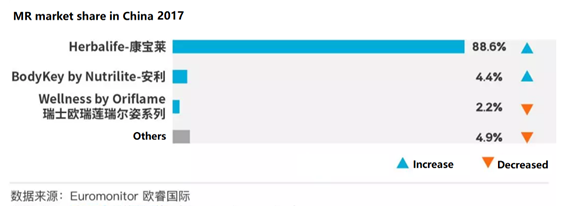 The success of herbal life in China showcased the major potential of the market, and it wasn’t long before Chinese companies entered the market, quickly diluting the market dominance of Herbalife. The relatively low technical requirements needed to manufacture meal replacement products mean that in 2018 there were over 409 enterprises. Today, if you search the words “meal replacement” in China’s E-commerce platform, you will find hundreds of food enterprises and thousands of meal replacement products in various forms, ranging from meal replacement milk, yogurt, milkshake, porridge, biscuits, bars, etc. But are these products really meal replacement products?
A glimpse of some popular “meal replacement” products in the market
| Category | Company & Products | Notes | Example of Meal Replacement Products |
| Meal replacement powder | Smeal Milkshake powder | Well-designed, good taste |  |
| By-health Solid drink | High protein, high fiber | 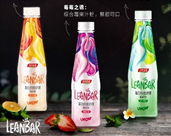 | |
| Herbalife Milkshake powder | Big brand, well known | 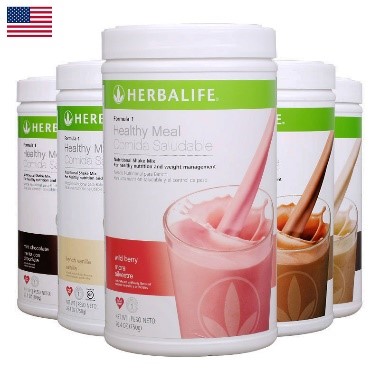 | |
| Ruofan (若饭) Meal replacement powder, liquid drink, biscuit | Provide "superfoods," which are nutritious, convenient, and healthy. | 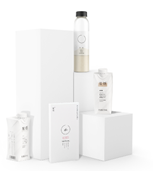 | |
| Meal replacement snacks | Wangbaobao[17] (王饱饱) Yogurt and dried fruit | Top1 cereal seller on the Double 11 shopping festival, exceed the performance of Quaker and Calbee | 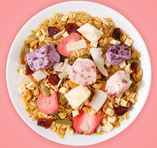 |
| Miss Zero Milkshake powder, biscuit, nut bar, chocolate, coffee, etc. | Zero-sugar can satisfy hunger, good taste with various product forms. They also claim it can help you lose weight within three days. According to the founder, the monthly sales value of Miss Zero is over 10 million RMB. | 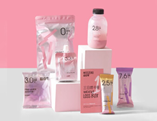 | |
| Others | Orange-run Bread, porridge, chicken, sausage, salad sauce, biscuit, coffee, etc. | Orange-run has a 13-day weight loss plan on its website. It will design your recipes and mail the meals to you for 13 days. | 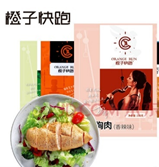 |
Lack of Regulation and Unified Standard
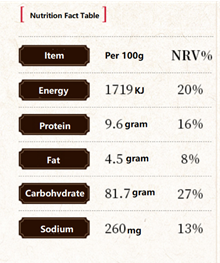 Photo from Taobao |
After taking a glance at the meal replacement foods in the table above, it becomes clear that China lacks a unified definition of meal replacement to delineate meal replacement foods from general foods clearly. The absence of regulations and standards is undermining the development of the sector. Looking at the “nutrition facts table” of many “meal replacement” products, you will find most of them are just common food but branded, marketed and labeled as “meal replacement” and "weight loss” products.
Furthermore, although the specific macronutrient content (proteins, fats, sugars) of these foods can be relatively higher than some common food, the nutrient content is still much lower than recommended daily nutrient intake and would, therefore, result in malnutrition if the product was consumed as the sole dietary source of nutrition (these are not complete foods).
In order to overhaul the market chaos, on November 27th, the Chinese Nutrition Society released the group standard of Meal Replacement Foods (T/CNSS 002-2019)[18], which comes into effect on Jan 1st, 2020, and is currently the only standard that can be used as a reference in China.
During a conference[19] this year, one Chinese official told ChemLinked that the government is preparing to formulate its own national standard as well, which will be based on this group standard.
A Comparison of International Regulations VS China’s Group Standard
Only a few countries have formulated relevant food regulations, such as the EU, Canada, Chile, Indonesia, and Korea. Here is a brief comparison of the definitions used in these frameworks and specific requirements relating to energy and nutrient content. In general, meal replacement food can be defined as “a formulated food used in conjunction with calorie restriction to manage or reduce body weight. The product should provide adequate amounts of all essential nutrients (protein, fats, vitamins, and minerals) and should not negatively impact health".
The scope of meal replacement can be summarized in three key points:
It formulated as a replacement for daily meals (one meal or more) or all the meals of the day
It must be formulated with all essential nutrients
It must be used as part of a calorie-restricted diet
Table 1: Regulations and Definitions
| Year | Organization /country | Regulation | Definition |
| 1991 | Codex | Codex Stan 181-1991 Formula Foods For Use in Weight Control Diets[20] | Formula foods for use in weight control diets are foods that, when presented as "ready-to-serve" or when prepared in conformity with the directions for use, are presented as a replacement for all or part of the total daily diet. |
| 1995 | Codex | Codex Stan 203-1995 Formula Foods For Use in Very Low Energy Diets For Weight Reduction[21] | A formula food for use in very low energy diets is a food specially prepared to supply a minimum amount of carbohydrates and the daily requirements of the essential nutrients in 450-800 kcal, which represents the sole source of energy intake. |
| 1996 | The EU | Commission Directive 96/8/EC of 26 February 1996 on foods intended for use in energy-restricted diets for weight reduction[22] | Foods for use in energy-restricted diets for weight reduction are specially formulated foods that, when used as instructed by the manufacturer, replace the whole or part of the total daily diet. They are divided into two categories:
|
| 2013 | EU 609/2013[23] | Replace 96/8/EC | |
| 2016 | EU 2016/1413[24] | Revision to the claims of ‘Meal replacement for weight control | |
| 2016 | Australia New Zealand | Australia and New Zealand Food Standards Codes[25] | Formulated meal replacement means food for sale or a prepackaged selection of food for sale that:
|
| / | Canada | B.24.200 of Food and Drug Regulations[26] | Meal replacement means a formulated food that, by itself, can replace one or more daily meals. |
| / | South Korea | Food Standard and Specification[27] | Food for weight control, specially formulated as a replacement for one or more daily meals with necessary nutrients. |
| … | |||
Table 2: Specific Requirements to Energy and Nutrient Content per Meal
| Codex | Australia and New Zealand | Canada | EU | Korea | US | |
| Energy | 200–400 kcal | ≥850 KJ (around 203 kcal) | ≥225 kcal | 200–400 kcal | ≥200–400 kcal | None |
| Protein | 25–50% of total energy; ≤125 g/day | ≥12 g | 15% or 20% to 40% of the total energy of the product | 25–50% of the total energy of the product | ≥10% NRV | None |
| Fat | ≤30% of total energy | None | ≤35% energy of the product | ≤30% energy of the product | None | None |
| Fat from linoleic acid | ≥3% of the total energy of linoleic acid (glyceride form) | None | ≥3% energy of the product | ≥1 g | None | None |
| The ratio of linoleic acid to n-3 linolenic acid | None | None | 4:1–10:1 | None | None | None |
| Vitamin | a minimum of 33% or 25% of the amounts specified in 3.2.3.1 of Codex 181‐1991, depending on whether the recommended number of servings per day is 3 or 4 respectively | ≥ 25% *RDI of each vitamin and mineral listed in Column 1 of the table to section S29—12 of Australia New Zealand Food Standards Code | Specific minimum and maximum indicated in the regulation | ≥30% of the amounts of the nutrient reference values of vitamins per meal as laid down in Annex XIII to Regulation (EU) No 1169/2011. | ≥25% NRV specified in Korea’s regulation | None |
| Mineral | a minimum of 33% or 25% of the amounts specified in 3.2.3.1 of Codex 181‐1991, depending on whether the recommended number of servings per day is 3 or 4 respectively | ≥ 25% *RDI of each vitamin and mineral listed in Column 1 of the table to section S29—12 of Australia New Zealand Food Standards Code | Specific minimum and maximum indicated in the regulation | ≥30% of the amounts of the nutrient reference values of minerals per meal as laid down in Annex XIII to Regulation (EU) No 1169/2011. | ≥25% NRV specified in Korea’s regulation | None |
| Essential amino acids | None | None | None | Yes—profile WHO 1985 | None | None |
Detailed analysis of China’s Group Standard
Borrowing some ideas from relevant regulations formulated by Codex, EU, Canada, and ANZ, China released its first standard on meal replacement food on November 27, 2019. Although it’s only a group standard, as we mentioned above, the national standard will likely be formulated based on this group standard. Thus, it is necessary to analyze this group standard.
Here are the definition and technique requirements.
Scope. This standard applies to
Meal replacement food is mainly designed for adults that need to control body weight.
Prepackaged food, excluding health food
Terms
Meal replacement food refers to a specially formulated food as a replacement for one or two daily meals, in order to meet adults’ nutrition demand during a calorie-restricted diet.
Partial meal replacement food refers to a specially formulated food as a replacement for a part of the meal, which contributes to some but not all of the nutritional requirements of an adult during a calorie-restricted diet. It is also said when taking partial meal replacement food, consumers shall take it along with other foods such as milk, vegetables, fruits, etc. for it only replace a part of the meal.
From the group standard, we can see that China has a conservative attitude towards meal replacement products and will use precautionary principles when developing its national standard. Compared to other countries, China does not encourage the manufacturing of meal replacement food that is designed as a complete meal replacement used as the sole source of nutrition. It also outlines that meal replacement products should not be consumed for longer than two months without the guidance of a qualified medical practitioner or licensed nutritionist.
Compulsory Component Requirements to Meal Replacement Food per Meal
| Component | Minimum Amount | Maximum Amount |
| Energy | 200kcal – 400 kcal (835kj - 1670kj) | |
| Protein | 25-50% of the total energy of the product | |
| Fat |
| |
| Fiber/g | 5 | 12 |
| Vitamin A/μg RE | 260 | 580 |
| Vitamin B1/mg | 0.4 | N.S. |
| Vitamin B2/mg | 0.4 | N.S. |
| Vitamin C/mg | 30 | N.S. |
| Niacin/mg | 4.6 | N.S. |
| Folic acid/μg DFE | 110 | N.S. |
| Ca/mg | 260 | N.S. |
| Mg/mg | 50 | N.S. |
| Fe/mg | 5 | 9 |
| Zn/mg | 3 | 7 |
| *N.S. means not specified | ||
Compulsory Component Requirements to Partial Meal Replacement Food per Meal
| Component | Minimum Amount | Maximum Amount |
| Energy | 80kcal – 200 kcal (334kj – 835 KJ) | |
| Protein | 25-50% of the total energy of the product and no less than 8g per serving | |
| Fat |
| |
| Fiber/g | 2 | 12 |
| Vitamin B1/mg | 0.2 | N.S. |
| Vitamin B2/mg | 0.2 | N.S. |
| Ca/mg | 80 | N.S. |
| Fe/mg | 2.5 | N.S. |
| Zn/mg | 1.5 | N.S. |
| *N.S. means not specified | ||
Using China’s new group standard as our reference and analyzing a range of products currently circulating on the market, we find that many of the products using the term “meal replacement food” would actually be non-compliant. If China's national standard follows the group standard, the manufacturers of these products will be forced to alter the product label, the product formula, or remove the product from the market.
Case Study I: A famous “meal replacement” food in China
| Product | Component | Result |
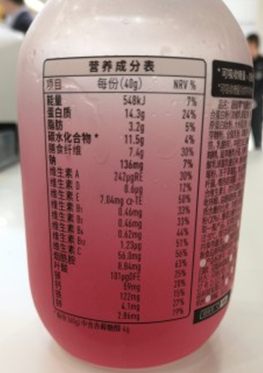 | Energy | X |
| Protein | ||
| Fat | ||
| Fiber/g | ||
| Vitamin A/μg RE | X | |
| Vitamin B1/mg | ||
| Vitamin B2/mg | ||
| Vitamin C/mg | ||
| Niacin/mg | ||
| Folic acid/μg DFE | ||
| Ca/mg | X | |
| Mg/mg | ||
| Fe/mg | X | |
| Zn/mg | X | |
| "X” means didn’t meet the requirements outlined in China’s new group standard. | ||
Case Study II: total meal replacement food (35g/serving)
| Product | Component | Result |
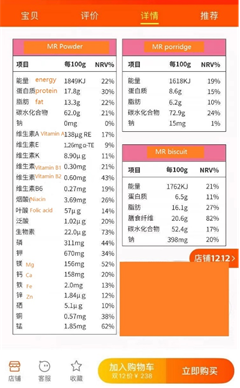 | Energy | X |
| Protein | ||
| Fat | ||
| Fiber/g X | X | |
| Vitamin A/μg RE X | X | |
| Vitamin B1/mg X | X | |
| Vitamin B2/mg X | X | |
| Vitamin C/mg X | X | |
| Niacin/mg X | X | |
| Folic acid/μg DFE X | X | |
| Ca/mg X | X | |
| Mg/mg | ||
| Fe/mg X | X | |
| Zn/mg X | X | |
| *Although it contains various nutrients, the amount is far below the required amount. | ||
Mitigating Compliance Risks
Legal basis for meal replacement food manufacturing
The most important question for enterprises is, “can a manufacturer use China’s new group standard as a legal reference when manufacturing meal replacement products?” SAMR replied to this question last year. As we can learn from its official website[28], the group standard can be used as a basis for food manufacturing as long as the products satisfy relevant compulsory standards (GB standards) first. And this principle applies to both domestic enterprises and overseas enterprises.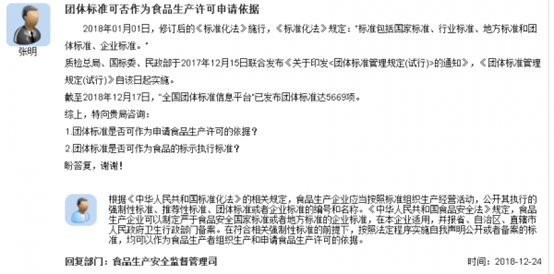 So here’re two steps that enterprises need to complete before the manufacturing.
Step 1
Step 2
In this way, your meal replacement food will satisfy relevant compulsory standards and group standards at the same time. In addition to food category labeling, enterprises can also label "meal replacement food/partial meal replacement food" on packages as laid down in the group standard. Companies can also legally advertise these products on E-commerce platforms.
To pick the correct food category for your meal replacement food, check the classification system specified in GB 2761 and GB 2762. And then to find the standards for specific products. (View more about the food classification in ChemLinked’s free webinar China Food Classification Rules & Case Study[32])
We have here listed some standards for possible meal replacement forms.
GB 7099-2015 Pastry and Bread[33]
GB 7100-2015 Biscuit[34]
GB 7101-2015 Beverage[35]
GB 19300-2014 Nut and Seed Food[36]
GB/T 19343 -2016 Chocolate and Chocolate Products, Cocoa Butter Alternatives Chocolate and its Products[37]
GB/T 29602-2013 Solid Beverage[38]
GB/T 20977 General technical requirement for the pastry[39]
GB 19640-2016 National Food Safety Standard Reconstituted Cereal Products[40]
…
Compliance tips for labeling
After producing compliant food products, a business can label “meal replacement food” on the package. But the characters must be the same size or smaller than its real food category name (e.g., solid beverage).
Besides, enterprises shall also note meal replacement food cannot use a label claim with health function like "it can help lose weight." In China, only healthy food with a blue hat certification mark can use functional claims.
Can I sell meal replacement via CBEC platforms?
Yes, and Nestle is doing this right now.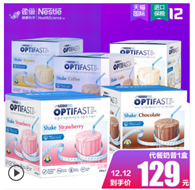
 We provide full-scale global food market entry services (including product registration, ingredient review, regulatory consultation, customized training, market research, branding strategy). Please contact us to discuss how we can help you by